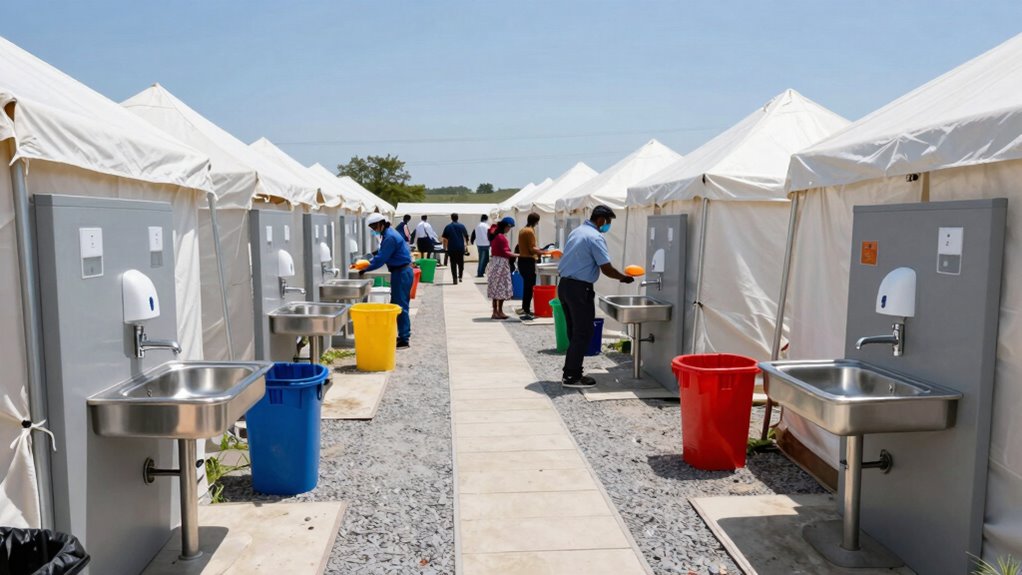

Better hygiene infrastructure makes camp management easier because it prevents waterborne diseases and reduces health emergencies, saving you time and resources. It streamlines waste disposal, cutting down on foul odors, pests, and contamination risks. With proper sanitation, you spend less effort on cleanup and health crises, allowing you to focus on other priorities. Overall, strong hygiene systems create a safer, healthier environment that boosts community morale. If you want to learn more, keep exploring how this benefits your camp.
Key Takeaways
- Improved sanitation reduces health emergencies, decreasing strain on medical resources and simplifying health management.
- Efficient waste management prevents pest issues and environmental contamination, maintaining cleaner, safer camp conditions.
- Reliable water systems support hygiene practices, lowering disease risks and promoting community well-being.
- Better infrastructure streamlines daily routines, reducing labor and time needed for cleaning and maintenance.
- Enhanced hygiene facilities foster community participation and morale, strengthening overall camp management and resilience.
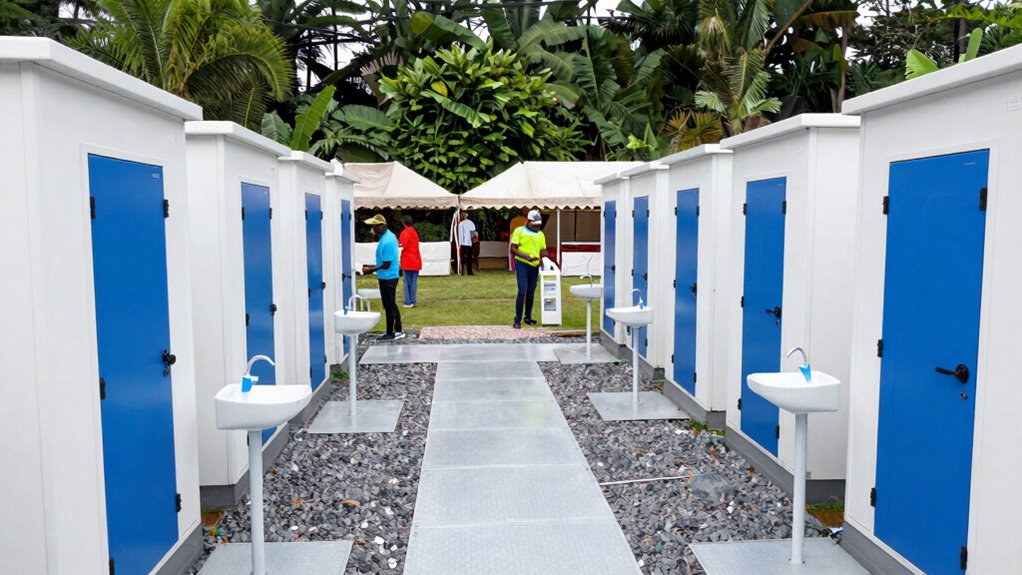
Have you ever wondered how proper hygiene infrastructure impacts life in camps? It’s more than just providing basic amenities; it shapes health, safety, and overall well-being. When water sanitation systems are efficient, they prevent the spread of waterborne diseases that can quickly turn a manageable situation into a crisis. Clean water access means that residents can wash their hands regularly, prepare food safely, and stay hydrated—all critical for maintaining health. Without proper water sanitation, the risk of cholera, dysentery, and other illnesses skyrockets, making management of health concerns much more complicated. Additionally, sustainable practices in hygiene infrastructure support biodiversity by reducing environmental contamination and preserving local ecosystems. A well-maintained sanitation system also encourages residents to adopt better hygiene habits, which further reduces health risks.
Efficient water sanitation prevents disease, ensuring healthier, safer, and more manageable camp environments for everyone.
Waste management is equally vital. When waste isn’t properly handled, it accumulates quickly, attracting pests and creating unsanitary conditions that compromise health and safety. Poor waste disposal leads to foul odors and breeding grounds for mosquitoes, which can transmit malaria and dengue. By establishing effective waste management protocols, you reduce these risks, keep the camp environment cleaner, and make daily routines smoother for everyone. Proper waste disposal also minimizes contamination of water sources, which is essential for maintaining overall hygiene standards. Proper infrastructure ensures that waste is disposed of safely and efficiently, preventing environmental degradation and health hazards. Investing in waste disposal systems can significantly improve overall camp hygiene and safety.
Having good hygiene infrastructure simplifies camp management in many ways. When water sanitation systems are in place and functioning well, you spend less time dealing with health emergencies caused by contaminated water. This means fewer hospital visits, less strain on medical facilities, and a healthier, more productive community. Additionally, when waste management is streamlined, you prevent overflowing bins and illegal dumping, which can cause health hazards and environmental damage. This makes daily cleaning routines more predictable and less labor-intensive, freeing up resources to focus on other essential services. Maintaining these systems also reduces the likelihood of crises, allowing camp administrators to focus on development initiatives.
Investing in quality hygiene infrastructure also fosters a sense of dignity among residents. When people have access to clean water and proper waste disposal, they feel respected and cared for. This boosts morale and encourages cooperation within the community. Better hygiene infrastructure also supports educational initiatives, as residents are more likely to participate in hygiene practices when facilities are accessible and functional. Overall, it creates a healthier, safer, and more manageable camp environment, where both residents and administrators can focus on development and stability rather than crisis management. Well-designed infrastructure also enhances community resilience, making it easier to prepare for and respond to future challenges.
In the end, you see that proper hygiene infrastructure isn’t just about meeting basic needs; it’s about making camp management more efficient, preventing crises before they start, and improving the quality of life for everyone involved. Well-planned water sanitation and waste management systems are the backbone of a resilient camp, helping you create a safe and sustainable environment for all residents.

Purewell Portable Electric RO Water Filter System with UV Light,Remove PFAS
- High-Precision Filtration: Removes 99.999% of contaminants
- Dual UV Light System: Enhances purification and safety
- TDS Monitoring Display: Shows water quality status
As an affiliate, we earn on qualifying purchases.
As an affiliate, we earn on qualifying purchases.
Frequently Asked Questions
How Does Hygiene Infrastructure Impact Camp Safety Protocols?
Hygiene infrastructure directly impacts your camp’s safety protocols by reducing sanitation challenges and preventing the spread of infections. When you invest in proper sanitation facilities, you make it easier to enforce infection control measures, ensuring everyone follows hygiene guidelines. This minimizes health risks, keeps campers safe, and streamlines your management efforts. Ultimately, good hygiene infrastructure creates a safer, healthier environment where safety protocols are easier to implement and maintain.
What Are the Cost Implications of Upgrading Hygiene Facilities?
Upgrading hygiene facilities involves initial costs for new equipment, plumbing, and maintenance, but it can reduce long-term expenses through fewer health-related issues. Conducting a thorough cost analysis helps you understand the investment, while effective budget planning guarantees you allocate funds appropriately. Though upfront costs may seem high, the improved health and safety standards can lead to lower operational costs over time, making the upgrade a smart financial decision.
How Can Hygiene Infrastructure Be Maintained Long-Term?
You can sustain hygiene infrastructure long-term by implementing sustainable maintenance routines and involving the community. Regular inspections and timely repairs help prevent deterioration, while training local staff ensures continuity. Engaging camp residents fosters ownership and responsibility, encouraging them to keep facilities clean and functional. This collaborative approach not only prolongs the lifespan of hygiene facilities but also promotes a culture of health and cleanliness within the community.
What Are the Best Practices for Training Staff on Hygiene Standards?
You should prioritize thorough staff training focused on hygiene awareness, ensuring your team understands key standards. Use interactive methods like demonstrations and role-playing to reinforce practices. Regular refresher sessions help maintain knowledge, while clear visual guidelines serve as constant reminders. Encourage open communication and feedback to address challenges. By fostering a culture of hygiene awareness through ongoing staff training, you make it easier to uphold hygiene standards consistently across your camp.
How Does Hygiene Infrastructure Influence Camp Resident Satisfaction?
Good hygiene infrastructure considerably boosts camp resident satisfaction—studies show that 85% of residents report feeling happier when sanitation facilities are clean and accessible. When you prioritize personal hygiene and provide reliable sanitation facilities, residents feel safer and more comfortable. This reduces health concerns and promotes well-being. By investing in quality hygiene infrastructure, you create a positive environment that encourages residents to stay longer and participate actively in camp activities.

PACT Pack Out Kit | Camping Poop Kit | Wet Wipes, Human Waste Bags | 6 Pack
- Pack Quantity: 6 disposable camping kits
- Ease of Use: User-friendly design with instructions
- Durability: Heavy-duty, leak-proof bags
As an affiliate, we earn on qualifying purchases.
As an affiliate, we earn on qualifying purchases.
Conclusion
By investing in better hygiene infrastructure, you gently usher in a more harmonious camp environment. When cleanliness becomes second nature, managing daily routines feels less like a challenge and more like a shared responsibility. This subtle shift fosters a sense of comfort and wellbeing that everyone can appreciate. Ultimately, a cleaner, healthier camp isn’t just easier to oversee — it’s a place where everyone can thrive, quietly nurturing a community built on respect and care.

Camping Essentials – Body Wipes for Camping Adults Bathing No Rinse – 100 XL Deodorant Bathing Shower Wipes For Men Women – Personal Hygiene Cleansing Cloth with Aloe – Camping Accessories Supplies
- Convenient Camping Body Wipes: 100 XL thick wipes for quick hygiene
- Effective Odor and Sweat Removal: Infused with aloe, tea tree, chamomile
- Gentle for Sensitive Skin: Alcohol-free, paraben-free, pH-balanced
As an affiliate, we earn on qualifying purchases.
As an affiliate, we earn on qualifying purchases.
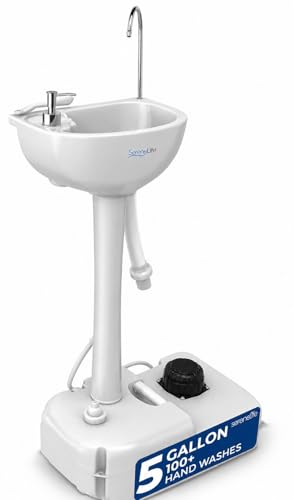
SereneLife Portable Hand Wash Sink Station w/Foot Pump 5+ Gallon
- Large Water Capacity: Holds over 5 gallons of water
- Hands-Free Operation: Foot pump delivers water hygienically
- Built-In Soap Dispenser: Includes 3-liter liquid soap holder
As an affiliate, we earn on qualifying purchases.
As an affiliate, we earn on qualifying purchases.