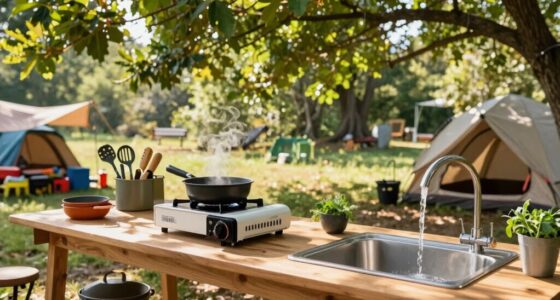

To build a cleaner camp workflow for multi-day stays, set up designated areas for clothes, supplies, tools, and waste. Use labeled bins and keep gear organized to save time and avoid clutter. Clean cooking areas and utensils after each use, and wash your hands regularly. Develop daily routines like tidying up after meals and checking gear before bed. These steps improve campsite hygiene and make packing easier—continue exploring for more tips to enhance your camp routine.
Key Takeaways
- Establish designated areas for gear, food, and waste to streamline organization and minimize clutter.
- Implement daily cleaning routines for cooking utensils and surfaces to maintain hygiene.
- Regularly inspect and maintain gear to prevent damage and ensure readiness.
- Incorporate end-of-day routines like tidying, trash collection, and surface cleaning.
- Use labeled bins and clear signage to facilitate quick access and reduce search time.
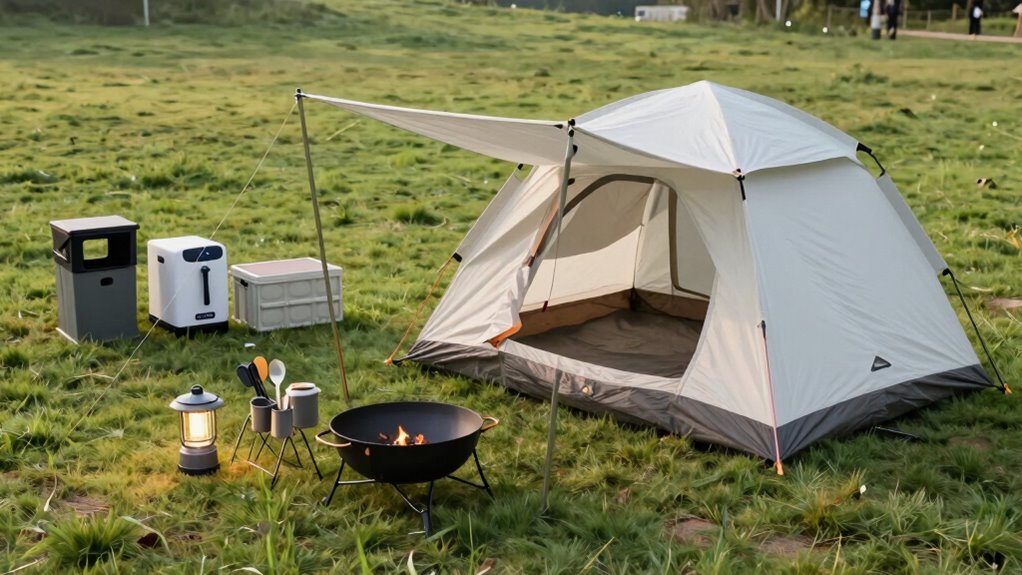
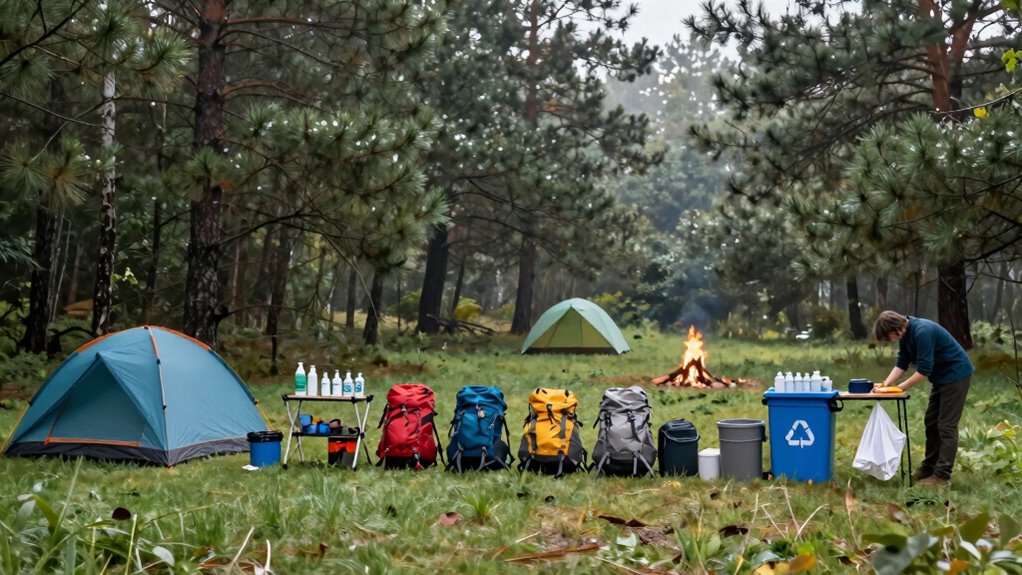
Staying organized and keeping your campsite clean during multi-day trips can feel overwhelming, but establishing a solid workflow makes it manageable. The key is creating a system that addresses gear organization and sanitation routines, so everything flows smoothly from setting up to packing up. When you plan ahead, you’ll spend less time searching for gear and more time enjoying your trip. Start by designating specific areas for different types of gear—clothes, cooking supplies, tools, and personal items. Use labeled bins or gear organizers to keep everything accessible and prevent clutter. This way, each item has its place, and you won’t waste time rummaging through bags when you need something quickly. Consistent gear organization also helps you track what’s missing or damaged before it becomes a problem. Additionally, incorporating a dedicated cleaning routine ensures your gear remains in good condition and your campsite stays tidy. Regularly inspecting your gear for wear and tear also extends its lifespan and keeps your setup functioning smoothly.
Sanitation routines are equally critical for maintaining a clean campsite. Before setting out, gather supplies like trash bags, biodegradable soap, hand sanitizer, and disinfectant wipes. Establish a routine where you clean your cooking area and utensils immediately after use, and always wash your hands before handling food. Regularly empty trash and pack out all waste to prevent attracting wildlife and keep the environment pristine. Designate a specific spot for waste disposal, away from your tents and water sources, to minimize contamination. When you move to a new campsite or pack up, thoroughly clean cooking equipment and any surfaces that came into contact with food or dirt. This helps prevent the spread of germs and keeps your gear in good condition. Incorporating proper waste management practices into your routine can significantly reduce environmental impact and improve overall campsite hygiene.
Integrating these routines into your daily schedule creates a natural workflow. For example, after breakfast, take a few minutes to tidy up, wipe down surfaces, and pack away leftovers. Before bedtime, check your gear and ensure everything is stored properly and clean. When packing up at the end of your trip, do a final sweep of the campsite, collecting all trash and cleaning surfaces. This habit encourages a cleaner environment and makes your packing process easier. Remember, a little effort each day saves you time and stress in the long run. By prioritizing gear organization and maintaining strict sanitation routines, you’ll create a cleaner, more efficient workflow that makes multi-day camping trips more enjoyable and less cluttered.
As an affiliate, we earn on qualifying purchases.
Frequently Asked Questions
What Are the Best Eco-Friendly Cleaning Products for Camping?
You should choose eco-friendly cleaning products like biodegradable detergents to keep your camp spotless without harming the environment. Reusable cleaning supplies, such as cloths and brushes, reduce waste and are gentle on nature. Look for products labeled biodegradable or eco-certified, and opt for reusable options whenever possible. These choices help you maintain a clean campsite while minimizing your ecological footprint, making your camping experience more sustainable and enjoyable.
How Do I Handle Waste Disposal Effectively?
To handle waste disposal effectively, prioritize Leave No Trace principles by packing out all trash and waste. Use designated waste management sites or containers if available, and always double-check local regulations. Separate recyclables from trash to reduce environmental impact, and never burn waste. Proper waste management guarantees your campsite stays clean and preserves the natural environment for future visitors. Always plan ahead to minimize your footprint during your multi-day stay.
What Are Some Ways to Keep Food Storage Hygienic?
Imagine opening your food storage to find it perfectly sealed and spotless—keeping it hygienic is simple. Use airtight containers to prevent pests and contamination, and store perishables in a cool, shaded spot. Regularly clean your food storage area with soap and water, and check for spoilage often. Practicing these hygiene routines guarantees your food stays fresh and safe, so your camp remains a healthy, worry-free haven.
How Can I Prevent Pests From Contaminating the Camp?
You can prevent pests from contaminating your camp by using natural pest repellents like citronella candles or essential oils, which deter insects without harming wildlife. Keep food sealed and stored properly to avoid attracting animals. Be mindful of wildlife interaction; avoid leaving food or trash accessible, and store it away from your campsite. Regularly clean up scraps and waste to minimize pest attraction, ensuring a safe, pest-free environment for everyone.
What Safety Precautions Should I Take When Cleaning in Remote Areas?
Imagine yourself in a wild, unpredictable landscape—your safety hinges on cautious steps. You should always wear personal protective equipment, like gloves and masks, to shield against contaminants. Stay alert to hazard awareness, recognizing potential risks like sharp tools or toxic substances. Keep a first aid kit nearby, communicate your plans, and work slowly. These precautions help you stay safe in remote areas, turning the wilderness from danger into a manageable adventure.
As an affiliate, we earn on qualifying purchases.
Conclusion
By establishing a cleaner camp workflow, you’re planting seeds of order amid nature’s chaos. Each task is a gentle stream guiding waste away, leaving behind a clear path for your journey. Embrace this rhythm, and your campsite becomes a living symbol of respect—nurturing the land that sustains you. When you leave no trace, you’re not just cleaning up; you’re stewarding a precious gift, ensuring it blooms anew for others to enjoy.
As an affiliate, we earn on qualifying purchases.
As an affiliate, we earn on qualifying purchases.