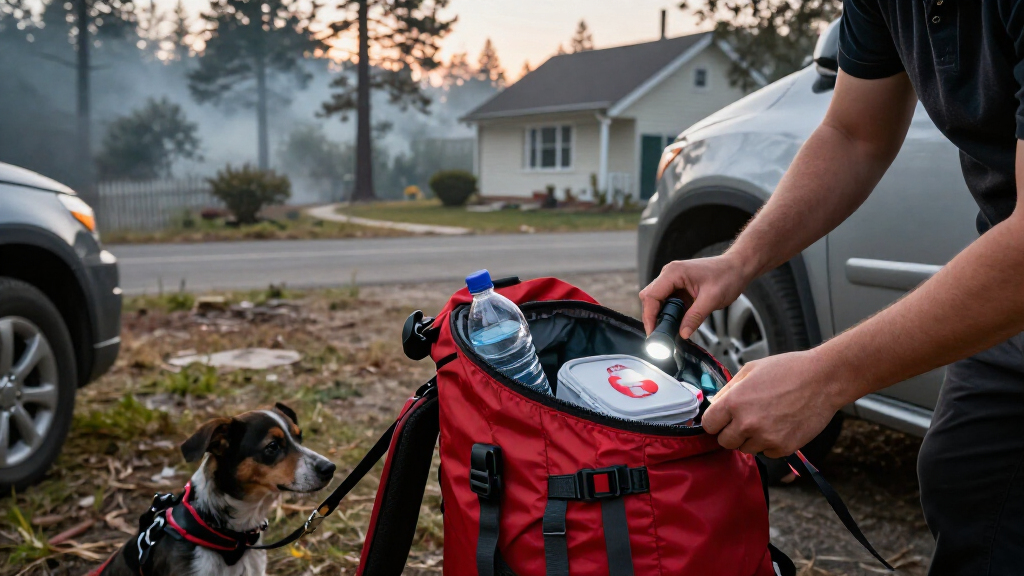
This checklist is for households preparing to leave quickly when wildfire threatens, whether you live near open land or are planning a trip through fire-prone areas. Use it to gather key supplies and think through what you may need before an evacuation notice arrives. Early preparation can make it easier to focus on official instructions when conditions change.

Get emergency and outdoor gear delivered free with Prime
- Fast, free delivery on millions of items
- Prime Video, Amazon Music and more included
- Member-only deals all year
The checklist is organized by purpose: respiratory protection, document storage, emergency information, eye protection, indoor air support, and warmth. Each section names a product where one was provided; the goggles section offers advice without a specific pick. Match each item to your household, likely travel conditions, and the instructions supplied by emergency officials.
Review the list before fire season, check that items are accessible, and make sure everyone knows where they are stored. Read product labels and instructions, and confirm fit and compatibility before relying on any gear. Supplies can support your plan, but they do not replace evacuation orders or guidance from local authorities. Leave promptly when instructed.
N95 Respirator Masks
A respirator can be one part of a wildfire evacuation kit when smoke is present, so it helps to choose and prepare one before you need to leave. The listed pick is the 3M Particulate Respirator 8210, N95, Pack of 160, Disposable, NIOSH Ap. Check the packaging and current product information for the complete designation and use instructions. Fit matters: a respirator that does not seal properly may not perform as intended.
A common mistake is assuming that one size or style will fit everyone in a household, or that a respirator is suitable for every person and situation. Review the manufacturer’s guidance for fit, limitations, storage, and use, and consider individual needs before adding it to a shared kit. Keep the masks in their original packaging where practical and make sure household members know where they are. Check before travel that the supply is accessible and that each person can use it as directed.
What to look for:
- Check the full product designation on the package.
- Review fit guidance for each intended wearer.
- Read manufacturer instructions and limitations.
- Keep masks accessible and protected in storage.
- Consider individual needs before relying on a shared supply.
3M Particulate Respirator 8210, N95, Pack of 160, Disposable, NIOSH Approved

This lightweight, disposable N95 respirator from 3M offers at least 95% filtration efficiency against non-oil based particles. It features an adjustable noseclip, welded dual straps, and is suitable for various dusty and airborne biological particle applications, providing reliable respiratory protection for industrial and occupational use.
Pros:
- High filtration efficiency with N95 rating
- Adjustable noseclip for a secure and comfortable fit
- Lightweight and comfortable for extended wear
- Welded dual straps for secure attachment
Cons:
- Designed for industrial/occupational use only, not for consumer sale
- Single-use disposable respirator, not reusable
- Limited to non-oil based particle filtration
Best for: Households preparing a shared disposable mask supply
Not ideal for: Anyone who has not checked fit or use guidance
Bottom line: Review fit and instructions before packing these respirators for an evacuation.
Fire-Resistant Document Bag
Important papers can be difficult to replace, so gathering them in one place can make an evacuation checklist more useful. The listed pick is the DocSafe Fireproof File Organizer with Combination Lock. Use it to organize the documents you choose to bring, and keep the bag where it can be reached without delaying departure. Easy access is central to making any document organizer useful in an emergency.
A common mistake is treating a product description as a guarantee that contents will remain protected in every fire or exposure. Read the manufacturer’s specifications and limitations, and do not assume that a fire-resistant label means the organizer is suitable for every hazard. Check that the combination lock is set and that the people who may need the documents can open it. Decide which papers are essential and how they fit before an emergency. Keep the plan simple: the bag should be ready to take, not a reason to delay evacuation.
What to look for:
- Review the manufacturer’s protection claims and limitations.
- Confirm the organizer fits the documents you intend to carry.
- Set the combination and ensure relevant household members can open it.
- Choose essential papers in advance.
- Store the bag somewhere accessible.
DocSafe Fireproof File Organizer with Combination Lock

This hard-shell file organizer is made with silicone-coated fire-resistant insulation and is described as water-resistant. It has 13 labeled accordion pockets and additional storage for documents, cards, passports, and small items, plus a combination lock, double zipper, and carrying handle.
Pros:
- Hard-shell construction adds structure and durability.
- Combination lock and double zipper help secure stored items.
- Multiple labeled pockets and organizers accommodate documents and accessories.
- Carrying handle makes it portable for home, office, or travel use.
Cons:
- At 15.55 x 11.5 x 3 inches, it may be bulky for compact storage.
- The description does not specify a fire-protection duration or temperature limit.
Best for: Households organizing selected important documents
Not ideal for: Anyone expecting a product label to guarantee protection in every fire
Bottom line: Prepare the contents and lock access in advance, then keep the organizer easy to reach.
Emergency Radio
When an evacuation disrupts normal routines, a radio may be a useful way to seek information. The listed pick is the Midland ER310 Emergency Crank Weather AM/FM Radio. Before relying on it, read the product instructions and understand its available power and tuning options. Know the controls before an emergency so you are not learning them while trying to leave.
A common mistake is packing a radio without checking how it is powered, how to tune it, or whether it is ready to use. Review the manufacturer’s directions, check the device before wildfire season, and make sure everyone who may use it can operate it. Identify the official information sources relevant to your area and follow local emergency instructions. A radio is one communications aid; it should not postpone an evacuation or replace alerts and directions from authorities. Keep it accessible with the other items you plan to take.
What to look for:
- Read the operating and power instructions.
- Learn how to tune the radio before an emergency.
- Check the device’s readiness periodically.
- Identify relevant official information sources.
- Store it where it can be reached quickly.
Midland ER310 Emergency Crank Weather AM/FM Radio

The Midland ER310 is an emergency weather radio with AM/FM tuning, multiple power sources, and a built-in flashlight. It also features an SOS emergency flashlight, ultrasonic dog whistle, and NOAA weather scan and alert.
Pros:
- Multiple power options for emergency use
- AM/FM radio with NOAA weather scan and alert
- Includes a built-in flashlight and SOS feature
- USB connectivity
Cons:
- Not water resistant
- Requires six AA batteries when using battery power
Best for: People who want a radio in their evacuation kit
Not ideal for: Anyone who has not learned its controls or checked readiness
Bottom line: Learn the radio’s operation ahead of time and follow official evacuation instructions.
Protective Safety Goggles
Smoke, ash, and debris can make eye protection worth considering as part of a household evacuation plan. No specific product was provided for this slot, so choose goggles based on the wearer, intended use, and manufacturer’s instructions rather than relying on a generic description. Comfort and fit matter because poorly fitting goggles may be difficult to wear when needed.
A common buying mistake is choosing eyewear without checking whether it fits over prescription glasses or works with other protective equipment the wearer may use. Review product guidance for fit, visibility, intended use, and limitations. Try the goggles before adding them to the kit, and make sure each person can put them on and remove them comfortably. Do not assume that ordinary glasses provide the same protection as goggles. Keep them reachable with the rest of the evacuation supplies, and follow official guidance about conditions and protective equipment.
What to look for:
- Check fit for each intended wearer.
- Confirm whether they fit over prescription eyewear if needed.
- Review intended use and manufacturer limitations.
- Try them before packing to check comfort and visibility.
- Store them with accessible evacuation supplies.
Portable Air Purifier
A portable air purifier may be part of an indoor air plan for times when smoke affects a home, especially before an evacuation is necessary. The listed pick is the AirDoctor AD1500 Air Purifier for Home, Small/Medium Rooms up to 1280 . Check the complete product information to confirm its intended room size and any other requirements. Room suitability should guide where you plan to use it.
A common mistake is assuming a purifier can make it safe to stay when authorities say to evacuate. It is an indoor air aid, not a reason to delay leaving. Review the manufacturer’s instructions, including setup, filter requirements, and room guidance, and make sure the household can operate it. Consider whether it will be practical to use in the location where you plan to shelter, while keeping evacuation supplies ready. Follow local orders and leave promptly when instructed, regardless of whether the purifier is running.
What to look for:
- Confirm the complete product name and room guidance.
- Read setup and operating instructions.
- Check filter requirements in the manufacturer’s information.
- Plan where the purifier could be used indoors.
- Keep evacuation plans and supplies ready regardless of purifier use.
AirDoctor AD1500 Air Purifier for Home, Small/Medium Rooms up to 1280 ft²

The AirDoctor AD1500 uses a three‑stage filtration system—including a hospital‑grade UltraHEPA filter and premium activated carbon—to capture 99.99% of particles as small as 0.003 microns and eliminate odors, smoke, and VOCs. Its built‑in Halo PM2.5 sensor automatically adjusts fan speed for real‑time air quality control, while operating quietly enough for bedrooms and nurseries.
Pros:
- Hospital‑grade UltraHEPA filter captures ultra‑fine particles down to 0.003 µm.
- Premium activated carbon with potassium permanganate reduces odors, smoke, and VOCs.
- Auto mode with Halo sensor continuously monitors air quality and adjusts fan speed.
- Quiet operation suitable for bedrooms, nurseries, and workspaces.
Cons:
- Requires proprietary AirDoctor replacement filters, which may be expensive.
Best for: Households preparing an indoor smoke response plan
Not ideal for: Anyone relying on a purifier to override evacuation instructions
Bottom line: Use the purifier only as directed and leave promptly when authorities instruct you to evacuate.
Emergency Sleeping Bags
Evacuations can involve changes to sleeping arrangements, so it can help to consider how your household will stay warm if normal routines are interrupted. The listed pick is the USGI Gear 4-Piece Modular Military Sleeping Bag System. Review the product information to understand what the system includes and how its components are intended to be used. Plan for the people who may need it, not just the gear.
A common mistake is assuming a sleeping bag system will suit every person, sleeping location, or set of conditions without checking its specifications. Read the manufacturer’s guidance, consider who will carry and use it, and check whether the system is practical for your evacuation plan. Make sure household members know how it is assembled or adjusted, if applicable, and store it where it can be reached. Keep evacuation timing first: collecting bedding should never delay leaving when officials direct you to go.
What to look for:
- Review what the system includes.
- Check manufacturer instructions for setup and use.
- Consider whether it suits each intended user.
- Assess how it fits into your household’s evacuation plan.
- Store it somewhere accessible and keep the departure plan clear.
USGI Gear 4-Piece Modular Military Sleeping Bag System

This four-piece sleeping bag system includes a patrol bag, intermediate cold-weather bag, waterproof bivy cover, and compression stuff sack. Its nylon ripstop construction, water-repellent coating, and layered design support use in wet and cold conditions, with a stated temperature range of 50°F to -50°F.
Pros:
- Four-piece modular system can be layered or used separately
- Waterproof bivy cover helps protect against wind and moisture
- Compact compression stuff sack is included
Cons:
- Temperature range is stated broadly, without separate ratings for each bag layer
- One size may not fit every user comfortably
Best for: Households planning for disrupted sleeping arrangements
Not ideal for: Anyone who has not checked the system’s contents and use guidance
Bottom line: Review the system and plan who will use it before adding it to your evacuation supplies.
Build your checklist around essentials first: know your evacuation routes and official alert sources, gather critical documents and medications, and prepare the supplies your household can use. Then add items such as respirators, goggles, a radio, indoor air equipment, and sleeping gear according to your needs and the product instructions. Prioritize readiness and accessibility over collecting equipment you have not checked.
Walk through the plan with everyone in your household, including where supplies are stored and what to do when an evacuation notice arrives. Keep the list current as household needs change, and follow directions from local authorities when wildfire threatens. A practiced plan helps make the next step clear when it matters.