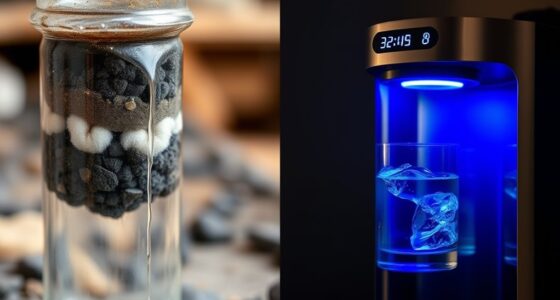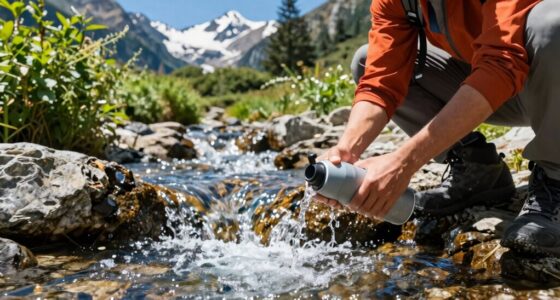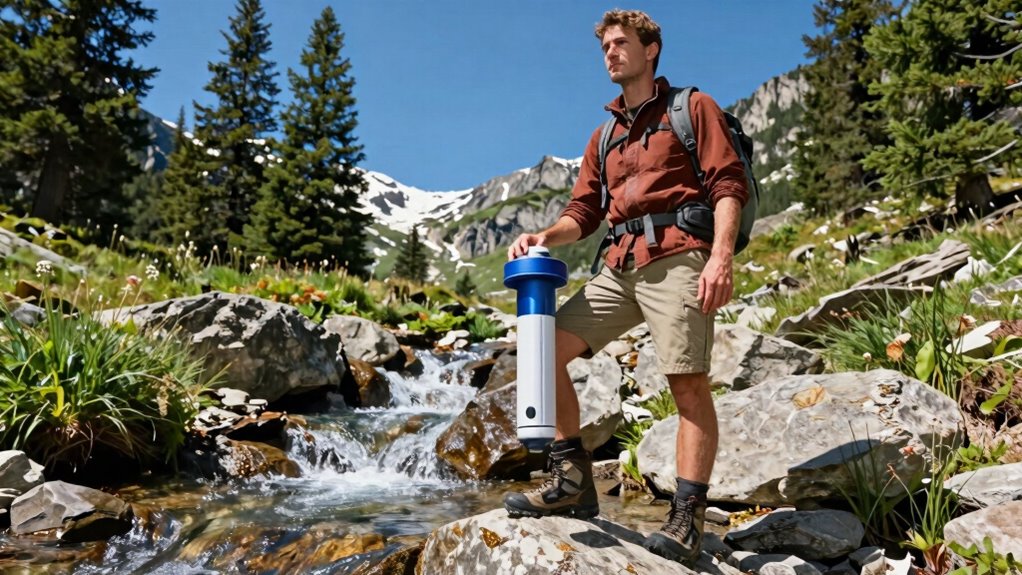

A solid water filtration strategy boosts your outdoor confidence by ensuring you can access safe drinking water in various environments. When you select the right combination of portable filters, chemical treatments, and natural filtration methods, you’re prepared for different water sources and potential contaminants. Knowing how to adapt your approach makes you more self-reliant and ready for emergencies. Continue exploring to discover how these techniques work together to keep you safe and confident on any adventure.

Get emergency and outdoor gear delivered free with Prime
- Fast, free delivery on millions of items
- Prime Video, Amazon Music and more included
- Member-only deals all year
Key Takeaways
- A well-planned filtration strategy ensures access to safe drinking water, reducing health risks and increasing outdoor confidence.
- Combining multiple filtration methods offers comprehensive protection, making users more assured in various environments.
- Using portable filters and chemical treatments empowers outdoor enthusiasts to handle diverse water sources confidently.
- Tailoring filtration techniques to specific environments enhances safety and preparedness for unforeseen water contamination.
- Incorporating natural filtration methods alongside mechanical and chemical solutions builds resilience and trust in water safety management.

Ensuring clean, safe drinking water requires a well-planned filtration strategy that addresses your specific needs. Whether you’re heading into the wilderness or preparing for emergency situations, having reliable methods to purify water boosts your confidence and keeps you safe. One of the most versatile tools in your arsenal is portable filters. Compact and easy to carry, portable filters allow you to quickly remove bacteria, protozoa, and sediments from water sources like streams, lakes, or even questionable tap water. They’re designed for convenience, so you can set them up effortlessly during your outdoor adventures. With a good portable filter, you don’t have to worry about what’s lurking in the water—just pump or pour through, and you’re good to go.
However, relying solely on physical filtration isn’t always enough, especially when chemical contaminants or viruses are present. That’s where chemical treatments come into play. These treatments, often in the form of tablets, drops, or liquids, can neutralize bacteria, viruses, and other pathogens that physical filters might miss. Chemical treatments are lightweight, affordable, and simple to use, making them ideal for situations where water clarity is poor or biological risks are high. Combining chemical treatments with portable filters creates a robust strategy, giving you multiple layers of protection. You can filter out sediments and larger particles first, then use chemical treatments to eliminate microscopic threats, ensuring the water you drink is safe and clean.
Your water filtration strategy should be tailored to your environment and activities. For instance, if you’re backpacking in remote wilderness, lightweight portable filters paired with chemical treatments offer maximum efficiency. In urban or emergency scenarios, chemical treatments can be a quick fix for contaminated tap water when filtration options are limited. It’s essential to understand the water sources you’ll encounter and choose the right combination of filtration methods accordingly. Regular maintenance and testing of your filtration gear also help ensure its reliability when you need it most. Understanding how to incorporate natural filtration techniques, like utilizing certain vegetation or landscape features, can further enhance your water safety approach.
Having a clear plan that integrates portable filters and chemical treatments empowers you to face outdoor challenges with confidence. It allows you to focus on enjoying your adventure, knowing that your water is safe. When you understand how to adapt your filtration strategy to different situations, you’ll feel more prepared and in control, no matter where your journey takes you. Ultimately, a thoughtful approach to water filtration isn’t just about safety; it’s about building trust in your ability to handle the unexpected and stay confident in any outdoor environment.
portable water filter for hiking
As an affiliate, we earn on qualifying purchases.
As an affiliate, we earn on qualifying purchases.
Frequently Asked Questions
How Often Should I Replace My Water Filter in Outdoor Settings?
You should replace your water filter every 1 to 3 months during outdoor adventures, depending on usage and water source compatibility. Regular filter maintenance is essential to guarantee clean, safe drinking water. If you notice a decrease in flow rate or taste changes, it’s time for a replacement. Keep an eye on filter life, especially with variable water sources, to maintain confidence in your filtration system and stay healthy on your trip.
What Are the Signs My Water Filter Needs Replacing?
Think of your water filter as a vigilant guardian, its strength waning with each battle against contaminants. When it struggles to maintain clear, fresh water, or if you notice an odd taste or smell, it signals time for water filter maintenance. Contaminant detection becomes harder, and the filter’s effectiveness diminishes. Trust your senses—if the water’s not crisp and clean, it’s a sign you need to replace your filter to keep your outdoor adventures safe.
Can I Use the Same Filter for Different Water Sources?
You shouldn’t use the same filter for different water sources without considering filter maintenance and water source compatibility. Different sources like rivers, lakes, or streams may contain varied contaminants, which can clog or damage your filter. Always check the manufacturer’s guidelines to guarantee your filter is suitable for each water source. Regular filter maintenance is vital to keep your filtration system effective and safe for outdoor adventures.
How Does Filter Lifespan Vary With Water Quality?
Your filter lifespan varies with water quality, as cleaner water extends its durability, while contaminated or murky sources can clog or strain the filter faster. When water quality is poor, expect the filter to need replacement sooner, reducing overall durability. To maximize your filter’s lifespan, always use the best water source available and consider pre-filtering or settling water to improve water quality, ensuring your gear lasts longer during outdoor adventures.
Are Portable Filters Effective Against All Outdoor Contaminants?
Portable filters are effective against many outdoor contaminants, but their effectiveness varies. They typically remove biological threats like bacteria and protozoa, ensuring safe drinking water. However, some filters may struggle with chemical contaminants, like pesticides or heavy metals, unless specifically designed for that purpose. To stay confident outdoors, choose a filter suited to your environment and consider additional purification methods if chemical pollutants are a concern.
water purification tablets for camping
As an affiliate, we earn on qualifying purchases.
As an affiliate, we earn on qualifying purchases.
Conclusion
By choosing the right water filtration strategy, you boost your outdoor confidence, ensuring safe hydration, reliable water quality, and peace of mind. You trust your gear, you embrace adventure, and you stay prepared for any situation. With a clear filtration plan, you conquer new terrains, face unexpected challenges, and enjoy every moment with clarity and assurance. Ultimately, your water filtration strategy shapes your outdoor experience, empowering you to explore boldly, stay refreshed, and thrive in nature’s wild embrace.
personal water filtration system
As an affiliate, we earn on qualifying purchases.
As an affiliate, we earn on qualifying purchases.
As an affiliate, we earn on qualifying purchases.
Halloween Picks
halloween
As an affiliate, we earn on qualifying purchases.