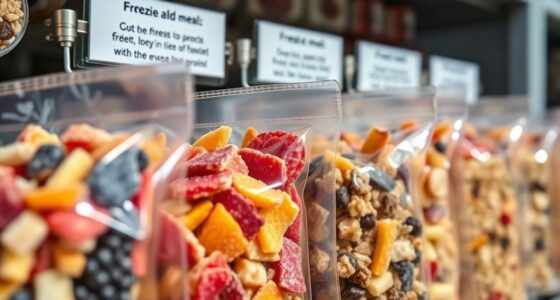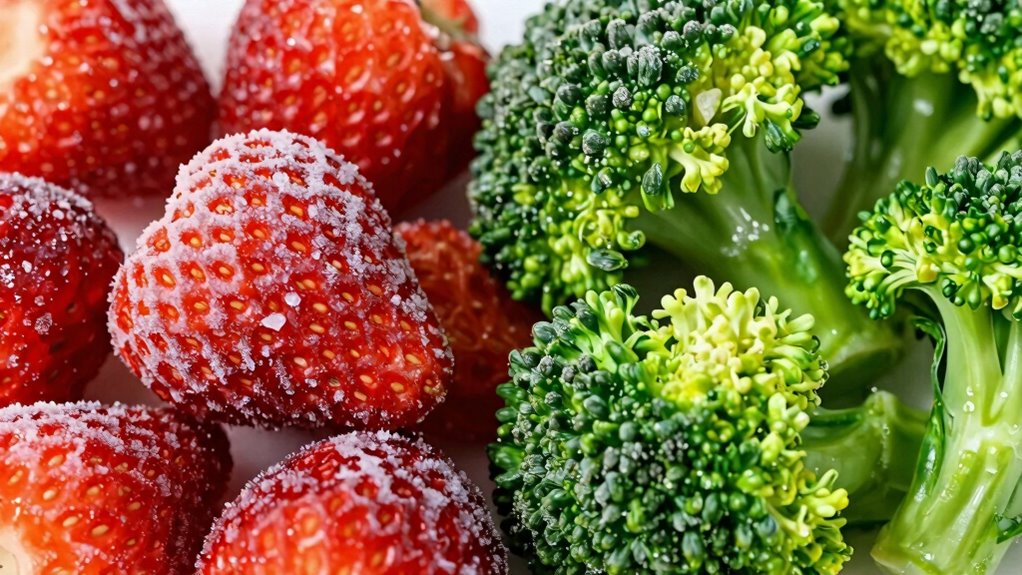

Freeze drying and dehydrating change how you prep food by substantially extending shelf life while keeping nutrients and flavor intact. These methods reduce moisture, preventing spoilage and making food safe without refrigeration for months or years. Freeze drying preserves delicate foods and nutrients better, while dehydration is quick and budget-friendly for everyday snacks. By understanding these techniques, you can store fresh, nutritious food longer—if you want to discover more, keep exploring how these methods work.

Get emergency and outdoor gear delivered free with Prime
- Fast, free delivery on millions of items
- Prime Video, Amazon Music and more included
- Member-only deals all year
Key Takeaways
- They significantly extend food shelf life, enabling long-term storage without refrigeration.
- They preserve nutrients and flavors better than other preservation methods.
- They allow for convenient, lightweight, and portable food options for emergencies or travel.
- They maintain food texture and quality, making rehydration or consumption more appealing.
- They provide flexible prepping options by preserving a variety of foods and meals.

Freeze drying and dehydrating are popular methods for preserving food, each offering distinct advantages. These techniques notably extend the shelf life of your food, making it easier to store and enjoy long after the harvest or purchase. When you choose freeze drying or dehydrating, you’re effectively reducing moisture content, which is the main factor that leads to spoilage. As a result, your preserved foods can last months or even years without refrigeration, giving you greater flexibility in meal planning and emergency preparedness.
Freeze drying and dehydrating extend food shelf life, making storage easier and reducing spoilage without refrigeration.
One of the key reasons these methods have become so popular is their ability to maintain nutrient preservation. Freeze drying, in particular, is excellent at locking in vitamins, minerals, and other nutrients because it operates at low temperatures. This means your dried or freeze-dried foods retain much of their original nutritional value, unlike some other preservation techniques that can degrade essential nutrients. When you use these methods, you’re not just prolonging shelf life—you’re also ensuring your food remains wholesome, fresh, and nutritious for longer periods.
Dehydrating food involves removing moisture through heat and airflow, which is often quicker and more cost-effective. It’s especially handy for fruits, vegetables, herbs, and jerky. While dehydration can slightly impact nutrient levels—particularly heat-sensitive vitamins—it still offers a reliable way to preserve food for extended periods. Freeze drying, on the other hand, involves freezing the food and then reducing the surrounding pressure so that the frozen water sublimates directly into vapor. This process preserves the food’s structure, flavor, and nutrients better than dehydration alone, making it ideal for preserving more delicate items like berries or cooked meals. Additionally, the moisture removal process in freeze drying helps prevent bacterial growth and mold, further extending shelf life. Moreover, the low-temperature operation of freeze drying helps protect delicate nutrients that can be lost during heat-based methods. Understanding the scientific principles behind these methods can help you make more informed decisions about which technique best suits your needs and storage conditions, especially when considering nutrient retention as a priority.
As an affiliate, we earn on qualifying purchases.
Frequently Asked Questions
How Do Freeze Drying and Dehydrating Affect Nutritional Value?
Freeze drying and dehydrating help preserve your food’s nutritional value by maintaining high levels of nutritional retention and vitamin stability. These methods remove moisture without significant heat, so essential nutrients stay intact. As a result, your dried or freeze-dried food retains most vitamins and minerals, ensuring you get the nutrients you need. You can enjoy healthy, shelf-stable foods that maintain their nutritional quality longer than fresh options.
Are Freeze-Dried Foods Suitable for Long-Term Storage?
Freeze-dried foods are perfect for long-term storage, acting like a time capsule for your nutrition. Thanks to advanced packaging techniques like vacuum sealing and oxygen absorbers, they stay fresh and safe for years. Their shelf stability makes them ideal for emergencies, camping, or prepping. You can confidently store these foods, knowing they’ll maintain quality and flavor, turning your pantry into a reliable treasure chest of sustenance for the future.
What Are the Cost Differences Between Freeze Drying and Dehydrating?
The cost comparison between freeze drying and dehydrating shows that freeze drying generally has a higher equipment investment, often costing thousands of dollars, but offers longer shelf life and better preservation. Dehydrating is more affordable upfront, with basic dehydrators priced lower, making it suitable for casual prep. However, freeze drying’s higher initial cost can be offset by its superior quality and storage benefits over time.
Can I Rehydrate Freeze-Dried or Dehydrated Foods Easily?
Yes, you can easily rehydrate freeze-dried or dehydrated foods. Rehydration techniques like soaking in water or broth work well, restoring texture and flavor. While freeze-dried foods rehydrate quickly and retain nutrients, dehydrated foods may need longer soaking. Both offer storage convenience, making them ideal for quick meals or emergencies. You’ll find rehydrating straightforward, allowing you to enjoy preserved foods with minimal effort.
Which Method Preserves Flavor Better: Freeze Drying or Dehydrating?
Freeze drying generally preserves flavor better because it prevents oxidation and moisture loss, maintaining the food’s natural taste. Dehydrating can sometimes diminish flavor due to heat exposure during the process. For texture preservation, freeze-dried foods tend to remain more intact and airy, while dehydrated foods often become denser and chewier. If you want the best flavor and texture, freeze drying is the superior method.
dehydrator for fruits and vegetables
As an affiliate, we earn on qualifying purchases.
As an affiliate, we earn on qualifying purchases.
Conclusion
By freeze drying and dehydrating, you embrace longevity and convenience, yet lose some of the fresh, vibrant flavors that make food truly satisfying. These methods extend your prep time, but simplify storage and transport. While you gain rugged resilience against spoilage, you sacrifice the sensory richness of fresh ingredients. In choosing between them, you navigate a delicate balance—between convenience and flavor, durability and freshness—shaping how you experience and prepare your food every day.
As an affiliate, we earn on qualifying purchases.
As an affiliate, we earn on qualifying purchases.
Fall Picks
fall essentials
As an affiliate, we earn on qualifying purchases.