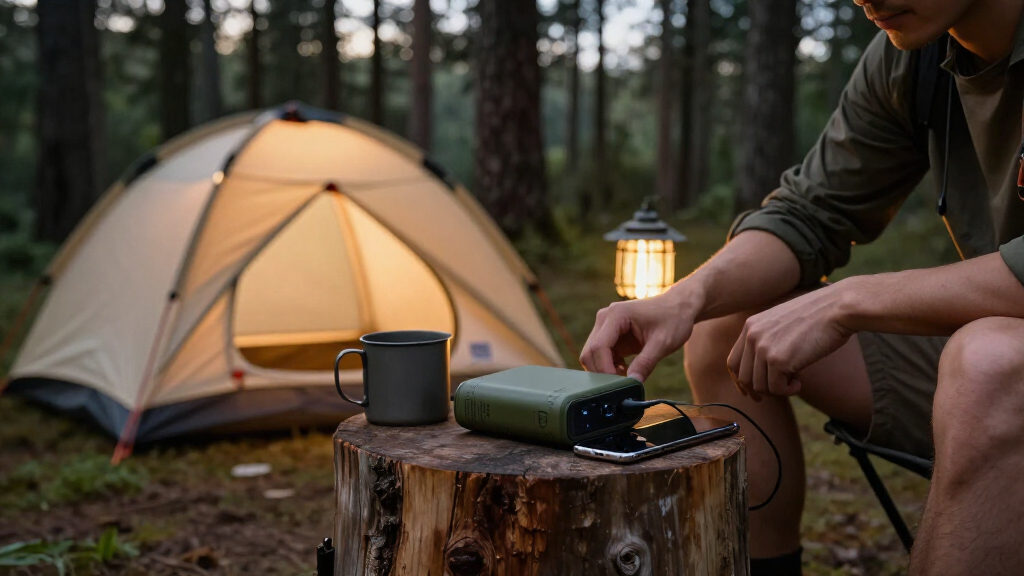
The best portable power banks for camping depend on whether you need to top up a phone or run several devices at camp. I’d name the Anker SOLIX C300 my best overall pick for its useful 288Wh capacity, while the ALLWEI 300W suits campers seeking a LiFePO4 power station and the BLAVOR 20,000mAh is a smaller, simpler choice for personal devices. The central tradeoff is portability versus capacity: pocket-size banks are easier to carry, but they cannot power the same range of gear as a station with AC outlets. Solar features also vary in usefulness, especially when panel output and charging conditions are limited. Read on for the full comparison, ranking logic, and guidance by camping style.

Get emergency and outdoor gear delivered free with Prime
- Fast, free delivery on millions of items
- Prime Video, Amazon Music and more included
- Member-only deals all year
Complete the kit


Key Takeaways
The roundup spans two different jobs: compact banks such as the BLAVOR 10,000mAh are for personal-device charging, while models such as the Jackery Explorer 1000 v2 are power stations for broader camp power needs.
Capacity alone does not tell the whole story. Output limits, available ports, and whether a model includes AC outlets affect which devices it can actually run.
LiFePO4 models stand out for battery chemistry and longevity-focused buying. The ALLWEI 300W, DaranEner 192Wh, and Daran 89.6Wh offer that chemistry, but differ greatly in capacity and output.
Solar and hand-crank features are not automatic replacements for a charged battery. The solar-equipped options can add flexibility, but campers should check charging conditions and treat these features as supplemental.
The best choice changes with the trip. A short, weight-sensitive outing favors a compact bank; longer stays or multiple devices make the larger stations, such as the Anker SOLIX C300 or Jackery models, more relevant.
| HOWEASY Portable Power Station, 120W (240W Peak), 88Wh |  | Best Compact Power Station | Battery capacity: 88Wh | AC output: 110V, 120W (240W peak) | USB-C output: 18W | VIEW LATEST PRICE | See Our Full Breakdown |
| BLAVOR 20,000mAh Solar Power Bank with Wireless Charging |  | Best for Multi-Device Convenience | Battery capacity: 20,000mAh | USB-C output: 20W | USB ports: 3 | VIEW LATEST PRICE | See Our Full Breakdown |
| MARBERO Portable Power Station, 88Wh, 120W Surge, 24,000mAh |  | Best for USB-C Device Mix | Capacity: 88Wh, 24,000mAh | Running wattage: 80W | Surge power: 120W | VIEW LATEST PRICE | See Our Full Breakdown |
| ALLWEI 300W Portable Power Station with 256Wh LiFePO4 Battery |  | Best Overall for Weekend Camping | Battery capacity: 256Wh | Battery type: LiFePO4 | Continuous / peak output: 300W / 600W | VIEW LATEST PRICE | See Our Full Breakdown |
| FEELLE 50,000mAh Solar Power Bank with Magnetic Wireless Charging and Hand Crank |  | Best for Off-Grid Phone Backup | Battery capacity: 50,000mAh | Battery cell type: Lithium polymer | Wireless charging output: Up to 15W | VIEW LATEST PRICE | See Our Full Breakdown |
| DaranEner Portable Power Station, 192Wh LiFePO4 Battery, 300W Output |  | Best for Longer Battery Life in a Compact Station | Capacity: 192Wh | Battery chemistry: LiFePO4 | AC output: 300W, 600W surge | VIEW LATEST PRICE | See Our Full Breakdown |
| HOWEASY Portable Power Station, 98Wh, 135W |  | Best Lightweight Pick for Short Trips | Battery capacity: 98Wh | Output: 135W, 270W peak | Weight: 2.3 lbs | VIEW LATEST PRICE | See Our Full Breakdown |
| Jackery Explorer 1000 v2 Portable Power Station |  | Best for Appliance-Powered Campsites | Battery capacity: 1,070Wh | Output: 1,500W, 3,000W surge | Battery type: LFP | VIEW LATEST PRICE | See Our Full Breakdown |
| Anker SOLIX C300 Portable Power Station, 288Wh |  | Best Port Variety for a Compact Station | Capacity: 288Wh | Running power: 300W | Surge power: 600W | VIEW LATEST PRICE | See Our Full Breakdown |
| Daran 89.6Wh Portable Power Station with LiFePO4 Battery |  | Best Quiet Pick for Small Electronics | Battery capacity: 89.6Wh | Battery chemistry: LiFePO4 | Maximum output: 100W, 200W peak | VIEW LATEST PRICE | See Our Full Breakdown |
| ZeroKor 300W Portable Power Station with 60W Solar Panel | 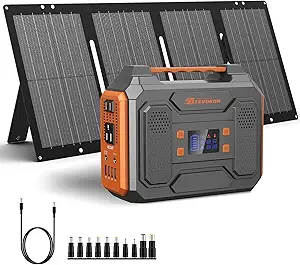 | Best Solar-Ready Starter Kit | Maximum power output: 300W | Solar panel: 60W monocrystalline | Solar conversion efficiency: 20.5% | VIEW LATEST PRICE | See Our Full Breakdown |
| MaiVoz 56,800mAh Portable Charger, 22.5W Fast Charging Power Bank with LED Display |  | Best for Charging Several Phones | Battery capacity: 56,800mAh | Fast-charging output: 22.5W | Ports: 2 USB-A outputs and 1 two-way USB-C port | VIEW LATEST PRICE | See Our Full Breakdown |
| ZeroKor 120W Portable Power Station, 97.6Wh |  | Best Lightweight Power Station | Battery capacity: 97.6Wh / 26,400mAh | Maximum AC output: 120W | AC outlets: 2 | VIEW LATEST PRICE | See Our Full Breakdown |
| Jackery Explorer 300 Portable Power Station, 292Wh |  | Best for Longer Car-Camping Trips | Capacity: 292Wh | Peak output: 600W | AC outlets: 2 | VIEW LATEST PRICE | See Our Full Breakdown |
| BLAVOR 10,000mAh Solar Power Bank with Wireless Charging |  | Best Compact Backup for Day Hikes | Battery capacity: 10,000mAh | Battery type: Lithium-cobalt | USB-C output: 20W | VIEW LATEST PRICE | See Our Full Breakdown |
| portable power banks for camping | Weight | Battery capacity |
|---|---|---|
| HOWEASY Portable Power Station | 2.3 pounds | 88Wh |
| BLAVOR 20,000mAh Solar Power B | — | 20,000mAh |
| MARBERO Portable Power Station | 3.2 pounds | — |
| ALLWEI 300W Portable Power Sta | 6.4 pounds | 256Wh |
| FEELLE 50,000mAh Solar Power B | — | 50,000mAh |
| DaranEner Portable Power Stati | 5.73 lbs | — |
| HOWEASY Portable Power Station | 2.3 lbs | 98Wh |
| Jackery Explorer 1000 v2 Porta | 23.8 lbs | 1,070Wh |
| Anker SOLIX C300 Portable Powe | 4.13kg | — |
| Daran 89.6Wh Portable Power St | 2.54 lbs | 89.6Wh |
| ZeroKor 300W Portable Power St | — | — |
| MaiVoz 56,800mAh Portable Char | — | 56,800mAh |
| ZeroKor 120W Portable Power St | 2.2 lbs | 97.6Wh / 26,400mAh |
| Jackery Explorer 300 Portable | 7.1 lbs in specifications; 7.5 lbs in description | — |
| BLAVOR 10,000mAh Solar Power B | 9.3 ounces | 10,000mAh |
More Details on Our Top Picks
HOWEASY Portable Power Station, 120W (240W Peak), 88Wh
For campers who want an AC outlet without hauling a large station, this 2.3-pound, 88Wh unit is the lightest power-station pick in this group. Its 110V outlet and eight total ports let you charge several small devices or run a modest appliance, while the 120W running limit rules out higher-draw gear. Compared with the MARBERO 88Wh, it weighs less and offers a slightly higher stated running output, but MARBERO also provides USB-C PD and a three-level light. The built-in SOS light, hidden handle, and AC, car, or compatible solar charging make this HOWEASY practical for short trips. The tradeoff is limited stored energy: its capacity is far below the ALLWEI 256Wh, and the solar panel is sold separately.
Pros:- Light 2.3-pound design with a hidden handle is easy to pack and carry.
- Eight ports allow several small devices to charge at the same time.
- Can recharge from an AC outlet, car socket, or compatible solar panel.
- Built-in light includes steady, flashing, and SOS modes.
Cons:- The 120W running output limits appliance choice.
- Compatible solar panel is not included.
- Its 88Wh capacity offers less reserve power than the ALLWEI 256Wh station.
Best for: Solo campers and minimalist weekend hikers who want a lightweight station for phones, cameras, lights, and other low-wattage devices.
Not ideal for: Campers who need to run larger appliances or keep several devices powered for multiple days; 88Wh capacity and 120W continuous output impose firm limits.
- Battery capacity:88Wh
- AC output:110V, 120W (240W peak)
- USB-C output:18W
- Total output ports:8
- Charging methods:AC outlet, 12V/24V car socket, compatible 15V–24V solar panel
- Weight:2.3 pounds
- Dimensions:6.6 × 4 × 3 inches
- Cycle life:More than 1,500 cycles
Our verdict“Choose this HOWEASY for a light, compact station for small electronics, but pick the ALLWEI if you need more stored energy or higher output.”
BLAVOR 20,000mAh Solar Power Bank with Wireless Charging
When a camping group carries a mix of phones and wearables, the BLAVOR 20,000mAh bank cuts down on loose charging leads: it has four built-in cables, three USB ports, and Qi wireless charging for compatible phones and Apple Watch. The stated capacity and 20W USB-C output suit personal electronics, not AC-powered camp equipment. Compared with the FEELLE 50,000mAh, BLAVOR has less capacity and fewer backup power features, but its combination of built-in cables and wireless charging is a convenient fit for mixed-device use. Its IPX5 water resistance and outdoor accessories add practical utility, though they do not make it a power station. Solar charging performance is unspecified, so I would treat it as a small backup option rather than a dependable way to refill the bank off-grid.
Pros:- Four built-in cables and Qi charging reduce the need to pack separate leads.
- Can charge up to six devices at once, according to the product data.
- 20W USB-C output supports faster charging for compatible devices.
- IPX5 water resistance and built-in lighting suit outdoor carry.
Cons:- Solar charging speed and performance are not specified.
- Available output may be divided when charging several devices at once.
- It lacks an AC outlet for appliances and other station-powered gear.
Best for: Small camping groups carrying phones and an Apple Watch who want one shared USB and wireless charger with cables built in.
Not ideal for: Campers who need AC power, substantial solar recharging, or a clearly specified high-output source for appliances.
- Battery capacity:20,000mAh
- USB-C output:20W
- USB ports:3
- Built-in cables:4: two USB-C, one iOS, and one USB-A
- Simultaneous device charging:Up to 6 devices
- Wireless charging:Qi for compatible phones and Apple Watch
- Water resistance:IPX5
- Additional features:Flashlight, camping light, red indicator light, compass, thermometer, carabiner, and rope
Our verdict“Pick the BLAVOR for shared phone and wearable charging, while campers needing a larger reserve and hand-crank backup should compare it with the FEELLE.”
MARBERO Portable Power Station, 88Wh, 120W Surge, 24,000mAh
The MARBERO earns its place for campers who want a small station with a broader mix of charging connections, including USB-C PD alongside AC, USB, and car DC. At 3.2 pounds, it is still compact, but the HOWEASY 88Wh is lighter at 2.3 pounds and lists a 120W AC running output; MARBERO’s data instead states 120W surge and an 80W running limit. That lower continuous ceiling calls for care with appliances. Eight ports help a group charge small electronics, and the three-level LED with SOS adds campsite utility. AC, battery, and compatible solar charging give it multiple recharge paths, although its solar panels are not included. For buyers who need more headroom and a longer-cycle-life battery, the ALLWEI 256Wh LiFePO4 is the stronger step up, at the cost of extra weight.
Pros:- Eight output ports cover AC, USB, USB-C PD, and car DC connections.
- USB-C PD gives compatible devices a dedicated charging option.
- Compact body and ergonomic handle make it easier to carry than larger stations.
- Three brightness levels and SOS mode add useful campsite lighting.
Cons:- The stated 80W running wattage limits appliance use.
- Compatible 30W or 60W solar panel is not included.
- At 3.2 pounds, it is heavier than the similarly sized HOWEASY 88Wh.
Best for: Campers with USB-C devices who want a compact power station for phones, tablets, cameras, and small, low-wattage gear.
Not ideal for: Anyone planning to power appliances near or above 80W continuously, or wanting solar charging hardware included.
- Capacity:88Wh, 24,000mAh
- Running wattage:80W
- Surge power:120W
- Output ports:8
- Charging methods:AC, battery, compatible 30W or 60W solar panel
- Weight:3.2 pounds
- Dimensions:6.5 × 4.6 × 3.1 inches
- Safety features:Battery management system, short-circuit and overload protection, automatic shutdown
Our verdict“Choose MARBERO for its USB-C PD connection mix and compact form, but favor HOWEASY for lower carry weight or ALLWEI for more output and capacity.”
ALLWEI 300W Portable Power Station with 256Wh LiFePO4 Battery
The ALLWEI is the most capable balanced station in this batch: its 256Wh LiFePO4 battery and 300W continuous output give campers more room to run small appliances and recharge personal electronics than either 88Wh station. It remains portable at 6.4 pounds, though it is a substantial step up from the 2.3-pound HOWEASY. The 60W USB-C PD port, six outputs, and pass-through charging suit a campsite with several devices, while AC, car, solar, and AC-plus-solar charging offer flexibility when a suitable panel is available. The listed 3,000-cycle battery rating and five-year warranty add reassurance for repeat trips. Its limits are clear: 300W still excludes high-draw appliances, and the solar panel is separate. Campers who only need phone charging can save weight with a smaller bank.
Pros:- 256Wh LiFePO4 battery provides more capacity than either 88Wh station in this batch.
- 300W continuous and 600W peak output cover more small-appliance needs.
- AC, car, solar, and AC-plus-solar charging offer several recharge routes.
- 60W USB-C PD, pass-through charging, and a five-year warranty add practical flexibility.
Cons:- At 6.4 pounds, it is much heavier than the compact HOWEASY and MARBERO stations.
- Solar panel is sold separately.
- The 300W continuous output still rules out high-draw appliances.
Best for: Car campers and weekend campers who need more reserve power for small appliances, phones, lights, and multiple devices without moving to a much larger station.
Not ideal for: Backpackers prioritizing minimum weight, or campers who need to run high-wattage appliances beyond its 300W continuous limit.
- Battery capacity:256Wh
- Battery type:LiFePO4
- Continuous / peak output:300W / 600W
- Output ports:6: AC, two DC5521, car, USB-A, and USB-C PD
- USB-C PD output:60W
- Recharging methods:AC, 12V car, solar, or AC plus solar
- Weight:6.4 pounds
- Charging time:AC: 3.5–4 hours; car: 3.5–4 hours; solar: 4–5 hours with a 100W panel; dual: 2–2.5 hours
- Warranty:5 years
Our verdict“Choose the ALLWEI for a stronger balance of campsite capacity, output, and recharge options, unless low carry weight matters more than appliance support.”
FEELLE 50,000mAh Solar Power Bank with Magnetic Wireless Charging and Hand Crank
Among the personal-device banks here, the FEELLE offers the largest stated capacity at 50,000mAh, plus four built-in cables, magnetic wireless charging, and three ports. Its four solar panels and hand-crank backup provide extra ways to add power when outlets are unavailable, but the data gives no solar charging rate; I would treat those features as backup options, not a guaranteed refill plan. Compared with the BLAVOR 20,000mAh, FEELLE has more stated capacity and adds a hand crank, while BLAVOR specifies IPX5 water resistance and a 20W USB-C output. Neither replaces a power station: FEELLE’s 5V charging is for phones and similar electronics, not AC appliances. Thick phone cases may also weaken its magnetic charging. This is a bulky-accessory-style choice for device backup, not a lightweight station.
Pros:- 50,000mAh stated capacity provides a larger device-charging reserve than the BLAVOR 20,000mAh.
- Four built-in cables and magnetic wireless charging support several device types.
- Four solar panels and a hand-crank backup provide alternatives when outlets are unavailable.
- Compass, flashlight, backpack hook, and protected construction suit outdoor carry.
Cons:- Solar charging performance depends on sunlight and no charging rate is specified.
- Magnetic charging may be weaker or less efficient through thick phone cases.
- Its 5V power-bank design does not provide AC output for appliances.
Best for: Car campers and emergency-minded travelers who want a high-capacity phone and tablet bank with built-in cables and several backup charging options.
Not ideal for: Backpackers seeking a light, compact charger, or campers who need AC power, a specified solar recharge rate, or reliable appliance support.
- Battery capacity:50,000mAh
- Battery cell type:Lithium polymer
- Wireless charging output:Up to 15W
- USB-C charging:3A; USB-C input/output
- Ports:3
- Built-in cables:USB-C, Phone, Micro-USB, and USB-A
- Solar and backup:4 solar panels and hand-crank backup
- Voltage:5V
- Additional features:Compass, three-mode LED flashlight, backpack hook
Our verdict“Pick FEELLE for high-capacity personal-device backup with multiple fallback features, but choose a power station such as ALLWEI for AC appliances.”
DaranEner Portable Power Station, 192Wh LiFePO4 Battery, 300W Output
The DaranEner 192Wh balances useful camping capacity with a carry weight of 5.73 pounds. Its LiFePO4 battery rated for 3,500+ cycles suits repeat trips, while 300W of AC output can handle small devices but not demanding appliances. Compared with the lighter HOWEASY 98Wh, it offers nearly twice the stored energy and more room for charging phones, lights, or a laptop over a weekend; the tradeoff is carrying extra weight. Two AC outlets, USB ports, and 12V DC output allow up to six devices to connect, though that does not mean every device can draw high power at once. Solar and car recharging add flexibility, but the panels and car cable are not included. The SOS light is useful at camp, but this is still a modest station rather than a cooking-power option.
Pros:- LiFePO4 battery rated for 3,500+ cycles
- 192Wh capacity exceeds the smaller HOWEASY 98Wh for multi-device trips
- AC, car, and solar recharging options
- Built-in LED light includes an SOS mode
Cons:- 300W output rules out high-power appliances
- Solar panels and car charging cables are sold separately
Best for: Campers taking weekend trips who want a durable battery for phones, lighting, and other modest loads.
Not ideal for: Campers planning to run high-wattage appliances or seeking a complete solar setup without buying extra accessories.
- Capacity:192Wh
- Battery chemistry:LiFePO4
- AC output:300W, 600W surge
- USB-C output:60W PD
- Maximum simultaneous devices:6
- Solar input:60W DC maximum
- Battery cycle life:3,500+ cycles
- Weight:5.73 lbs
Our verdict“Choose the DaranEner 192Wh if you want more camping runtime than a pocket-size station while keeping weight and output needs modest.”
HOWEASY Portable Power Station, 98Wh, 135W
At 2.3 pounds, the HOWEASY 98Wh is the easiest of these five stations to pack when every pound matters. Its 135W output and 98Wh capacity fit phones, headlamps, and other small electronics better than appliance-heavy camp setups. Compared with the DaranEner 192Wh, it is less than half the capacity but markedly lighter, making it a sensible choice for a one-night trip or a short hike-in camp where power needs stay limited. A 65W USB-C PD port, two AC outlets, and two DC ports give it useful connection variety, though connecting several devices does not increase its limited energy reserve. It supports wall, car, and solar charging, and the four-mode light adds emergency utility. The stated capacity appears as both 98Wh and 99Wh in the supplied description, so I would not rely on greater runtime than the listed 98Wh suggests.
Pros:- Light 2.3-pound design is easier to carry than the DaranEner 192Wh
- 65W USB-C PD and multiple AC, USB, and DC connections
- Supports wall, car, and solar charging
- Four-mode LED light includes SOS
Cons:- 98Wh capacity limits runtime for extended trips
- 135W output cannot support many larger appliances
- Product description lists both 98Wh and 99Wh capacity figures
Best for: Solo campers and day-trip users who need a lightweight source for phones, lights, and small electronics.
Not ideal for: Groups or multi-day campers who need sustained runtime, or anyone expecting to power larger appliances.
- Battery capacity:98Wh
- Output:135W, 270W peak
- Weight:2.3 lbs
- Dimensions:6.6 × 4 × 3 in
- USB-C output:65W PD
- Charging methods:USB-C PD, solar, car, and wall adapter
- LED light modes:Low, medium, high, and SOS
- Warranty:24 months
Our verdict“Pick the HOWEASY 98Wh for short, weight-conscious outings where portable phone and lighting power matters more than long runtime.”
Jackery Explorer 1000 v2 Portable Power Station
The Jackery Explorer 1000 v2 is the clear capacity leader here: its 1,070Wh battery and 1,500W output can support a much broader campsite setup than the 300W DaranEner 192Wh or Anker SOLIX C300. That extra headroom can matter for campers bringing higher-draw gear, but it comes with a 23.8-pound carry weight that is better suited to car camping than carrying far from the vehicle. Three pure sine wave AC outlets and multiple USB connections help serve a group, while the LFP battery is rated for 4,000 cycles to over 70% capacity. App-controlled charging modes add flexibility, though the fastest one-hour charge requires enabling emergency charging in the app. Solar panels are sold separately, and compatibility is limited to Jackery solar panels, which makes solar expansion less flexible than the other options listed here.
Pros:- Largest listed capacity and AC output in this group
- Three pure sine wave AC outlets support several campsite devices
- LFP battery rated for 4,000 cycles to over 70% capacity
- App offers fast, quiet, and energy-saving charging modes
Cons:- At 23.8 pounds, it is far heavier than the HOWEASY 98Wh or Daran 89.6Wh
- Solar panel is not included and compatibility is limited to Jackery panels
- One-hour charging requires enabling emergency charging in the app
Best for: Car campers and small groups who want to run more demanding gear and can transport a 23.8-pound station by vehicle.
Not ideal for: Backpackers, weight-sensitive campers, or buyers who want to use a solar panel they already own from another brand.
- Battery capacity:1,070Wh
- Output:1,500W, 3,000W surge
- Battery type:LFP
- AC outlets:3 pure sine wave
- USB-C ports:2, up to 100W charging
- Weight:23.8 lbs
- Charge cycle lifespan:4,000 cycles to over 70% capacity
- Full charge time:1 hour with emergency charging enabled; 1.7 hours by default
Our verdict“Choose the Jackery Explorer 1000 v2 for vehicle-based camping when high capacity and appliance support outweigh portability.”
Anker SOLIX C300 Portable Power Station, 288Wh
The Anker SOLIX C300 pairs 288Wh of capacity with 300W running output, giving it more reserve than the DaranEner 192Wh without stepping up to the much heavier Jackery Explorer 1000 v2. Its eight ports make it a strong fit for a campsite with several people charging at once, including three AC outlets and three USB-C ports. A USB-C port can deliver up to 140W, but the station’s 300W total output still limits what it can run overall; plentiful ports are not a substitute for appliance-level capacity. LiFePO4 cells are rated for 3,000 cycles, and wall charging reaches 80% in 50 minutes. Solar, car, and USB-C recharging give it more routes back to power, although panels are not included and compatibility excludes several Anker solar panel models. At 4.13kg, it is compact but not a featherweight.
Pros:- 288Wh capacity exceeds the DaranEner 192Wh
- Eight ports, including three AC outlets and three USB-C ports
- Wall charging reaches 80% in 50 minutes
- LiFePO4 battery rated for 3,000 cycles and quiet 25dB operation
Cons:- 300W running output limits use with higher-power appliances
- Solar panel and shoulder strap are not included
- Not compatible with several Anker solar panel models
Best for: Small camping groups who need several ports and more stored energy than a sub-200Wh station provides.
Not ideal for: Campers needing high-wattage appliance support, a lightweight backpacking unit, or broad compatibility with Anker solar panels.
- Capacity:288Wh
- Running power:300W
- Surge power:600W
- Battery type:LiFePO4
- Charging ports:8 total: 3 AC, 1 car socket, 3 USB-C, 1 USB-A
- USB-C output:Up to 140W per port
- Wall recharge time:80% in 50 minutes
- Weight:4.13kg
Our verdict“Choose the Anker SOLIX C300 if your campsite needs many charging connections and moderate capacity rather than high appliance output.”
Daran 89.6Wh Portable Power Station with LiFePO4 Battery
The Daran 89.6Wh is designed for a different kind of camping kit than the Jackery Explorer 1000 v2: it prioritizes low weight and quiet operation over appliance power. At 2.54 pounds, with a fanless design, it suits tent-side use for phones, lights, and other small electronics without adding much noise or bulk. Its 100W output and 89.6Wh capacity are more limited than the HOWEASY 98Wh, though the Daran specifies LiFePO4 cells rated for over 3,500 cycles and includes a digital display. Seven ports and several charging methods offer flexibility, but the number of connections should not be mistaken for long runtime or high output. The 100W ceiling rules out demanding gear, and solar charging needs optional equipment not included in the package. A four-mode flashlight and 12 battery protections round out its emergency-use features.
Pros:- 2.54-pound design with a carry handle
- LiFePO4 battery rated for over 3,500 cycles
- Fanless operation suits quiet tent-side charging
- Digital display, four-mode flashlight, and 12 battery protections
Cons:- 89.6Wh capacity is limited for multi-day or group use
- 100W maximum output excludes higher-draw devices
- Solar panel and cable are not included
Best for: Solo campers who want a quiet, lightweight station for small electronics and value a long-rated-cycle LiFePO4 battery.
Not ideal for: Campers who need extended runtime, output above 100W, or included solar charging equipment.
- Battery capacity:89.6Wh
- Battery chemistry:LiFePO4
- Maximum output:100W, 200W peak
- Weight:2.54 lbs
- Ports:7: 2 AC, 2 USB-C, 2 USB-A, and 1 DC5521
- USB-C outputs:45W and 15W
- Charging methods:AC wall outlet, USB-C PD, car, and solar
- Battery life:Rated for over 3,500 cycles
Our verdict“Choose the Daran 89.6Wh for quiet, lightweight charging of small devices when capacity and appliance output are secondary.”
ZeroKor 300W Portable Power Station with 60W Solar Panel
The ZeroKor makes the most sense for campers who want a power station and panel in one package, rather than assembling a solar setup separately. Its 300W maximum output and mix of AC, DC, and USB ports can handle phones, tablets, and some small electronics, while the included 60W monocrystalline panel gives you a way to replenish power away from camp outlets. Compared with the Jackery Explorer 300, the ZeroKor includes a panel, but its solar input setup and 300W ceiling still keep it in small-device territory. Built-in protection and reading and SOS flashlight modes add useful campsite functions. The tradeoff is that the panel’s junction box is not waterproof, so it needs protection from rain, and loads above 300W are outside its safe operating range.
Pros:- Includes a 60W monocrystalline solar panel
- Offers AC, DC, and USB outputs for varied small-device charging
- Can recharge from an AC outlet, car port, or compatible solar panel
- Reading and SOS flashlight modes are useful around camp
Cons:- Devices drawing more than 300W are beyond its safe output limit
- Solar panel junction box is not waterproof
- The included 60W panel is a modest recharging source for a power station
Best for: Car campers who want an included solar panel for topping up phones, tablets, and other small electronics.
Not ideal for: Campers planning to run appliances above 300W or leave the solar panel exposed to wet weather.
- Maximum power output:300W
- Solar panel:60W monocrystalline
- Solar conversion efficiency:20.5%
- AC outlets:2; 300W maximum
- USB ports:3 USB ports and 1 quick-charge USB port
- DC port:9V–12.6V, 10A maximum
- Recharging methods:AC outlet, 12V car port, or DC5521 solar panel input (13V–23V); built-in MPPT
- Safety protections:Short-circuit, over-current, over-voltage, overload, and overheating
Our verdict“Choose the ZeroKor if an included solar panel matters more than higher output or a weatherproof solar setup.”
MaiVoz 56,800mAh Portable Charger, 22.5W Fast Charging Power Bank with LED Display
The MaiVoz is a USB-focused battery bank for groups that need to keep several personal devices going, not a substitute for a power station with AC outlets. Its 56,800mAh capacity and three outputs let you charge up to three devices at once, while the percentage display makes it easier to decide whether there is enough reserve for another night away. Compared with the BLAVOR 10,000mAh Solar Power Bank, it offers far more stated capacity and simultaneous wired charging, but gives up that model’s outdoor-rated casing and wireless charging. Its 22.5W fast charging is useful for compatible devices, though the listed output remains far below what a laptop or campsite appliance may need. Another practical limit: the product data says it is not allowed on airplanes because of its capacity, so it suits road trips better than flying to a campsite.
Pros:- Large stated 56,800mAh capacity for USB devices
- Charges up to three devices at once
- Digital display shows remaining battery percentage
- Includes overvoltage, overheating, short-circuit, and overcurrent protection
Cons:- Not allowed on airplanes according to the product data
- Bulkier to carry than a compact bank such as the BLAVOR 10,000mAh
- No AC outlet for appliances or other plug-in gear
Best for: Car-camping groups who want one battery bank to charge several phones or small USB devices and track remaining charge.
Not ideal for: Air travelers, campers needing AC power, or hikers who prioritize a lighter and smaller pack.
- Battery capacity:56,800mAh
- Fast-charging output:22.5W
- Ports:2 USB-A outputs and 1 two-way USB-C port
- Simultaneous charging:Up to 3 devices
- Voltage and output current:5V; 3A
- Battery cell type:Lithium-ion
- Display:Digital LED battery percentage
- Air travel:Not allowed on airplanes due to battery capacity
- Safety protections:Overvoltage, overheating, short-circuit, and overcurrent
Our verdict“Pick the MaiVoz for multi-phone car camping, but skip it if you need AC power or an airline-friendly battery.”
ZeroKor 120W Portable Power Station, 97.6Wh
At 2.2 pounds, this ZeroKor is the easy-carry choice for campers who want AC power without hauling a larger station. Its 97.6Wh capacity and 120W maximum output can support small electronics and low-draw gear, with AC, DC, USB-A, and USB-C connections covering more device types than a simple power bank. Compared with the ZeroKor 300W Portable Power Station with 60W Solar Panel, this model is lighter and easier to pack, but gives up output headroom and does not include a solar panel. That makes it better for short trips and modest charging needs than for powering several devices over an extended stay. The built-in light and safety protections are useful extras, though the 120W ceiling rules out many appliances; the DC output also requires a long press of its button to activate.
Pros:- Light 2.2-pound design with compact listed dimensions
- Provides AC, DC, USB-A, and USB-C outputs
- 97.6Wh capacity in a small power-station format
- Includes an LED light with reading and SOS modes
Cons:- 120W maximum output limits the appliances it can run
- Solar panel is not included
- DC output activation requires a long press of the DC button
Best for: Backpackers and minimalist car campers who need a light station for phones, cameras, and other small electronics.
Not ideal for: Campers running higher-draw appliances or anyone who wants a solar panel included in the box.
- Battery capacity:97.6Wh / 26,400mAh
- Maximum AC output:120W
- AC outlets:2
- Weight:2.2 lbs
- Dimensions:5.7 × 4.4 × 4.1 in
- DC output:12–16.8V, 6A maximum
- USB outputs:1 standard USB-A, 1 QC USB-A, and 1 USB-C
- Recharging methods:USB-C adapter, car USB port, or solar panel (not included)
- Safety protections:Short-circuit, over-current, over-voltage, overload, and overheating
Our verdict“Choose this ZeroKor when low carry weight matters more than appliance support or included solar charging.”
Jackery Explorer 300 Portable Power Station, 292Wh
The Explorer 300 brings a more substantial 292Wh reserve than the two smaller ZeroKor stations, making it a stronger fit for car campers who need to charge several devices across a weekend. It has two AC outlets, USB-C PD, USB-A, and a car port, so it can serve different kinds of camp electronics from one unit. The listed 100W USB-C output is a useful distinction for compatible devices; the ZeroKor 300W includes a solar panel, while this Jackery’s solar panel is sold separately. Its listed 300W rated output still limits appliance choices, and the product data gives conflicting weights and dimensions, so packing plans deserve extra care. The included handle helps with carrying, but at roughly seven pounds it is a car-camping station rather than a natural choice for hiking.
Pros:- 292Wh capacity offers more reserve than the compact ZeroKor 120W
- Includes two AC outlets, USB-C PD, USB-A, and a car port
- 100W USB-C PD supports compatible higher-power devices
- Supports solar charging with compatible Jackery panels
Cons:- Solar panel is sold separately
- Listed weight and dimensions are inconsistent
- 300W rated output rules out many higher-draw appliances
Best for: Car campers who want several hundred watt-hours for phones, laptops, and modest AC-powered gear over a multi-day trip.
Not ideal for: Backpackers seeking a light battery, or buyers who need solar charging hardware included and consistent size information.
- Capacity:292Wh
- Peak output:600W
- AC outlets:2
- Ports:100W USB-C PD, 2 USB-A, and 120W car port
- Battery chemistry:LiFePO4
- Weight:7.1 lbs in specifications; 7.5 lbs in description
- Solar panel:Not included; supports compatible Jackery panels
- Model number:JE-300E
Our verdict“Choose the Explorer 300 for a larger, versatile car-camping reserve, provided you can verify its dimensions and do not need an included panel.”
BLAVOR 10,000mAh Solar Power Bank with Wireless Charging
The BLAVOR is the most pocketable, weather-ready option here: at 9.3 ounces, it suits day hikes and campsite use where a full power station would be excessive. Its 10,000mAh capacity, 20W USB-C output, and Qi charging cover common phone needs, while an IPX5 case and built-in flashlights add practical outdoor touches. Compared with the MaiVoz 56,800mAh, it is much easier to carry and adds wireless charging, but its smaller capacity means less reserve for multiple devices or several nights away. Although the name highlights solar, the supplied product data does not specify solar charging speed, so I would treat any solar function as a bonus rather than a dependable way to refill it. Its capacity is best matched to phone top-ups, not extended group use.
Pros:- Lightweight 9.3-ounce design for day trips
- Supports Qi wireless charging and 20W USB-C output
- IPX5 water resistance with dustproof and shockproof claims
- Includes dual flashlights and a compass carabiner
Cons:- 10,000mAh capacity offers limited reserve for multiple devices or long trips
- Solar charging performance and speed are not specified
- Wireless charging may be less convenient when charging multiple devices at once
Best for: Day hikers and minimalist campers who want a light, weather-resistant backup for a phone and appreciate Qi charging.
Not ideal for: Groups or multi-night campers who need repeated device charges, or buyers relying on solar input as their main recharge source.
- Battery capacity:10,000mAh
- Battery type:Lithium-cobalt
- USB-C output:20W
- Ports:3
- Wireless charging:Qi compatible
- Water resistance:IPX5
- Weight:9.3 ounces
- Dimensions:5.91 × 3.07 × 0.87 inches
- Battery charge time:4 hours
Our verdict“Pick the BLAVOR for a compact phone backup on short outings, not as the main power source for a multi-day camp.”
How We Picked
I compared these 15 products as camping gear, not as interchangeable battery packs. The main criteria were usable capacity, output and port variety, portability, battery type, charging options, and whether the design fits a realistic campsite routine. I gave more weight to products whose capacity and output suit a clear camping need than to headline features that may be less useful away from reliable sunlight or a vehicle.
The ranking reflects tradeoffs rather than capacity alone. Larger stations can support more devices but add bulk; compact banks are easier to carry but are best for phones and other small electronics. I also separated solar power banks from power stations, since their form factor and likely role differ. Products with similar capacity were judged by their output and chemistry, while premium-capacity options were weighed against the extra space and weight they ask campers to carry.
Factors to Consider When Choosing Portable Power Banks For Camping
Before choosing, match the power source to your actual campsite routine. I’d start with the devices you need to charge, how long you’ll be away from an outlet, and how much weight you’re willing to carry. These factors help prevent both overbuying a bulky station and underbuying a small bank that runs short.
Match capacity to the devices you will use
List each device, how often you expect to use it, and whether it needs occasional charging or steady power. Phone-only campers may have little use for a large station, while camera batteries, lights, and several people’s devices can quickly make a compact bank feel limiting. Battery capacity figures are not the same as energy delivered to every device, because conversion and charging losses reduce usable power. Allow a reserve for colder conditions, unexpected delays, or extra phone use. A common mistake is choosing by the largest capacity number without asking whether the resulting size belongs in your pack or vehicle.
Check output before planning around appliances
Capacity tells you how much energy is stored; output tells you which devices the unit can run at a given moment. Check the device’s power requirement and compare it with the bank’s output rating, including any surge limit for equipment that draws more power when starting. A USB charging bank may be fine for phones but cannot substitute for a station with suitable AC output. Do not assume that a product described as a power station can handle every appliance. For camping, choosing around a small set of must-run devices is usually more practical than expecting one battery to power an entire home routine.
Balance carry weight with trip length
For backpacking, every extra pound competes with food, water, and shelter, so a modest capacity may be the better choice even if it means rationing device use. At a car campsite, a larger station can make sense because it does not need to ride in your pack. Think about the journey from the vehicle to the site, not just the campsite itself. If the setup requires repeated trips or a long walk, handles and compact dimensions matter alongside the battery specifications. A frequent buying mistake is selecting a high-capacity model for its flexibility without accounting for how rarely that extra capacity will be worth carrying.
Treat solar charging as a plan, not a guarantee
Solar input can extend a trip, but actual charging depends on sunlight, panel placement, weather, and the power bank’s supported input. A built-in solar feature on a small bank may be more useful as a backup than as a dependable way to refill it quickly. Separate panels can offer more flexibility, but add gear and require setup space. Before relying on solar, check whether the panel is included, its output, and the charging connection supported by the battery. If you camp under trees or move often, begin with a full charge and treat solar as supplemental rather than your only recharge method.
Choose battery chemistry and features for your use
Battery chemistry, port layout, and charging convenience can shape long-term satisfaction as much as capacity. LiFePO4 models may appeal to buyers who prioritize cycle life, while a lighter personal bank may better suit someone who only needs to charge a phone. Wireless charging, built-in lights, and multiple charging methods can be handy, but each is a secondary feature if the core output does not fit your devices. Check whether the ports remain accessible when the unit is stored and whether the controls are practical in low light. Pay more for features you will use repeatedly, not a long list that adds little to your camping routine.
Frequently Asked Questions
Can a portable power bank run a camping fridge?
It depends on the fridge’s power draw, startup requirements, and how long you need it to run. A small USB power bank is not a suitable substitute for a power station with compatible output. Compare the fridge’s wattage with the station’s continuous output, then estimate energy use across the full trip rather than focusing only on the first startup. Frequent opening, warm weather, and limited recharging can all shorten runtime. If food storage depends on it, choose a station with a comfortable capacity margin and a reliable recharge plan.
Is a solar power bank enough for a weekend camping trip?
It may be enough for light phone charging, especially if you start with the bank fully charged and keep device use modest. Built-in solar panels are often better treated as a slow top-up than as a full recharge source. Shade, cloudy weather, and changing the panel’s angle can limit incoming energy. For a weekend with several people or power-hungry devices, a larger capacity or a separate compatible panel may be a better fit. Decide based on your expected use and access to sun, not the word “solar” alone.
Should I bring one large power station or several small banks?
One larger station is more versatile for a vehicle-based camp and can serve several devices, but it is heavier and creates a single point of failure if it runs out. Several small banks are easier to share and carry on foot, though they may offer fewer output options and require more tracking and charging. Consider whether your group needs power in one shared location or throughout the day while moving around. For backpacking, distributing modest capacity can be more practical; for a car campsite, centralized power can simplify charging. Your device mix and carrying distance should decide the format.
How much battery capacity should I bring for a two-night trip?
There is no single capacity that fits every two-night trip, because phone use, navigation, cameras, lights, and group size change the energy demand. Estimate how many charges each device needs, then choose a bank with some reserve rather than matching your estimate exactly. Remember that a station’s rated capacity is not all delivered to your devices. If you only need emergency phone power, a compact bank may be enough; adding cameras or several campers points toward a larger option. A written charging plan can reveal whether extra capacity is useful or just extra weight.
Do I need AC outlets if I already have USB-C devices?
Not necessarily. If every device charges through USB and the bank provides suitable USB output, AC outlets may add bulk without helping your setup. AC becomes useful when a required device has a wall adapter and no practical USB charging option. Check each device’s input requirements before choosing, since an outlet alone does not guarantee the power station can support its wattage. USB-C can be a more direct fit for phones, tablets, and some laptops. Choose AC for a specific need, not as a default feature.
Conclusion
For most car campers who want a balance of capacity and manageable size, I’d start with the Anker SOLIX C300 as the best overall choice. The ZeroKor 120W is a value-minded option for simpler, lower-output needs, while the Jackery Explorer 1000 v2 is the premium pick for campers who need substantially more capacity and accept a larger unit. Beginners who mainly charge personal devices can start with the BLAVOR 20,000mAh rather than carrying a power station they may not use fully. For buyers prioritizing LiFePO4 chemistry, compare the ALLWEI 300W with the smaller DaranEner and Daran options according to the output and capacity your devices require. Match your choice to your trip length, device list, and carrying distance; those needs matter more than choosing the largest battery in the lineup.
Columbus Day / Indigenous Peoples' Day Picks
long weekend sales
As an affiliate, we earn on qualifying purchases.