For alpine climbing, my best overall pick in this roundup is the Petzl Altitude harness, which prioritizes a lightweight, mountaineering-focused setup; the Grivel Air Tech Evo crampon stands out for technical snow and ice, while the Petzl BOREO helmet offers a more general-purpose protective option. The right choice depends on whether you value low weight, durable versatility, or specialized performance for a particular route. These 14 products cover different jobs, so they are not interchangeable—and a harness or lanyard cannot replace route-specific protection or training. Match each item to your climbing system, conditions, and skills before buying. Continue reading for the full comparison, selection criteria, and advice on building a compatible alpine kit.

Get emergency and outdoor gear delivered free with Prime
- Fast, free delivery on millions of items
- Prime Video, Amazon Music and more included
- Member-only deals all year
Key Takeaways
- Purpose-built alpine gear leads for weight-conscious objectives: the Petzl Altitude, EDELRID Loopo Lite, and CAMP Alp Race are more specialized choices than the Ocun Neon 3 or KAILAS Airo B3.
- Crampon choice hinges on terrain and boot fit: the Grivel Air Tech Evo and CAMP Peak 12 serve different priorities, and neither should be chosen without checking boot compatibility and route demands.
- Protection and connection tools solve different problems: the BOREO helmet protects against impacts, while the Petzl Dual Connect Adjust, Metolius Alpine PAS, and Singing Rock I Lanyard are connection options with different handling and use cases.
- The belay and ascent tools need system-level judgment: the Mammut Nordwand Alpine Belay Device and Wild Country Ropeman 1 are specialized components whose suitability depends on rope, technique, and the rest of the system.
- One-size-fits-all gear is not a safe assumption: harness fit, crampon attachment, rope diameter, and intended use can matter more than a product’s category label or low weight.
| Mammut Nordwand Alpine Belay Device, Black, One Size |  | Best Lightweight Belay Device | Brand: Mammut | Material: 100% aluminium | Weight: 80 g | VIEW ON AMAZON | See Our Full Breakdown |
| Petzl Altitude Lightweight Mountaineering Harness |  | Best for Ski Touring and Crampon Use | Brand: Petzl | Weight: 150 g | Materials: Nylon, polyester, high-modulus polyethylene, aluminum | VIEW ON AMAZON | See Our Full Breakdown |
| Metolius Alpine PAS Personal Anchor System, Purple/Silver |  | Best Compact Personal Tether | Material: UHMWPE | Webbing: 11 mm Monster Sling | Strength: 14 kN | VIEW ON AMAZON | See Our Full Breakdown |
| Petzl BOREO Climbing Helmet |  | Best Multi-Activity Helmet | Construction: ABS shell with EPP/EPS foam liner | Certifications: CE EN 12492, UKCA, UIAA | Ventilation: Large ventilation holes | VIEW ON AMAZON | See Our Full Breakdown |
| Ocun Neon 3 Rock Climbing Harness |  | Best Comfort-Focused Harness | Material: Abrasion-resistant microfiber | Waist buckle: One slide-lock stainless steel buckle | Leg-loop buckles: Two self-locking stainless steel buckles | VIEW ON AMAZON | See Our Full Breakdown |
| EDELRID Loopo Lite Ski Touring Harness, Light Grey, Small |  | Best for Lightweight Ski Mountaineering | Size: Small | Weight: 3.7 oz | Color: Light grey | VIEW ON AMAZON | See Our Full Breakdown |
| Petzl Dual Connect Adjust Adjustable Double Lanyard for Climbing and Mountaineering |  | Best for Adjustable Anchor and Rappel Setups | Fixed arm length: 45 cm | Adjustable arm length: 15–95 cm | Weight: 160 g | VIEW ON AMAZON | See Our Full Breakdown |
| Grivel Air Tech Evo 12-Point Mountaineering Crampon |  | Best Steel Crampon for Mixed Alpine Routes | Points: 12 (8 front, 4 rear) | Material: Chromoly steel | Anti-balling system: Front and rear Antibott plates | VIEW ON AMAZON | See Our Full Breakdown |
| Black Diamond Camalot C4 #2 Rock Climbing Cam |  | Best for Protecting Wider Alpine Cracks | Size: #2 | Weight: 140 g | Materials: Aluminum, nylon | VIEW ON AMAZON | See Our Full Breakdown |
| C.A.M.P. Peak 12 Aluminum Crampons |  | Best Lightweight Crampon for Snow Travel | Model: Peak 12 Alu | Material: 7075 aluminum | Weight: 545 g | VIEW ON AMAZON | See Our Full Breakdown |
| KAILAS Airo B3 Rock Climbing Harness | 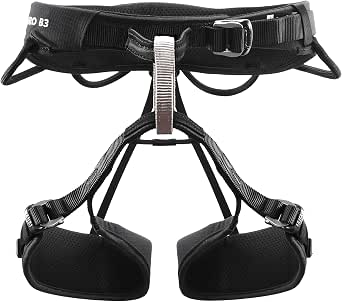 | Best for Young Beginner Climbers | Harness type: Half-body | Sizes: XXS: up to 45 kg (99 lbs), 110–150 cm tall; XS: up to 50 kg (110 lbs), 110–160 cm tall | Material: CORDURA fabric with reinforced stitching | VIEW ON AMAZON | See Our Full Breakdown |
| C.A.M.P. Alp Race Ski Mountaineering Harness |  | Best for Ultralight Ski Mountaineering | Weight: 68 g (2.4 oz, medium) | Fabric: Nylon | Leg loops: Fixed | VIEW ON AMAZON | See Our Full Breakdown |
| Wild Country Ropeman 1 Ascender |  | Best for Rope-Based Self-Rescue | Rope diameter: 10–13 mm | Weight: 2.19 oz | Certifications: CE EN567, UIAA 126 | VIEW ON AMAZON | See Our Full Breakdown |
| Singing Rock I Lanyard |  | Best for Fall-Arrest System Setups | Material: Polyester blend | Weight: 27.22 g | Dimensions: 9.5 × 5 × 1 in | VIEW ON AMAZON | See Our Full Breakdown |
| mountaineering safety gear for alpine climbing | Weight | Material | Color |
|---|---|---|---|
| Mammut Nordwand Alpine Belay D | 80 g | 100% aluminium | Black |
| Petzl Altitude Lightweight Mou | 150 g | — | White/Turquoise |
| Metolius Alpine PAS Personal A | 2.08 oz | UHMWPE | Purple/Silver |
| Petzl BOREO Climbing Helmet | 10.58 ounces | — | Orange |
| Ocun Neon 3 Rock Climbing Harn | — | Abrasion-resistant microfiber | — |
| EDELRID Loopo Lite Ski Touring | 3.7 oz | — | Light grey |
| Petzl Dual Connect Adjust Adju | 160 g | — | — |
| Grivel Air Tech Evo 12-Point M | 458 g | Chromoly steel | — |
| Black Diamond Camalot C4 #2 Ro | 140 g | — | Yellow |
| C.A.M.P. Peak 12 Aluminum Cram | 545 g | 7075 aluminum | — |
| KAILAS Airo B3 Rock Climbing H | — | CORDURA fabric with reinforced stitching | — |
| C.A.M.P. Alp Race Ski Mountain | 68 g (2.4 oz, medium) | — | — |
| Wild Country Ropeman 1 Ascende | 2.19 oz | — | — |
| Singing Rock I Lanyard | 27.22 g | Polyester blend | White/Eye Red |
More Details on Our Top Picks
Mammut Nordwand Alpine Belay Device, Black, One Size
At 80 g, the Mammut Nordwand Alpine is a compact choice for climbers who want a belay device suited to mountaineering and trekking without adding much weight to a kit. Its aluminium construction keeps the design simple, but the supplied information does not specify rope compatibility, braking modes, or performance characteristics. That makes it harder to choose confidently for a particular rope or alpine belay setup than the more fully detailed Petzl Altitude harness, whose use case and equipment organization are spelled out. The Nordwand makes the most sense for buyers who can confirm compatibility against the device manual and their climbing system. Its tradeoff is limited product detail: the low weight is clear, while the specific handling capabilities are not.
Pros:- Lightweight 80 g aluminium construction
- Designed for mountaineering and trekking
- One-size format keeps selection straightforward
Cons:- No rope-diameter compatibility information is provided
- No belay-mode or braking-performance details are listed
Best for: Alpine climbers and trekkers who prioritize low carried weight and can verify the device’s rope compatibility and use instructions before relying on it.
Not ideal for: New climbers or anyone choosing a belay device without guidance; the provided product details do not identify rope diameters or supported belay modes.
- Brand:Mammut
- Material:100% aluminium
- Weight:80 g
- Color:Black
- Size:One size
- Intended use:Mountaineering and trekking
- Included components:Belay device and manual
- Model number:2040-01602
Our verdict“Choose the Nordwand when low weight matters and you can confirm its compatibility with your rope and belay system.”
Petzl Altitude Lightweight Mountaineering Harness
The Petzl Altitude is built around a practical alpine problem: getting a harness on or off while wearing skis or crampons. At 150 g, it also packs more easily than a comfort-focused harness such as the Ocun Neon 3, which adds padded waist and leg areas for rock climbing. The Altitude instead favors low bulk, a glove-friendly DoubleBack Light buckle, and integrated loops for organizing equipment, including ice-screw keeper loops on the legs. That makes it a better match for ski touring and fast-moving alpine objectives than long sessions where padding matters. Its unpadded waistbelt and leg loops are a real comfort tradeoff, and the product details are inconsistent about the number of gear loops, so buyers should check the current configuration before planning a rack.
Pros:- Can be put on or removed while wearing skis or crampons
- Lightweight 150 g design packs compactly
- Glove-friendly DoubleBack Light buckle
- Integrated waistbelt and ice-screw keeper loops help organize gear
Cons:- Waistbelt and leg loops have no foam padding
- Provided details differ on the number of gear loops
Best for: Ski tourers and alpine climbers who need a lightweight harness that can be put on or removed over skis or crampons.
Not ideal for: Climbers prioritizing padded support for extended hanging or long rock routes, or buyers who need unambiguous gear-loop counts before organizing equipment.
- Brand:Petzl
- Weight:150 g
- Materials:Nylon, polyester, high-modulus polyethylene, aluminum
- Buckle:DoubleBack Light
- Size:Medium-Large
- Color:White/Turquoise
- Equipment loops:Four integrated waistbelt loops; keeper loops for ice screws on each leg
- Shelf life:10 years
- Warranty:3 years
Our verdict“Pick the Altitude for ski touring and crampon-heavy alpine days when packability and easy access matter more than padding.”
Metolius Alpine PAS Personal Anchor System, Purple/Silver
The Metolius Alpine PAS earns its place for climbers who want a compact, adjustable personal tether rather than a multipurpose lanyard. Its 11 mm Monster Sling webbing weighs 2.08 oz and is described as over 40% lighter than the original PAS, a useful difference when small pieces of hardware add up on an alpine rack. The stated 14 kN strength and 36.5-inch length give buyers concrete details to compare, while the adjustable design offers more flexibility than a fixed-length tether such as the Singing Rock I Lanyard. It is explicitly intended for personal tether use only, however; it should not be treated as a general-purpose climbing connection or a substitute for understanding the anchor system. Buyers should also follow the manufacturer’s instructions for setup and use.
Pros:- Weighs 2.08 oz and is stated to be over 40% lighter than the original PAS
- Adjustable design offers length flexibility
- Compact webbing stores easily with climbing gear
- Specified 14 kN strength and 36.5-inch length
Cons:- Intended for personal tether use only
- Its single-purpose design is less versatile than a double lanyard such as the Petzl Dual Connect Adjust
Best for: Alpine climbers seeking a light, adjustable personal tether for organized attachment at anchors.
Not ideal for: Anyone looking for a multipurpose lanyard or a device for uses beyond personal tethering.
- Material:UHMWPE
- Webbing:11 mm Monster Sling
- Strength:14 kN
- Length:36.5 in (93 cm)
- Weight:2.08 oz
- Fit:Adjustable
- Color:Purple/Silver
- Intended use:Personal tether only
Our verdict“Choose the Alpine PAS if you want a lightweight, adjustable personal tether and do not need a multi-use lanyard.”
Petzl BOREO Climbing Helmet
The Petzl BOREO is the most broadly specified head-protection option in this batch, with an ABS shell and EPP/EPS foam liner designed to protect the top, sides, front, and rear of the head. Its certified climbing and mountaineering use, large ventilation holes, and four headlamp clips suit varied mountain days that may include climbing, caving, or via ferrata. Compared with the lightweight Petzl Altitude harness, the BOREO prioritizes durable protective coverage rather than minimal carried weight; at 10.58 oz, it is not the pick for someone counting every gram. The product data does not list adjustment features or fit range beyond Small-Medium, so buyers should confirm that size and fit work for them. Its wider activity range is useful, but the listed weight and size limit its appeal to some alpine users.
Pros:- ABS shell and EPP/EPS liner provide coverage around the top, sides, front, and rear
- CE EN 12492, UKCA, and UIAA certifications are listed
- Large ventilation holes support airflow
- Four clips provide headlamp attachment points
Cons:- Listed weight is 10.58 oz, which may not suit gram-conscious alpine kits
- Only Small-Medium sizing is specified in the provided details
- Adjustment and fit-range details are not provided
Best for: Climbers and mountaineers seeking a certified helmet for varied activities, with headlamp attachment points for low-light starts or finishes.
Not ideal for: Weight-focused alpine climbers who need a lighter helmet, or buyers whose head size falls outside the listed Small-Medium size.
- Construction:ABS shell with EPP/EPS foam liner
- Certifications:CE EN 12492, UKCA, UIAA
- Ventilation:Large ventilation holes
- Headlamp attachment:4 clips
- Size:Small-Medium
- Dimensions:10.04 x 8.07 x 5.91 inches
- Weight:10.58 ounces
- Color:Orange
- Warranty:3 years
Our verdict“Choose the BOREO for durable, multi-activity head protection if its listed size fits and its weight suits your alpine kit.”
Ocun Neon 3 Rock Climbing Harness
Where the Petzl Altitude pares back padding to suit ski touring and crampon access, the Ocun Neon 3 takes the opposite approach with a padded waistbelt and breathable, padded leg loops. That makes it the more comfort-oriented choice for rock climbing and longer periods in a harness, while its four reinforced gear loops provide organized rack space. Stainless steel waist and leg-loop buckles and tie-in wear indicators add useful details for regular climbing use. Those features come with a less alpine-specific profile than the Altitude, which is designed to go on over skis or crampons. Ocun does not provide sizing or weight in the supplied information, so fit and pack-weight comparisons are difficult. Buyers planning fast, weight-conscious alpine travel may prefer the Altitude’s defined low weight; those who value padding may favor the Neon 3.
Pros:- Padded waistbelt and breathable, padded leg loops
- Three stainless steel buckles for waist and leg-loop adjustment
- Four reinforced gear loops
- Tie-in wear indicators make inspection points visible
Cons:- No sizing information is provided
- No weight information is provided
- Lacks the stated over-skis-or-crampons access feature of the Petzl Altitude
Best for: Rock climbers who value padded support, four reinforced gear loops, and visible wear indicators at the tie-in points.
Not ideal for: Ski tourers and fast-and-light alpine climbers who need a harness designed for use over skis or crampons, or buyers who need weight and sizing details before purchase.
- Material:Abrasion-resistant microfiber
- Waist buckle:One slide-lock stainless steel buckle
- Leg-loop buckles:Two self-locking stainless steel buckles
- Buckle steel:SS-420J2
- Buckle sizes:2 × 15 mm, 1 × 20 mm
- Certification:CE EN 12277 Type C, UIAA 105
- Gear loops:4 reinforced
- Warranty:2 years
Our verdict“Choose the Neon 3 for padded support and organized rock-climbing gear storage, but favor the Altitude for ski touring and weight-focused alpine use.”
EDELRID Loopo Lite Ski Touring Harness, Light Grey, Small
The EDELRID Loopo Lite is the specialist choice here for climbers who need a harness they can put on without taking off skis or crampons. Its 3.7-ounce weight and compact pack size keep bulk low on approaches, while adjustable leg loops make it easier to fit over changing layers. Reflective tie-in loops add visibility in low light, a useful detail on early starts and glacier routes. Compared with the Petzl Altitude, this model emphasizes ski-on access and detachable elastic straps; it is less suited to general-purpose climbing than a more versatile harness. The tradeoff is a narrow use case: its lightweight build and four textile gear loops suit alpine travel, not carrying a large rack or frequent crag sessions. I’d choose it when fast transitions matter more than broad utility.
Pros:- Very light at 3.7 oz and compact to pack
- Can be put on without removing skis or crampons
- Adjustable leg loops accommodate changing layers
- Reflective tie-in loops improve visibility in low light
Cons:- Specialized design is less versatile for general climbing
- Four textile gear loops may be limiting for climbers carrying a larger rack
Best for: Ski tourers and high-altitude climbers who need a lightweight harness that can be donned while wearing skis or crampons.
Not ideal for: Climbers seeking one harness for cragging, trad rack carrying, and alpine routes; its specialized construction is focused on ski touring and mountaineering.
- Size:Small
- Weight:3.7 oz
- Color:Light grey
- Fabric:100% synthetic
- Certification:EN 12277 Type C
- Adjustable leg loops:Yes
- Gear loops:Four textile gear loops
- Origin:Made in the USA or imported
Our verdict“Choose the Loopo Lite if you prioritize low weight and putting on a harness without removing skis or crampons over all-around versatility.”
Petzl Dual Connect Adjust Adjustable Double Lanyard for Climbing and Mountaineering
The Petzl Dual Connect Adjust combines a fixed tether with an adjustable one, letting a climber stay connected while setting up a rappel or positioning at an anchor. Its adjuster is designed for one-handed length changes, which can make fine positioning easier when managing ropes and hardware. The adjustable arm spans 15–95 cm, while the 45 cm fixed arm provides a second connection point. Unlike the Metolius Alpine PAS, this is a dynamic-rope lanyard with an adjustable arm rather than a series of fixed-length loops; it also requires two locking carabiners, sold separately. Its limits matter: it is intended for use below the anchor point, where fall factor is less than 1, not as a fall-arrest tether above an anchor. The 160 g weight and extra hardware make it less minimal than a simple single tether.
Pros:- Fixed and adjustable arms support two connection tasks
- Ergonomic adjuster allows one-handed length changes
- Dynamic rope helps reduce force in a short fall
- Adjustable arm ranges from 15 to 95 cm
Cons:- Two locking carabiners are required and not included
- Must be used below the anchor point where fall factor is less than 1
- At 160 g, it is heavier than a minimal single tether
Best for: Alpine climbers and multipitch leaders who want separate fixed and adjustable arms for anchor positioning and rappel setup.
Not ideal for: Climbers who need a complete ready-to-clip kit or a tether for use above an anchor; carabiners are not included and the use restrictions are specific.
- Fixed arm length:45 cm
- Adjustable arm length:15–95 cm
- Weight:160 g
- Materials:Polyamide, aluminum, thermoplastic elastomer (TPE)
- Carabiners:Two locking carabiners required; not included
- Attachment:Girth hitch to the belay loop
- Care instructions:Hand wash only
- Model:L035BA00
Our verdict“Pick this lanyard for versatile anchor positioning and rappel setup if you already have compatible locking carabiners and can follow its use limits.”
Grivel Air Tech Evo 12-Point Mountaineering Crampon
For routes that move between glacier snow, couloirs, and mixed rock and ice, the Grivel Air Tech Evo offers the broadest terrain focus among these two crampon picks. Its 12 chromoly-steel points provide a durable platform for varied alpine use, while front and rear Antibott plates help limit snow buildup underfoot. Multiple binding options let buyers match the crampon to compatible mountaineering boots, but boot fit is a prerequisite rather than a minor detail. Compared with the C.A.M.P. Peak 12 Alu, the Grivel’s steel construction favors durability on demanding mixed terrain; the C.A.M.P. aluminum model is lighter and better aligned with snow travel and ski touring. At 458 g, the Grivel is not weightless, and its alpine-specific bindings make it a poor fit for ordinary hiking footwear.
Pros:- 12-point steel design suits varied alpine terrain
- Chromoly-steel construction is built for demanding mountaineering use
- Front and rear Antibott plates help reduce snow buildup
- Several binding systems support compatible boot types
Cons:- Heavier than the aluminum C.A.M.P. Peak 12 Alu
- Requires compatible mountaineering boots
- Specialized for alpine and glacier use rather than general hiking
Best for: Alpine climbers using compatible mountaineering boots on routes that mix glacier travel, snow couloirs, and rock or ice.
Not ideal for: Ski tourers who put the lowest crampon weight first, or hikers hoping to use ordinary flexible footwear.
- Points:12 (8 front, 4 rear)
- Material:Chromoly steel
- Anti-balling system:Front and rear Antibott plates
- Binding options:New-Matic EVO, New-Classic EVO, Cramp-O-Matic EVO, Dual-Matic EVO
- Boot size:EU 35–47
- Certification:CE EN 893:2019 and UIAA
- Weight:458 g
- Model number:GV-RAATNME
Our verdict“Choose the Air Tech Evo for durable, mixed-terrain alpine use if its binding system fits your mountaineering boots.”
Black Diamond Camalot C4 #2 Rock Climbing Cam
The Camalot C4 #2 adds active protection for alpine routes with cracks too wide or irregular for a passive placement alone. Its dual-axle design gives the cam a wide expansion range, making it more adaptable across varied crack widths than a fixed-size protection piece. Hot-forged lobes and a Dyneema sling are intended for durable use, and this version is described as up to 10% lighter than previous versions. Unlike the Petzl Dual Connect Adjust, which connects a climber to an anchor, the Camalot protects the rope in a suitable rock placement; it serves a different job in an alpine safety kit. Its main compromise is size-specific utility: a #2 only helps where the rock accepts that range, so it cannot replace a balanced rack. The supplied details do not specify a camming range or strength rating, so check the manufacturer’s current information before use.
Pros:- Dual-axle design offers a wide expansion range
- Can suit irregular and flaring crack placements
- Hot-forged lobes are designed for durable use
- Dyneema sling and reduced weight versus previous versions
Cons:- A single #2 size covers only placements within its camming range
- Rock protection is not a substitute for glacier or snow safety equipment
- Camming range and strength rating are not provided in the supplied product details
Best for: Trad and alpine climbers building a rack for routes with wider or irregular cracks that suit a #2 cam.
Not ideal for: Climbers who need snow or glacier protection, or anyone building a rack without confirming the route’s crack sizes and the cam’s current technical specifications.
- Size:#2
- Weight:140 g
- Materials:Aluminum, nylon
- Construction:Dual axle, hot-forged lobes
- Sling:Dyneema
- Color:Yellow
- Unit count:1
- Country of origin:USA
Our verdict“Add the Camalot C4 #2 when your alpine route calls for a matching wide-crack placement, not as a stand-alone protection solution.”
C.A.M.P. Peak 12 Aluminum Crampons
The C.A.M.P. Peak 12 Alu is the lighter-duty, snow-focused alternative to the steel Grivel Air Tech Evo. Its 7075 aluminum construction and 12-point layout suit firm snow, glacier approaches, and ski touring, while the adjustable Boot Adapt System accommodates ski and mountaineering boots across sizes 36–50. A folding micrometric linking bar helps the crampons pack more compactly. The included automatic and semi-automatic configurations add flexibility, but the correct setup depends on boot compatibility; buyers need to match the binding to their footwear rather than assume every boot works. At 545 g, it is listed as lightweight for this role, though it is heavier than the Grivel’s stated 458 g, so the weight advantage should not be assumed from material alone. Aluminum is the tradeoff for lower-weight snow use, not the pick I’d favor for repeated hard mixed-rock contact.
Pros:- 7075 aluminum construction targets lightweight snow travel
- 12-point design provides traction on firm alpine terrain
- Adjustable Boot Adapt System fits a broad listed size range
- Folding linking bar packs compactly
Cons:- Aluminum is less suited than the Grivel’s steel construction to repeated hard mixed-terrain use
- Boot compatibility depends on the selected binding configuration
- At 545 g, it is not lighter than the Grivel Air Tech Evo based on the listed weights
Best for: Ski tourers and mountaineers who need crampons for snow and firm alpine terrain and want adjustable compatibility with suitable ski or mountaineering boots.
Not ideal for: Climbers expecting frequent hard mixed-rock use or buyers whose boots do not match the included automatic or semi-automatic bindings.
- Model:Peak 12 Alu
- Material:7075 aluminum
- Weight:545 g
- Size:36–50
- Point design:12-point
- Boot compatibility:Ski and mountaineering boots
- Configurations:Automatic and semi-automatic
- Included components:Case, antibott, crampons
Our verdict“Choose the Peak 12 Alu for snow-focused touring and mountaineering if its binding configuration fits your boots and mixed-rock durability is not your priority.”
KAILAS Airo B3 Rock Climbing Harness
The KAILAS Airo B3 is the clearest fit here for children and new climbers who need a straightforward half-body harness for indoor sessions and outdoor routes. Its CE and UIAA certifications, reinforced stitching, and quick buckle fastening offer a practical combination for supervised climbing, while lightweight CORDURA fabric keeps the design simple to wear. Compared with the Ocun Neon 3, which is listed as a general climbing harness, the Airo B3 is specifically sized for smaller climbers; the tradeoff is that only XXS and XS sizes are listed, with weight and height limits. It is not a specialist alpine harness, so I would not choose it as an adult mountaineering harness or for a growing climber without checking fit carefully. Hand washing also takes more care than machine-washable gear.
Pros:- CE and UIAA certified
- Lightweight CORDURA construction with reinforced stitching
- Quick-buckle fastening simplifies fitting
- Specified for both indoor and outdoor climbing
Cons:- Only XXS and XS sizes are listed, limiting fit options
- Hand wash only
- Not presented as a specialist alpine or ski-mountaineering harness
Best for: Parents and climbing instructors seeking a certified, lightweight harness for children or smaller beginners climbing indoors and outdoors.
Not ideal for: Adult alpine climbers or families seeking room to grow; only XXS and XS sizing is listed, with stated weight and height limits.
- Harness type:Half-body
- Sizes:XXS: up to 45 kg (99 lbs), 110–150 cm tall; XS: up to 50 kg (110 lbs), 110–160 cm tall
- Material:CORDURA fabric with reinforced stitching
- Fastening:Quick buckle
- Certification:CE and UIAA certified
- Intended use:Indoor and outdoor climbing
- Care:Hand wash only
Our verdict“Choose the Airo B3 for a child or smaller beginner who needs a certified general climbing harness, not an adult alpine-specific model.”
C.A.M.P. Alp Race Ski Mountaineering Harness
At 68 g in medium, the C.A.M.P. Alp Race is the packability-first choice in this group for ski mountaineers who want a harness that adds little bulk. Breathable monofilament nylon and abrasion-resistant polyethylene suit fast-moving outings, while adjustable waist and thigh cords help tune the fit. The removable gear loop adds some versatility, but there is just one loop and no haul loop, so this setup is pared back compared with more conventional climbing harnesses such as the Petzl Altitude. Fixed leg loops also limit adjustment once layers change. I’d choose this for ski tours and competition-focused missions where low weight matters more than storage or broad climbing utility; for technical alpine routes that call for more gear organization, its minimalist layout is a real compromise.
Pros:- Very low stated weight of 68 g in medium
- Compressible design with breathable nylon and abrasion-resistant polyethylene
- Adjustable waist and thigh cords allow fit tuning
- Removable gear loop can be used for via ferrata carabiners
Cons:- Fixed leg loops offer limited adjustment for changing layers
- Only one removable gear loop
- No haul loop
Best for: Ski mountaineers and racers who prioritize a compressible, very lightweight harness and carry minimal equipment.
Not ideal for: Climbers who need adjustable leg loops, multiple gear loops, or a haul loop for technical alpine routes and heavier rack setups.
- Weight:68 g (2.4 oz, medium)
- Fabric:Nylon
- Leg loops:Fixed
- Gear loops:1, removable
- Haul loop:None
- Buckles:Pre-threaded
- Care:Machine wash
Our verdict“Pick the Alp Race for weight-conscious ski mountaineering where a minimal harness beats storage and adjustability.”
Wild Country Ropeman 1 Ascender
The Wild Country Ropeman 1 brings a specific capability that the harnesses and lanyards in this roundup do not: a compact mechanical ascender for hauling, pulley systems, prusiks, and self-rescue. Its 10–13 mm rope range makes compatibility checks central to the buying decision, especially when a team’s alpine rope is thinner than the stated range. Forged side plates keep the unit strong without making it especially heavy, and its flat cam profile is designed to release easily under light loads. Compared with the Metolius Alpine PAS, which serves as a personal anchor system, the Ropeman is a rope-handling tool rather than an anchor extension; it fills a different role and does not replace a belay device or rescue training. Its narrow rope range is the main limitation.
Pros:- Supports hauling, pulley setups, prusiks, and self-rescue tasks
- Forged side plates combine strength with low weight
- Flat cam profile is designed to release under light loads
- CE EN567 and UIAA 126 certifications
Cons:- Limited to ropes 10–13 mm in diameter
- Requires compatible rope and knowledge of correct system setup
- Does not replace a belay device or personal anchor system
Best for: Alpine climbers carrying a compatible 10–13 mm rope who want a compact tool for hauling systems or practiced self-rescue setups.
Not ideal for: Climbers using ropes outside the 10–13 mm range, or anyone expecting a standalone belay or personal-anchor device.
- Rope diameter:10–13 mm
- Weight:2.19 oz
- Certifications:CE EN567, UIAA 126
- Axle and wire:Stainless steel
- Shape:D-shape
- Lock type:Wire lock
- Recommended use:Climbing
Our verdict“Choose the Ropeman 1 as a specialized rescue and hauling tool only if your rope falls within its stated diameter range.”
Singing Rock I Lanyard
The Singing Rock I Lanyard is a lightweight, single-purpose component for buyers assembling a compatible fall-arrest system. Its polyester-blend construction and stitched loops with plastic reinforcement help keep carabiners positioned at the attachment points, while its listed weight of 27.22 g makes it a low-bulk addition. That narrow role sets it apart from the Petzl Dual Connect Adjust, which is an adjustable double lanyard intended for climbing and mountaineering applications. The Singing Rock model is not described as adjustable or as a standalone alpine anchor, and the product data calls for use as part of a full fall-arrest system. I’d only select it when its specific compatibility and system requirements are clear; the sparse details make it a poor pick for buyers who need a versatile, route-ready connection.
Pros:- Lightweight stated weight of 27.22 g
- Stitched loops include plastic reinforcement for carabiner positioning
- Polyester-blend construction
- Manufactured in the Czech Republic
Cons:- Must be used as part of a compatible full fall-arrest system
- No adjustability or alpine climbing-specific use is stated
- Product data provides limited detail about compatibility and application
Best for: Buyers who need a lightweight lanyard component for a compatible, fully specified fall-arrest system and can verify its fit with the rest of their equipment.
Not ideal for: Alpine climbers seeking an adjustable personal anchor or a standalone lanyard for general climbing; this model requires a compatible fall-arrest system.
- Material:Polyester blend
- Weight:27.22 g
- Dimensions:9.5 × 5 × 1 in
- Country of origin:Czech Republic
- Model number:W213
- Manufacturer part number:SR0715
- Color:White/Eye Red
Our verdict“Choose this lanyard only as a verified component of a complete fall-arrest system, not as a general alpine anchor.”
How We Picked
I ranked these products by how directly they address alpine climbing needs: secure function for their intended role, manageable weight, useful handling in cold or exposed settings, durable construction, and compatibility with common climbing systems. I also considered versatility, since some climbers need equipment that moves between alpine routes, rock approaches, and ski mountaineering, while others benefit more from a specialized design.
The ranking reflects differences between product types, not a claim that one item can replace another. Purpose-built alpine options rank ahead when their design aligns closely with mountain use; more general climbing gear remains useful for buyers who need broader application. Compatibility and fit can change the order for an individual: I would not choose a crampon, harness, belay device, or ascender without checking its specifications against boots, rope, and planned techniques.
Factors to Consider When Choosing 15 Best Mountaineering Safety Gear For Alpine Climbing
Alpine safety gear works as a system, so choosing individual products by weight or feature list alone can leave gaps. I would start with the route, conditions, and skills required, then check how each component fits your existing equipment and planned techniques.
Start With the Route, Not the Gear Category
List the hazards and tasks your objective actually involves: steep snow, rock protection, glacier travel, rappels, or ski transitions. A crampon matters on hard snow and ice, while a cam is useful only where suitable rock placements exist. Buying a broad set of tools before choosing routes can add weight without improving the systems you will use. Match equipment to the most demanding expected section, but do not assume one specialist item covers every hazard. For mixed objectives, favor gear you can use confidently across more than one setting. Training and sound judgment remain part of the safety system, not optional accessories.
Check Compatibility Before Comparing Weight
Compatibility is a safety requirement, not a minor convenience. Confirm that crampon bindings match your boots and that the fit remains secure under movement; boot shape and sole stiffness can affect the result. Check rope diameter and approved use for a belay device or ascender, and read the manufacturer’s instructions for lanyards and anchor systems. A lighter harness is not a better choice if it fits poorly over the layers you will wear or cannot accommodate the equipment you need. When combining products from different makers, verify the full system rather than relying on similar-looking connectors. If a fit or connection is uncertain, ask a qualified gear shop or instructor before climbing.
Choose Harnesses for Layers, Access, and Task
Harness selection involves more than deciding between a lightweight model and a padded one. Try it over the clothing planned for the coldest day, and check that the waist and leg adjustments remain secure with gloves on. Consider how often you will put it on while wearing skis or crampons, whether you need gear loops for protection, and how long you expect to hang in it. Ski-mountaineering harnesses can simplify transitions and reduce carried weight, but may offer fewer features for sustained climbing. General climbing harnesses can feel more adaptable yet add bulk on long approaches. Choose for the route’s tasks and your fit, not the lightest specification alone.
Treat Lanyards and Anchor Systems as Different Tools
Adjustable double lanyards, personal anchor systems, and fixed-length lanyards may look similar in a gear list, but their handling and intended uses differ. Before buying, learn how the specific system is meant to be attached, adjusted, and loaded, and follow the maker’s instructions. Avoid assuming a personal anchor system replaces a dynamic rope connection in every climbing situation. Check whether you can operate the adjustment method while wearing gloves and whether the system suits your anchor and belay setup. Common mistakes include choosing by length alone or clipping a component into an incompatible point. Practice the exact setup in a controlled environment before relying on it in exposed terrain.
Balance Specialist Performance Against Versatility
Specialized alpine gear can reduce bulk and make transitions smoother, but it may be less comfortable or adaptable for a season of mixed climbing. A general-purpose harness or helmet may suit climbers who split time between crags and mountains, while dedicated ski-touring gear can make more sense for repeated fast objectives. Ask how often you will use the item for its intended purpose and what compromises you can accept elsewhere. Spending more makes sense when a real design difference addresses a recurring need, such as lower carry weight or easier use with gloves. It makes less sense when the product duplicates equipment you already own. Prioritize function and fit before adding niche features.
Inspect, Maintain, and Retire Equipment Correctly
Soft goods, metal protection, and moving devices have different inspection and care needs, so keep track of each item’s instructions and history. Check for wear, deformation, corrosion, damaged stitching, or action that feels abnormal before use, and retire equipment according to manufacturer guidance after damage or a serious event. Dry and store gear as directed rather than sealing damp equipment in a pack. Do not modify crampons, lanyards, or mechanical devices unless the maker specifically permits it. Used gear with an unknown history can be a poor trade, particularly for life-support equipment. A simple record of purchase, use, and inspection helps prevent uncertainty from becoming a field decision.
Frequently Asked Questions
Can I use the same harness for alpine climbing and ski mountaineering?
Sometimes, but the answer depends on fit, clothing, and how you put the harness on during a transition. A climbing-focused model may provide more equipment-carrying options, while a ski-mountaineering design can make it easier to put on without removing skis or crampons. Check that the harness fits over your expected layers and works with your planned rope and protection setup. If you split time between both activities, compare the convenience of a specialized design against the broader utility of a general climbing harness. Follow the manufacturer’s intended-use guidance rather than treating the categories as interchangeable.
How do I know whether a crampon will fit my mountaineering boots?
Start with the crampon maker’s stated boot-compatibility requirements, then check your exact boot model and sole construction. Binding style, boot shape, and sole stiffness all affect whether the crampon sits securely. A nominal size match is not enough if the heel or toe attachment does not hold firmly. Try the assembled setup on the boots you will wear, check for movement, and follow the manufacturer’s fitting instructions. If you cannot confirm a secure match, get help from a knowledgeable retailer before taking the setup onto a route.
Should I choose an adjustable lanyard or a personal anchor system?
Choose based on the task and the specific product’s intended use, not on which option appears more versatile. Adjustable lanyards can offer length adjustment for certain climbing or mountaineering setups, while a personal anchor system has its own connection and handling characteristics. Neither should be assumed to replace a rope system in every situation. Read the instructions, confirm compatible attachment points, and learn how the system behaves under the loads it is designed for. Practice with the exact setup before using it at an exposed stance.
Is a lighter alpine harness a good choice for a first harness?
It can be, if it fits securely, adjusts well over your layers, and has the features your routes require. A very minimal design may have less padding or fewer equipment-carrying options than a more general climbing harness. For a first harness, prioritize fit and straightforward adjustment over saving a small amount of pack weight. Try it with the clothing you expect to wear and confirm you can manage the buckles and tie-in points correctly. If you are learning rope systems, ask an instructor to check your setup and technique.
Do I need a dedicated ascender for alpine climbing?
Not for every route; it depends on whether your planned techniques call for mechanical progress on a rope and whether the device is compatible with that rope and system. An ascender is not a substitute for training, a suitable backup, or sound rope management. Check the manufacturer’s rope specifications and use instructions before pairing it with other equipment. For occasional use, consider whether the weight and complexity are justified by the route plan. Learn the technique under qualified supervision before depending on the device in consequential terrain.
Conclusion
For a broad alpine-focused starting point, I would choose the Petzl Altitude harness as the best overall, provided its fit and equipment capacity suit the route. The CAMP Peak 12 is my best-value direction for climbers seeking a straightforward crampon option, while the Grivel Air Tech Evo is the premium technical pick for buyers whose terrain calls for its more specialized design. Beginners should prioritize a comfortable, adjustable harness such as the Ocun Neon 3 and get hands-on instruction before building a technical system. For ski objectives, compare the EDELRID Loopo Lite and CAMP Alp Race; for rope handling or anchor tasks, select the Mammut belay device, Petzl Dual Connect Adjust, Metolius PAS, Singing Rock I Lanyard, or Wild Country Ropeman 1 only when its intended use matches your training and setup. No single product completes an alpine safety kit: choose by route, verify compatibility, and practice with the full system.
Fall Picks
fall essentials
As an affiliate, we earn on qualifying purchases.