Portable water filters for emergencies range from $15 straw multipacks to electric pump systems, and the right choice depends on how many people you’re preparing for and how fast you need clean water. For most emergency kits, the Survivor Filter PRO stands out as the best overall pick thanks to its triple-stage filtration and fast pumping for groups. The Sawyer MINI is the best value play with its enormous filtration lifespan, while the Waterdrop Gravity Straw with 1.5-gallon bag is the easiest hands-free option for families. The main tradeoff in this category is speed and capacity versus weight and cost — straws are featherlight but slow, pumps are fast but bulkier. Continue reading for the full breakdown of all 14 filters.

Get emergency and outdoor gear delivered free — and shop member deals
- Fast, free delivery on millions of items
- Access to Prime Big Deal Days deals on October 6–7
- Prime Video, Amazon Music and more included
Key Takeaways
- Pump and gravity systems dominated the top of this comparison because emergencies rarely give you time to suck water through a straw one mouthful at a time — the Survivor Filter PRO and 3-in-1 Electric model delivered water 5 to 10 times faster than straw-only options.
- Multipacks (LifeStraw 4-pack, Yuclet 4-pack, the 5-pack with whistles) won on cost per person for family or group emergency planning, but every one of them is straw-based, so they trade speed for coverage.
- Filtration lifespan varied enormously: the Sawyer MINI’s 100,000-gallon rating makes it the cheapest long-term ownership option in the lineup despite its modest upfront appeal, while cheap no-name straws may need replacement after a single emergency.
- Only a handful of models in this roundup (Survivor Filter PRO, BKLES BK3000, the 3-in-1 electric) include replaceable or cleanable filter elements — a meaningful advantage when resupply is impossible during a real emergency.
- Gravity-fed options (Uzima UZ-2, Waterdrop gravity bag) proved the best fit for base-camp scenarios and households with kids or elderly members who can’t operate a pump or straw, filling containers without continuous effort.
| 3-in-1 Portable Electric Water Filter for Survival Kits & Emergencies |  | Best for Fast, Low-Effort Filtering | Flow rate: 800 ml/min | Filter capacity: 5,000 liters | Filtration layers: 8 | VIEW LATEST PRICE | See Our Full Breakdown |
| Sawyer Products SP128 MINI Water Filtration System, Single, Blue |  | Best Compact Backup | Filter pore size: 0.1 micron absolute | Weight: 2 ounces | Filter life: Up to 100,000 gallons | VIEW LATEST PRICE | See Our Full Breakdown |
| Waterdrop Portable Water Filter Straw – Camping Survival Water Purifier with 0.1 Micron Filtration |  | Best Lightweight Straw with Backwash | Filtration: 5-stage system with 0.1-micron ultrafiltration membrane and coconut shell activated carbon | Filter life: 1,400 gallons (5,300 liters) | Maximum flow rate: 700 ml/min | VIEW LATEST PRICE | See Our Full Breakdown |
| Survivor Filter PRO Portable Water Filter | 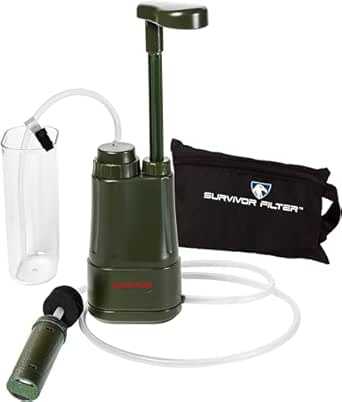 | Best for Manual Pumping | Weight: 12.8 oz | Dimensions: 0.77 x 2 x 6.5 in | Maximum flow rate: 500 ml/min | VIEW LATEST PRICE | See Our Full Breakdown |
| Uzima UZ-2 Portable Gravity-Fed Camping Water Filter |  | Best for Simple Gravity Setup | Filter type: Hollow fiber | Operation: Gravity-fed, manual | Power source: None required | VIEW LATEST PRICE | See Our Full Breakdown |
| LifeStraw Personal Water Filter for Hiking, Travel and Emergency, Navy, 4 Pack |  | Best Family Emergency Kit Staple | Pack size: 4 filter straws | Filtration: Hollow fiber membrane (microfiltration) | Filter life: 4,000 liters (1,000 gallons) per straw | VIEW LATEST PRICE | See Our Full Breakdown |
| BKLES BK3000 3-in-1 Portable Water Filter System |  | Best Powered Filtration for Blackouts | Filtration: Six-stage system, dual 0.01-micron ultrafiltration membranes | Filter media: PP cotton, KDF, activated carbon, coconut carbon fiber | Operation: Electric and hand-pump modes | VIEW LATEST PRICE | See Our Full Breakdown |
| Trailgo Pro Portable Water Filter Pump for Camping and Emergency Use |  | Best Manual Pump for Groups | Flow rate: Up to 1.5 liters per minute | Group capacity: Designed for 4–6 people | Filtration stages: 3 | VIEW LATEST PRICE | See Our Full Breakdown |
| Yuclet Emergency Water Filter Straw for Camping, Hiking, and Survival, 4-Pack |  | Best Budget Multi-Pack Backup | Pack size: 4 filters | Filtration size: Down to 0.1 micron | Contaminant removal: Over 99.9999% | VIEW LATEST PRICE | See Our Full Breakdown |
| Membrane Solutions Personal Water Filter Straw S1 |  | Best Certified Ultralight Straw | Dimensions: 7.1 x 1 inches | Weight: 2 oz | Filter lifespan: 1,320 gallons (5,000 liters) | VIEW LATEST PRICE | See Our Full Breakdown |
| Portable Water Filter Straws, 2-Pack, 0.1-Micron Hollow Fiber | 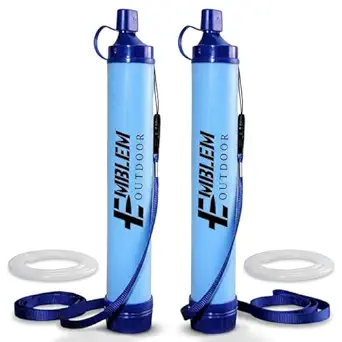 | Best Starter Pair for Emergency Kits | Pack Size: 2 filters | Filtration: Five-stage; 0.1-micron hollow fiber membrane, PP cotton, activated carbon | Flow Rate: 500 ml per minute | VIEW LATEST PRICE | See Our Full Breakdown |
| Practical Survival Reusable Emergency Water Filter Straws, 2-Pack |  | Best Long-Term Value Two-Pack | Quantity: 2 filters | Weight: 2 oz each | Length: 8 inches | VIEW LATEST PRICE | See Our Full Breakdown |
| 5-Pack Personal Water Filter Straw with Emergency Whistle |  | Best for Families and Group Kits | Quantity: 5-pack | Filter Pore Size: 0.1 micron | Filter Type: Hollow fiber membrane | VIEW LATEST PRICE | See Our Full Breakdown |
| Waterdrop Gravity Water Filter Straw with 1.5-Gallon Water Bag | 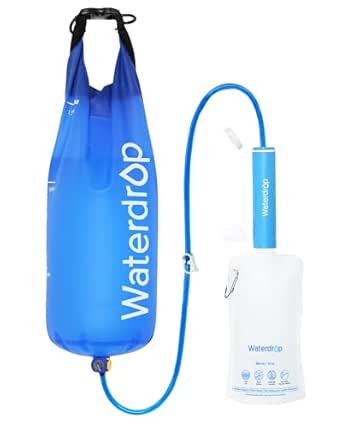 | Best for Filtering in Bulk | Filtration Method: Hollow fiber ultrafiltration membrane | Pore Size: 0.1 micron | Water Bag Capacity: 1.5 gallons | VIEW LATEST PRICE | See Our Full Breakdown |
| portable water filters for emergencie | Weight |
|---|---|
| 3-in-1 Portable Electric Water | 360 grams |
| Sawyer Products SP128 MINI Wat | 2 ounces |
| Waterdrop Portable Water Filte | 0.19 lb (0.09 kg) |
| Survivor Filter PRO Portable W | 12.8 oz |
| Uzima UZ-2 Portable Gravity-Fe | — |
| LifeStraw Personal Water Filte | — |
| BKLES BK3000 3-in-1 Portable W | 450 g (0.99 lb) |
| Trailgo Pro Portable Water Fil | — |
| Yuclet Emergency Water Filter | 3.5 ounces per straw |
| Membrane Solutions Personal Wa | 2 oz |
| Portable Water Filter Straws | 2.5 ounces |
| Practical Survival Reusable Em | 2 oz each |
| 5-Pack Personal Water Filter S | 2 oz per straw |
| Waterdrop Gravity Water Filter | 4.64 ounces |
More Details on Our Top Picks
3-in-1 Portable Electric Water Filter for Survival Kits & Emergencies
For emergency kits where speed and minimal effort matter, this electric pump has a clear advantage over the Sawyer Products SP128 MINI: its stated 800 ml/min flow rate fills a one-liter bottle in about 75 seconds without squeezing. The solar panel and hand crank also give it charging options when USB power is unavailable, while its 360-gram weight keeps it packable. The 8-layer filter is rated for 5,000 liters, and the included storage pouch and LED light add practical utility during outages. The tradeoff is reliance on a battery-powered mechanism: charging options help, but they add parts and upkeep that a fully manual filter avoids. Its filter core also needs washing or replacement to maintain flow, so it suits users willing to maintain a device.
Pros:- Stated 800 ml/min flow rate avoids the repeated squeezing required by compact squeeze filters.
- USB-C, solar, and hand-crank charging options reduce dependence on grid power.
- Rated 5,000-liter filter capacity supports extended use.
- Includes a water storage pouch and built-in LED light.
Cons:- Battery-powered operation adds charging and device-maintenance needs.
- Filter core requires washing or eventual replacement to maintain flow.
- Supplied details do not specify protection against viruses or chemicals.
Best for: Emergency-kit owners who want to fill bottles quickly with less hand effort and have several ways to recharge.
Not ideal for: Buyers seeking the simplest manual backup or a filter with a stated virus-removal capability; neither is established by the supplied product details.
- Flow rate:800 ml/min
- Filter capacity:5,000 liters
- Filtration layers:8
- Filter materials:PP cotton, activated carbon, and ultrafiltration membranes
- Power sources:USB-C, integrated solar panel, and hand-crank dynamo
- Weight:360 grams
- Included accessories:Water storage pouch and LED light
Our verdict“Choose this pump if you value fast bottle filling and multiple charging options more than the simplicity of a manual filter.”
Sawyer Products SP128 MINI Water Filtration System, Single, Blue
At just 2 ounces, the Sawyer MINI is the easiest option here to tuck into a pocket or small emergency pouch. Its 0.1-micron absolute filter is rated for up to 100,000 gallons and connects to the included squeeze pouch, compatible 28 mm bottles, or hydration packs; it can also be used as a drinking straw. That flexibility gives it more ways to access water than the simpler Waterdrop Portable Water Filter Straw. The compromise is effort and maintenance: squeezing can be slow, flow may fall as the filter clogs, and backflushing is needed. The included pouch is also described as prone to wear. Its stated filtration covers bacteria, protozoa, and microplastics, but not viruses or chemicals, so I would treat it as a compact backup for suitable freshwater rather than a universal emergency purifier.
Pros:- Weighs only 2 ounces and fits easily into a small kit.
- Connects to its squeeze pouch, standard 28 mm bottles, and hydration packs, or works as a straw.
- Rated for up to 100,000 gallons of filtration.
- Specified removal rates cover bacteria, protozoa, and microplastics.
Cons:- Squeezing can be slow, and flow can decrease as the filter clogs.
- Requires backflushing to help restore flow.
- The included squeeze pouch is relatively flimsy, and the filter does not remove viruses or chemicals.
Best for: Hikers and emergency-kit builders who prioritize low weight and want several ways to connect a filter to their drinking setup.
Not ideal for: People who need quick, effortless group water preparation or stated protection from viruses and chemicals.
- Filter pore size:0.1 micron absolute
- Weight:2 ounces
- Filter life:Up to 100,000 gallons
- Bacteria removal:99.99999%
- Protozoa removal:99.9999%
- Microplastics removal:100%
- Included items:Filter, 16-ounce reusable squeeze pouch, 7-inch drinking straw, and cleaning plunger
Our verdict“Pick the Sawyer MINI when compact size and flexible connections matter more than fast flow or broad contaminant coverage.”
Waterdrop Portable Water Filter Straw – Camping Survival Water Purifier with 0.1 Micron Filtration
The Waterdrop straw pairs a 0.1-micron ultrafiltration membrane with coconut shell activated carbon, giving it a taste-and-odor benefit that the supplied Sawyer MINI specifications do not claim. It weighs about 0.09 kg and has a stated maximum flow of 700 ml/min, so it offers a light, non-electric way to drink from compatible bottles or water bags. Its backwash function is useful for clearing debris, though it means upkeep is part of regular use. The rated 1,400-gallon life is substantial for a straw, but well below the Sawyer MINI’s stated 100,000-gallon rating. The Waterdrop also has a stated 12-month shelf life and a 300 PPM TDS limit; buyers should check their water source against that limit and avoid assuming the filter removes viruses, which the supplied details do not address.
Pros:- Lightweight at about 0.09 kg and requires no electricity.
- Activated carbon is specified to reduce chlorine, sediment, bad taste, and odor.
- Backwash function helps clear the filter and maintain flow.
- Connects to water bags or standard water bottles.
Cons:- Rated filter life of 1,400 gallons is much lower than the Sawyer MINI’s stated capacity.
- Requires priming before first use and regular backwashing.
- Stated 12-month shelf life and 300 PPM TDS limit narrow its emergency-storage and source-water fit.
Best for: Campers who want a lightweight, non-electric straw that connects to bottles or water bags and includes activated carbon for taste and odor.
Not ideal for: People who need a long-stored emergency filter beyond its stated shelf life, water above 300 PPM TDS, or verified virus protection.
- Filtration:5-stage system with 0.1-micron ultrafiltration membrane and coconut shell activated carbon
- Filter life:1,400 gallons (5,300 liters)
- Maximum flow rate:700 ml/min
- Weight:0.19 lb (0.09 kg)
- Power source:Non-electric
- Supported water TDS:Up to 300 PPM
- Shelf life:12 months
- Material:BPA-free food-grade material
Our verdict“Choose the Waterdrop straw for a light, taste-focused setup with backwashing, provided its shelf-life and TDS limits suit your needs.”
Survivor Filter PRO Portable Water Filter
The Survivor Filter PRO gives buyers a hand-operated alternative to both the rechargeable 3-in-1 electric filter and the compact Sawyer MINI. Its three-stage setup combines a 0.1-micron pre-filter, carbon filter, and 0.01-micron ultra-filter, while the stated maximum flow of 500 ml/min offers a defined pace without battery charging. Replaceable, reusable filters may suit someone building a maintained emergency kit, and the included cup, bag, and tubes provide several parts of a ready-to-use setup. Still, manual pumping takes ongoing effort, and its 12.8-ounce weight is notably more than the Sawyer MINI’s 2 ounces. The product data also gives a maximum supported TDS of 1,000 ppm but does not specify removal rates for particular contaminants. I would choose it for pump control and a supplied accessory set, not for low-effort use.
Pros:- Three filtration stages include a 0.01-micron ultra-filter and carbon filter.
- Manual operation requires no charging or external power.
- Stated maximum flow rate is 500 ml/min.
- Includes a cup, bag, filters, and tubes.
Cons:- Manual pumping requires sustained effort.
- At 12.8 ounces, it is substantially heavier than the Sawyer MINI.
- Supplied details do not provide specific contaminant-removal rates.
Best for: Preparedness-minded campers who want a manually operated pump, multiple filtration stages, and included collection accessories.
Not ideal for: Ultralight kit builders or anyone who wants to filter water without repeated hand pumping.
- Weight:12.8 oz
- Dimensions:0.77 x 2 x 6.5 in
- Maximum flow rate:500 ml/min
- Filtration stages:3
- Pre-filter:0.1 micron
- Ultra-filter:0.01 micron
- Capacity:100,000 liters
- Maximum supported TDS:1,000 ppm
Our verdict“Pick the Survivor Filter PRO if you want a manually pumped, multi-stage setup and can accept its weight and hand effort.”
Uzima UZ-2 Portable Gravity-Fed Camping Water Filter
The Uzima UZ-2 is the least specified option in this group, which makes it harder to judge for emergency planning than the Survivor Filter PRO or Sawyer MINI. Its gravity-fed hollow-fiber design needs no electricity and avoids the pumping effort of the Survivor, a useful distinction when preparing water with limited supplies or energy. The product says it protects against 99.999% of bacteria and is compatible with purification tablets, offering a way to pair filtration with another treatment method. However, the supplied data gives no capacity, flow rate, or details on protection from protozoa, viruses, or chemicals. That uncertainty matters when choosing a filter for changing water sources. The UZ-2 may suit buyers who value a basic gravity-fed arrangement, but readers who need measurable performance should favor a better-documented option such as the Sawyer MINI.
Pros:- Gravity-fed operation requires no electricity.
- Hollow-fiber filter is described as protecting against 99.999% of bacteria.
- Compatible with water purification tablets.
- Designed for portable camping and hiking use.
Cons:- No filter capacity or flow rate is provided.
- Supplied details do not specify removal of protozoa, viruses, or chemicals.
- Limited performance information makes it difficult to compare with the Sawyer MINI.
Best for: Campers assembling a simple, electricity-free gravity setup who plan to pair filtration with compatible purification tablets.
Not ideal for: Emergency planners who need a stated capacity, filtration rate, or clear details about protection from contaminants beyond bacteria.
- Filter type:Hollow fiber
- Operation:Gravity-fed, manual
- Power source:None required
- Bacteria protection:99.999%
- Compatibility:Water purification tablets
- Intended use:Camping, hiking, travel, and emergency preparedness
Our verdict“Choose the Uzima UZ-2 if a basic gravity-fed filter and tablet compatibility fit your plan, and you can accept its sparse performance details.”
LifeStraw Personal Water Filter for Hiking, Travel and Emergency, Navy, 4 Pack
This 4-pack of LifeStraw filters makes the most sense for households building emergency readiness for multiple people at once. Each straw delivers 4,000 liters of filtration — the longest rated lifespan in this straw-heavy lineup — and removal rates for bacteria and parasites are backed by EPA, NSF, and ASTM testing standards, which is more third-party validation than the Yuclet 4-pack or Membrane Solutions S1 offer. Compared with the Trailgo pump, there’s no mechanical pumping at all: you drink straight from the source or a container, which keeps things simple under stress. The tradeoff is fundamental to straw designs — no virus or chemical removal, and no built-in container means you’re committed to the water source’s edge. Proper cleaning and dry storage are needed to reach the full rated life.
Pros:- Longest filter life in the straw category at 4,000 liters per unit
- EPA, NSF, and ASTM tested removal rates for bacteria and parasites
- Four individually usable straws from one purchase for household kits
- Ultralight and pocketable for each family member
Cons:- No protection against viruses or dissolved chemicals
- Requires drinking directly at the source or from a separate container
- Needs maintenance and proper storage to reach full rated lifespan
Best for: Families stocking go-bags or home emergency kits who want one filter per person from a single purchase
Not ideal for: Anyone traveling where viruses or industrial/chemical contamination is the primary concern — this filters biology, not chemistry
- Pack size:4 filter straws
- Filtration:Hollow fiber membrane (microfiltration)
- Filter life:4,000 liters (1,000 gallons) per straw
- Bacteria removal:99.999999% (E. coli, Salmonella)
- Parasite removal:99.999% (Giardia, Cryptosporidium)
- Microplastic removal:99.999% down to 1 micron
- Weight class:Ultralight straw
- Testing standards:US EPA, NSF, ASTM
Our verdict“The easiest way to outfit a whole household with trusted personal filtration for blackouts, evacuations, and storm kits.”
BKLES BK3000 3-in-1 Portable Water Filter System
The BK3000 stands out for solving the problem most filters ignore: what happens when your hands are tired and the grid is down. With electric pumping, a hand-pump backup, and both USB-C and solar charging, it keeps producing water through nearly any failure mode. Its dual 0.01-micron ultrafiltration membranes in a six-stage system — including activated carbon layers the straw-only picks lack — also improve taste in ways hollow fiber alone cannot. A single charge covers up to 240,000 ml, dwarfing what a manual pump like the Trailgo produces per session. The compromises are real, though: it depends on a battery that eventually dies, replacement filters are sold separately, and at 450 g it’s far heavier than tossing a LifeStraw into a kit.
Pros:- Electric pumping with hand-pump fallback for redundancy
- USB-C and solar charging keep it running off-grid
- Six-stage filtration with carbon stages for better-tasting water
- Built-in LED/SOS light and reverse phone charging add emergency utility
Cons:- Replacement filters are an ongoing cost and sold separately
- Heavier and bulkier than any straw option in this roundup
- More moving parts and electronics mean more potential failure points
Best for: Preppers and car-campers who want effortless, high-volume water for a household during extended outages
Not ideal for: Ultralight backpackers — at roughly a pound plus a case, it’s overkill for solo trail use
- Filtration:Six-stage system, dual 0.01-micron ultrafiltration membranes
- Filter media:PP cotton, KDF, activated carbon, coconut carbon fiber
- Operation:Electric and hand-pump modes
- Charging:USB Type-C and solar
- Flow rate:800–1000 ml/min
- Capacity per charge:Up to 240,000 ml
- Weight:450 g (0.99 lb)
- Certifications:SGS, FCC, UL
Our verdict“The pick for home or vehicle emergency kits where powered convenience and redundancy matter more than weight.”
Trailgo Pro Portable Water Filter Pump for Camping and Emergency Use
When the plan is filtering water for four to six people, straw filters stop making sense and the Trailgo Pro takes over. Its 1.5 liters per minute hand-pumped flow fills bottles and pots far faster than sipping through a Membrane Solutions S1 at 500 ml/min, and the 5-micron reusable pre-filter catches sediment that would clog a straw instantly in murky floodwater — a genuine advantage for emergency scenarios where clarity can’t be chosen. Like the BK3000 it’s a pump, but unlike that model it needs no battery, cable, or sunlight, which makes it the more dependable choice when everything fails at once. The cost is physical: someone has to pump, and the cartridge is finite at 3,000 liters before replacement becomes necessary.
Pros:- High 1.5 L/min flow rate suited to filling containers for groups
- Fully manual operation — no batteries or electricity ever needed
- Reusable pre-filter handles sediment and cloudy source water
- Complete accessory kit including tubing, clamps, and carry bag
Cons:- Manual pumping is real physical work over long durations
- Filter cartridge is limited to about 3,000 liters before replacement
- Bulkier in a pack than any straw-style option
Best for: Camping groups and families who need to fill multiple containers quickly without relying on power
Not ideal for: Solo travelers counting grams — a single straw does the same job at a fraction of the size
- Flow rate:Up to 1.5 liters per minute
- Group capacity:Designed for 4–6 people
- Filtration stages:3
- Pre-filter:5 microns, reusable
- Filter life:Up to 3,000 liters
- Power source:Hand-operated; no batteries or electricity
- Accessories:Pre-filter, tubes, clamps, carry bag, instructions
Our verdict“The most practical manual option for groups who need volume and reliability over ultralight portability.”
Yuclet Emergency Water Filter Straw for Camping, Hiking, and Survival, 4-Pack
This pick makes the most sense as a distribution strategy rather than a single hero product: four independently usable straws that can be scattered across cars, packs, and drawers at a lower commitment than the LifeStraw 4-pack. Each unit filters down to 0.1 microns — finer than the LifeStraw’s 1-micron microplastic rating — and claims up to 1,300 gallons per straw with SGS certification behind it. Where the LifeStraw leans on EPA and NSF standards, Yuclet’s validation is thinner, which is the honest tradeoff at this tier. The standout emergency detail is an unlimited shelf life, meaning kits can sit for years without rotation. Like any straw, it demands suction effort and consistent maintenance to actually reach rated capacity.
Pros:- Four separate filters for spreading across kits and vehicles
- Unlimited shelf life — no rotation schedule to remember
- 0.1-micron filtration rating finer than many pricier straws
- Works straight from sources, bottles, or gravity-fed systems
Cons:- Certification documentation is less rigorous than category leaders
- Suction required — tiring when dehydration is already setting in
- Rated capacity only holds up with diligent maintenance
Best for: Budget-minded preppers who want filtration scattered across multiple vehicles, bags, and locations
Not ideal for: Buyers who prioritize the strongest third-party certifications — LifeStraw’s EPA/NSF testing carries more weight
- Pack size:4 filters
- Filtration size:Down to 0.1 micron
- Contaminant removal:Over 99.9999%
- Capacity per filter:Up to 1,300 gallons
- Weight:3.5 ounces per straw
- Flow rate:600 ml/min max
- Bottle compatibility:Standard 28 mm and 30 mm bottles
- Shelf life:Unlimited
- Certification:SGS certified
Our verdict“A sensible low-cost way to put backup filtration in every bag you own, as long as certification pedigree isn’t your top priority.”
Membrane Solutions Personal Water Filter Straw S1
At 2 ounces and 7.1 inches long, the S1 is the lightest dedicated filter in this batch, and it carries something most competitors can’t claim: triple NSF/ANSI certification (42, 372, and 401) covering taste, lead-free materials, and microplastic reduction. That’s a stronger certification story than the Yuclet 4-pack and a different one than the LifeStraw’s EPA-based testing. The five-stage design with an activated carbon layer also addresses flavor, which pure hollow-fiber straws leave untouched. Its 1,320-gallon lifespan edges out most rivals, though reaching it depends on regular backflushing. The compromises: a 500 ml/min flow feels slow when drinking heavily, and like every straw here, it does nothing about dissolved solids or TDS — salty or chemically contaminated water stays salty.
Pros:- Triple NSF/ANSI certification across safety and material standards
- Featherweight 2 oz build that fits any pocket or kit
- Five-stage filtration with carbon for noticeably better taste
- Up to 1,320 gallons of rated lifespan
Cons:- Does not reduce TDS or remove dissolved solids
- 500 ml/min flow rate is slow for high-volume drinking
- Backflushing required to maintain rated lifespan
Best for: Ultralight hikers and travelers who want certified filtration without noticing it in their pack
Not ideal for: Anyone needing fast hydration after heavy exertion — the modest flow rate makes big drinking sessions tedious
- Dimensions:7.1 x 1 inches
- Weight:2 oz
- Filter lifespan:1,320 gallons (5,000 liters)
- Pore size:0.1 micron
- Filtration stages:5
- Flow rate:16.9 fl oz/min (500 ml/min)
- Material:BPA-free ABS plastic
- Certifications:NSF/ANSI 42, 372, 401
- Bottle compatibility:28mm threaded bottles
Our verdict“The best-certified featherweight straw for people who carry their filtration everywhere and drink moderately, not in gulps.”
Portable Water Filter Straws, 2-Pack, 0.1-Micron Hollow Fiber
This two-pack earns its spot as an easy first addition to any emergency kit or glove box. The five-stage filtration — pairing a 0.1-micron hollow fiber membrane with PP cotton and activated carbon — does more for taste and chlorine than the simpler setups in this roundup, like the Yuclet 4-Pack, which skips the carbon stage entirely. At 2.5 ounces each and 8.27 inches long, these straws disappear into a pack, and the 28 mm bottle compatibility means you can screw one onto a standard bottle instead of lying down at a streambank. The tradeoff is capacity: 396 gallons per filter is a fraction of what the Practical Survival 2-Pack claims, so this pair is better treated as a short-term solution than a decade-long one. Backwashing extends life, but you’ll want to replace these sooner than rivals.
Pros:- Five-stage filtration with activated carbon improves taste and reduces chlorine
- Backwashable design extends usable life
- Fits 28 mm bottles, soft pouches, or cups for flexible drinking
- Two filters give you a built-in backup at minimal weight
Cons:- 396-gallon per-filter capacity is low compared with 1,600+ gallon rivals in this guide
- Intended for freshwater sources only — no protection against viruses or heavy metals
Best for: Preppers building a first emergency kit who want carbon filtration for better-tasting water and a spare filter included
Not ideal for: Anyone planning multi-year or heavy-use scenarios — the 396-gallon-per-filter capacity runs out far faster than higher-rated competitors
- Pack Size:2 filters
- Filtration:Five-stage; 0.1-micron hollow fiber membrane, PP cotton, activated carbon
- Flow Rate:500 ml per minute
- Capacity:396 gallons per filter; 792 gallons combined
- Shelf Life:5 years
- Weight:2.5 ounces
- Bottle Compatibility:28 mm
- Power Source:Manual
Our verdict“A sensible starter pair for short-term emergencies where taste matters more than maximum lifespan.”
Practical Survival Reusable Emergency Water Filter Straws, 2-Pack
Where most straw filters in this roundup treat capacity as an afterthought, this pair leans into it: up to 1,800 gallons per filter, which the maker frames as roughly a decade of personal use. That more than doubles the Portable Water Filter Straws 2-Pack’s 792-gallon combined figure, and each unit arrives individually sealed with its own backflushing plunger — a detail cheaper multi-packs often skip, leaving you to nurse a clogged filter with no maintenance tool. Filtration performance covers bacteria, parasites, and microplastics down to 0.1 micron, placing it alongside the LifeStraw 4-Pack in capability while giving each filter a longer rated life. The limitation is inherent to the straw format: you drink directly from the source, so filling pots or bottles for a household means repeated trips. For solo or two-person preparedness, though, the math here is hard to beat.
Pros:- 1,800-gallon rated lifespan per filter outlasts nearly every straw in this guide
- Includes a dedicated backflushing plunger per filter
- Filters bacteria, parasites, and microplastics at 0.1 micron
- BPA-free, FDA-compliant construction at just 2 oz each
Cons:- Straw design restricts you to drinking directly from sources
- No activated carbon stage, so chemical tastes and chlorine pass through
Best for: Solo backpackers and couples who want one purchase to cover roughly ten years of personal emergency filtration
Not ideal for: Households that need to fill containers for cooking or storage — the straw-only design can’t batch-filter water
- Quantity:2 filters
- Weight:2 oz each
- Length:8 inches
- Filtration:Removes over 99.99% of waterborne bacteria and parasites
- Filter Lifespan:Up to 1,800 gallons (~10 years per person)
- Materials:BPA-free, FDA-compliant
- Includes:Individual backflushing plunger per filter
Our verdict“The pick for buyers who want maximum lifespan per dollar and don’t need to filter water in bulk.”
5-Pack Personal Water Filter Straw with Emergency Whistle
When the goal is covering every member of a household, five individually sealed straws beat the Practical Survival 2-Pack or the Yuclet 4-Pack on sheer headcount. Each unit filters up to 1,600 gallons through a 0.1-micron hollow fiber membrane, so a family of five carries a combined buffer few kits can match, and the backflushing plungers included per straw keep maintenance honest. The added emergency whistles are a small but genuine touch for bug-out bags where signaling matters. My main hesitation: the filtration claims carry no independent verification, unlike better-established names such as Sawyer or LifeStraw elsewhere in this guide, so I’d treat these as a redundancy layer rather than a primary plan. And like all straw formats, you can’t fill a cooking pot with one — the Waterdrop gravity bag handles that job better for camp use.
Pros:- Five individually sealed straws cover a full family or group
- 1,600-gallon capacity per straw is generous for a multi-pack
- Backflushing plungers included for every unit
- Ultra-light 2 oz design plus emergency whistles for signaling
Cons:- No independent verification of the filtration claims
- Straw-only format can’t fill bottles or pots for group cooking
Best for: Families and group leaders distributing one filter per person across multiple bug-out bags or vehicles
Not ideal for: Buyers who want independently certified filtration claims or a way to filter water into containers for cooking
- Quantity:5-pack
- Filter Pore Size:0.1 micron
- Filter Type:Hollow fiber membrane
- Filter Capacity:Up to 1,600 gallons per filter
- Weight:2 oz per straw
- Material:BPA-free, FDA-compliant food-grade
- Includes:Backflushing plungers, emergency whistles
Our verdict“The quantity play — one straw per person, plus spares, at a per-unit capacity that holds up on paper.”
Waterdrop Gravity Water Filter Straw with 1.5-Gallon Water Bag
This is the only entry in this batch that solves the straw filter’s biggest weakness: you can’t fill containers with one. The included 1.5-gallon gravity bag lets you collect a source once, hang it, and let the 0.1-micron ultrafiltration membrane do the work hands-free — a real advantage over the Practical Survival or 5-Pack straws when you’re supplying drinking water for several people or filling a cook pot. The filter itself is backwashable and rated for 1,400 gallons, sitting comfortably between the shorter-lived 2-packs and the top-rated straws on lifespan. At 4.64 ounces total it’s heavier than any bare straw here, though still trivial to carry. Be realistic about scope: contaminant reduction isn’t fully specified beyond particulates, sediment, and chlorine, so brackish or chemically suspect water is off the menu — the Uzima UZ-2 covers that ground better.
Pros:- 1.5-gallon gravity bag enables hands-free bulk filtering for groups
- Backwashable filter rated up to 1,400 gallons
- Reduces chlorine, sediment, and unpleasant taste, not just pathogens
- Non-electric operation works in any outage scenario
Cons:- Heavier and bulkier than bare straw alternatives at 4.64 ounces plus the bag
- Contaminant reduction claims are partial; limited to water under 300 ppm TDS
Best for: Camp groups and households who need to filter water into storage rather than drink straight from the source
Not ideal for: Minimalist hikers counting grams, or anyone dealing with water beyond 300 ppm TDS — the bag system adds bulk and has hard limits
- Filtration Method:Hollow fiber ultrafiltration membrane
- Pore Size:0.1 micron
- Water Bag Capacity:1.5 gallons
- Filter Lifespan:Up to 1,400 gallons (5,300 liters)
- Maximum Flow Rate:700 ml per minute
- Power Source:Non-electric
- Maximum Supported TDS:300 ppm
- Weight:4.64 ounces
Our verdict“The group-workhorse pick — grab this when drinking directly from a stream won’t cut it for multiple people.”

How We Picked
I evaluated each filter through the specific demands of emergency use rather than casual camping. That meant prioritizing three things above all else: filtration performance against bacteria and protozoa, output speed (how quickly a filter can hydrate one person or a family), and longevity without maintenance supplies. An emergency filter you can’t rely on after six months in a go-bag is worse than no filter at all, so I also weighed shelf readiness, backflushing capability, and whether replacement cartridges exist.
The ranking reflects a simple hierarchy: systems that can serve multiple people quickly ranked highest, versatile mid-tier options filled the middle, and budget straw multipacks clustered at the bottom — not because they’re bad products, but because they solve a narrower problem. Where two filters overlapped, the one with better build quality, clearer certification data, or a smarter included accessory kit won the higher slot.
Factors to Consider When Choosing Portable Water Filters For Emergencies
Before settling on a specific model, it helps to understand the broader landscape of emergency water filtration — the category is full of products that look similar on a listing page but behave very differently when the power is out and the tap is dry.Filter Type: Match the Mechanism to the Scenario
Straws, pumps, squeeze systems, and gravity bags each answer a different emergency question. Straws are personal escape-and-evacuate tools — fine for one adult on the move, miserable for hydrating a family. Pumps give you control and speed at the cost of effort and moving parts. Gravity systems do the work while you handle other tasks but need a hanging point and time. A common mistake I see is buyers grabbing a single straw for a household of four; one straw means one person drinks while three wait. Many experienced preppers layer two types: a pump or gravity unit for sheltering in place, plus a straw per person for evacuation. Decide which scenario you’re actually preparing for before comparing specs.
Pore Size and What It Actually Blocks
Most quality hollow-fiber filters in this category feature 0.1 or 0.2 micron pores, which physically block bacteria (like E. coli) and protozoa (like Giardia and Cryptosporidium). What they do not block is viruses — those require much finer filtration or chemical treatment, and floodwater and sewage-contaminated sources are exactly where viruses concentrate. If your emergency risk profile includes flooding or urban infrastructure failure, pair any filter here with purification tablets or boiling for virus coverage. Don’t be sedued by marketing claims beyond the pore size; a 0.1-micron claim from an established brand means more than vague ‘removes 99.99%’ language from an unknown one. Also check whether the manufacturer publishes independent lab test results — reputable brands do.
Capacity Ratings and Total Cost of Ownership
Filtration lifespan ranges from a few hundred gallons on budget straws to 100,000 gallons on the Sawyer MINI, and that gap changes the math completely. A person needs roughly a gallon per day in an emergency, so a 264-gallon straw covers one person for under a year of genuine use — while a Sawyer could theoretically last decades. The catch: lifespan ratings assume reasonably clear source water. Silty or muddy water clogs any filter far faster, which is why backflushing capability and prefiltration (a cloth or coffee filter over the intake) matter so much. When comparing prices, divide cost by rated gallons rather than comparing sticker prices alone. The cheapest filter on the shelf is often the most expensive per gallon.
Storage, Shelf Life, and Freeze Risk
An emergency filter spends 99% of its life unused in a closet or car trunk, and that reality shapes what you should buy. Hollow-fiber membranes are destroyed by freezing if any water remains inside them — a filter left in a winter vehicle may fail silently with no visible damage. If your storage spot freezes, either bring the filter indoors or keep a backup chemical method alongside it. Dry the filter fully before long-term storage, and rotate the water you practice with. Also consider weight and packed size against your actual container: a bulky pump system is useless in a go-bag that’s already full. The best emergency filter is the one that’s still functional the day you need it, not the one with the best specs.
Group Size and Who’s Operating It
Count the hands that will use the filter, not just the mouths it serves. Small children, elderly family members, and anyone with reduced lung capacity struggle with straw filters, which require real suction to draw water through a membrane. Pumps demand arm strength and coordination; gravity bags demand almost nothing once they’re hung and filled — which is why they’re the default choice for households with mixed abilities. Multipacks solve the sanitation problem too: sharing one straw among several people during an emergency is both unpleasant and a disease vector. My general rule is one personal straw per person plus one shared pump or gravity system per household.
Certifications and Brand Transparency
The emergency filter market is crowded with rebranded, nearly identical straws from unfamiliar brands, and quality control varies widely. Look for EPA-compliant testing standards or NSF/ANSI 53 and 58 certifications where available, and be skeptical of filters that list no lab data at all. Established brands maintain replacement parts, published pore sizes, and responsive warranty support — all of which matter more after purchase than the listing suggested. That said, a no-name straw is still better than nothing, and multipacks have a legitimate place as redundant backups distributed across cars, desks, and packs. Just don’t make an uncertified product your only line of defense against contaminated water.
Frequently Asked Questions
Can one emergency water filter serve my whole family?
Technically yes, but practically it’s a bottleneck and a hygiene risk. A single straw or pump means every person waits their turn, and sharing a mouthpiece spreads germs precisely when medical care may be unavailable. A better structure is one personal straw per person paired with a shared pump or gravity system for cooking and refilling bottles. The multipacks in this roundup — like the LifeStraw 4-pack or the 5-pack with whistles — exist exactly for this layered approach. If budget forces a choice, buy a gravity system first, since it hydrates the most people with the least effort, then add individual straws over time.
Do these filters remove viruses from floodwater?
Almost none of the hollow-fiber filters in this category remove viruses — pore sizes of 0.1 micron catch bacteria and protozoa, but viruses are small enough to pass through. This matters most in flood scenarios and sewage-contaminated urban water, where viral contamination is common. The solution isn’t buying a different filter; it’s layering methods. Filter first to remove sediment and organisms, then treat with chlorine dioxide tablets, UV, or boiling for virus coverage. The Uzima UZ-2 and similar systems with carbon stages improve taste and chemicals but still don’t address viruses on their own. Anyone in a flood-prone region should budget for both a filter and a chemical backup.
Is an electric pump filter worth it for emergencies?
Electric models like the 3-in-1 Portable Electric Water Filter offer genuinely effortless operation — press a button and fill a bottle — which is valuable for people who can’t pump manually or in situations where you’re filtering large volumes. The tradeoff is dependency on battery power, and batteries degrade, die, and are useless if you forgot spares. The better ones in this category include a manual backup mode, and I’d treat that as a requirement rather than a bonus. For short emergencies and vehicle-based kits, electric convenience is a real luxury. For indefinite or unknown-duration scenarios, a manual pump or gravity system is the more dependable choice.
How do I know if my filter is still working after years in storage?
Silent failure is the biggest danger with stored filters, and there’s no reliable field test for filtration performance. Hollow-fiber membranes crack if frozen with water inside, and cracks let contaminated water pass with no visible sign. Your best defense is annual inspection and practice: pull the filter out once a year, run clear tap water through it, check flow rate, and look for cracks in the housing. If the filter ever froze, assume it’s compromised. Keep a chemical backup like purification tablets in the same kit as insurance, since tablets don’t degrade from physical shock the way membranes do. A filter you’ve never tested is a hypothesis, not a plan.
Should I buy one high-end filter or several cheap straw filters?
This is really a question about redundancy versus capability, and the honest answer is both approaches have a place. One quality pump like the Survivor Filter PRO gives you speed, longevity, and replaceable cartridges — but if it breaks or gets lost, you have nothing. A handful of budget straws scattered across locations (car, desk bag, home kit) guarantee you’re never without something, but each one is slow, limited in lifetime, and exhausting for group use. The strongest setup layers them: a primary pump or gravity system at home, plus a straw per person for evacuation. If you can only afford one purchase now, start with the multipack for coverage, then upgrade to a pump when budget allows.
Conclusion
After comparing all 14 filters, the right choice comes down to who’s drinking and how fast you need water. For the best overall emergency filter, the Survivor Filter PRO earns the top spot with triple-stage filtration, strong output, and replaceable cartridges that keep it serviceable for years. The best value pick is the Sawyer MINI — its 100,000-gallon lifespan makes it the cheapest water you’ll ever filter per gallon, and it works as a squeeze, straw, or bottle system. If you want the best premium setup, the 3-in-1 Electric Water Filter delivers effortless, motorized filtration with manual backup for when batteries run dry.
For beginners, the LifeStraw 4-pack is the simplest entry point: nothing to learn, nothing to break, and enough units for the whole household. Families with kids or older adults should lean toward the Waterdrop Gravity Straw with the 1.5-gallon bag or the Uzima UZ-2, since gravity does the work for everyone. And for go-bags and budget backups, the multipacks from Yuclet, Membrane Solutions, and Practical Survival provide cheap, distributed redundancy. Whatever you choose, test it before you need it — the filter you’ve practiced with is worth three you’ve never opened.
Fall Picks
fall essentials
As an affiliate, we earn on qualifying purchases.