For most backpackers, I would start with the Sawyer Micro Squeeze: it balances a compact setup with flexible ways to filter water on trail. The Platypus QuickDraw is a strong alternative for hikers who want a straightforward squeeze system, while the Waterdrop gravity filter suits camps where hands-free batch filtering matters more than pack weight. The main tradeoffs are speed, carrying capacity, ease of cleaning, and how much effort filtering takes when water sources are silty or hard to reach. Bottle and straw designs can simplify solo drinking, but they may be less adaptable for group cooking and water storage. Read on for the full breakdown and the factors that can help match a filter to your route.

Get emergency and outdoor gear delivered free with Prime
- Fast, free delivery on millions of items
- Prime Video, Amazon Music and more included
- Member-only deals all year
Key Takeaways
- Squeeze filters lead this lineup for versatility: Sawyer Micro Squeeze, Platypus QuickDraw, and Sawyer Squeeze systems can support direct drinking and filling containers, making them easier to adapt than standalone straws.
- Gravity systems trade pack simplicity for camp convenience: The Waterdrop gravity option can filter a larger batch without constant squeezing, while its bag and hose add bulk compared with compact squeeze filters.
- Small and ultralight are not the same as easy: Mini filters and straws reduce carried size, but their slower flow or limited bottle-filling options can matter on long days and at camp.
- Pump filters serve a different job: The MSR TrailShot and Katadyn Hiker offer controlled water collection from awkward sources, but pumping takes hands-on effort and adds moving parts.
- Emergency-oriented claims need careful scrutiny: Several straw-style and survival models emphasize portability, yet backpackers should verify the stated contaminant coverage, capacity, and replacement plan before relying on them as a primary filter.
| JEYOGO 1L Collapsible Water Filter Bottle |  | Best Collapsible Bottle | Capacity: 1 L (1000 ml) | Filter type: 0.1-micron hollow fiber membrane | Maximum flow rate: Up to 2 liters per minute | VIEW LATEST PRICE | See Our Full Breakdown |
| Sawyer Products SP2129 Micro Squeeze Water Filtration System, Black/Blue |  | Best Lightweight Squeeze Kit | Purification method: Hollow fiber membrane | Maximum flow rate: 1,400 milliliters per minute | Weight: 53 g (2 oz) | VIEW LATEST PRICE | See Our Full Breakdown |
| Sawyer Products SP128 Mini Water Filtration System, Blue | 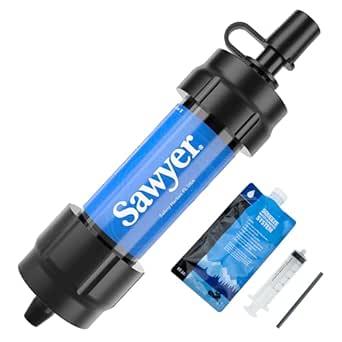 | Best for Flexible Connections | Filter pore size: 0.1 micron absolute | Filter capacity: Up to 100,000 gallons | Weight: 2 ounces (41 g) | VIEW LATEST PRICE | See Our Full Breakdown |
| Platypus QuickDraw Ultralight 1-Liter Backpacking Water Filter System |  | Best for Fast Group Refills | Capacity: 1 liter | Filter type: Hollow-fiber membrane | Maximum flow rate: 3 liters per minute | VIEW LATEST PRICE | See Our Full Breakdown |
| Waterdrop Portable Water Filter Straw, 2-Pack | 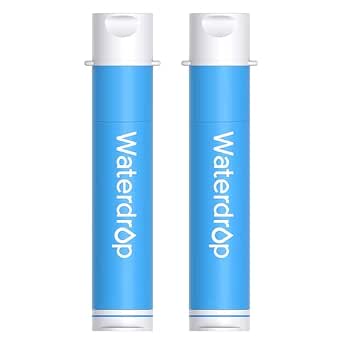 | Best Shared Emergency Backup | Included components: 2 personal water filter straws | Filtration method: Hollow fiber ultrafiltration membrane | Capacity: 1,400 gallons | VIEW LATEST PRICE | See Our Full Breakdown |
| Sawyer Products SP129 Squeeze Water Filtration System with Two 32 oz Pouches |  | Best for Flexible Camp Setups | Filter pore size: 0.1 micron absolute | Filter weight: 2 oz | Filter lifespan: Up to 100,000 gallons | VIEW LATEST PRICE | See Our Full Breakdown |
| Practical Survival Reusable Emergency Water Filter Straws, 5-Pack |  | Best Shared Emergency Backup | Quantity: 5 filters | Filtration method: Hollow fiber membrane | Bacteria and parasite removal: Over 99.99% | VIEW LATEST PRICE | See Our Full Breakdown |
| BACHGOLD Collapsible Squeeze Water Filter Bottle |  | Best Integrated Bottle | Capacity: 1,000 ml | Weight: 95 g | Dimensions: 4 x 4 x 11 in | VIEW LATEST PRICE | See Our Full Breakdown |
| Waterdrop Gravity Water Filter Straw with 1.5-Gallon Water Bag | 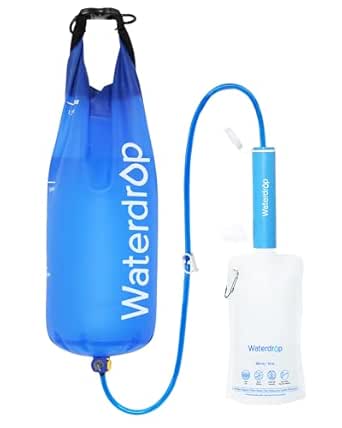 | Best for Camp Water Volume | Filtration method: Hollow fiber ultrafiltration membrane with five-stage filtration | Pore size: 0.1 micron | Filtration capacity: 1,400 gallons (5,300 liters) | VIEW LATEST PRICE | See Our Full Breakdown |
| MSR TrailShot Ultralight Backpacking Water Filter |  | Best for Fast Hand-Pumped Filtering | Purification method: Hollow fiber membrane | Power source: Hand powered | Weight: 5.44 ounces | VIEW LATEST PRICE | See Our Full Breakdown |
| Katadyn Hiker Pump-Action Water Filter, 11 oz |  | Best for Field-Cleanable Pump Filtration | Weight: 11 oz | Filter type: Microfilter | Operation: Manual pump | VIEW LATEST PRICE | See Our Full Breakdown |
| MODERN NEEDS Ready Filter Personal Water Filter Straw |  | Best for Minimalist Direct Drinking | Filtration: 0.1 micron | Capacity: 396 gallons | Weight: 2 oz (0.1 kg) | VIEW LATEST PRICE | See Our Full Breakdown |
| FS-TFC Portable 0.01 Micron Survival Water Filter |  | Best for Multi-Stage Filtration | Filter stages: Sediment prefilter, 0.01-micron membrane, activated carbon fiber | Maximum flow rate: 500 mL per minute | Filter capacity: 4,000 liters | VIEW LATEST PRICE | See Our Full Breakdown |
| Lormandy TriplePure6000 Portable Water Filter Straw | 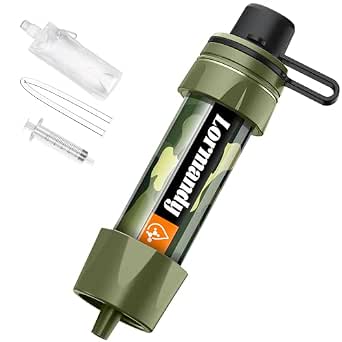 | Best for Versatile Trail Setup | Filtration: Sediment prefilter and 0.1-micron hollow-fiber membrane | Weight: Less than 1.8 oz (0.11 kg) | Dimensions: 6 x 2 x 2 inches | VIEW LATEST PRICE | See Our Full Breakdown |
| portable water filters for backpacking | Weight | Maximum flow rate | Capacity | Dimensions |
|---|---|---|---|---|
| JEYOGO 1L Collapsible Water Fi | 120 g | Up to 2 liters per minute | 1 L (1000 ml) | 3.54 x 3.54 x 11.02 in |
| Sawyer Products SP2129 Micro S | 53 g (2 oz) | 1,400 milliliters per minute | — | 1.59 × 1.59 × 4.22 in |
| Sawyer Products SP128 Mini Wat | 2 ounces (41 g) | — | — | — |
| Platypus QuickDraw Ultralight | 3.3 oz (95 g) | 3 liters per minute | 1 liter | — |
| Waterdrop Portable Water Filte | 0.19 lb per straw | 700 ml/min | 1,400 gallons | — |
| Sawyer Products SP129 Squeeze | — | — | — | — |
| Practical Survival Reusable Em | 56.7 g (scope not specified) | — | Up to 1,800 gallons per filter | 8 x 1.5 x 1.5 inches |
| BACHGOLD Collapsible Squeeze W | 95 g | 0.2 liters per minute | 1,000 ml | 4 x 4 x 11 in |
| Waterdrop Gravity Water Filter | — | 700 ml/min | — | — |
| MSR TrailShot Ultralight Backp | 5.44 ounces | — | — | 6 x 2.4 x 6 inches |
| Katadyn Hiker Pump-Action Wate | 11 oz | 0.95 liters per minute | 750 liters | 6.5 x 3 x 3 inches |
| MODERN NEEDS Ready Filter Pers | 2 oz (0.1 kg) | — | 396 gallons | — |
| FS-TFC Portable 0.01 Micron Su | — | 500 mL per minute | — | — |
| Lormandy TriplePure6000 Portab | Less than 1.8 oz (0.11 kg) | — | — | 6 x 2 x 2 inches |
More Details on Our Top Picks
JEYOGO 1L Collapsible Water Filter Bottle
The JEYOGO combines a 1-liter bottle and a 0.1-micron filter in one packable unit, making it a practical choice for backpackers who want to collect and filter water without carrying a separate rigid bottle. Its 120 g TPU body folds down when empty, while the filter’s shake-cleaning and integrity check offer useful maintenance options on a trip. Compared with the Sawyer SP2129 Micro Squeeze, this is more bottle-like and needs no separate pouch for its stated capacity, but the Sawyer is lighter and includes a drinking straw and cleaning accessories. The JEYOGO’s listed flow rate reaches 2 liters per minute, though actual flow depends on conditions. It is intended for freshwater filtration, not every water source, and the bottle format is less versatile than a standalone filter connected to different containers.
Pros:- Collapsible 1-liter body packs smaller when empty than a rigid bottle.
- At 120 g, it keeps the combined bottle-and-filter setup relatively light.
- Shake-cleaning can help restore flow without a separate cleaning tool.
- Integrity check lets users inspect the filter after impact or storage.
Cons:- The stated maximum flow rate may vary with water and operating conditions.
- Designed for freshwater filtration, limiting its fit for other source-water needs.
- The integrated bottle format offers less container flexibility than a standalone filter such as the Sawyer SP2129.
Best for: Backpackers who want a foldable 1-liter reservoir with an integrated filter and prefer collecting water in a bottle-style container.
Not ideal for: Ultralight hikers prioritizing the lowest filter weight, or anyone needing treatment for water sources beyond the product’s stated freshwater use.
- Capacity:1 L (1000 ml)
- Filter type:0.1-micron hollow fiber membrane
- Maximum flow rate:Up to 2 liters per minute
- Bottle material:0.4 mm BPA-free TPU
- Purification method:Ultra filtration
- Power source:Gravity-fed
- Weight:120 g
- Dimensions:3.54 x 3.54 x 11.02 in
Our verdict“Choose the JEYOGO if you want a collapsible, integrated 1-liter filter bottle and can accept a less versatile setup than a standalone squeeze filter.”
Sawyer Products SP2129 Micro Squeeze Water Filtration System, Black/Blue
At 53 g (2 oz), the SP2129 is the lightest option in this set with a supplied pouch, and its 0.1-micron hollow-fiber filter is rated for bacteria, protozoa, and microplastics. The included 32-ounce pouch gives backpackers a ready-to-use way to collect and squeeze water; a cleaning plunger, coupling, and spare gasket add useful trail-maintenance pieces. Its rated capacity of up to 100,000 gallons is far beyond the 1,400-gallon figure listed for the Waterdrop straw, though the Sawyer requires manual squeezing rather than direct sipping. The tradeoff is familiar to squeeze-filter users: filtering takes hand pressure, and its maximum supported TDS is 500 ppm. This kit suits hikers who want a light, refillable system, but those seeking a bottle-integrated design may prefer the JEYOGO.
Pros:- At 53 g, it is the lightest pouch-equipped filter in this five-product group.
- The 32-ounce pouch provides a ready collection and squeeze container.
- The 0.1-micron hollow-fiber filter is specified to remove bacteria, protozoa, and microplastics.
- Cleaning plunger, coupling, and spare gasket are included.
Cons:- Manual squeezing takes effort and attention when filtering several liters.
- The 500 ppm maximum supported TDS is lower than the JEYOGO’s listed 1000 ppm.
- It does not provide the direct bottle-style carry format of the JEYOGO.
Best for: Weight-conscious backpackers who want a compact squeeze filter, a reusable 32-ounce pouch, and included tools for cleaning and upkeep.
Not ideal for: Hikers who dislike squeezing water by hand or need a filter specified for water above 500 ppm TDS.
- Purification method:Hollow fiber membrane
- Maximum flow rate:1,400 milliliters per minute
- Weight:53 g (2 oz)
- Dimensions:1.59 × 1.59 × 4.22 in
- Included pouch capacity:32 oz
- Maximum supported TDS:500 ppm
- Shelf life:10 years
- Maximum temperature:40 °C
Our verdict“Pick the SP2129 if low carried weight and a complete squeeze-filter kit matter more to you than hands-free or bottle-integrated use.”
Sawyer Products SP128 Mini Water Filtration System, Blue
The SP128 Mini is a compact standalone filter for hikers who want several ways to drink: it connects to its included pouch, a compatible bottle, or a hydration pack. Its 0.1-micron hollow-fiber membrane is specified for bacteria, protozoa, and microplastics, while the 2-ounce listed weight keeps the filter itself easy to carry. Compared with the Sawyer SP2129 Micro Squeeze, the Mini emphasizes connection options and includes a 16-ounce pouch and drinking straw; the SP2129 instead supplies a larger 32-ounce pouch and additional cleaning accessories. Both require manual operation, so neither offers a hands-free flow advantage. The Mini’s pouch is smaller than the SP2129’s, and hydration tubing is not included. Its standard 28 mm bottle compatibility can also make it a useful backup when a dedicated filter bottle is not part of the plan.
Pros:- Multiple connection options support different drinking and carrying setups.
- The 2-ounce listed weight makes the filter compact for backpacking.
- The 0.1-micron membrane is specified for bacteria, protozoa, and microplastics.
- Includes a 16-ounce squeeze pouch, 7-inch straw, and cleaning plunger.
Cons:- Filtering requires manual operation rather than a hands-free system.
- Hydration pack tubing is sold separately.
- The included pouch is smaller than the SP2129’s 32-ounce pouch.
Best for: Backpackers who want one small filter that can work with a pouch, a compatible bottle, or a hydration pack.
Not ideal for: Hikers who want a larger included pouch or a ready-made hydration-tubing connection without sourcing compatible parts.
- Filter pore size:0.1 micron absolute
- Filter capacity:Up to 100,000 gallons
- Weight:2 ounces (41 g)
- Purification method:Hollow-fiber membrane
- Bacteria removal:99.99999%
- Protozoa removal:99.9999%
- Bottle compatibility:Standard 28 mm disposable water bottles
- Included items:Filter, 16-ounce reusable squeeze pouch, 7-inch drinking straw, cleaning plunger
Our verdict“Choose the SP128 Mini if you value flexible bottle and hydration-pack connections more than a larger pouch or extra cleaning accessories.”
Platypus QuickDraw Ultralight 1-Liter Backpacking Water Filter System
The QuickDraw stands out for backpackers who value fast refills: its listed maximum squeeze flow reaches 3 liters per minute, and gravity flow is rated at 1.75 liters per minute. The included 1-liter reservoir and 28 mm bottle connections give it more setup flexibility than the JEYOGO collapsible bottle, while shake-cleaning or backflushing needs no tools. At 3.3 ounces (95 g), it is heavier than the Sawyer SP2129, so minimalists may prefer that lighter kit. The QuickDraw’s stated removal figures are 99.9999% for bacteria and 99.9% for protozoa; buyers should compare those figures with the needs of their water sources rather than assuming all filters offer identical treatment. It still depends on squeezing or arranging a gravity setup, and its bottle fit is limited to compatible 28 mm openings.
Pros:- Listed squeeze flow of up to 3 liters per minute supports quicker refills.
- Gravity flow offers an alternative to continuous hand squeezing.
- Includes a 1-liter reservoir and connections for compatible 28 mm bottles.
- Shake-cleaning and backflushing require no tools.
Cons:- At 95 g, it weighs more than the Sawyer SP2129 Micro Squeeze.
- Requires squeezing or a gravity arrangement to move water through the filter.
- Bottle connections are limited to compatible 28 mm openings.
Best for: Backpackers who refill several bottles or need a quicker way to filter water for a small group at camp.
Not ideal for: Ultralight solo hikers who prioritize minimum filter weight, or users whose bottles lack compatible 28 mm openings.
- Capacity:1 liter
- Filter type:Hollow-fiber membrane
- Maximum flow rate:3 liters per minute
- Gravity flow rate:1.75 liters per minute
- Weight:3.3 oz (95 g)
- Bottle compatibility:28 mm bottles
- Bacteria removal:99.9999%
- Protozoa removal:99.9%
Our verdict“Choose the QuickDraw if refill speed and gravity-use flexibility matter more than carrying the lightest filter in the group.”
Waterdrop Portable Water Filter Straw, 2-Pack
This two-straw set is better suited to simple personal backup than to high-volume camp water treatment. Each straw uses a 0.1-micron hollow-fiber ultrafiltration membrane and is listed at up to 1,400 gallons of capacity, with backwashing available to help maintain flow. The two-piece format lets hiking partners carry separate filters, unlike the single-filter Sawyer SP128 Mini, which instead offers more connection options through a pouch, compatible bottle, or hydration pack. The Waterdrop can connect to compatible bags or bottles, but it needs priming before first use and regular backwashing based on water quality. Its 700 ml-per-minute maximum flow is below the QuickDraw’s listed squeeze rate, and the supplied details emphasize chlorine, particulates, sediment, taste, and odor rather than the bacteria and protozoa removal claims given for the Sawyer and Platypus filters. Check that its stated treatment profile matches your needs.
Pros:- Two straws let two people carry separate filters.
- Backwashing can help maintain flow as water quality changes.
- Connects to compatible water bags or bottles.
- The listed filter capacity is up to 1,400 gallons per straw.
Cons:- Requires priming before first use.
- Regular backwashing may be needed to help prevent blockage.
- Its supplied treatment description does not state bacteria and protozoa removal claims like those listed for the Sawyer SP128 and Platypus QuickDraw.
Best for: Pairs who want a separate compact straw filter each for backup use, travel, or short outings where compatible bottles or water bags are available.
Not ideal for: Backpackers seeking a primary filter with stated bacteria and protozoa removal performance or a high-volume group refill system.
- Included components:2 personal water filter straws
- Filtration method:Hollow fiber ultrafiltration membrane
- Capacity:1,400 gallons
- Maximum flow rate:700 ml/min
- Weight:0.19 lb per straw
- Material:BPA-free food-grade material
- Maximum supported water TDS:300 ppm
- Warranty:30-day limited filter warranty
Our verdict“Pick the Waterdrop two-pack as a shared personal backup only if its stated treatment profile fits your water sources and you are prepared to prime and backwash it.”
Sawyer Products SP129 Squeeze Water Filtration System with Two 32 oz Pouches
The Sawyer SP129 suits backpackers who want one filter to work across several water-carrying setups. Its 2-ounce filter can attach to the included pouches, compatible 28 mm bottles, or hydration equipment, giving it more flexibility than the dedicated bottle format of the BACHGOLD Collapsible Squeeze Water Filter Bottle. The two 32-ounce pouches also make it possible to collect water first and filter it as needed. The tradeoff is hands-on effort: squeezing takes time, and a gravity setup still requires arranging the system at camp. Backwashing helps restore flow, but the filter’s long stated lifespan depends on regular care. I’d choose it over the MSR TrailShot for a lighter, adaptable kit, but not for someone who wants a quick hand-pumped fill.
Pros:- The 2-ounce filter keeps carried weight low.
- Works with the included pouches, compatible 28 mm bottles, and hydration setups.
- Backwashing can restore up to 98% of original flow rate.
- Includes two 32-ounce pouches and adapters for different configurations.
Cons:- Manual squeezing can make filtering several liters tedious.
- Flow and performance depend on proper backwashing and filter care.
Best for: Backpackers who want a lightweight filter that can work with pouches, compatible bottles, or a hydration setup.
Not ideal for: Hikers who want fast, low-effort filtering without squeezing or maintaining a backwash routine.
- Filter pore size:0.1 micron absolute
- Filter weight:2 oz
- Filter lifespan:Up to 100,000 gallons
- Pouch capacity:Two 32 oz reusable pouches
- Bottle compatibility:Standard 28 mm threaded bottles
- Included accessories:Drinking straw, hydration pack adapters, tubing, mesh storage bag
- Filtration performance:Removes 99.99999% of bacteria, 99.9999% of protozoa, and 100% of microplastics
Our verdict“Choose the SP129 if you value a light, adaptable filter system and are comfortable managing its squeezing and cleaning.”
Practical Survival Reusable Emergency Water Filter Straws, 5-Pack
This five-pack is a different kind of backpacking choice: it favors spares and shared kits over a single, integrated water system. Each straw is rated for up to 1,800 gallons and includes a backflushing plunger, so a group can distribute filters across packs or keep extras for emergencies. Compared with the Sawyer SP129, it lacks pouches, adapters, and bottle-based versatility; it is a more direct personal-use straw, not a flexible camp filter. The listed weight is 56.7 g, though the data does not clarify whether that applies to each unit or the set, so I wouldn’t plan pack weight around it without checking. Its six-year shelf life also makes it less suitable for a set-and-forget emergency cache. Manual use remains part of the deal, and this format is less convenient for filling containers for cooking.
Pros:- Five filters let a group carry separate units or keep spares.
- Each filter is rated for up to 1,800 gallons.
- The hollow-fiber membrane is specified to filter microplastics down to 0.1 micron.
- A backflushing plunger is included with each filter.
Cons:- Straw-style use is less convenient for filling bottles and camp cooking water.
- The listed six-year shelf life limits long-term emergency storage.
- The provided weight figure does not specify whether it is per filter or for the pack.
Best for: Backpacking groups or emergency-kit planners who want several individual-use filters with separate backflushing plungers.
Not ideal for: Solo hikers who want to collect and filter larger quantities into bottles or cooking containers.
- Quantity:5 filters
- Filtration method:Hollow fiber membrane
- Bacteria and parasite removal:Over 99.99%
- Capacity:Up to 1,800 gallons per filter
- Weight:56.7 g (scope not specified)
- Dimensions:8 x 1.5 x 1.5 inches
- Shelf life:6 years
- Included components:One flushing plunger per filter
Our verdict“Pick this set if you need several personal-use filters for a group or backup kits, not a versatile way to process camp water.”
BACHGOLD Collapsible Squeeze Water Filter Bottle
The BACHGOLD collapsible bottle keeps water collection and filtering in one piece of gear: fill its 1-liter body, then squeeze water through the two-stage filter. At 95 g, it has a clear portability advantage over carrying a rigid bottle, while its closed design is described as leak-resistant. That convenience comes with a slower pace. The stated maximum flow is only 0.2 liters per minute, far below the MSR TrailShot’s 1 liter per minute, so filling a pot or several bottles may take patience. It also requires rinsing to restore flow. Unlike the Sawyer SP129, it doesn’t offer a range of pouch, bottle, and hydration-pack configurations; the bottle is the system. I’d choose it for simple personal hydration, but skip it if group water needs or faster camp processing are priorities.
Pros:- The 95 g collapsible bottle keeps the personal water system lightweight.
- The 1-liter capacity combines collection and drinking in one container.
- Two filtration stages combine an electro-adsorptive nanofiber layer and a 0.2-micron hollow-fiber membrane.
- Manual squeezing avoids carrying a pump, and the closed bottle is described as leak-resistant.
Cons:- Maximum flow of 0.2 liters per minute is slow for filling larger containers.
- Flow may need to be restored by rinsing.
- The integrated bottle format offers less setup flexibility than the Sawyer SP129.
Best for: Solo backpackers who want a lightweight, collapsible bottle with an integrated filter for personal drinking water.
Not ideal for: Groups or hikers who need to filter water quickly into multiple containers, given its 0.2-liter-per-minute maximum flow.
- Capacity:1,000 ml
- Weight:95 g
- Dimensions:4 x 4 x 11 in
- Filtration:Electro-adsorptive nanofiber layer and 0.2-micron hollow-fiber membrane
- Maximum flow rate:0.2 liters per minute
- Supported water TDS maximum:500 ppm
- Temperature range:33.8–104 °F
- Included components:Squeeze bottle, filter, manual
Our verdict“Choose the BACHGOLD for compact, personal drinking-water convenience, but not when filtering speed or shared camp capacity matters.”
Waterdrop Gravity Water Filter Straw with 1.5-Gallon Water Bag
With its 1.5-gallon bag, the Waterdrop is aimed at backpackers who would rather hang or position a reservoir and let gravity do the work than squeeze every drink through a filter. The listed maximum flow of 700 ml per minute and backwashable design make it more appealing for camp water than the BACHGOLD bottle, whose stated flow is 0.2 liters per minute. It also comes with a 16-ounce pouch for a smaller setup. The cost of that capacity is bulk: the bag and accessories take more space than the Sawyer SP129’s two compact pouches, and gravity filtration depends on arranging the bag above the outlet. Its stated TDS ceiling is 300 ppm, and the filter warranty is limited to 30 days. This is a camp-oriented system, not my pick for minimalist, on-the-move drinking.
Pros:- The 1.5-gallon bag supports larger camp water batches.
- A 700 ml/min maximum flow rate is suited to shared water needs better than the BACHGOLD bottle’s stated rate.
- The filter is backwashable and designed for reuse.
- Includes both a gravity-fed water bag and a 16-ounce pouch.
Cons:- The bag and accessories take more pack space than a simple personal straw.
- Gravity filtration requires positioning the bag above the outlet.
- The filter warranty is limited to 30 days, and supported water TDS is capped at 300 ppm.
Best for: Backpackers who camp near a water source and want to filter larger quantities with a gravity-fed setup.
Not ideal for: Minimalist hikers who need a compact, quick-to-deploy personal filter while walking.
- Filtration method:Hollow fiber ultrafiltration membrane with five-stage filtration
- Pore size:0.1 micron
- Filtration capacity:1,400 gallons (5,300 liters)
- Maximum flow rate:700 ml/min
- Water bag capacity:1.5 gallons
- Item weight:4.64 ounces
- Included components:Water filter straw, 1.5-gallon gravity-fed water bag, 16-ounce water pouch
- Warranty:30-day limited filter warranty
Our verdict“Choose the Waterdrop if you want a gravity-fed camp supply and can spare room for its bag and setup.”
MSR TrailShot Ultralight Backpacking Water Filter
The MSR TrailShot stands out for a straightforward reason: its stated 1-liter-per-minute flow rate is much faster than the BACHGOLD bottle’s 0.2 liters per minute. Hand-powered filtering lets you draw from a lake, river, or stream and fill a container without squeezing a pouch or setting up the Waterdrop gravity bag. At 5.44 ounces, it is heavier than the Sawyer SP129’s 2-ounce filter alone, but the TrailShot’s pump-based format may suit hikers who prefer a controlled fill over squeezing. It treats up to 2,000 liters, so its capacity is more limited than the Sawyer’s stated 100,000-gallon lifespan. Field cleaning without tools is a practical plus, though it still needs manual pumping. This is the speed-oriented pick among these options, not the lightest or longest-lived filter.
Pros:- The stated 1-liter-per-minute flow is faster than the BACHGOLD bottle’s maximum rate.
- Hand-powered operation filters water without chemicals.
- Compact 5.44-ounce design is suited to backpacking.
- Can be cleaned in the field without tools.
Cons:- Requires repeated manual pumping.
- The stated filter capacity is limited to 2,000 liters, far below the Sawyer SP129’s stated lifespan.
- At 5.44 ounces, it weighs more than the SP129 filter alone.
Best for: Backpackers who want a hand-powered filter with a stated 1-liter-per-minute flow for filling containers at natural water sources.
Not ideal for: Ultralight hikers prioritizing the lowest filter weight or buyers seeking a very high stated lifetime capacity.
- Purification method:Hollow fiber membrane
- Power source:Hand powered
- Weight:5.44 ounces
- Dimensions:6 x 2.4 x 6 inches
- Flow rate:1 liter per minute
- Filter capacity:Up to 2,000 liters
- Bacteria removal:99.9999%
- Protozoa removal:99.9%
Our verdict“Pick the TrailShot if you value faster hand-powered filling and tool-free field cleaning more than minimum weight or maximum stated lifespan.”
Katadyn Hiker Pump-Action Water Filter, 11 oz
The Katadyn Hiker is a sensible choice for backpackers who want to draw water into a bottle rather than drink through a straw. Its manual pump delivers a stated 0.95 liters per minute, and the filter can be cleaned in the field, which helps when sediment slows filtration on a trip. At 11 ounces, it is heavier than the MODERN NEEDS Ready Filter straw, but it offers a more flexible way to fill containers at the source. The tradeoff is straightforward: pumping takes effort, and there is no activated carbon stage for improving taste or odor. I’d choose it over a straw when bottle filling and field cleaning matter more than minimizing weight.
Pros:- At 11 ounces, it is relatively light for a pump-style filter
- Manual operation needs no batteries or electricity
- Field-cleanable design can help restore performance when sediment builds up
- Pump format lets users fill containers instead of drinking only through a straw
Cons:- Manual pumping takes time and effort, especially when filling multiple containers
- No activated carbon stage is included
- The 750-liter stated capacity is lower than the capacities listed for some straw options here
Best for: Backpackers who regularly fill bottles at water sources and want a pump filter that can be cleaned during a trip
Not ideal for: Ultralight hikers who want the smallest possible setup, or buyers seeking an activated-carbon stage for taste and odor
- Weight:11 oz
- Filter type:Microfilter
- Operation:Manual pump
- Maximum flow rate:0.95 liters per minute
- Capacity:750 liters
- Dimensions:6.5 x 3 x 3 inches
- Model number:8018270
Our verdict“Choose the Katadyn Hiker if you value a field-cleanable pump and bottle filling more than the lighter, direct-drinking convenience of a filter straw.”
MODERN NEEDS Ready Filter Personal Water Filter Straw
At 2 ounces and 8 inches long, the MODERN NEEDS Ready Filter is the easiest of these four to justify as a low-bulk backup or minimalist trail filter. It needs no pump, batteries, or chemicals, so there is little setup before drinking. Unlike the Katadyn Hiker, it does not provide a pump for filling a bottle; the user must drink directly from a freshwater source. Its stated 0.1-micron filtration and activated-carbon purification method make it a compact, simple option, but the listed capacity of 396 gallons sets a defined service limit. I’d pick it over the larger FS-TFC when pack weight and simplicity matter most, and skip it when shared water access or filling containers is part of the plan.
Pros:- Weighs just 2 ounces and measures 8 inches long
- Works without pumps, batteries, or chemicals
- Stated filtration rating is 0.1 micron
- Shatterproof design suits a compact outdoor kit
Cons:- Requires drinking directly from a freshwater source
- Does not offer a pump or included container for filling bottles
- Listed capacity is limited to 396 gallons
Best for: Solo hikers and emergency-kit builders who want a very light filter for drinking directly from accessible freshwater sources
Not ideal for: Backpackers who need to fill bottles or hydration reservoirs, or who prefer a filter that can serve a group at camp
- Filtration:0.1 micron
- Capacity:396 gallons
- Weight:2 oz (0.1 kg)
- Length:8 inches
- Purification method:Activated carbon
- Power source:Manual
- Maximum supported water TDS:1000 ppm
Our verdict“Choose this straw for solo trips where low weight and direct drinking matter more than filling containers or sharing a filter.”
FS-TFC Portable 0.01 Micron Survival Water Filter
The FS-TFC stands apart from the simpler straw designs with a three-stage setup: sediment prefiltration, a 0.01-micron membrane, and activated carbon fiber. That combination is aimed at backpackers who want sediment handling and help with water odor in one manual device. Its stated 500 mL-per-minute flow rate is slower than the Lormandy TriplePure6000’s listed rate of about 800 mL per minute, so filling containers may take longer. The FS-TFC can draw from a source or fill bottles and hydration packs, giving it more flexibility than the MODERN NEEDS straw, though it weighs 8.8 ounces versus that straw’s 2 ounces. I’d favor it when filtration stages and a stated 4,000-liter capacity outweigh minimum pack weight.
Pros:- Combines a sediment prefilter, 0.01-micron membrane, and activated carbon fiber
- Can be used at a source or to fill bottles and hydration packs
- Stated capacity is 4,000 liters
- Collapsible handle supports a compact carry setup
Cons:- Manual operation requires effort and time
- Listed flow rate of 500 mL per minute is slower than the Lormandy TriplePure6000’s stated rate
- Designed for fresh water sources
Best for: Backpackers who want a manual filter with sediment prefiltration, a fine membrane, and activated carbon for use with bottles or hydration packs
Not ideal for: Ultralight hikers prioritizing the lowest weight, or anyone needing a filter intended for sources beyond fresh water
- Filter stages:Sediment prefilter, 0.01-micron membrane, activated carbon fiber
- Maximum flow rate:500 mL per minute
- Filter capacity:4,000 liters
- Item weight:8.8 ounces
- Item dimensions:3 x 1.3 x 6.1 inches
- Power source:Manual
- Warranty:Lifetime warranty
Our verdict“Choose the FS-TFC if you want multi-stage filtration and container-filling flexibility, and can accept more weight and slower flow than a compact straw.”
Lormandy TriplePure6000 Portable Water Filter Straw
The Lormandy TriplePure6000 pairs a sub-1.8-ounce filter with a pouch, silicone tubing, and a syringe, making it more adaptable than the bare-bones MODERN NEEDS straw. The pouch and tubing give backpackers options for drawing and handling water, while the syringe supports backflushing when flow slows. Its stated 800 mL-per-minute flow rate is quicker than the FS-TFC’s 500 mL-per-minute figure, and its listed capacity reaches 1,320 gallons. That versatility comes with upkeep: repeated use calls for backflushing, and the included pouch holds only 16 ounces. I’d choose it over the Katadyn Hiker when lower weight and accessories matter more than a pump handle; the Katadyn may suit users who prefer a dedicated pump format.
Pros:- Filter weighs less than 1.8 ounces
- Includes a 16-ounce pouch, silicone tubing, syringe, and travel bag
- Can be backflushed to help manage clogging
- Stated flow rate is about 800 mL per minute
Cons:- Repeated use calls for backflushing and added maintenance
- Included pouch holds only 16 ounces
- Listed capacity is up to 1,320 gallons, below the FS-TFC’s stated 4,000-liter capacity
Best for: Backpackers who want a lightweight filter with tubing and a pouch for more than one way to collect and drink water
Not ideal for: Hikers who want a larger ready-to-fill reservoir, or those unwilling to backflush the filter after repeated use
- Filtration:Sediment prefilter and 0.1-micron hollow-fiber membrane
- Weight:Less than 1.8 oz (0.11 kg)
- Dimensions:6 x 2 x 2 inches
- Flow rate:About 800 mL per minute (0.2 gpm)
- Filter capacity:Up to 1,320 gallons (5,000 liters)
- Included components:Water filter, 16 oz water pouch, silicone tubing, syringe, manual, travel bag
- Temperature range:32°F to 132°F
Our verdict“Choose the Lormandy if you want a very light, accessory-rich filter for flexible trail use and are comfortable with backflushing and a small pouch.”
How We Picked
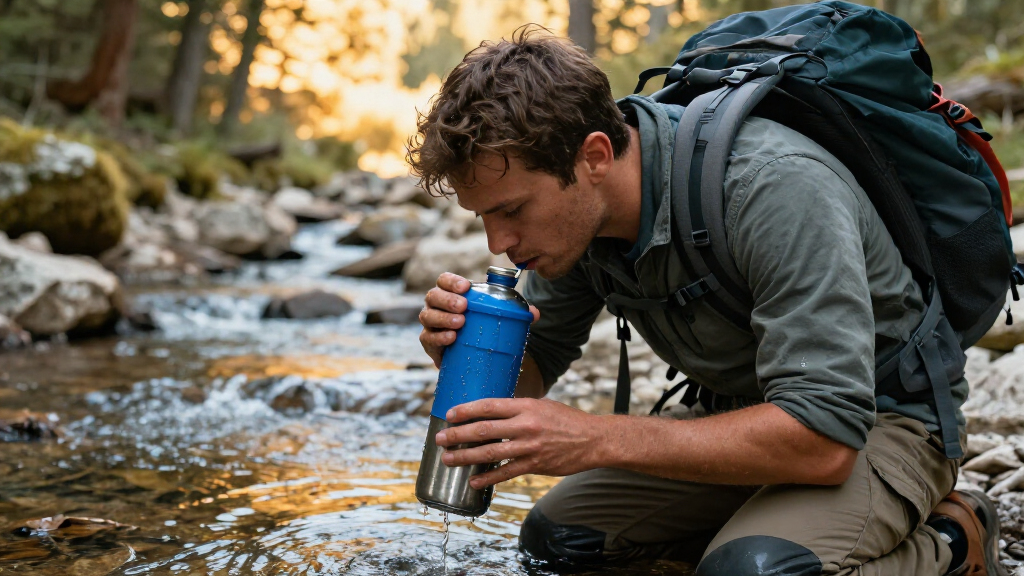
I compared the 14 options for the jobs backpackers actually need a filter to do: collect from natural sources, produce drinkable water with manageable effort, and fit into a system for carrying water between stops. I gave more weight to adaptable designs, clear use cases, practical cleaning, and a useful balance of size and throughput than to compact dimensions alone. A filter that can fill a bottle or reservoir has an advantage for longer days and camp use; a straw can still make sense when direct drinking and emergency portability take priority.
The order reflects those differences rather than treating every product as interchangeable. Squeeze systems rank ahead because they offer a strong mix of trail flexibility and simple operation; gravity and pump models earn places for specific group, camp, or source-access needs. Bottle filters and straws are judged by how well their form matches backpacking routines, with extra caution for products whose stated performance or maintenance details need close checking. No filter should be assumed to remove every hazard: buyers should verify the manufacturer’s tested claims and match them to the water sources on their route.
Factors to Consider When Choosing Portable Water Filters For Backpacking
The right filter depends less on a single headline specification and more on how you collect, carry, and share water during a trip. I would choose a system around your route and routine before focusing on weight alone.
Match the format to how you drink
A squeeze filter works well when you want to drink directly or transfer water into a bottle, soft flask, or cooking container. Gravity systems suit a camp routine where you can hang a bag and wait while doing another task. Straws are convenient at the source, but they do not automatically solve the need to carry clean water away from it. Before buying, map out a typical day: how often you stop, whether you cook with filtered water, and whether you need a filled reservoir for a dry stretch. A compact filter can become awkward if it forces you to redesign those habits.
Think about the water sources on your route
Clear flowing water is easier to work with than shallow, silty pools, but source conditions can change during a trip. Fine sediment can slow many filters and make cleaning more frequent, so plan to let dirty water settle or pre-filter it when practical. A pump may help draw from narrow or awkward sources, while a wide-mouth bottle or squeeze setup may be easier at a stream edge. Check the product’s stated contaminant coverage against local advisories and the hazards expected on your route. Do not treat a generic “portable filter” label as proof that a device addresses every biological or chemical risk.
Compare carried weight with total system weight
The listed filter weight is only part of what goes in your pack. Dirty-water bags, clean-water containers, hoses, adapters, and a backflush tool can add meaningful bulk. A straw may look light on its own, yet a backpacker who still needs bottles for camp may carry more equipment overall. Likewise, a gravity setup can replace repeated hand squeezing at camp, but the reservoir and hanging arrangement take space. Compare complete setups, including the containers you already own, rather than choosing from the filter body’s weight alone.
Plan for flow, capacity, and group size
Fast filtering matters most when several people need water at once or when camp chores compete for time. A solo hiker with frequent streams may be comfortable filtering a small amount at each stop, while a group may prefer a larger batch system. Flow rates can change with water quality, filter condition, and how the device is operated, so advertised figures are not a promise for every source. Ask how much water you need before the next reliable refill and whether your chosen format can produce that amount without frustrating effort. For shared trips, agree on who carries the filter and how clean water will be stored.
Check cleaning, freezing, and replacement needs
Backflushing or rinsing can restore flow in some filters, but the method and supplied accessories differ by model. Learn the cleaning steps before a trip, since a clogged filter is harder to deal with when water is scarce. Freezing can damage some hollow-fiber filters even when the outside looks intact; follow the maker’s storage guidance and keep the filter protected from freezing conditions. Also check replacement limits, compatible parts, and whether the filter can be inspected or maintained in the field. A low-maintenance setup may be a better fit than a lighter one for hikers who travel far from resupply.
Separate filtration from purification
Many portable backpacking filters target bacteria and protozoa, but products vary in what they claim to reduce or remove. Viruses, dissolved chemicals, fuel residues, and heavy metals may require a different treatment method or a combination of methods. Read the testing standard and contaminant list rather than relying on pore-size language or broad survival wording alone. If your route includes high-risk human contamination or questionable water infrastructure, check local guidance and consider whether filtration needs to be paired with a purifier or chemical treatment. Keep a backup method for trips where the main filter is damaged or unsuitable for the source.
Frequently Asked Questions
Is a squeeze filter or a gravity filter a better choice for a typical backpacking trip?
I would choose a squeeze filter for a solo trip where low bulk and flexible bottle filling matter most. A gravity filter is more appealing at camp, especially when several people need water and you would rather let a batch filter while setting up. The gravity bag and hose take additional space, so that convenience has a packing cost. For a mixed itinerary, consider whether you need frequent small refills on trail or larger amounts at camp. Your water routine is a better guide than a general claim that one format is always faster.
Can a portable water filter make water safe from viruses and chemicals?
Not every filter is designed to address viruses, dissolved chemicals, or heavy metals. Many backpacking filters focus on bacteria and protozoa, so the exact claims and test information matter more than the word “filter” on the package. Check the manufacturer documentation and local water guidance for the hazards you expect. If those hazards fall outside the filter’s scope, a purifier or an additional treatment step may be needed. Do not rely on a straw or small pore-size claim as a substitute for checking contaminant coverage.
Should I bring a backup water treatment method on a long trip?
A backup is a sensible choice when the route has long gaps between reliable sources, cold conditions, or limited resupply. A filter can clog, crack, freeze, or be misplaced, and a second method can keep a small equipment problem from becoming a water problem. Choose a backup that addresses the risks on your route and that you know how to use correctly. Chemical treatment may be light, but it can require waiting time and may not improve taste. For remote trips, test your primary and backup systems before leaving.
Are straw-style filters practical as a backpacking trip’s only filter?
A straw can work for direct drinking when water is available often and you do not need to fill containers. It is less convenient when you need water for cooking, a dry stretch, or another person, because drinking through the straw does not create a reserve. Some straw products also differ in stated capacity and contaminant coverage, so check those details rather than treating them as interchangeable. For a full backpacking setup, a squeeze filter or another option that transfers water can be more flexible. A straw may still be useful as a small backup or emergency tool.
What should I do if my filter slows down during a trip?
First, follow the manufacturer’s cleaning or backflushing instructions; improvised methods can damage a filter or contaminate the clean side. If the source is cloudy, allow sediment to settle or use a suitable pre-filter before processing more water. Check whether the filter has been exposed to freezing temperatures or physical damage, since a unit can look normal while its performance has been affected. If flow remains poor or the filter may be compromised, switch to your backup treatment method rather than assuming it is still working. Build cleaning time and a backup plan into your trip routine.
Conclusion
For the broadest mix of trail flexibility and packability, I would choose the Sawyer Micro Squeeze as the best overall pick, with the Platypus QuickDraw as a strong alternative for hikers who favor a simple squeeze routine. The best value depends on your preferred setup: a Sawyer Squeeze package with pouches may suit hikers who need a ready-made carry system, while a straw is a better match for direct drinking than for group or camp water. Beginners should prioritize a familiar, easy-to-clean squeeze design and practice with it before departure. For hands-free camp batches, the Waterdrop gravity system is the specific-use choice; for drawing from awkward sources, consider the MSR TrailShot or Katadyn Hiker. Whatever you select, verify the contaminant claims for your route and carry a backup method when water access is uncertain.