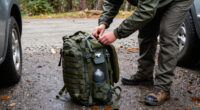
The best hiking backpack overall in this roundup is the Osprey Rook 50L, a balanced choice for overnight trips that need more capacity than a daypack. For long, heavier loads, the Osprey Atmos AG 65L stands out for its suspension-focused design, while the Osprey Talon 22L suits fast day hikes where a large pack would be needless weight. The main tradeoff is between capacity and carry comfort: compact hydration packs keep essentials close, while larger internal-frame packs make room for multi-day gear. Rain covers, fit, and intended load also separate these options, and a bigger pack is not automatically a better one. Read on for the full breakdown and help matching a pack to your trips.

Get emergency and outdoor gear delivered free with Prime
- Fast, free delivery on millions of items
- Prime Video, Amazon Music and more included
- Member-only deals all year
Key Takeaways
- The Osprey Rook 50L is the strongest all-around backpacking choice for hikers who need overnight capacity without jumping to a 65L pack.
- The Osprey Atmos AG 65L and Aether 65L are the premium, load-oriented options; their larger formats make most sense when the trip and gear justify carrying more.
- The TETON Sports Scout 55L, Explorer 65L, and Loowoko 50L favor capacity and included rain protection, while their larger size may be excessive for day hikes.
- For short outings, the Osprey Talon 22L, Sportlite 30L, and Daylite Plus serve different roles: active hiking, light day loads, and more general-purpose use.
- Hydration-focused packs are a distinct category: the TETON Oasis Trailrunner, Water Buffalo Sherpa, and IX INOXTO prioritize ready access to water over the organized gear space of larger packs.
| TETON Sports Scout 55L Internal Frame Backpack with Rain Cover, Olive |  | Best for Smaller Adults and Older Kids | Capacity: 55 liters | Weight: 1.86 kg | Material: 600D polyester diamond ripstop | VIEW LATEST PRICE | See Our Full Breakdown |
| Loowoko 50L Hiking Backpack with Rain Cover | 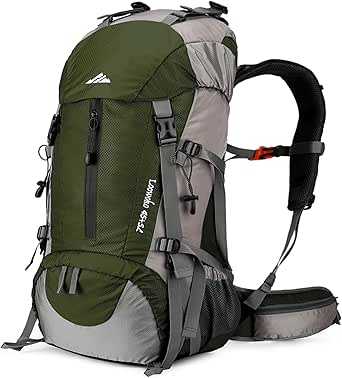 | Best Frameless Value Pick | Capacity: 50 liters | Weight: 2.1 pounds | Material: Polyester and nylon | VIEW LATEST PRICE | See Our Full Breakdown |
| TETON Sports Explorer 65L Internal Frame Backpack with Rain Cover, Olive |  | Best for Higher-Capacity Trips | Capacity: 65 liters | Weight: 5 pounds | Dimensions: 18 × 32 × 12 inches | VIEW LATEST PRICE | See Our Full Breakdown |
| IX INOXTO Hiking Backpack, 26L Waterproof Daypack with 3L Water Bladder and Rain Cover (Khaki) |  | Best Daypack with Hydration Included | Capacity: 26 liters | Dimensions: 20.4 × 11.8 × 5.9 inches (H × W × D) | Weight: 2.2 pounds | VIEW LATEST PRICE | See Our Full Breakdown |
| Osprey Sportlite 30L Lightweight Hiking Backpack, Tan OS |  | Best Adjustable Daypack | Capacity: 30 liters | Dimensions: 11 × 11.8 × 21.7 inches (D × W × H) | Weight: 1060 g | VIEW LATEST PRICE | See Our Full Breakdown |
| Osprey Rook 50L Men’s Backpacking Backpack, Blue |  | Best for Adjustable Backpacking Fit | Capacity: 50 liters | Weight: 3.6 lb | Dimensions: 29.5 × 14.6 × 13.8 in | VIEW LATEST PRICE | See Our Full Breakdown |
| Osprey Talon 22L Men’s Lightweight Hiking Backpack, Gray |  | Best for Active Day Hikes | Capacity: 22 liters | Weight: 2.4 lb | Dimensions: 22 × 11.4 × 11.4 in | VIEW LATEST PRICE | See Our Full Breakdown |
| Maelstrom 40L Hiking Backpack with Rain Cover |  | Best for Pocket-Based Organization | Capacity: 40 liters | Weight: 2.2 lb | Dimensions: 8.86 × 12.99 × 23.62 in | VIEW LATEST PRICE | See Our Full Breakdown |
| Maelstrom 40L Waterproof Hiking Backpack | 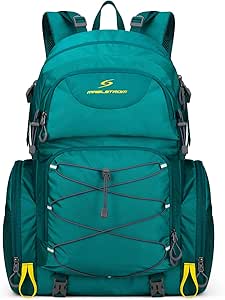 | Best for Maximum Pocket Organization | Capacity: 40 liters | Weight: About 2 lb; listing also states 1.96 lb | Dimensions: 13.4 × 8.6 × 22 in | VIEW LATEST PRICE | See Our Full Breakdown |
| Teton Oasis Trailrunner Hydration Backpack – Lightweight Water Pack with 2L/3L Bladder for Hiking, Running, Cycling, Biking – 18L/22L Sizes – Sewn-in Rain Cover – Fits Men and Women |  | Best for Built-In Hydration | Capacity: 18 liters; 22-liter version available | Weight: 2 lb | Dimensions: 10 × 18.5 in | VIEW LATEST PRICE | See Our Full Breakdown |
| Osprey Aether 65L Men’s Backpacking Backpack – Black L-XL |  | Best for a Customizable Heavy-Load Fit | Capacity: 68 liters | Weight: 4.96 lb | Dimensions: 33.5 x 15.7 x 11 in | VIEW LATEST PRICE | See Our Full Breakdown |
| Osprey Atmos AG 65L Men’s Backpacking Backpack – Black, Large-XL |  | Best for Ventilated Backpacking Comfort | Volume: 68 liters | Weight: 4 lb | Dimensions: 34.6 x 15.4 x 14.2 in | VIEW LATEST PRICE | See Our Full Breakdown |
| Osprey Daylite Plus Commuter Backpack, Green |  | Best for Day Hikes and Everyday Carry | Capacity: 20 liters | Weight: 1.3 lb | Dimensions: 18.9 x 11 x 9.4 in | VIEW LATEST PRICE | See Our Full Breakdown |
| Water Buffalo Sherpa 22L Hiking Hydration Backpack, 2L Bladder |  | Best for Hydration-Ready Day Hikes | Backpack capacity: 22 liters | Bladder volume: 2 liters | Pockets: 6 | VIEW LATEST PRICE | See Our Full Breakdown |
| hiking backpack | Material | Weight | Capacity | Dimensions |
|---|---|---|---|---|
| TETON Sports Scout 55L Interna | 600D polyester diamond ripstop | 1.86 kg | 55 liters | 16 × 30 × 10 in (D × W × H) |
| Loowoko 50L Hiking Backpack wi | Polyester and nylon | 2.1 pounds | 50 liters | — |
| TETON Sports Explorer 65L Inte | 600D polyester diamond ripstop | 5 pounds | 65 liters | 18 × 32 × 12 inches |
| IX INOXTO Hiking Backpack | High-density polyester | 2.2 pounds | 26 liters | 20.4 × 11.8 × 5.9 inches (H × W × D) |
| Osprey Sportlite 30L Lightweig | 100% recycled nylon ripstop | 1060 g | 30 liters | 11 × 11.8 × 21.7 inches (D × W × H) |
| Osprey Rook 50L Men’s Backpack | Polyester | 3.6 lb | 50 liters | 29.5 × 14.6 × 13.8 in |
| Osprey Talon 22L Men’s Lightwe | 100% recycled 100D high-tenacity nylon with DWR treatment | 2.4 lb | 22 liters | 22 × 11.4 × 11.4 in |
| Maelstrom 40L Hiking Backpack | 210D rip-stop nylon | 2.2 lb | 40 liters | 8.86 × 12.99 × 23.62 in |
| Maelstrom 40L Waterproof Hikin | Nylon; outer material listed as polyester | About 2 lb; listing also states 1.96 lb | 40 liters | 13.4 × 8.6 × 22 in |
| Teton Oasis Trailrunner Hydrat | 210D 2mm polyester honeycomb ripstop | 2 lb | 18 liters; 22-liter version available | 10 × 18.5 in |
| Osprey Aether 65L Men’s Backpa | Bluesign-approved 420HD nylon packcloth with PFC-free DWR | 4.96 lb | 68 liters | 33.5 x 15.7 x 11 in |
| Osprey Atmos AG 65L Men’s Back | Recycled nylon main, accent, and bottom fabrics; soft-shell | 4 lb | — | 34.6 x 15.4 x 14.2 in |
| Osprey Daylite Plus Commuter B | Recycled 300D polyester with PFAS-free DWR | 1.3 lb | 20 liters | 18.9 x 11 x 9.4 in |
| Water Buffalo Sherpa 22L Hikin | 150D ripstop polyester and 420D jacquard nylon | — | — | — |
More Details on Our Top Picks
TETON Sports Scout 55L Internal Frame Backpack with Rain Cover, Olive
The Scout makes the most sense for hikers who need multi-day capacity but benefit from a pack shaped for a smaller frame. Its adjustable torso and shoulder straps help tailor the fit, while the three-quarter internal frame is specifically aimed at kids and smaller adults. Compared with the roomier TETON Sports Explorer 65L, the Scout carries less, which can make it a more manageable choice for shorter trips and smaller users. A sleeping bag compartment, seven pockets, and included rain cover help separate gear and handle passing showers. The tradeoff is fit: the compact frame may not suit larger adults, and its water-resistant fabric is not a substitute for rain protection during prolonged downpours. I’d choose it over a frameless pack when load support matters, but not for a large-bodied hiker seeking a full-size frame.
Pros:- Adjustable torso and shoulder straps allow a more tailored fit.
- Three-quarter internal frame offers structure for carrying hiking gear.
- Sleeping bag compartment and multiple pockets help separate equipment.
- Included rain cover adds protection during showers.
Cons:- Three-quarter frame may limit fit for larger users.
- Water-resistant construction needs the included cover in prolonged rain.
Best for: Smaller adults and older kids planning one- to three-day hikes who want an adjustable internal-frame pack with organized storage.
Not ideal for: Larger adults or hikers expecting sustained heavy rain; the three-quarter frame may not fit well, and the shell is only water resistant.
- Capacity:55 liters
- Weight:1.86 kg
- Material:600D polyester diamond ripstop
- Dimensions:16 × 30 × 10 in (D × W × H)
- Frame:¾ internal frame
- Harness:Adjustable
- Pockets:7
- Included:Rain cover
Our verdict“Choose the Scout for an adjustable, organized multi-day pack sized for smaller hikers, but look elsewhere if you need a larger frame fit.”
Loowoko 50L Hiking Backpack with Rain Cover
For hikers who want a large main pack without an internal frame, the Loowoko offers a straightforward setup: 50 liters of capacity, a shoe separator, six external pockets, and attachment points for gear. Its included waterproof rain cover is a useful advantage over the Osprey Sportlite 30L, which has less room and no cover included. The Loowoko also has padded, breathable shoulder straps and ventilated back support, but those comfort features do not replace a frame when carrying heavier loads. That distinction is the main reason I’d place it below framed options such as the TETON Sports Scout 55L for load support. It suits hikers who value storage and a light, simple design over frame structure. The lack of an internal frame can make weight distribution less supportive, particularly when the pack is heavily loaded.
Pros:- 50-liter capacity provides room for multi-day hiking gear.
- Waterproof rain cover is included.
- Shoe separator and six external pockets help organize belongings.
- Compression straps and attachment points accommodate outdoor equipment.
Cons:- No internal frame for supporting heavier loads.
- Machine washing may require care to protect pack components.
Best for: Hikers seeking a roomy, frameless pack for lighter loads, with external storage and a rain cover included.
Not ideal for: Backpackers carrying heavy loads over long distances who want the structure and load support of an internal frame.
- Capacity:50 liters
- Weight:2.1 pounds
- Material:Polyester and nylon
- Frame:No internal frame
- External pockets:6
- Included:Waterproof rain cover
- Organization:Main compartment and shoe separator
- Care instructions:Machine wash
Our verdict“Pick the Loowoko for generous storage and a rain cover in a frameless design, but choose the Scout if carrying support is a higher priority.”
TETON Sports Explorer 65L Internal Frame Backpack with Rain Cover, Olive
The Explorer is the capacity pick in this group for hikers who need space for camping gear and prefer an internal frame. At 65 liters, it offers 10 liters more room than the TETON Sports Scout 55L, along with an adjustable torso and back panel, a sleeping bag compartment, and a hydration pocket. That extra volume is useful for longer trips or bulkier equipment, but the pack itself weighs 5 pounds before anything goes inside. Hikers prioritizing a lighter daypack may find the Osprey Sportlite 30L a better match, though it cannot hold the same multi-day load. The Explorer’s six pockets and compartments, compression straps, and rain cover help manage a full pack. Its listed dimensions are also substantial, so I’d skip it for short outings or when compact carry matters more than capacity.
Pros:- 65-liter capacity accommodates bulky camping and backpacking gear.
- Adjustable torso and back panel help tailor the fit.
- Hydration pocket, sleeping bag compartment, and compression straps support organized packing.
- Included rain cover offers added weather protection.
Cons:- Five-pound pack weight adds a substantial load before gear is packed.
- Large dimensions may feel bulky on shorter outings or for compact storage.
Best for: Campers and backpackers packing bulky gear for longer trips who want adjustable fit features and an internal frame.
Not ideal for: Day hikers and weight-conscious backpackers who do not need 65 liters or want to avoid a five-pound pack before loading.
- Capacity:65 liters
- Weight:5 pounds
- Dimensions:18 × 32 × 12 inches
- Material:600D polyester diamond ripstop
- Frame:Internal frame
- Pockets and compartments:6 each
- Included:Rain cover
- Warranty:Limited lifetime
Our verdict“Choose the Explorer when 65 liters and an adjustable internal frame matter more than keeping your base pack weight low.”
IX INOXTO Hiking Backpack, 26L Waterproof Daypack with 3L Water Bladder and Rain Cover (Khaki)
The IX INOXTO is the hydration-focused choice for day hikes: its 26-liter capacity is paired with a built-in 3-liter bladder, so water storage is part of the pack rather than a separate purchase. That makes it more ready to go than the Osprey Sportlite 30L, which includes a hydration sleeve but not the reservoir. A steel frame support and breathable mesh back add structure for trail use, while seven pockets and six compartments give smaller items designated places. The tradeoff is range: 26 liters works for day outings but is far short of the TETON Sports Scout 55L or Explorer 65L for overnight gear. Its one-size fit may also be less adaptable across body types than packs with adjustable torso systems. I’d pick it for organized day hikes, not as a multi-day backpack.
Pros:- Includes a 3-liter hydration bladder and rain cover.
- Breathable mesh back and 3D suspension support comfort on longer day hikes.
- Seven pockets and six compartments help organize trail essentials.
- Steel frame support adds structure to the daypack.
Cons:- 26-liter capacity is too limited for most multi-day trips.
- One-size fit may not suit every body type.
Best for: Day hikers who want a dedicated hydration bladder, rain cover, and organized storage in one pack.
Not ideal for: Overnight backpackers or buyers who need an adjustable torso fit; its 26-liter capacity and one-size design may not meet those needs.
- Capacity:26 liters
- Dimensions:20.4 × 11.8 × 5.9 inches (H × W × D)
- Weight:2.2 pounds
- Material:High-density polyester
- Frame:Steel frame support
- Pockets:7
- Compartments:6
- Hydration bladder:3 liters
Our verdict“Choose the IX INOXTO for a day-hiking setup with a large included bladder, but not for overnight capacity or a customizable torso fit.”
Osprey Sportlite 30L Lightweight Hiking Backpack, Tan OS
The Sportlite is the most versatile day-hiking pick here for buyers who want a lighter, adjustable pack without the bulk of a backpacking model. Its sliding-yoke torso adjustment helps tailor the fit, while the ventilated AirScape backpanel and padded hipbelt support comfort when carrying a full day’s gear. The 30-liter capacity gives it more room than the IX INOXTO 26L, but the IX includes a 3-liter bladder and rain cover; the Sportlite supplies only a hydration sleeve, so the reservoir must be bought separately. Compared with the TETON Sports Scout 55L, this Osprey is better suited to day hikes than overnight loads. Recycled nylon ripstop is another plus for buyers seeking recycled materials. Its main limits are the lack of an included rain cover and insufficient room for most multi-day kits.
Pros:- Sliding-yoke adjustment helps tailor torso length.
- Ventilated AirScape backpanel and padded hipbelt support hiking comfort.
- 30-liter capacity offers more day-hike storage than the IX INOXTO 26L.
- Made from 100% recycled nylon ripstop.
Cons:- Hydration reservoir is sold separately.
- No integrated rain cover is included.
- 30-liter capacity may not fit multi-day gear.
Best for: Day hikers who want an adjustable torso, supportive hipbelt, and 30 liters of storage for varied trail essentials.
Not ideal for: Backpackers needing overnight capacity or hikers who want a hydration reservoir and rain cover included.
- Capacity:30 liters
- Dimensions:11 × 11.8 × 21.7 inches (D × W × H)
- Weight:1060 g
- Material:100% recycled nylon ripstop
- Fit:Unisex, regular fit
- Adjustment system:Sliding-yoke torso length adjustment
- Pockets:6
- Compartments:7
Our verdict“Choose the Sportlite for an adjustable, well-organized daypack, and pick the IX INOXTO instead if an included bladder and rain cover matter more.”
Osprey Rook 50L Men’s Backpacking Backpack, Blue
The Osprey Rook 50L is the strongest fit here for hikers carrying overnight gear who want an adjustable suspension rather than a one-size daypack. Its AirSpeed backpanel adds airflow, while the LightWire frame shifts weight toward the hipbelt, helping a loaded pack feel more supported. Compared with the Maelstrom 40L Hiking Backpack, the Rook offers more capacity and a more specified frame-and-fit system; the Maelstrom is lighter and has more pockets, but its load limit is not listed. The Rook’s removable raincover and divided sleeping-bag compartment suit multi-day packing. The tradeoff is its 3.6-pound weight: it is a more substantial choice than a daypack and may feel bulky when stored or carried without a full load.
Pros:- Adjustable torso fit accommodates a range of torso lengths.
- Ventilated AirSpeed backpanel helps limit heat buildup.
- LightWire frame transfers pack weight toward the hipbelt.
- Removable raincover and divided sleeping-bag compartment support overnight packing.
Cons:- At 3.6 pounds, it adds noticeable weight before gear is packed.
- Its listed dimensions can make it awkward to store in compact spaces.
Best for: Backpackers planning overnight or weekend trips who want adjustable torso fit, ventilation, and a framed carry system.
Not ideal for: Day hikers and ultralight packers who need a compact, low-weight bag rather than 50 liters of framed capacity.
- Capacity:50 liters
- Weight:3.6 lb
- Dimensions:29.5 × 14.6 × 13.8 in
- Material:Polyester
- Suspension:Adjustable AirSpeed suspension
- Frame:LightWire
- Raincover:Integrated and removable
- Sleeping bag compartment:Zippered with floating divider
Our verdict“Choose the Rook if you want a framed, adjustable 50-liter pack for overnight trips and can accept its heavier, bulkier build.”
Osprey Talon 22L Men’s Lightweight Hiking Backpack, Gray
For day hikes that involve a brisk pace, cycling, or frequent stops to use trekking poles, the Osprey Talon 22L is the most activity-focused option in this group. Its AirScape backpanel and BioStretch hip belt are designed to keep the pack close and stable, while attachment points accommodate poles and other equipment. That makes it a more nimble choice than the Osprey Rook 50L, which is built around overnight capacity and a frame, not compact movement. Recycled, bluesign-approved nylon with a water-repellent treatment suits regular outdoor use, though it is not a substitute for a rain cover in sustained wet weather. The 22-liter volume keeps the load restrained, but limited internal organization and the absent hydration reservoir make it less ready for longer outings than a dedicated hydration pack such as the Teton Oasis.
Pros:- Lightweight 22-liter format suits full-day outings without excess capacity.
- AirScape backpanel and BioStretch hip belt support a close, stable carry.
- Attachment points accommodate trekking poles, a helmet, and an ice axe.
- Made from 100% recycled, bluesign-approved nylon with a water-repellent treatment.
Cons:- Hydration reservoir is not included.
- Limited internal compartments can make gear organization harder on longer outings.
Best for: Day hikers and cyclists who carry a compact kit and want a stable pack with pole and helmet attachment options.
Not ideal for: Overnight hikers or buyers who want a hydration reservoir included and more internal compartments for organizing gear.
- Capacity:22 liters
- Weight:2.4 lb
- Dimensions:22 × 11.4 × 11.4 in
- Material:100% recycled 100D high-tenacity nylon with DWR treatment
- Water resistance:Water repellent
- Pockets:4
- Fit:Regular/adjustable
- Hydration:Hydration sleeve; reservoir not included
Our verdict“Pick the Talon for active day hikes when a stable, attachment-rich pack matters more than overnight capacity or included hydration.”
Maelstrom 40L Hiking Backpack with Rain Cover
The Maelstrom 40L makes sense for hikers who like to divide gear among accessible pockets instead of relying on a simpler main compartment. It lists 10 pockets, including a wet-item compartment, and includes a rain cover, trekking-pole carry features, and a hydration sleeve. Against the Maelstrom 40L Waterproof Hiking Backpack, this model specifies rip-stop nylon and a wet-item pocket, while the other Maelstrom lists more pockets and a waterproof fabric claim. Neither listing provides a maximum load capacity, so I would not choose either based on an assumption about heavy-load support. At 2.2 pounds, this version is relatively light for its stated 40-liter volume, but hand-wash-only care is less convenient, and the lack of a stated load limit leaves some uncertainty for fully packed trips.
Pros:- Ten pockets, including a wet-item compartment, help separate trail essentials and damp gear.
- Included rain cover adds protection beyond the water-resistant fabric.
- Hydration sleeve and hose port support drinking on the move.
- Trekking-pole carry features add utility for varied hiking routes.
Cons:- No maximum load capacity is provided, making heavy-load suitability unclear.
- Hand-wash-only care is less convenient than machine-friendly maintenance.
Best for: Hikers who want a 40-liter pack with many separate storage spots, a rain cover, and a wet-item pocket.
Not ideal for: Backpackers carrying heavy loads who need a clearly stated load capacity or a more specified frame and suspension system.
- Capacity:40 liters
- Weight:2.2 lb
- Dimensions:8.86 × 12.99 × 23.62 in
- Material:210D rip-stop nylon
- Pockets:10
- Zippered compartments:7
- Water protection:Water-resistant fabric with included rain cover
- Care:Hand wash only
Our verdict“Choose this Maelstrom if pocket organization and a rain cover matter more than a documented load limit or advanced suspension details.”
Maelstrom 40L Waterproof Hiking Backpack
Among the two 40-liter Maelstrom options, this one prioritizes storage separation and weather protection. It lists 15 pockets and four compartments, alongside waterproof, tear-resistant fabric and an included rain cover. That is a larger pocket count than the Maelstrom 40L Hiking Backpack with Rain Cover, which lists 10 pockets and specifically calls out a wet-item compartment; the other model also gives a more precise rip-stop material description. This pack’s hydration compatibility and attachment straps offer useful flexibility for bottles, trekking poles, or a sleeping pad, but its one-size fit may not sit comfortably on every body. The listed weight varies slightly between about 1.96 and 2 pounds, so treat it as an approximate figure. It suits organized day hikes and light overnight packing better than buyers seeking a clearly adjustable, body-specific fit.
Pros:- Fifteen pockets and four compartments provide extensive gear separation.
- Waterproof, tear-resistant fabric is paired with an included rain cover.
- Hydration compatible, with straps for bottles, trekking poles, and other gear.
- Compression straps and ergonomic shoulder straps support a more controlled carry.
Cons:- One-size fit may not work well for every wearer.
- Product information gives slightly different weights, around 1.96 to 2 pounds.
Best for: Hikers who prefer many dedicated pockets and want a 40-liter pack with waterproof fabric, rain cover, and external gear straps.
Not ideal for: People who need a tailored fit or want precise, consistent weight and material details before choosing a pack.
- Capacity:40 liters
- Weight:About 2 lb; listing also states 1.96 lb
- Dimensions:13.4 × 8.6 × 22 in
- Material:Nylon; outer material listed as polyester
- Water protection:Waterproof fabric with included rain cover
- Pockets:15
- Compartments:4
- Fit:One size fits all
Our verdict“Choose this model if you want extensive pocket organization and weather protection, but skip it if a tailored fit is a priority.”
Teton Oasis Trailrunner Hydration Backpack – Lightweight Water Pack with 2L/3L Bladder for Hiking, Running, Cycling, Biking – 18L/22L Sizes – Sewn-in Rain Cover – Fits Men and Women
The Teton Oasis Trailrunner is the clearest choice for hikers who want water included as part of the pack setup, rather than adding a reservoir later. Its 2-liter bladder and insulated pocket keep hydration close at hand, while the sewn-in rain cover and weather-guarded zippers add protection for a compact load. Compared with the Osprey Talon 22L, the Oasis includes a bladder and emphasizes hydration storage; the Talon instead offers more specialized attachment points for poles, a helmet, or an ice axe. The Oasis’s 18-liter capacity is better for streamlined outings than the 40-liter Maelstrom packs, but it leaves less room for bulky layers or overnight gear. A 3-liter bladder is optional, yet even that may fall short for very long or remote outings. The listed weight is 2 pounds.
Pros:- Includes a 2-liter bladder with an insulated pocket for accessible hydration.
- Compact storage suits hiking, running, and cycling without a large backpack.
- Sewn-in rain cover and weather-guarded zippers add wet-weather protection.
- Adjustable design is described as fitting men, women, and youth.
Cons:- The stated 18-liter capacity offers less room than the 22-liter Talon or 40-liter packs.
- A maximum 3-liter bladder may not provide enough water for long, remote outings.
- Color options are limited according to the product information.
Best for: Hikers, runners, and cyclists who want a compact pack with a bladder included and easy access to water.
Not ideal for: Overnight hikers or people on long, remote routes who need more gear space or greater water capacity than a 2- or 3-liter bladder provides.
- Capacity:18 liters; 22-liter version available
- Weight:2 lb
- Dimensions:10 × 18.5 in
- Tank volume:2 liters; optional 3-liter bladder
- Material:210D 2mm polyester honeycomb ripstop
- Color:Burnt Orange
- Rain protection:Sewn-in rain cover
Our verdict“Pick the Oasis for compact outings when an included hydration bladder matters more than larger capacity or extensive technical attachment points.”
Osprey Aether 65L Men’s Backpacking Backpack – Black L-XL
The Osprey Aether 65L suits backpackers carrying bulky gear for week-long trips or equipment-heavy weekends. Its adjustable torso length, shoulder straps, and hip belt let buyers fine-tune the fit, while the 68-liter capacity and nine compartments make it easier to organize a substantial load. The AirScape backpanel adds breathable support, and an included rain cover provides backup weather protection. Compared with the Osprey Atmos AG 65, the Aether puts more emphasis on adjustable contact points rather than a suspended mesh harness, which may appeal to people seeking a tailored fit. The tradeoff is weight: at nearly five pounds empty, it is a substantial pack before gear goes in. I’d choose it over a smaller daypack only when the trip genuinely calls for its capacity.
Pros:- Adjustable torso length, shoulder straps, and hip belt support a more tailored fit.
- 68-liter capacity and nine compartments accommodate bulky gear and organized packing.
- AirScape backpanel provides breathable support on longer outings.
- Included rain cover adds a layer of protection in wet weather.
Cons:- At 4.96 pounds, the pack adds substantial weight before it is loaded.
- Its large capacity can encourage carrying more gear than a shorter trip requires.
Best for: Backpackers carrying a full week of gear who want adjustable torso, shoulder, and hip-belt fit.
Not ideal for: Fast-and-light hikers and day hikers who can use a smaller, lighter pack and do not need 68 liters of storage.
- Capacity:68 liters
- Weight:4.96 lb
- Dimensions:33.5 x 15.7 x 11 in
- Material:Bluesign-approved 420HD nylon packcloth with PFC-free DWR
- Pockets:4
- Compartments:9
- Rain cover:Included
- Fit system:Adjustable torso length, Fit-on-the-Fly hip belt and shoulder straps
Our verdict“Choose the Aether 65L for long trips and heavy loads when a customizable fit matters more than keeping pack weight low.”
Osprey Atmos AG 65L Men’s Backpacking Backpack – Black, Large-XL
For hikers who prioritize airflow under a substantial load, the Osprey Atmos AG 65 stands apart with its AntiGravity suspension, which wraps breathable mesh across the back and hips. Its 68-liter volume, six pockets, and ten compartments suit weekend or week-long trips, while the sleeping-bag compartment, hydration sleeve, and trekking-pole attachment keep common trail gear accessible. Compared with the Osprey Aether 65L, the Atmos is lighter at four pounds and leans more heavily on its mesh suspension for ventilation, while the Aether offers more explicit adjustment at the torso, hip belt, and shoulder straps. The Atmos still is not a lightweight choice, and its large frame can be excessive for short hikes. Its listed waterproof construction and included rain cover offer added weather protection, but this is a feature-rich load hauler, not a minimalist daypack.
Pros:- AntiGravity mesh suspension promotes ventilation across the back and hips.
- Ten compartments and a dedicated sleeping-bag section help separate gear.
- Hydration sleeve and trekking-pole attachment support trail use.
- Rain cover and listed waterproof construction add weather protection.
Cons:- Four-pound base weight is a lot for short hikes or lighter loads.
- Large capacity may be more pack than weekend hikers with compact gear need.
Best for: Backpackers taking weekend or week-long trips who carry a full load and value a breathable back-and-hip harness.
Not ideal for: Day hikers and minimalist trekkers who want a compact, light pack rather than a feature-rich 68-liter bag.
- Volume:68 liters
- Weight:4 lb
- Dimensions:34.6 x 15.4 x 14.2 in
- Material:Recycled nylon main, accent, and bottom fabrics; soft-shell
- Pockets:6
- Compartments:10
- Weather protection:Waterproof; rain cover included
- Fit:Custom
- Shoulder-to-bottom length:30 in
Our verdict“Pick the Atmos AG 65 if breathable suspension and organized storage matter more to you than a compact, lightweight pack.”
Osprey Daylite Plus Commuter Backpack, Green
The Osprey Daylite Plus is the practical choice for short hikes where a large backpacking pack would be unnecessary. At 20 liters and 1.3 pounds, it has room for daily essentials, snacks, and a spare layer without the bulk of the Aether 65L or Atmos AG 65. Its padded sleeve fits devices up to 14 inches, making it a more useful crossover for commuting and travel than either of those overnight packs. A breathable backpanel, padded harness, and bottle pockets suit everyday trail outings, while recycled polyester and PFAS-free DWR add material details some buyers may value. The capacity is the main limitation: one compartment is not designed to organize multi-day gear, and water-repellent fabric is not a substitute for a rain cover in sustained wet weather.
Pros:- Light 1.3-pound design is easier to carry on daily outings than the Aether 65L or Atmos AG 65.
- Padded sleeve accommodates devices up to 14 inches for commuting and travel.
- Breathable backpanel, padded harness, and side bottle pockets support day-to-day use.
- Made with recycled polyester and PFAS-free DWR treatment.
Cons:- 20-liter capacity and one compartment limit its usefulness for overnight trips.
- Water-repellent finish does not provide the same specified rain-cover backup as the larger Osprey packs.
- One-size fit may not suit every wearer.
Best for: Commuters and day hikers who want one light pack for a laptop, water, snacks, and a few trail essentials.
Not ideal for: Overnight hikers who need sleeping-bag storage, extensive gear organization, or the capacity of a dedicated backpacking pack.
- Capacity:20 liters
- Weight:1.3 lb
- Dimensions:18.9 x 11 x 9.4 in
- Laptop compatibility:Up to 14 in
- Pockets:5
- Compartments:1
- Material:Recycled 300D polyester with PFAS-free DWR
- Water resistance:Water repellent
- Size:One size
Our verdict“Choose the Daylite Plus for commuting and short day hikes, but look to a larger backpacking pack for overnight gear.”
Water Buffalo Sherpa 22L Hiking Hydration Backpack, 2L Bladder
The Water Buffalo Sherpa 22L puts water access at the center of a compact day-hiking setup. Its 2-liter BPA-free bladder and six pockets make it a better fit for hikers who want to carry fluids and trail essentials together than the Osprey Daylite Plus, which lists a device sleeve but no included bladder. Adjustable chest and hip straps help stabilize the load, and trekking-pole holders keep hands free on the trail. Rain-proof zipper liners add a measure of protection around stored gear. The tradeoff is that this hydration-focused pack can feel bulky and heavy when fully loaded, particularly on longer treks. Its 22-liter capacity also falls well short of the 68-liter Osprey Aether 65L and Atmos AG 65, so it is not a substitute for a multi-day backpacking pack.
Pros:- Included 2-liter BPA-free bladder supports hands-free hydration on the trail.
- Six pockets provide separate storage for snacks and small hiking essentials.
- Adjustable hip and chest straps help keep the pack stable.
- Trekking-pole holders and rain-proof zipper liners add useful trail features.
Cons:- A fully loaded pack can feel bulky and heavy on long treks.
- 22-liter capacity is not suited to the gear load of multi-day trips.
- Hydration-focused design offers less flexibility for buyers who do not want an included bladder.
Best for: Day hikers who want an included hydration bladder, accessible pockets, and pole storage in one pack.
Not ideal for: Backpackers carrying overnight or week-long gear, or hikers who prefer to choose a separate reservoir and pack.
- Backpack capacity:22 liters
- Bladder volume:2 liters
- Pockets:6
- Material:150D ripstop polyester and 420D jacquard nylon
- Waterproof zippers:Yes
- Adjustable straps:Hip and chest straps
Our verdict“Choose the Sherpa 22L for day hikes where an included 2-liter bladder and hands-free pole storage are priorities.”
How We Picked
I compared the 14 packs by the jobs hikers are likely to ask them to do: short day hikes, hydration-led outings, overnight trips, and longer backpacking routes. Capacity was judged against intended use rather than treated as a standalone advantage; a compact pack can be a better hiking choice than a large one when the load is small. I also weighed stated features such as internal frames, hydration bladders, rain covers, and pack format by how they affect comfort, weather readiness, and ease of use.
The ranking favors useful versatility and a clear fit for a common hiking need, then accounts for the tradeoffs each design brings. That puts the Rook 50L first as a practical bridge between day hiking and overnight backpacking, while the Atmos AG 65L and Aether 65L are better for hikers carrying more gear. Smaller packs rank well for their specific day-hike or hydration roles, but not as substitutes for backpacking bags. I also distinguish similar options by capacity and intended use, rather than treating a rain cover or hydration bladder as proof that a pack suits every trip.
Factors to Consider When Choosing Best Hiking Backpacks
Before choosing from these packs, start with the trip you take most often, not the longest trip you might take once. The right hiking backpack balances load, fit, access, and weather protection; extra capacity can add bulk without making a hike easier. These factors help narrow the field beyond the differences between individual models.
Match Capacity to Your Typical Trip
Pack volume should reflect how much gear you carry, including food, water, and layers, rather than the number of days alone. A 18–30L pack often fits day-hike essentials, while 40–55L can suit overnight trips for hikers with compact gear. Larger capacities may help on longer routes or when carrying bulky equipment, but unused space can tempt you to pack extra weight. A common mistake is buying the largest bag you can afford as a way to prepare for every scenario. Instead, list the gear you routinely bring and allow some room for seasonal layers. If your trips range widely, a smaller daypack and a dedicated backpacking pack may work better than one oversized compromise.
Treat Fit as a Load-Bearing Feature
Pack fit affects how weight sits on your body, so torso length and hip-belt placement matter as much as nominal capacity. A frame can transfer some of the load toward the hips, but only if the pack matches the wearer and is adjusted correctly. Unisex labels or a size range do not replace checking the maker’s sizing guidance. Try a loaded pack when possible, or check the return policy before ordering online. Shoulder straps that feel comfortable when empty may pinch or shift once food and water are added. For a small daypack, fit still matters, though the consequences of a mismatch are usually more noticeable on longer, heavier hikes.
Choose a Carry Style for Your Hiking Pace
Internal-frame backpacking packs are built for carrying more gear, while streamlined daypacks favor lower weight and quicker movement. Hydration packs make water easy to reach during active outings, but their limited room can leave little space for extra clothing or a substantial lunch. A larger pack can feel cumbersome on a fast day hike, even if it has useful pockets. Think about whether you prefer a reservoir hose, water bottles in side pockets, or both. Buyers often focus on storage volume and overlook how frequently they will need to stop to reach food, a shell, or navigation tools. Choose access and organization around your habits, not just the feature list.
Plan for Rain Without Assuming a Cover Solves Everything
A rain cover can help protect the outside of a pack, but it may shift in wind or leave some areas exposed during prolonged rain. A water-resistant or waterproof description should not be treated as a promise that every seam, zipper, and opening keeps gear dry in all conditions. For wet-weather hiking, put sleeping gear, spare clothing, and electronics in separate dry bags or waterproof liners. This adds a small packing step but gives more dependable protection than relying on one external cover. Covers are also easy to misplace, so check whether a pack includes one or stores it on the bag. Match your protection plan to the length and exposure of your routes.
Pay for Features You Will Use, Not Capacity You Might Need
A higher-end suspension and adjustment system can make sense when you regularly carry a heavy load over long distances. On short hikes with a light kit, a simpler, lighter pack may serve better than a large backpacking model. Hydration bladders, rain covers, and extra organization can add convenience, but each feature should solve a real problem for your outings. One common buying error is paying for a technical design that adds bulk while leaving most of its capacity empty. Another is choosing the least expensive-looking option without checking whether its size and support match the planned load. Spend toward comfort and durability where your routine puts repeated strain on the pack.
Frequently Asked Questions
Is a 50L hiking backpack enough for an overnight trip?
For many overnight trips, 50L can be enough if your sleeping system and other gear pack down reasonably well. The total load depends on season, food, water, and whether you carry shared equipment for other hikers. Cold-weather layers or bulky gear can push you toward a larger capacity, while compact equipment may leave room to spare. A pack that is nearly full before food and water are added is likely too small for your actual plan. Check the packed dimensions of your own gear rather than relying only on a trip-length rule.
Should I choose a hydration pack or a regular daypack?
Choose a hydration pack if frequent access to water is a priority and you usually carry a compact set of essentials. A regular daypack gives you more flexibility for extra layers, food, or gear that does not fit neatly around a bladder. Some hikers prefer bottles because they are easy to refill and monitor, while others like drinking through a hose without stopping. Think about your route, water sources, and refill routine before deciding. If you need both ample storage and a bladder, check that the pack supports one without crowding the rest of your kit.
Do I need an internal-frame backpack for hiking?
An internal frame is most useful when you carry enough weight for load support and structure to matter, especially on overnight or multi-day trips. For a light day hike, a framed backpack may add more structure than you need. Frame design alone does not guarantee comfort: fit, adjustment, and how the load is packed all play a part. If you are comparing a frame pack with a smaller daypack, start by weighing your typical packed load. Choose the simpler format when your gear is light and the more supportive design when the load regularly grows.
Will a backpack rain cover keep my gear dry?
A rain cover provides useful extra protection, but it is not a substitute for protecting sensitive gear inside the pack. Wind can move a cover, and water may still enter through openings or exposed areas during sustained rain. Put clothing, electronics, and sleep gear in dry bags or a liner if they need to stay dry. A cover can be particularly handy for short showers and wet trails, but it may not be needed in every climate. Check where it is stored and whether it fits securely before heading out.
How can I tell whether a backpack is too large for my needs?
If your normal day-hike gear occupies only a small part of the pack, a large capacity may encourage extra packing and make the load bulkier than necessary. A larger bag is justified when you routinely carry overnight gear, cold-weather layers, or shared supplies. Start by laying out your usual kit and comparing its packed volume with the bag’s stated capacity. Also think about how the pack carries when partly full; loose gear can shift unless it is secured. If your short outings and overnight trips differ greatly, two purpose-matched packs can be more comfortable than one bag for every hike.
Conclusion
For a single pack that covers many overnight plans, I recommend the Osprey Rook 50L as best overall. The Loowoko 50L is my best value-oriented pick for hikers drawn to a straightforward, higher-capacity pack with a rain cover, while the Osprey Atmos AG 65L is the best premium choice for longer trips and heavier gear. Beginners who want a backpacking-size starting point can look to the TETON Sports Scout 55L, but should first confirm that a 55L pack fits their actual plans. For fast day hikes, the Osprey Talon 22L is the specific-needs pick; for water-forward outings, compare the TETON Oasis Trailrunner and Water Buffalo Sherpa. Choose by the load and route you expect most often, not by capacity alone.