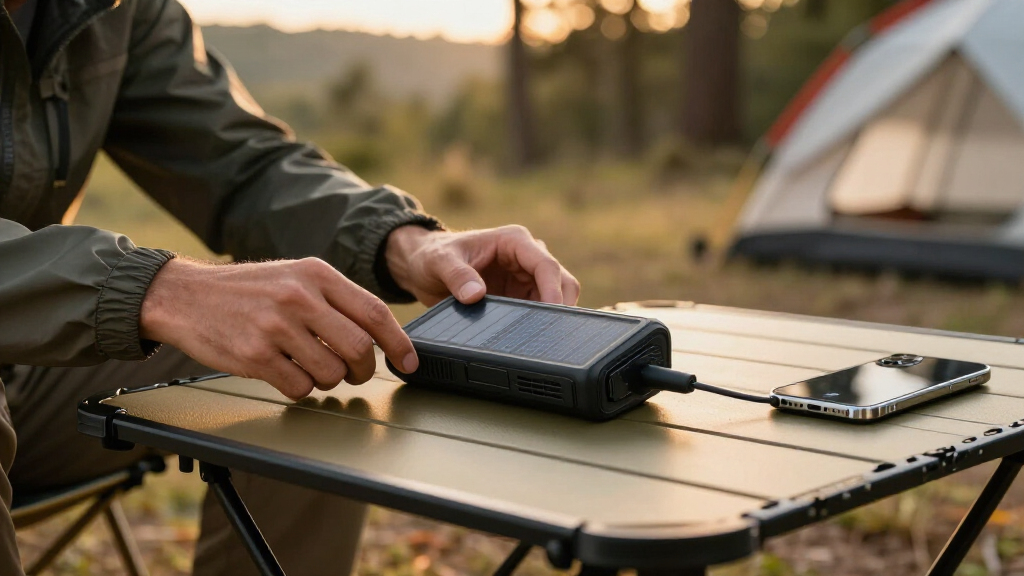

The SOARAISE 50000mAh Solar Power Bank is my best overall pick among these portable solar power banks because it pairs a large claimed capacity with 22.5W charging and wireless convenience. The Mregb 20000mAh Solar Charger is the stronger value choice for occasional camping and emergency backup, while the compact Blavor 10,000mAh makes more sense for beginners and lighter packs. Buyers mainly need to choose between higher capacity and lower weight, built-in convenience and charging speed, or a basic solar panel and a more useful multi-panel design. The advertised battery figures also deserve caution because real output is lower, and small integrated panels recharge very slowly in sunlight. Continue reading for the full breakdown of which model best matches each type of trip, budget, and backup plan.

Get emergency and outdoor gear delivered free — and shop member deals
- Fast, free delivery on millions of items
- Access to Prime Big Deal Days deals on October 6–7
- Prime Video, Amazon Music and more included
Key Takeaways
- SOARAISE 50000mAh ranks first because its 22.5W output, wireless charging, and large claimed capacity create the most balanced package rather than maximizing only one feature.
- The comparison revealed a clear split between compact 10,000mAh to 20,000mAh models and heavier 40,000mAh to 50,000mAh options built for longer backup duty.
- Built-in cables are a major separator in this lineup: the Soarise 48000mAh, Durecopow 20000mAh, and several unbranded models reduce cable clutter, but attached leads can be harder to replace.
- The four-panel 20000mAh model offers the most credible solar-oriented layout here, while most single-panel products are better viewed as battery banks with emergency solar support.
- FEELLE’s magnetic charging and hand crank give it the broadest emergency feature set, but the added hardware makes it a specialized premium pick rather than the best choice for every buyer.


| portable solar power bank | Battery capacity | Built-in cables | Wireless charging |
|---|---|---|---|
| Solar Power Bank 20000mAh with | — | — | — |
| MINRISE Solar Power Bank 40000 | 40000mAh | — | — |
| Solar Power Bank 40000mAh PD20 | — | Type-C, iOS, and Micro USB | — |
| SOARAISE 50000mAh Solar Power | — | USB-C and Lightning | 15W |
| Solar Power Bank 20000mAh with | 20000mAh | 3 | — |
| Mregb Solar Charger Power Bank | 20,000mAh | — | — |
| Blavor Solar Power Bank 10,000 | 10,000mAh | — | Yes |
| Soarise Solar Power Bank 48000 | 48,000mAh | 4 | Yes |
| Durecopow Solar Charger Power | 20,000mAh | 4 | — |
| Solar Charger Power Bank 49800 | 49,800mAh | — | Yes |
| BLASOUL Solar Power Bank 49800 | — | iOS, USB-C, Micro-USB, and USB-A | 15W |
| FEELLE Solar Power Bank 50000m | 50,000mAh | — | Magnetic |
| SoarAise Solar Power Bank 4800 | — | USB-C, phone, USB-A, and Micro-USB | Supported |
More Details on Our Top Picks
Solar Power Bank 20000mAh with Built-in Cables and Wireless Charging
I rank this as the best all-in-one convenience pick because it combines four foldable solar panels, built-in cables, wireless charging, and navigation and lighting extras. Unlike the MINRISE 40000mAh, it sacrifices half the battery capacity for a more versatile charging setup that suits shorter trips. The four-panel array gives it more solar surface than single-panel emergency chargers, though the stated 12–15 hours of sunlight means I would still recharge it from a wall before leaving. Waterproof, shockproof, sandproof construction makes sense around campsites and beaches, while the dual flashlight adds SOS and strobe modes. Its compromises are extra bulk and slower wireless output, so cable charging remains the better choice when speed matters.
Pros:- Four foldable panels provide more solar collection area than a basic single-panel design
- Built-in cables and wireless charging reduce the number of accessories to pack
- Waterproof, shockproof, sandproof, and temperature-resistant housing suits exposed campsites
- Dual LED flashlight offers standard, SOS, and strobe modes
Cons:- Solar replenishment may require 12–15 hours of strong sunlight
- Foldable panels and outdoor extras create a bulkier package
- Wireless charging is slower and less efficient than a wired connection
Best for: Weekend campers who want cables, wireless charging, lighting, and backup solar input in one weather-resistant unit
Not ideal for: Ultralight hikers or buyers needing several days of phone power, since the foldable panels add bulk while capacity stops at 20000mAh
- Capacity:20000mAh
- Charging methods:USB-C, Lightning, Micro USB, and wireless
- Solar array:4 foldable panels
- USB-C input:5V/3A
- Lightning and Micro USB input:5V/2A
- Wireless compatibility:Stated for iPhone 15/16/18 and Galaxy S21–S24 series
- Flashlight:Dual LED with standard, SOS, and strobe modes
- Protection:Waterproof, shockproof, sandproof, and temperature resistant
Our verdict“I recommend this for short outdoor trips where connection flexibility matters more than maximum battery capacity.”
MINRISE Solar Power Bank 40000mAh PD 20W Fast Charging
I place the MINRISE 40000mAh ahead of the 20000mAh models for multi-day trips because its larger reserve can support more phone recharges between outlets. Its 20W PD output also offers a clearer speed advantage than the 15W Solar Power Bank with Camping Light. Built-in cables and numerous connections make sharing power easier, although the claimed ten ports should not be mistaken for ten full-speed simultaneous outputs. At 1.1 pounds, this is better carried in a vehicle, base-camp bag, or emergency kit than an ultralight pack. The 1.8W panel is another limitation: I view it as a way to collect emergency power slowly, not refill 40000mAh on demand. A stated six-hour wired recharge makes wall charging the practical routine.
Pros:- 40000mAh capacity offers a larger multi-day reserve than the 20000mAh picks
- 20W PD charging shortens charging time for compatible phones
- Built-in cables reduce accessory clutter when several device types are present
- Waterproof, dust-proof, and drop-proof construction supports rough travel
Cons:- The 1.8W solar panel is suitable only for slow emergency collection
- A 1.1-pound body is heavy for hiking or everyday pocket carry
- Large capacity still depends on wired charging for practical replenishment
Best for: Car campers, road-trippers, and households needing a large emergency reserve for several phones
Not ideal for: Weight-conscious backpackers or buyers expecting the 1.8W solar panel to refill a 40000mAh battery quickly
- Battery capacity:40000mAh
- Battery voltage:3.7V
- USB-C PD output:20W
- Maximum output current:3A
- Solar panel power:1.8W
- Wired charging time:6 hours
- Dimensions:6.67 x 3.35 x 1.22 inches
- Weight:1.1 pounds
- Protection:Waterproof, dust-proof, and drop-proof
Our verdict“I would choose the MINRISE for high-capacity group or emergency use when weight matters less than runtime.”
Solar Power Bank 40000mAh PD20W Fast Charging Portable Solar Charger
I give this 40000mAh model the best emergency-lighting role because its four flashlight modes and stated 30-hour runtime are more useful during outages than the simpler dual-light setup on the MINRISE 40000mAh. The IP67-rated housing also provides a defined protection level, paired with shockproof and dustproof construction for storm kits or exposed campsites. Phone charging is competitive rather than exceptional: 20W USB-C PD matches the MINRISE, while built-in Type-C, iOS, and Micro USB cables cover older and newer devices. Its size and weight are not supplied, but a battery this large is unlikely to suit minimalist packing. Solar input remains a slow fallback, and I would plan on a standard power adapter for regular refills. The strongest reason to choose it is preparedness versatility, not solar speed.
Pros:- Four flashlight modes support routine lighting, signaling, and low-power use
- Flashlight runtime reaches a stated 30 hours
- 40000mAh capacity and 20W USB-C PD balance endurance with useful wired speed
- IP67, shockproof, and dustproof construction fits emergency storage and outdoor trips
Cons:- Solar charging is too slow to serve as the regular refill method
- The large-capacity design is less portable than 20000mAh alternatives
- Fast battery replenishment requires a separate standard power adapter
Best for: Storm-prepared households and campers who want a large battery paired with long-running emergency illumination
Not ideal for: Minimalist travelers or off-grid users seeking fast solar replenishment without access to a wall adapter
- Capacity:40000mAh
- Fast charging:20W USB-C PD
- USB-C port:Input and output
- Additional ports:USB-A output and Micro USB input
- Built-in cables:Type-C, iOS, and Micro USB
- Waterproof rating:IP67
- Flashlight modes:Steady, SOS, strobe, and low brightness
- Flashlight runtime:Up to 30 hours
- Additional protection:Shockproof and dustproof
Our verdict“I favor this model for emergency kits where rugged protection and extended lighting carry as much weight as phone charging.”
SOARAISE 50000mAh Solar Power Bank 22.5W Wireless Portable Solar Charger
I rank the SOARAISE 50000mAh as best overall because it combines the largest capacity in this batch with 22.5W USB-C delivery, 15W wireless charging, and support for up to six devices. Compared with the MINRISE 40000mAh, it adds both capacity and wireless convenience; compared with the 20000mAh four-panel models, it is better suited to longer stays away from outlets. The flashlight, compass, and thermometer give it a broader campsite role, while waterproof, shockproof, and dustproof construction protects the investment. That broad feature set also makes this a high-capacity carry, not a pocket-friendly choice. Wireless performance can drop through thick cases, and the solar panel cannot quickly refill such a large battery. I see solar as emergency backup while USB-C handles routine charging.
Pros:- 50000mAh capacity is the largest among these five picks
- 22.5W USB-C and 15W wireless charging offer strong connection flexibility
- Can supply power to as many as six devices
- Flashlight, compass, thermometer, and rugged protection suit base-camp use
Cons:- A battery this large is less convenient for lightweight or pocket carry
- Solar input serves as backup rather than a practical full-recharge method
- Wireless charging can slow down or fail through thick phone cases
Best for: Base campers and traveling groups who need to charge several devices from one large, rugged battery
Not ideal for: Solo day hikers and buyers who want solar input to replace wall charging for a 50000mAh battery
- Capacity:50000mAh
- USB-C power delivery:22.5W
- Wireless charging:15W
- Built-in cables:USB-C and Lightning
- Additional ports:3
- Simultaneous device support:Up to 6 devices
- Outdoor tools:Flashlight, compass, and thermometer
- Protection:Waterproof, shockproof, and dustproof
Our verdict“I recommend the SOARAISE as the most capable group-camping choice, provided its likely bulk and slow solar refill are acceptable.”
Solar Power Bank 20000mAh with 4 Panels, Built-in Cables and Camping Light
I choose this as the best campsite pick because it pairs a four-panel solar array with both a flashlight and a broader camping light. That lighting setup gives it a clearer after-dark purpose than the 20000mAh Wireless Charging model, while its ability to charge up to five devices makes it useful around a shared tent or picnic table. The tradeoff is speed: its listed 15W output trails the 20W MINRISE and 22.5W SOARAISE models. Capacity is also better matched to weekends than long off-grid stays. Three built-in cables reduce forgotten-adapter problems, and the IP67 weatherproof body is reassuring around rain and dirt. Still, the folding panels add bulk, and the flashlight and camping light cannot run together. I value it most as a camp utility device, not a maximum-output battery.
Pros:- Four solar panels offer more collection area than a single-panel charger
- Camping light adds useful area illumination beyond a directional flashlight
- Built-in cables and extra ports can charge up to five devices
- IP67 weatherproof and shockproof construction suits campsite handling
Cons:- 15W charging is slower than the 20W and 22.5W alternatives in this batch
- Flashlight and camping light cannot operate simultaneously
- Foldable panels make the unit bulkier than a basic 20000mAh power bank
Best for: Weekend tent campers who want area lighting, built-in cables, and shared phone charging from one weatherproof device
Not ideal for: Fast-charge-focused buyers or campers who need the flashlight and area light operating at the same time
- Battery capacity:20000mAh
- Battery chemistry:Lithium polymer
- Solar array:4 panels
- Fast-charging power:15W
- Output current:3A
- Built-in cables:3
- Number of ports:3
- Simultaneous device support:Up to 5 devices
- Weatherproof rating:IP67
Our verdict“I would buy this for weekend camping when integrated area lighting and connection convenience outweigh faster charging.”
Mregb Solar Charger Power Bank 20000mAh
I rank the Mregb Solar Charger Power Bank as the rugged-value choice because its IP67 protection and drop-resistant construction offer stronger outdoor credentials than the IPX5-rated Blavor. Its 20,000mAh battery also provides more reserve power than Blavor’s 10,000mAh pack, making it better suited to weekends away from an outlet. QC 3.0 and dual USB outputs cover practical phone and tablet charging, while the bright flashlight adds genuine emergency utility. The compromise is convenience: unlike the Durecopow model, Mregb supplies no built-in cable set, and it lacks Blavor’s wireless pad. I would also treat the solar panel as a backup source rather than the main recharging method. A wall charger above 5V/2A is needed for reasonable daily recharge times.
Pros:- IP67 waterproof and dustproof construction suits exposed outdoor use
- 20,000mAh capacity provides more reserve power than compact 10,000mAh models
- QC 3.0 support reduces compatible-device charging time
- Drop-proof body and bright LED flashlight add emergency utility
Cons:- Solar recharging is too slow to serve as the primary power source
- No wireless charging or built-in cable set
- The large battery recharges slowly without a charger rated above 5V/2A
Best for: Campers and emergency-kit builders who prioritize IP67 protection and 20,000mAh capacity over wireless charging or built-in cables
Not ideal for: Travelers wanting quick solar replenishment or cable-free charging, since the panel is slow and wireless charging is absent
- Battery capacity:20,000mAh
- Connectors:USB-C and USB-A
- Maximum output:5V/3.1A
- Fast-charging standard:QC 3.0
- Water and dust protection:IP67
- Drop protection:Yes
- Construction:ABS
- Extra feature:LED flashlight
Our verdict“Choose Mregb when rugged protection matters more than integrated cables or wireless convenience.”
Blavor Solar Power Bank 10,000mAh Portable Wireless Charger
The Blavor Solar Power Bank makes the most sense for buyers who want wireless charging without carrying a nearly 50,000mAh brick. Its 20W USB-C connection gives it a useful speed advantage for compatible devices, while the charging pad removes the need for a cable during short stops. Compared with the 20,000mAh Mregb, however, Blavor offers half the stated capacity and weaker water protection at IPX5 rather than IP67. It is also described as relatively large for a 10,000mAh charger, so “compact” is relative to the much heavier Soarise 48,000mAh model. I place it ahead for day hikes and light travel, not extended off-grid stays. The solar panel remains an emergency feature, and there is no built-in charging cable.
Pros:- Wireless charging supports compatible phones without a separate cable
- 20W USB-C connection offers faster wired charging
- IPX5, dustproof, and shockproof design is suited to routine outdoor use
- 10,000mAh capacity keeps it lighter than the largest models in the lineup
Cons:- Half the stated capacity of the 20,000mAh Mregb
- IPX5 protection is weaker than Mregb’s IP67 rating
- Solar efficiency is limited, and no built-in cable is specified
Best for: Day hikers and light travelers who want wireless charging and 20W USB-C power in a lower-capacity outdoor battery
Not ideal for: Multi-day campers who need maximum stored energy or stronger water protection than IPX5
- Battery capacity:10,000mAh
- Wired connection:USB-C input/output
- USB-C charging power:20W
- Wireless charging:Yes
- Water protection:IPX5
- Outdoor protection:Dustproof and shockproof
- Materials:Flame-retardant ABS and PC
- Battery chemistry:Lithium-cobalt
Our verdict“Pick Blavor for shorter outings when wireless convenience and USB-C speed outweigh maximum capacity.”
Soarise Solar Power Bank 48000mAh Wireless Portable Charger with 4 Cables
I give the Soarise 48,000mAh Solar Power Bank the group-charging role because it can power up to seven devices and includes four common cable formats. That integration is far more useful for a mixed-device campsite than the Mregb’s two USB ports, and wireless charging adds another way to share power. Its four-panel solar array is also more ambitious than the single emergency panels found on many rivals, though sunlight and panel size still limit real-world replenishment. Capacity is the main reason to choose it, but it is also the reason to skip it: this model will be bulkier and potentially heavier than the 10,000mAh Blavor. I see it as a base-camp battery rather than a pocket charger. The built-in cable selection reduces clutter, but damaged fixed cables may be harder to replace.
Pros:- Charges up to seven devices simultaneously
- Four built-in cable types reduce the need for separate leads
- 48,000mAh capacity is well suited to shared use
- Four solar panels and wireless charging broaden replenishment and output choices
Cons:- High capacity and multiple panels make it bulky and potentially heavy
- Solar performance remains dependent on strong, sustained sunlight
- Built-in cables may be less convenient to replace if damaged
Best for: Families and camping groups carrying mixed USB-C, Lightning, Micro-USB, and wireless devices
Not ideal for: Solo hikers counting every ounce, since the 48,000mAh battery and four-panel design add bulk
- Battery capacity:48,000mAh
- Solar array:4 high-efficiency panels
- USB-A ports:2
- USB-C port:1 input/output
- Wireless charging:Yes
- Built-in cables:4
- Cable formats:USB-C, Lightning-style phone connector, USB-A, and Micro-USB
- Simultaneous device support:Up to 7 devices
Our verdict“Soarise is the practical group pick when connection variety and shared capacity matter more than pack weight.”
Durecopow Solar Charger Power Bank 20,000mAh with 4 Cables and 3 Ports
The Durecopow 20,000mAh Solar Charger earns its place by combining four attached cables with three ports, letting a mixed-device group charge without unpacking a separate cable pouch. Compared with the similarly sized Mregb, it sacrifices a stated IP67 rating but offers much better connection flexibility and support for up to six devices. Its 1,000-plus recharge-cycle claim also suits buyers assembling a reusable emergency kit rather than a single-trip accessory. Dual flashlights add campsite utility, while the water-resistant, shockproof, and dustproof shell provides broad protection. I would not choose it for ultralight hiking, since neither dimensions nor weight are disclosed and the design may be bulky for a pocket. As with the other models here, solar charging is best reserved for emergencies, especially under weak sunlight.
Pros:- Four built-in cable formats support a wide range of devices
- Three additional ports and six-device charging suit shared campsites
- 20,000mAh capacity balances reserve power with less bulk than 48,000mAh models
- Rated for more than 1,000 recharge cycles
Cons:- Dimensions and weight are not specified
- Solar recharge may be very slow under limited sunlight
- No formal IP rating is provided for its water resistance
Best for: Campers with several connector types who want one 20,000mAh battery that minimizes loose-cable clutter
Not ideal for: Ultralight hikers who need verified dimensions and weight before committing space in a pack
- Battery capacity:20,000mAh
- Built-in cables:4
- Cable formats:USB-C, Lightning, Micro-USB, and USB-A
- Ports:1 USB-C input/output and 2 USB-A
- Simultaneous device support:Up to 6 devices
- Construction:Silicone rubber and ABS-PC
- Recharge cycles:More than 1,000
- Outdoor protection:Water-resistant, shockproof, and dustproof
- Lighting:Dual flashlights with multiple modes
Our verdict“Choose Durecopow when integrated cables and broad device compatibility matter more than a verified size or IP rating.”
Solar Charger Power Bank 49800mAh QC3.0 Fast Charging Portable Charger
I assign the 49,800mAh QC 3.0 Solar Charger the maximum-connectivity role because its specified four USB-C outputs, two USB-A outputs, and wireless pad provide more external charging paths than the Soarise 48,000mAh model. That makes it attractive for a vehicle kit, group campsite, or household outage where several people may need power at once. QC 3.0 support improves charging speed for compatible devices, and the IP65 shell offers better defined weather protection than Durecopow’s unrated water resistance. Yet the 1,800mAh capacity advantage over Soarise is modest, while this battery remains large and heavy. It also lacks Soarise’s four built-in cables, so users must pack their own. I would treat the single solar panel as an emergency top-up; a battery this large would take a long time to refill from sunlight.
Pros:- Six specified wired outputs support demanding multi-device setups
- 49,800mAh capacity provides substantial shared reserve power
- QC 3.0 and wireless charging cover both speed and cable-free convenience
- IP65 construction and dual flashlights suit emergency use
Cons:- Large battery is heavy and less convenient to carry
- Single-panel solar charging will be slow for the stated capacity
- No built-in cables are specified, unlike the Soarise 48,000mAh model
Best for: Group campers and outage planners who need many wired outputs plus wireless charging from one large battery
Not ideal for: Backpackers seeking low weight or buyers expecting the solar panel to refill 49,800mAh quickly
- Battery capacity:49,800mAh
- Fast-charging standard:QC 3.0
- USB-C outputs:4
- USB-A outputs:2
- Wireless charging:Yes
- Water protection:IP65
- Construction:ABS and PC
- Lighting:Dual LED flashlights
- Solar charging:Emergency solar panel
Our verdict“This is the stronger choice for many simultaneous wired connections, provided portability and solar refill speed are secondary.”
BLASOUL Solar Power Bank 49800mAh Wireless Portable Phone Charger with Fast Charging and Built-in Cables
I rank the BLASOUL Solar Power Bank as the best choice for travelers who want fewer loose accessories. Its four built-in cable types make it more convenient than the FEELLE 50000mAh Magnetic Portable Charger, while 22.5W wired and 15W wireless charging provide clear output ratings. The 49,800mAh capacity suits multi-day trips, and IP65 protection adds reassurance around rain and dust. That versatility comes with bulk, however, and wireless charging offers little value to owners of incompatible phones. BLASOUL also supplies no panel output or solar recharge-time figure, making the sun better treated as backup than a dependable refill method. I favor this model for charging convenience and weather resistance, while emergency planners may get more utility from FEELLE’s hand crank.
Pros:- Four built-in cable types reduce the need for separate accessories
- 22.5W wired charging is clearly rated for faster phone refills
- 15W wireless charging adds flexibility for compatible devices
- IP65 construction and SOS lighting suit exposed outdoor settings
Cons:- The 49,800mAh battery and rugged housing may be cumbersome to carry
- No solar-panel wattage or solar recharge-time estimate is supplied
- Wireless charging is unavailable to devices without compatible receivers
Best for: Campers and road-trippers who charge several device types and want to leave separate cables at home
Not ideal for: Ultralight hikers or buyers seeking documented solar-panel output and predictable off-grid recharge times
- Capacity:49,800mAh
- Wired fast charging:22.5W
- Wireless charging:15W
- Built-in cables:iOS, USB-C, Micro-USB, and USB-A
- Water resistance:IP65
- Outdoor protection:Water-, shock-, and dust-resistant
- Lighting:LED flashlight with SOS and strobe modes
Our verdict“I recommend BLASOUL to multi-device travelers who value integrated cables and rated charging speeds more than a compact pack.”
FEELLE Solar Power Bank 50000mAh Magnetic Portable Charger with Hand Crank
I place the FEELLE Solar Power Bank in the emergency-focused slot because it combines solar input with a hand crank, compass, flashlight, and shockproof body. Unlike the BLASOUL 49800mAh charger, it offers a manual way to generate power when sunlight and outlets are unavailable. Its 50,000mAh battery and three ports also make it better suited to sharing among a group. The tradeoff is portability: this is a large, feature-heavy unit rather than an easy pocket carry. I would also treat the hand crank as a last-resort feature, not a practical way to refill such a large battery, while solar performance will vary with the weather. Magnetic charging is convenient for compatible phones, but thick cases can weaken alignment.
Pros:- Solar and hand-crank inputs provide two backup power options
- 50,000mAh capacity can support several devices between outlet charges
- Three ports and built-in cables make group charging easier
- Compass, flashlight, and shockproof housing add emergency utility
Cons:- Large capacity and extra hardware reduce packability
- Hand-crank generation is better for urgent power than full battery recharging
- Magnetic wireless charging may perform poorly through thick cases
Best for: Emergency-kit builders, car campers, and families who want several backup charging methods in one rugged device
Not ideal for: Backpackers counting every ounce or phone owners who use thick nonmagnetic cases
- Battery capacity:50,000mAh
- Connectors:USB-A and USB-C
- Number of ports:3
- Rated voltage:5V
- Rated current:3A
- Backup power sources:Solar panels and hand crank
- Wireless charging:Magnetic
- Outdoor features:Compass, LED flashlight, and shockproof construction
Our verdict“I would choose FEELLE for an emergency kit where redundant power sources matter more than low weight.”
SoarAise Solar Power Bank 48000mAh Wireless Battery Pack with 4 Cables
I give the SoarAise 48000mAh Solar Power Bank the solar-focused role because its four-panel array offers more collection area than a basic single-panel design. Compared with the BLASOUL 49800mAh charger, SoarAise places greater emphasis on outdoor solar replenishment while retaining four built-in cables and wireless charging. That makes it appealing for base camps where the panels can remain open in direct sun. Its 3A USB-C input/output is useful, though no charging wattage is stated, so BLASOUL provides clearer expectations for fast wired charging. The folding panels and large battery also add bulk, and solar performance still depends on light conditions. I favor this pick for long, stationary outdoor stays; mobile hikers may find the simpler 20,000mAh options easier to carry.
Pros:- Four solar panels provide more collection area than basic single-panel banks
- 48,000mAh capacity supports extended trips and repeated device charging
- Four built-in cables reduce accessory clutter
- USB-C, dual USB-A, and wireless outputs support several charging methods
Cons:- The folding solar array and large battery create a bulky package
- Solar replenishment remains dependent on strong, sustained sunlight
- No wattage is stated for USB-C or wireless charging
Best for: Base campers and extended-trip travelers who can unfold several panels in direct sunlight during the day
Not ideal for: Fast-moving hikers who need a light power bank or buyers who require a clearly stated USB-C wattage
- Capacity:48,000mAh
- Solar array:4 high-efficiency panels
- USB-A ports:2
- USB-C port:1 input/output port
- USB-C charging current:Up to 3A
- Wireless charging:Supported
- Built-in cables:USB-C, phone, USB-A, and Micro-USB
- Simultaneous charging:Supports multiple devices
Our verdict“I recommend SoarAise for campers who can deploy its four panels regularly and accept extra bulk for stronger solar potential.”
How We Picked
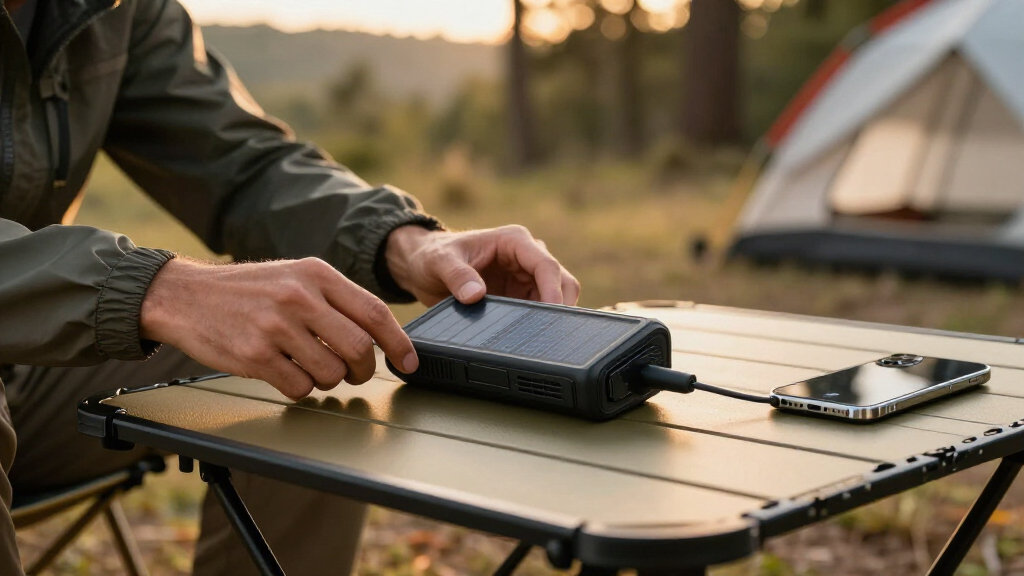
I ranked these portable solar power banks by how well their features support real off-grid use, not by advertised capacity alone. My main criteria were charging output, usable port and cable options, solar-panel area, carrying practicality, lighting features, and the balance between price and versatility. Models with PD or QC fast charging placed ahead of basic alternatives when their size remained reasonable. I also gave more weight to built-in cables, wireless charging, or multiple outputs when those additions reduced the amount of gear a buyer would need to pack.
The order reflects clear buyer priorities. A balanced model with strong output and several charging methods ranks above a larger unit that offers capacity without equal usability, while a lighter product can still earn a category win for compact carry. I treated all listed capacities as manufacturer claims rather than measured results, since actual delivered energy depends on conversion losses, temperature, battery condition, and charging method. Solar design also affected placement: four-panel construction carries more practical value than a small panel fixed to the back of a battery. Durability claims, replaceability of attached parts, and the usefulness of emergency lights helped separate otherwise similar products.
Factors to Consider When Choosing Portable Solar Power Banks
The right choice depends less on finding the largest number printed on a case and more on matching capacity, charging speed, and solar design to the way the battery will be carried. I would start by deciding whether the bank is for everyday phone charging, weekend camping, or emergency storage. Those uses call for very different compromises in weight, panel size, and connection options.
Treat Advertised Capacity as a Comparison Point
A 50,000mAh label suggests far more reserve than a 10,000mAh rating, but it does not equal the energy that reaches a phone. Conversion losses, cable resistance, operating temperature, and battery aging reduce usable output. I use capacity figures to compare products within the same category, not as a promise of an exact number of recharges. A 10,000mAh model suits daily carry or a short outing, while 20,000mAh is a practical middle ground for many weekend trips. The 40,000mAh to 50,000mAh models favor extended backup, though their extra bulk may keep them out of a hiking pack. Buyers who need to charge tablets or several phones should also compare watt-hours when that figure is available, since milliamp-hours alone can hide differences in battery voltage.
Know What the Solar Panel Can Realistically Do
Most integrated solar panels are too small to refill a high-capacity battery quickly. I view a single built-in panel as an emergency feature that can slowly add power for a message, location check, or brief call under strong sunlight. A four-panel design exposes more collection area and is better suited to buyers who expect solar input to play an active role. Even then, clouds, shade, panel angle, heat, and daylight hours can stretch charging across several days. Leaving a lithium battery on a hot dashboard or rock can also work against charging and shorten battery life. For regular off-grid replenishment, I would pair a power bank with a larger separate folding panel rather than depend entirely on the panel attached to the case.
Match Charging Speed to Your Devices
Fast-charge labels only help when the power bank, cable, and device support the same protocol. 20W PD is useful for recent phones because it can restore a meaningful amount of power during a short stop, while 22.5W output gives compatible devices a little more headroom. QC3.0 may be valuable for certain Android hardware, but it is not a universal substitute for USB-C Power Delivery. Buyers should check whether the USB-C connection accepts input, provides output, or does both. Wireless charging removes a cable but wastes more energy and creates more heat than a wired connection, which matters when stored power is limited. I would favor wired fast charging in the field and treat wireless support as a convenience for campsites, vehicles, or bedside use.
Balance Built-In Convenience Against Repairability
Integrated Lightning, USB-C, and other leads make a power bank easier to grab without assembling a cable pouch. That gives the four-cable Soarise and Durecopow models a practical advantage for families or groups carrying mixed devices. The tradeoff is that a damaged attached cable may be difficult or impossible to replace. Separate ports offer more flexibility because buyers can swap cable lengths, connector types, and worn parts. Wireless charging supplies another fallback, although phone cases and poor coil alignment can reduce efficiency. I prefer at least one standard output port even on models with built-in cables, since it keeps the battery useful when device connections change.
Choose Emergency Features That Fit the Risk
Flashlights and camping lamps are genuinely useful during outages, but they vary in purpose. A narrow flashlight helps with walking or repairs, while a broad lamp is better for lighting a tent or room. Dual lights can provide redundancy, though buyers should check control placement so they are not activated accidentally inside a bag. The FEELLE hand crank adds a charging method that does not depend on sunshine, yet manual generation is slow and best reserved for small emergency gains. Magnetic charging is handy for compatible phones, but it should not outweigh battery quality or wired output. I would pay more for multiple emergency charging paths only when preparing for storms, remote travel, or lengthy outages; casual campers can save money with a simpler light-equipped bank.
Frequently Asked Questions
Can a portable solar power bank fully recharge from its built-in panel?
It can in theory, but a full solar refill may take several days of strong, direct sunlight, especially on a 40,000mAh or 50,000mAh model. The panel area is usually small, and charging drops when clouds, shade, heat, or a poor angle reduces input. I would use the built-in panel for emergency energy rather than schedule a trip around a complete solar recharge. The four-panel 20000mAh option has a better collection layout than the single-panel models, though it still cannot match a full-size folding panel. Buyers who expect repeated off-grid charging should use a separate solar panel with higher output.
Is a 50,000mAh model better than a 20,000mAh power bank for camping?
A 50,000mAh bank makes sense for base camps, car camping, group charging, or longer power outages. A 20,000mAh unit is usually easier to carry and may be enough for one person’s phone, watch, and small accessories over a weekend. I would choose higher capacity for stationary backup and lower weight for hiking. Advertised capacity does not account for conversion losses, so neither figure predicts an exact number of phone charges. The best choice is the smallest bank that covers the trip with a reasonable reserve.
Are built-in cables more useful than wireless charging outdoors?
Built-in cables are usually more efficient because wired charging wastes less energy and works without careful phone placement. They also let several connector types travel with the battery, which helps groups using different devices. Wireless charging is convenient around camp and useful when a separate cable is missing, but heat, case thickness, and alignment can slow it down. I would prioritize built-in USB-C and phone-compatible leads before paying extra for a wireless pad. A model offering both provides the best connection flexibility, provided it still includes a replaceable standard port.
Should I choose PD 20W, 22.5W, or QC3.0 charging?
The answer depends on the charging standard supported by the device. USB-C PD 20W is a strong general choice for current phones and can be easier to pair with modern cables, while 22.5W may charge compatible hardware slightly faster. QC3.0 remains useful for devices designed around Qualcomm’s protocol but may fall back to a slower rate with other products. I would check the phone manufacturer’s charging specifications before treating the largest wattage as better. Protocol compatibility matters more than a small wattage difference, and the right cable is part of that match.
Is a hand-crank solar power bank worth the extra size and cost?
A hand crank is worthwhile for emergency kits used where both grid power and reliable sunlight may be unavailable. It can produce a small amount of energy for an urgent text, brief call, or flashlight, but it is not a practical way to refill a 50,000mAh battery. The FEELLE model is better suited to storm preparation and remote backup than to lightweight travel. I would choose it when charging-method redundancy matters more than compactness. For routine camping with vehicle or wall access between trips, a simpler fast-charging bank offers better value.
Conclusion
For most buyers, my best overall recommendation is the SOARAISE 50000mAh because its 22.5W charging, wireless pad, and large claimed capacity form the strongest all-around package. The Mregb 20000mAh is the best value for occasional trips and home backup, while the Blavor 10,000mAh is my beginner and compact pick for buyers who prefer easier carrying over maximum reserve. I would choose the FEELLE 50000mAh as the premium emergency option when magnetic charging and a hand crank justify added size and cost. Buyers focused on solar collection should favor the 20000mAh four-panel model, and families with mixed devices should look toward the Soarise 48000mAh or Durecopow 20000mAh models with multiple built-in cables. The final choice comes down to whether the priority is portable everyday power, extended backup, or stronger off-grid redundancy.
Fall Picks
fall essentials
As an affiliate, we earn on qualifying purchases.