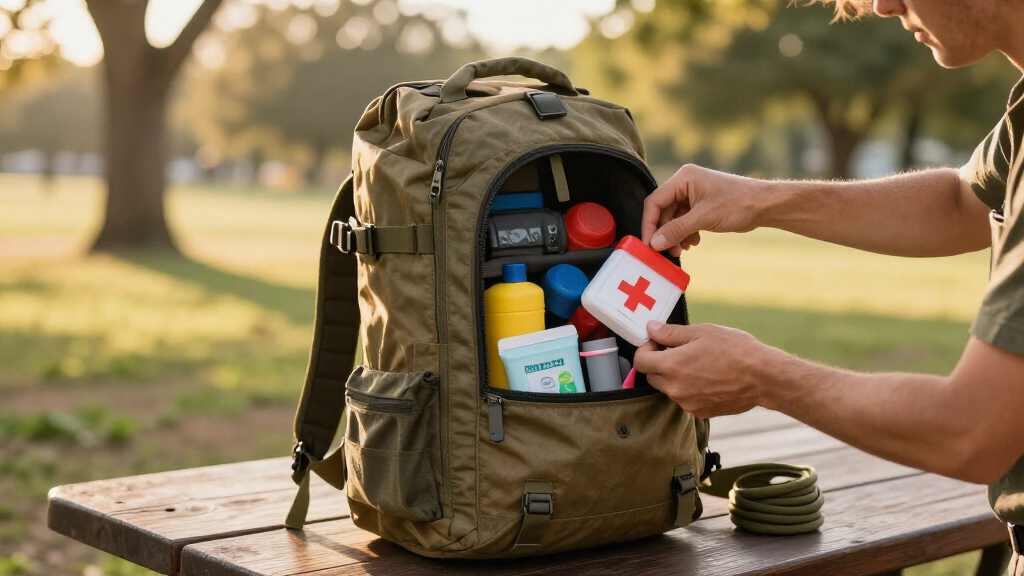
The best emergency preparedness backpack is the Ready America 72 Hour Deluxe Emergency Kit (4-Person), thanks to its balance of capacity, organization, and genuinely usable disaster supplies. If you’re prepping for fewer people, the Ready America 70285 Deluxe 2-Person 3-Day Backpack offers similar gear in a lighter package, while the Stealth Angel Survival 72 Hour Family Kit stands out for households that want gear for up to five people in one grab-and-go solution. The core tradeoff in this category is pre-packed convenience versus quality of contents — many kits pad their supply lists with cheap filler, and some buyers prefer an empty tactical bag like the QT&QY 45L so they can build their own kit from scratch. Sizing is the second big decision, since a 4-person kit is far too heavy for one person to carry during an evacuation. Read on for the full breakdown of all 11 options, including who each one is for and who should skip it.

Get emergency and outdoor gear delivered free with Prime
- Fast, free delivery on millions of items
- Prime Video, Amazon Music and more included
- Member-only deals all year
Key Takeaways
- Ready America dominates the lineup with five of eleven spots, and its Deluxe kits earn the top ranking because their contents match their advertised supply lists more closely than budget competitors.
- The QT&QY 45L Military Tactical Backpack is the only option without supplies included — it won the value slot for DIY builders but is the wrong choice for anyone who wants a ready-to-grab kit.
- Multi-person kits (4-5 person options like Stealth Angel and Ready America 4-Person) routinely weigh 20+ pounds packed, which makes them realistic for car trunk storage but questionable for on-foot evacuation by one carrier.
- Blue Seventy-Two’s two entries split along gear depth: the standard kit covers bare-bones basics, while the Pro Series Red Deluxe justifies its higher price with a more complete first aid setup and better tools.
- Across all pre-packed kits, food and water supplies are the weakest link — nearly every kit’s rations are barely palatable long-term, so buyers should plan to supplement regardless of which bag they choose.
| Ready America 72 Hour Deluxe Emergency Kit, 4-Person Backpack |  | Best Overall for Families | Number of People: 4 | Duration: 72 hours | Food: Four 2,400-calorie emergency food bars | VIEW LATEST PRICE | See Our Full Breakdown |
| Ready America 70280 Emergency 2-Person 3-Day Survival Backpack |  | Best Value for Couples | Number of People: 2 | Duration: 3 days | Food: 2 emergency food bars totaling 4,800 calories | VIEW LATEST PRICE | See Our Full Breakdown |
| Ready America 70285 Deluxe 2-Person 3-Day Emergency Backpack |  | Best Mid-Range Feature Step-Up | Number of People: 2 | Duration: 3 days | Food: Two 2,400-calorie emergency food bars | VIEW LATEST PRICE | See Our Full Breakdown |
| Ready America 72 Hour Emergency Kit, 1-Person 3-Day Backpack |  | Best Lightweight Solo Option | Number of People: 1 | Duration: 3 days (72 hours) | Food: 2,400-calorie emergency food bar | VIEW LATEST PRICE | See Our Full Breakdown |
| Essentials Complete Deluxe Survival Kit 2 & 4 Person Bug-Out Bag |  | Best for Water Security | Suitable For: 2-4 persons | Duration: 72 hours | Food Shelf Life: 5 years | VIEW LATEST PRICE | See Our Full Breakdown |
| Everlit Complete 72 Hours Earthquake Bug Out Bag Emergency Survival Kit for Family |  | Best Premium Pick | Duration: 72 hours | Capacity: 2 people | Water Supply: 24 x 125ML packs plus purification tablets for 25 quarts | VIEW LATEST PRICE | See Our Full Breakdown |
| QT&QY 45L Military Tactical Backpack Molle Army Assault Pack |  | Best Empty Pack for Building Your Own Kit | Dimensions: 18 x 13.2 x 11.6 inches | Capacity: 45L | Material: 900D water-resistant polyester | VIEW LATEST PRICE | See Our Full Breakdown |
| Blue Seventy-Two 72 Hour Emergency Backpack Survival Kit for 1 Person |  | Best Value Grab-and-Go Kit | Backpack Type: Reinforced Grab-N-Go | Food: 2,400 calories, 5-year shelf life | Water: Five 4.22 oz pouches, 5-year shelf life | VIEW LATEST PRICE | See Our Full Breakdown |
| Stealth Angel Survival 72 Hour Family Emergency Kit – 1 to 5 Person Survival Backpack |  | Best for Families | Person Capacity: 1-5 persons | Duration: 72 hours | Water Supply: Water pouches plus purification tablets | VIEW LATEST PRICE | See Our Full Breakdown |
| Ready America 72 Hour Deluxe Emergency Kit, 1-Person 3-Day Backpack |  | Best for Beginners | Food: 2,400-calorie emergency food bar | Water: Six pouches plus 32 oz BPA-free bottle | Lighting: Hand-crank LED headlamp | VIEW LATEST PRICE | See Our Full Breakdown |
| Blue Seventy-Two Pro Series Red Deluxe 72 Hour Emergency Backpack Survival Kit for 1 Person |  | Best Solo Upgrade Pick | Backpack Type: Triple-Pocket Reinforced Grab-N-Go Backpack | Food: 2,400 calories, 5-year shelf life | Water: 5 pouches, 4.22 oz each, 5-year shelf life | VIEW LATEST PRICE | See Our Full Breakdown |
| emergency preparedness backpack | Duration | Food | Water | First Aid Kit |
|---|---|---|---|---|
| Ready America 72 Hour Deluxe E | 72 hours | Four 2,400-calorie emergency food bars | Four 1-liter Aqua Literz cartons | 107-piece |
| Ready America 70280 Emergency | 3 days | 2 emergency food bars totaling 4,800 calories | 12 sealed drinking water pouches | 33-piece |
| Ready America 70285 Deluxe 2-P | 3 days | Two 2,400-calorie emergency food bars | Six 4.225 oz pouches plus 32 oz BPA-free bottle | 33-piece |
| Ready America 72 Hour Emergenc | 3 days (72 hours) | 2,400-calorie emergency food bar | 6 sealed water pouches | 18-piece |
| Essentials Complete Deluxe Sur | 72 hours | — | — | 53 pieces |
| Everlit Complete 72 Hours Eart | 72 hours | — | — | — |
| QT&QY 45L Military Tactical Ba | — | — | — | — |
| Blue Seventy-Two 72 Hour Emerg | — | 2,400 calories, 5-year shelf life | Five 4.22 oz pouches, 5-year shelf life | 36-piece |
| Stealth Angel Survival 72 Hour | 72 hours | — | — | — |
| Ready America 72 Hour Deluxe E | — | 2,400-calorie emergency food bar | Six pouches plus 32 oz BPA-free bottle | — |
| Blue Seventy-Two Pro Series Re | 3 days (72 hours) | 2,400 calories, 5-year shelf life | 5 pouches, 4.22 oz each, 5-year shelf life | — |
More Details on Our Top Picks
Ready America 72 Hour Deluxe Emergency Kit, 4-Person Backpack
This option stands out as the most complete family-ready package in this lineup, supplying food, water, shelter, and a 107-piece first aid kit for four people across 72 hours. Compared with the Ready America 70280, which covers only two people with a far smaller medical kit, this version makes the most sense for households that want a single grab-and-go solution rather than coordinating multiple bags. The hand-crank power station with radio and phone charging is a genuine differentiator against the Essentials kit, which lacks any communication gear. The tradeoff is weight and bulk — carrying it on foot for long distances is unrealistic, and the food variety is bare-bones calorie bars.
Pros:- Covers four people for a full 72 hours from a single bag
- 107-piece first aid kit far exceeds most competing kits
- Hand-crank power station adds radio, light, and phone charging without batteries
- Broad tool selection including goggles, gloves, and multi-function tool
Cons:- Heavy and bulky — poorly suited to extended travel on foot
- Food is limited to basic calorie bars with no variety
Best for: Families of four who want one comprehensive, ready-to-grab bag stored at home or in the car
Not ideal for: Solo preppers or anyone needing a lightweight bag for long-distance evacuation on foot
- Number of People:4
- Duration:72 hours
- Food:Four 2,400-calorie emergency food bars
- Water:Four 1-liter Aqua Literz cartons
- First Aid Kit:107-piece
- Power Source:Hand-crank emergency power station
- Includes:Survival blankets, ponchos, lightsticks, goggles, gloves, whistle, multi-tool, duct tape
Our verdict“If you’re preparing one bag for a household of four, this is the most complete out-of-the-box option on this list.”
Ready America 70280 Emergency 2-Person 3-Day Survival Backpack
This model makes the most sense for budget-minded couples who want credible three-day coverage without paying for extras they may never use. Where the Deluxe 2-Person 70285 adds a hand-crank power station, N95 masks, and hygiene kits, this version trims to the essentials — food, water, shelter, a 33-piece first aid kit, and signaling tools — and passes the savings on. That simplicity is also its strength: with 12 water pouches, it actually carries more drinking water than the 70285, which matters more in a real evacuation than gadgetry. The drawback is that the medical supplies are genuinely thin, with no trauma capability beyond basic bandages, and there’s no radio or way to charge a phone.
Pros:- More drinking water than the deluxe 2-person version
- Lightweight and genuinely compact for grab-and-go use
- Covers the core survival categories without inflated price
- Includes signaling tools like lightsticks and whistle for rescue scenarios
Cons:- First aid kit is basic and lacks trauma or medication supplies
- No radio, light source beyond lightsticks, or phone charging
Best for: Couples or roommates on a budget who want no-frills three-day coverage for a car or apartment
Not ideal for: Buyers who want communication gear or serious medical supplies in the bag itself
- Number of People:2
- Duration:3 days
- Food:2 emergency food bars totaling 4,800 calories
- Water:12 sealed drinking water pouches
- Shelter & Warmth:2 ponchos and 2 survival blankets
- First Aid Kit:33-piece
- Lighting & Signaling:2 x 12-hour lightsticks, safety whistle
Our verdict“A sensible, water-forward pick for two people who plan to add their own flashlight and medications separately.”
Ready America 70285 Deluxe 2-Person 3-Day Emergency Backpack
Positioned between the basic 70280 and the 4-person flagship, this deluxe version is for couples who want the hand-crank power station and better protective gear without buying the family-size kit. Compared with the 70280, you gain N95 masks, nitrile gloves, hygiene kits, a BPA-free bottle, and a power station combining flashlight, AM/FM radio, siren, and phone charging — meaningful upgrades in smoke, ash, or extended power-outage scenarios. The compromise is water: only six pouches plus one 32 oz bottle, roughly half the drinking water of the cheaper 70280. This model is better suited to shelter-in-place or vehicle storage than long hikes, since the added gear makes it noticeably heavier and there are no purification tablets for refills.
Pros:- Hand-crank power station with radio, siren, and phone charging
- N95 masks and nitrile gloves included — rare at this price point
- Hygiene kits and emergency contact card add real-world practicality
- Broader tool selection than the 70280 including duct tape and multi-tool
Cons:- Less drinking water than the cheaper 70280 model
- Heavier than stripped-down kits, and no water purification for resupply
Best for: Two-person households in wildfire or storm regions who want masks, radio, and hygiene gear built in
Not ideal for: Buyers prioritizing maximum water capacity or a low pack weight for foot travel
- Number of People:2
- Duration:3 days
- Food:Two 2,400-calorie emergency food bars
- Water:Six 4.225 oz pouches plus 32 oz BPA-free bottle
- First Aid Kit:33-piece
- Power & Lighting:Hand-crank power station with flashlight, AM/FM radio, siren, phone charging, lightsticks
- Additional Items:N95 masks, nitrile gloves, hygiene kits, ponchos, blankets, multi-tool, duct tape
Our verdict“The right pick for two people whose biggest risks involve smoke, contamination, or communication blackouts rather than thirst.”
Ready America 72 Hour Emergency Kit, 1-Person 3-Day Backpack
For a single adult, this kit’s appeal is weight and speed — it’s the lightest Ready America bag here, organized so you can grab it and be out the door in seconds. Compared with the Blue Seventy-Two 1-person kit elsewhere in this roundup, this one leans minimal: a 2,400-calorie bar, six water pouches, an 18-piece first aid kit, blanket, poncho, lightstick, and whistle. That minimalism cuts both ways. It fits easily in a car trunk or under a desk, but the medical kit is the smallest of any bag in this lineup, so anyone with prescription needs or injury risks will need to supplement it. It also makes the most sense as a building block — one per family member rather than a single shared bag.
Pros:- Lightest and most portable kit in this lineup
- Covers the full three-day basics for one person
- Affordable enough to buy one per household member
- Simple organization allows fast evacuation
Cons:- 18-piece first aid kit is the thinnest here
- Single-person design makes it expensive on a per-family basis
Best for: Solo commuters, students, or office workers who want a personal go-bag at their desk or in the car
Not ideal for: Families trying to share one bag, or anyone expecting serious medical capability
- Number of People:1
- Duration:3 days (72 hours)
- Food:2,400-calorie emergency food bar
- Water:6 sealed water pouches
- First Aid Kit:18-piece
- Shelter & Signaling:Emergency blanket, poncho, 12-hour lightstick, safety whistle
Our verdict“Buy one per person for car or office staging rather than relying on it as your household’s only emergency bag.”
Essentials Complete Deluxe Survival Kit 2 & 4 Person Bug-Out Bag
This kit’s standout feature is one no other bag in this roundup offers: a filtration system rated for up to 30 gallons, which turns almost any freshwater source into drinking water and dramatically extends your three-day window. The Ready America 4-person kit carries only four sealed liters with no way to refill, so this option is better suited to situations — floods, extended outages — where resupply matters more than gadgetry. A 5-year food shelf life also means less frequent replacement cycles than standard pouches, and the discreet design avoids advertising its contents. The tradeoff is gear depth: with a 53-piece first aid kit and little published detail on tools, it lacks the power stations, masks, and multi-tools that Ready America includes, and its vague 2-to-4-person sizing makes true capacity planning harder.
Pros:- 30-gallon water filtration extends survival well beyond packed supplies
- 5-year food shelf life reduces maintenance and rotation
- 53-piece first aid kit beats the smaller Ready America kits
- Discreet design doesn’t broadcast that it’s a survival bag
Cons:- Ambiguous 2-4 person capacity makes supply planning imprecise
- No power station, radio, or signaling tools included
- Weight and full contents are poorly documented
Best for: Households in flood-prone or outage-prone areas who value water resupply over included gadgets
Not ideal for: Buyers who want a clearly specified person count and a full tool and first aid loadout
- Suitable For:2-4 persons
- Duration:72 hours
- Food Shelf Life:5 years
- Water Purification:Filters up to 30 gallons
- First Aid Kit:53 pieces
- Design:Discreet bug-out bag for hurricanes, wildfires, earthquakes
Our verdict“Choose this when drinkable water access is your biggest uncertainty — skip it if you want defined capacity and communication gear.”
Everlit Complete 72 Hours Earthquake Bug Out Bag Emergency Survival Kit for Family
Most kits in this roundup pack generic basics, but Everlit’s kit stands out for its medical-grade contents — the 200-piece first aid supply includes a genuine CAT tourniquet, something no other option here offers. For a two-person household serious about earthquake or hurricane readiness, that difference matters when help is hours away. Compared with the Ready America 2-Person kits, Everlit’s 1000D tactical backpack with MOLLE webbing is built to survive being dragged, dropped, and rained on, and the water supply is more generous thanks to purification tablets covering 25 additional quarts. The tradeoff is real, though: this is the heaviest, bulkiest kit of the single-bag options, and it costs more than the basic Ready America sets. You’re paying for durability and trauma-level medical gear, not budget preparedness.
Pros:- Trauma-level medical kit with CAT tourniquet — rare at this price point
- Rugged 1000D polyester pack with MOLLE expansion and water resistance
- Water purification tablets extend supply well beyond the included pouches
- Hand-crank flashlight and shelter gear eliminate battery dependency
Cons:- Heavy and bulky, difficult for smaller or older users to carry
- Priced well above basic survival sets like Ready America’s kits
- Fixed two-person capacity — awkward for singles or larger families
Best for: Two-person households in earthquake or hurricane zones who want trauma-capable medical supplies, not just bandages
Not ideal for: Budget shoppers or anyone with limited storage space — it’s expensive, heavy, and sized for exactly two people
- Duration:72 hours
- Capacity:2 people
- Water Supply:24 x 125ML packs plus purification tablets for 25 quarts
- Food Supply:2 packs of 3600-calorie emergency food bars
- Medical Supplies:200 pieces including CAT tourniquet
- Backpack Material:1000D polyester
- Features:Water-resistant, tear-resistant, MOLLE system, adjustable straps
Our verdict“Buy this if you want the most medically capable and durably built two-person bag in the lineup, and skip it if price or portability is your priority.”
QT&QY 45L Military Tactical Backpack Molle Army Assault Pack
Unlike every other entry here, this bag arrives empty by design — and that’s exactly the point. Buyers who want to curate their own food, medical, and shelter supplies rather than accept a manufacturer’s pre-packed checklist will find the 45L capacity and MOLLE webbing give them room and flexibility the pre-assembled kits can’t match. Where the Everlit bug out bag locks you into its contents, this pack lets you swap in seasonal gear, prescription medications, and higher-quality tools over time. The 900D water-resistant polyester is genuinely tough, and the padded straps carry weight better than the thin harnesses on budget kits like the Ready America 1-Person bag. The obvious tradeoff: you’re signing up for a second project of sourcing and rotating supplies yourself, and a filled bag gets heavy fast.
Pros:- 45L of organized storage with multiple compartments and MOLLE expansion
- Durable, water-resistant 900D polyester survives rough handling
- Fits a 17-inch laptop, doubling as an everyday or travel bag
- Padded, comfortable shoulder straps for heavy loads
Cons:- No supplies included — total cost and effort depend entirely on you
- Heavy and bulky when fully loaded, and overbuilt for urban commuting
- Limited color options
Best for: Experienced preppers and outdoors-minded buyers who want to hand-select every item in their kit
Not ideal for: Beginners or anyone who wants grab-and-go readiness out of the box — you’ll need to source and maintain all supplies yourself
- Dimensions:18 x 13.2 x 11.6 inches
- Capacity:45L
- Material:900D water-resistant polyester
- Laptop Compartment:Fits up to 17 inches
- Webbing System:MOLLE compatible
- Supplies Included:None — empty pack
Our verdict“This is the pick for buyers who see preparedness as an ongoing project, not a one-time purchase.”
Blue Seventy-Two 72 Hour Emergency Backpack Survival Kit for 1 Person
For solo buyers who just want a complete three-day kit at a sensible price, this is the easiest yes in the roundup. The Blue Seventy-Two covers food, water, first aid, and basics like a crank flashlight, emergency blanket, and rain poncho — everything the Ready America 1-Person kit includes, at a typically lower cost and in a lighter package. The reinforced Grab-N-Go design means it lives in a closet or car trunk and deploys in seconds, which is the whole point of a 72-hour bag. Compared with the Blue Seventy-Two Pro Series Deluxe, this base version skips premium extras, keeping weight and price down. Don’t expect advanced survival gear — there’s no radio, no multitool — and remember that food and water carry a five-year shelf life, so calendar reminders for rotation are on you.
Pros:- Complete three-day supply of food, water, and first aid at a budget-friendly price
- Lightweight reinforced Grab-N-Go design stores easily and deploys fast
- Crank flashlight means no dead batteries when it matters
- Versatile enough for hurricanes, wildfires, and earthquakes
Cons:- Single-person capacity only
- Food and water expire after five years and require rotation
- No advanced tools like a radio or multitool
Best for: Solo apartment dwellers, students, or commuters who want affordable, store-it-and-forget-it disaster coverage
Not ideal for: Families or anyone expecting advanced gear like radios and multitools — this is strictly individual basics
- Backpack Type:Reinforced Grab-N-Go
- Food:2,400 calories, 5-year shelf life
- Water:Five 4.22 oz pouches, 5-year shelf life
- First Aid Kit:36-piece
- Additional Items:Mask, whistle/compass, crank flashlight, tissues, emergency blanket, rain poncho
- Capacity:1 person, 72 hours
Our verdict“The smartest low-cost entry point for one person — just set a reminder to swap expired supplies in 2030.”
Stealth Angel Survival 72 Hour Family Emergency Kit – 1 to 5 Person Survival Backpack
Most family options in this space cap at four people — the Ready America 4-Person kit being the classic example — but Stealth Angel scales from one to five, which matters for households of five that would otherwise need to buy a second bag. The coverage is broad: food, water pouches, purification tablets, shelter (tube tent, blankets, body warmers), a multitool, radio, and a hygiene kit, all organized across quality packs. Compared with the Everlit two-person kit, you give up the trauma-grade medical supplies but gain shelter and hygiene gear for more people — arguably a better trade for disaster scenarios like hurricanes where exposure, not injury, is the bigger threat. The honest downsides: a five-person loadout makes for a bulky, heavy kit, and solo buyers will pay for items they don’t need, like extra ponchos and blankets.
Pros:- Scales from 1 to 5 people, covering larger families in one purchase
- Includes shelter gear (tube tent, blankets, body warmers) many kits skip
- Radio, multitool, and purification tablets add genuine capability
- Built around expert advice and government preparedness guidelines
Cons:- Bulky and heavy when configured for five people
- Contains redundant items for solo or two-person buyers
- Pricing is opaque and varies, making value hard to judge
Best for: Families of three to five who want one purchase covering everyone’s food, water, shelter, and hygiene needs
Not ideal for: Solo users and couples — you’ll carry and pay for supplies sized for a household you don’t have
- Person Capacity:1-5 persons
- Duration:72 hours
- Water Supply:Water pouches plus purification tablets
- Shelter:Tube tent, blankets, body warmers, ponchos
- Tools:Flashlight, radio, whistle, multitool, compass
- First Aid & Hygiene:First aid kit and hygiene kit included
Our verdict“The most sensible single purchase for bigger households — everyone else should size down to a smaller kit.”
Ready America 72 Hour Deluxe Emergency Kit, 1-Person 3-Day Backpack
If you’ve never bought emergency gear before and find the whole category overwhelming, this is the kit that removes every decision. Everything arrives pre-packed and pre-planned: a 2,400-calorie food bar, six water pouches plus a BPA-free bottle, a hand-crank LED headlamp, poncho, survival blanket, waterproof matches, and a complete hygiene kit most competitors omit — the Blue Seventy-Two, for instance, includes only a tissue pack. That hygiene focus makes this the better pick for shelter-in-place situations after floods or earthquakes. Compared with the standard Ready America 1-Person kit, this deluxe version justifies its premium with the headlamp and expanded warmth and lighting options. The catch is capacity: it’s strictly one person for three days, and several buyers note the filled pack feels heavier than expected for its size, so test your carry before an emergency does.
Pros:- Hygiene kit, tissues, and emergency contact card included — rare at this level
- Hand-crank LED headlamp keeps your hands free during power outages
- Multiple warmth and lighting redundancies (blanket, poncho, matches)
- Grab-and-go format requires zero planning or assembly
Cons:- Single-person capacity makes it expensive for households
- Hard 72-hour limit on all supplies
- Heavier than its size suggests once fully packed
Best for: First-time buyers who want a thoughtful, hygiene-inclusive kit with zero assembly or research required
Not ideal for: Families — you’d need one per person — and minimalists who find the packed weight cumbersome
- Food:2,400-calorie emergency food bar
- Water:Six pouches plus 32 oz BPA-free bottle
- Lighting:Hand-crank LED headlamp
- Shelter:Emergency poncho, survival blanket, waterproof matches
- Hygiene:Complete hygiene kit, pocket tissues, emergency contact card
- Capacity:1 person, 3 days
Our verdict“The best zero-effort starter kit for one adult — buy multiples for a household, and check the fit before relying on it.”
Blue Seventy-Two Pro Series Red Deluxe 72 Hour Emergency Backpack Survival Kit for 1 Person
For solo buyers who want more than the bare minimum, this Pro Series version of the Blue Seventy-Two 72 Hour kit stands out for its triple-pocket reinforced grab-n-go design, which makes it far easier to organize and reach supplies mid-crisis than the single-compartment Ready America one-person alternatives. The 2,400-calorie food supply and five water pouches with a 5-year shelf life cover the full 72-hour window, while the extras — canteen cup, rain poncho, whistle/compass, and emergency blanket — give it a more complete feel than the standard Blue Seventy-Two kit it builds on. The tradeoff: like any pre-packed kit, contents expire together around the five-year mark, so you will need to plan a replacement cycle. Compared with family-sized options like the Stealth Angel kit, capacity here is strictly one person, so households should buy multiples rather than stretch a single pack.
Pros:- Triple-pocket reinforced design keeps supplies organized and fast to access under stress
- Full 72-hour coverage for one person with 2,400 calories of food and sealed water pouches
- Thoughtful extras like a rain poncho, whistle/compass, and canteen cup that most budget kits omit
- Bright red color makes the bag easy to spot in a closet, car trunk, or panic situation
Cons:- Supplies for only one person, so households must buy multiple units
- No published weight or size specs, making it hard to judge portability before purchase
- All perishable contents share a 5-year expiration, requiring a scheduled replacement cycle
Best for: Solo adults, college students, or single commuters who want an organized, ready-to-grab 72-hour kit without assembling one piece by piece
Not ideal for: Families or couples — the single-person supply means buying multiple bags, at which point a multi-person kit like the Stealth Angel offers better value
- Backpack Type:Triple-Pocket Reinforced Grab-N-Go Backpack
- Food:2,400 calories, 5-year shelf life
- Water:5 pouches, 4.22 oz each, 5-year shelf life
- Additional Gear:Mask, First Aid Kit, Whistle/Compass, Tissue Pack, Emergency Blanket, Rain Poncho, Canteen Cup, Playing Cards
- Duration:3 days (72 hours)
- Capacity:1 person
- Intended Disasters:Hurricanes, earthquakes, floods, and general emergencies
Our verdict“This is the kit for a solo prepper who wants a step up in organization and included gear over basic one-person bags — but families should buy one per member or choose a multi-person kit instead.”
How We Picked
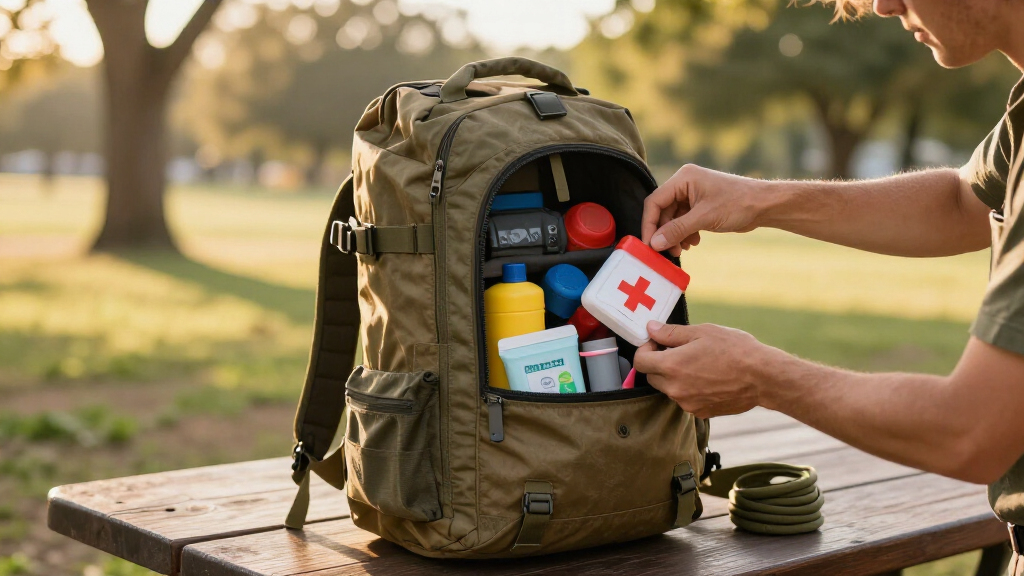
I evaluated each emergency preparedness backpack against the criteria that actually matter in a disaster scenario: kit completeness relative to person count, weight and carry comfort, the quality (not just quantity) of first aid supplies, organizational layout for fast access during an evacuation, and price per person covered. A kit that claims 72 hours of supplies for four people but ships with a single small first aid pouch scores poorly on completeness, while a heavier bag with a proper hip belt and padded straps scores well on carry comfort because someone has to actually move it under stress.
The ranking logic follows a simple premise: most buyers want a bag they can grab without thinking, so pre-packed kits with reliable contents rank above the DIY tactical option despite its superior build quality. Within the pre-packed group, Deluxe versions outrank base versions because the upgrades (better first aid, power banks, more substantial tools) close real gaps in an emergency. Family-size kits earned mid-tier placements rather than top honors because their weight makes them impractical for single-carrier evacuation, which is the scenario most buyers actually face.
Factors to Consider When Choosing Emergency Preparedness Backpacks
Choosing an emergency preparedness backpack involves more than picking the biggest kit on the shelf. These are the factors that separate a bag you’ll rely on from one that fails you when it matters.Person Count and Realistic Weight Limits
The most common mistake buyers make is overestimating what they can carry. A general rule is that a fully loaded emergency backpack should not exceed 20% of the carrier’s body weight, and ideally closer to 15% for realistic walking distances. A 4-person kit weighing over 20 pounds is fine for a car trunk or closet, but a single adult carrying it plus their own water on foot will struggle within a mile. If your household includes children, elderly family members, or anyone with mobility limits, distribute supplies across multiple smaller bags rather than consolidating into one hero pack. This is why the lineup includes 1-person and 2-person options alongside the family kits — matching kit size to carrying capacity matters more than raw supply count.
Pre-Packed Kit Versus Building Your Own
Pre-packed kits trade money for convenience, and that tradeoff is worth examining honestly. Manufacturers buy supplies in bulk, so a $100 kit often contains $60-80 worth of gear if you priced it individually — but you’re paying for the assurance that someone assembled it correctly and it’s ready today. Building your own kit in a tactical bag like the QT&QY lets you choose higher-quality first aid supplies, food you’ll actually eat, and water filtration suited to your region’s risks, but DIY kits have a dangerous failure mode: most people never finish building them. A half-completed kit in a closet is worse than a complete modest one. My advice for beginners is to buy a pre-packed kit now, then upgrade components over time rather than starting from zero.
Water: The Supply That Runs Out First
Nearly every pre-packed kit understates water needs. The standard 72-hour supply is one gallon per person per day, which means a 4-person kit should theoretically contain 12 gallons — something no backpack can hold. Kits instead ship with pouches or tablets meant to bridge the gap, so water is where every buyer should supplement immediately. Adding a quality filter straw or purification tablets costs little and multiplies your effective supply. Also check expiration dates on the included water pouches; they typically last 5 years, but heat exposure in a car trunk can degrade them faster. Store extra water separately from the backpack and plan to grab both, or invest in a filtration solution that lets you source water on the move.
First Aid Quality Over Quantity
Kit manufacturers love to advertise “first aid included,” but the contents range from a few bandages in a ziplock to genuinely useful trauma supplies. When comparing options, look past the piece count and check for actual treatment capability: gauze for pressure dressings, adhesive tape, antiseptic wipes, a triangular bandage for slings, and tweezers. Piece counts are inflated by counting individually wrapped wipes and single bandages. The Deluxe versions in this roundup generally include meaningfully better first aid than their base counterparts, which is a major reason they rank higher. If anyone in your household takes prescription medication or has allergies, no pre-packed kit will cover that — those additions are always your responsibility.
Storage Location Shapes Your Choice
Where the bag lives determines what kind of bag you need. A kit stored in a hot car trunk needs heat-tolerant contents — food bars and water pouches degrade faster in temperature swings, and some plastic components become brittle. Home closet storage allows any kit, but the bag must be accessible in seconds, not buried under holiday decorations. If you live in an earthquake zone, avoid storing your only kit in a location that could be blocked by debris. Some households solve this with multiple kits: a small one per car and a larger one at home. That strategy explains why several buyers purchase one of the smaller 1-person kits alongside a family-size option rather than choosing a single bag.
Expiration Management and Maintenance
An emergency backpack is not a buy-once product. Food bars, water pouches, batteries, and medications all expire, typically within 3-5 years, and a kit that’s sat untouched for a decade may contain useless supplies when you finally need it. The practical approach is to set a calendar reminder for an annual check: rotate food and water, test flashlights and power banks, and replace anything damaged. Kits with clearly printed expiration dates on outer packaging make this easier than kits where you have to open every pouch to check. When comparing prices, factor in roughly $20-40 of replacement supplies every few years — the true cost of a kit is its purchase price plus maintenance, not the sticker alone.
Frequently Asked Questions
Are pre-packed emergency kits actually good enough, or should I build my own?
Pre-packed kits are good enough to get started, and they beat the most common DIY outcome: an unfinished project sitting in a closet. Manufacturers like Ready America and Stealth Angel include supplies that meet basic 72-hour guidelines, and the Deluxe versions add genuinely useful gear like power banks and better first aid. The weakness is always quality of consumables — the food bars are survival rations, not meals you’ll enjoy, and the water supply is minimal. The smart approach is to buy a pre-packed kit now for peace of mind, then upgrade components individually: better food, a real water filter, and prescription medications. DIY building only makes sense if you’re disciplined enough to finish and maintain the kit.
Should I buy one family kit or individual backpacks for each person?
Individual bags are almost always the safer bet for evacuation scenarios, because a single family kit creates a single point of failure and a weight problem. If one 4-person bag weighs 25 pounds, one adult carries all of it while managing children or pets. With individual bags, each person carries their own water, food, and clothing, and the load spreads naturally — even older kids can manage a small 1-person kit. Family kits do make sense for shelter-in-place situations or vehicle storage, where weight doesn’t matter and one grab is easier than four. Many households compromise: a family kit in the car plus lightweight individual bags at home for grab-and-go scenarios.
How much should I expect to spend on a decent emergency preparedness backpack?
Budget around $40-60 per person covered for a solid kit, which means a quality 2-person bag runs $80-120 and a 4-person setup $150-250. The kits at the bottom of that range, like the base Ready America and Blue Seventy-Two options, cover essentials but skimp on first aid depth and tools. The Deluxe versions typically cost 30-50% more and close real gaps with power banks, better medical supplies, and sturdier bags. Going below $40 per person usually means filler items — glow sticks counted as tools, thin ponchos, tiny single-use packets. If budget is tight, prioritize a smaller quality kit for fewer people over a cheap large kit, since supply quality matters more than headcount on the box.
Do these kits expire, and how do I maintain one?
Yes — most consumable components expire within 3-5 years, including food bars, water pouches, batteries, and any medications or antiseptic wipes. The backpack itself and tools like blankets, whistles, and duct tape last indefinitely, so maintenance means replacing the perishables rather than the whole kit. Put a recurring annual reminder on your calendar to open the bag, check dates, test the flashlight and power bank, and swap anything expiring within the next year. Budget roughly $20-40 per rotation cycle for a multi-person kit. Kits stored in hot cars degrade faster, so check those every six months instead. The best kit maintenance habit is simple: whichever bag you buy, open it once and familiarize yourself with the contents now, not during an emergency.
What’s missing from every pre-packed kit that I should add myself?
Four categories of gaps show up across the entire category. First, prescription medications — no kit covers personal medical needs, so add a rotating supply or a written plan for grabbing them. Second, real water capacity: kits include token pouches, but you’ll want a filter straw or purification tablets plus stored water at home. Third, region-specific items: an earthquake zone needs a whistle and sturdy shoes, a hurricane zone needs rain gear and insect repellent, a cold climate needs hand warmers and extra layers. Fourth, comfort and documents: cash in small bills, copies of ID and insurance papers, a phone charger cable for your specific devices, and comfort items for kids. None of these additions cost much, but they’re what separates a generic kit from your kit.
Conclusion
Matching the right emergency preparedness backpack to your situation comes down to household size, budget, and how you plan to carry it. For most buyers, the Ready America 72 Hour Deluxe Emergency Kit (4-Person) is the best overall choice — it delivers the most complete supply list in the lineup at a fair price, and it works equally well in a trunk or a closet. Households that want to spend less should look at the Ready America 70280 2-Person kit or the Blue Seventy-Two standard kit for solo preppers; both cover the 72-hour basics without paying for upgrades you might add yourself.
On the premium end, the Stealth Angel Survival 72 Hour Family Kit offers the most flexibility with its 1-to-5 person scalability, while the Blue Seventy-Two Pro Series Red Deluxe is the strongest single-person option for buyers who want deeper first aid and better tools. Beginners who feel overwhelmed by preparedness altogether should simply start with the Ready America 1-Person 72 Hour Kit — one purchase, done, upgradeable later. And for the specific need of building a fully custom kit, the QT&QY 45L Tactical Backpack is the only empty bag in the group, built tougher than any pre-packed option. Whatever you choose, remember that the kit you actually own, check annually, and can physically carry beats the perfect kit you never bought.
Evergreen bestsellers Picks
bestsellers
As an affiliate, we earn on qualifying purchases.