Feeling safe when camping off-grid comes from a mix of preparation and mindset. You can boost confidence by planning ahead, packing essential gear, and understanding wildlife behaviors. Keeping your campsite clean and using secure food storage helps reduce risks and wildlife encounters. Building mental resilience and respecting nature also play key roles. As you learn how to manage these physical and emotional aspects, you’ll find yourself more grounded and ready for anything that comes your way. Keep exploring to discover how to stay calm and confident in the wild.

Get emergency and outdoor gear delivered free with Prime
- Fast, free delivery on millions of items
- Prime Video, Amazon Music and more included
- Member-only deals all year
Key Takeaways
- Preparedness and knowledge reduce uncertainty, fostering a sense of control and psychological safety.
- Managing wildlife interactions through proper food storage and campsite hygiene minimizes fear and anxiety.
- Developing survival skills and clear communication plans enhance confidence and trust in personal safety.
- Recognizing animal behaviors and signals helps interpret wildlife actions, reducing stress during encounters.
- Mental resilience and respectful attitudes toward nature promote emotional stability and a positive camping experience.
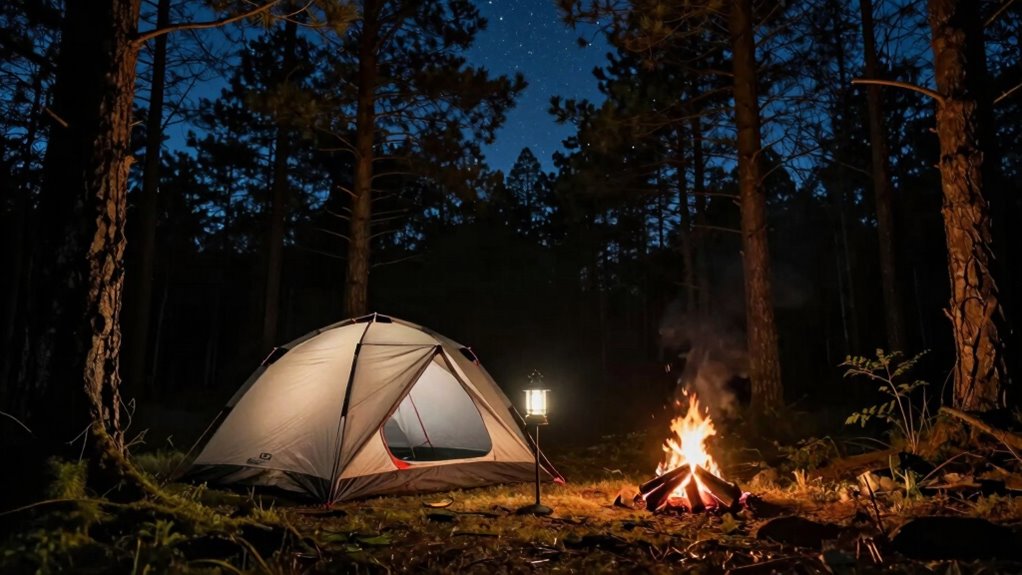
Venturing off-grid to camp offers an invigorating escape from everyday routines, but it also triggers a complex mix of emotions centered around safety. As you leave the comfort of familiar surroundings, your mind naturally assesses risks, especially when faced with wildlife encounters. The thought of sharing your space with animals—whether curious bears, stealthy coyotes, or insects—can spark both excitement and anxiety. You might worry about startling a creature or provoking an unwanted encounter, which makes emergency preparedness essential. Knowing how to handle wildlife safely, like storing food securely and keeping a clean campsite, bolsters your confidence. When you’re prepared, these encounters become less threatening and more an integral part of your outdoor experience.
Your sense of safety hinges on your ability to anticipate and respond to potential hazards. Planning ahead isn’t just about packing the right gear; it’s about cultivating a mindset of readiness. Carrying a well-stocked first-aid kit, understanding how to use it, and knowing basic survival skills strengthen your feeling of control. You’re more likely to relax and enjoy your trip when you trust your preparedness. This proactive approach also involves having clear communication plans. If you’re camping in a remote area, informing someone about your itinerary and expected return time can provide peace of mind. Emergency preparedness, within this framework, becomes a mental safety net—knowing that you have the tools and knowledge to handle unexpected situations. Additionally, understanding the importance of contrast ratio in projectors can enhance your outdoor viewing experience if you choose to incorporate technology into your camping setup.
Being prepared with a first-aid kit, survival skills, and communication plans boosts your confidence and safety off-grid.
Physical safety measures further reinforce your sense of security. Setting up your campsite in a location that’s accessible yet minimizes wildlife risks, such as avoiding dense brush or water sources that attract animals, makes a difference. Using bear-proof containers and hanging food away from your tent can prevent unwanted visits. Additionally, keeping your campsite tidy reduces the likelihood of attracting animals, easing your mind. Building awareness of wildlife behavior can help you interpret animal actions and respond appropriately, further increasing your confidence in managing encounters. Developing an understanding of animal signaling can also help you recognize when animals feel threatened or are trying to communicate, which is crucial for safe interactions. Knowing about wildlife attractants, such as food scraps or scented products, can help you further reduce risks. While these actions don’t eliminate all dangers, they greatly reduce your vulnerability, allowing you to focus on the enjoyment of your surroundings.
Ultimately, feeling safe when camping off-grid arises from a blend of cautious planning and mental resilience. By respecting wildlife and prioritizing emergency preparedness, you build trust in your ability to handle the unexpected. The more you educate yourself and prepare, the more your fears diminish, replaced by a sense of empowerment. This confidence transforms your outdoor adventure from a risky venture into a rewarding experience, where you’re connected to nature yet grounded in your readiness to face whatever comes your way.
As an affiliate, we earn on qualifying purchases.
Frequently Asked Questions
How Does Familiarity With the Environment Influence Feelings of Safety?
Familiarity with the environment boosts your feelings of safety by strengthening environmental cues that signal security. When you recognize landmarks, sounds, or smells, it fosters trust development in your surroundings. This familiarity reassures you that you’re aware of potential risks and can respond effectively, reducing anxiety. As your trust in the environment grows, you feel more confident and relaxed, making your off-grid camping experience safer and more enjoyable.
Can Camping Alone Affect Psychological Safety Differently Than With Others?
Camping alone can profoundly impact your psychological safety, as solo solitude often intensifies fear management. Studies show that 60% of solo campers report heightened feelings of vulnerability, making safety perceptions vary greatly. When you’re alone, you rely more on your instincts and preparedness, which can boost confidence or increase anxiety. Your experience depends on your comfort level, risk awareness, and ability to manage fear, ultimately shaping how safe you feel during your adventure.
What Role Does Preparedness Play in Reducing Camping-Related Anxiety?
Preparedness plays a vital role in reducing camping-related anxiety by boosting your risk management skills and mental resilience. When you plan ahead, pack necessary gear, and understand the environment, you feel more in control and less overwhelmed by potential dangers. This proactive approach helps you stay calm, confident, and ready to handle unexpected situations, making your off-grid experience safer and more enjoyable.
How Do Personal Beliefs Impact Perceptions of Safety Off-Grid?
Your personal beliefs can make you feel like you’re in a fortress or a vulnerability vortex when camping off-grid. If you believe nature is dangerous, your safety perceptions skyrocket, making every rustle sound like a bear attack. Conversely, if you see nature as a peaceful sanctuary, your safety perceptions plummet, and you feel invincible. Your beliefs act as a mental lens, magnifying threats or calming fears, shaping your off-grid experience.
What Are Common Psychological Reactions to Unexpected Emergencies While Camping?
When faced with unexpected emergencies while camping, you might experience fear, adrenaline rushes, or confusion. To handle these situations, activating your emergency response skills quickly is essential. Maintaining mental resilience helps you stay calm and focused, allowing you to make rational decisions. Practicing emergency scenarios beforehand strengthens your mental resilience, enabling you to respond effectively and keep yourself safe during unforeseen circumstances in the wild.
As an affiliate, we earn on qualifying purchases.
Conclusion
Feeling safe off-grid isn’t just about having the right gear—it’s about trusting yourself and your surroundings. When you’re confident in your skills and prepared for the unexpected, fear fades, and adventure becomes truly enriching. So, next time you set out into the wild, ask yourself: are you ready to embrace the unknown with calm and courage? After all, isn’t the real safety found in your mindset as much as your equipment?
campground safety and survival gear
As an affiliate, we earn on qualifying purchases.
As an affiliate, we earn on qualifying purchases.
As an affiliate, we earn on qualifying purchases.
Halloween Picks
halloween
As an affiliate, we earn on qualifying purchases.