
TL;DR

Get emergency and outdoor gear delivered free — and shop member deals
- Fast, free delivery on millions of items
- Access to Prime Big Deal Days deals on October 6–7
- Prime Video, Amazon Music and more included
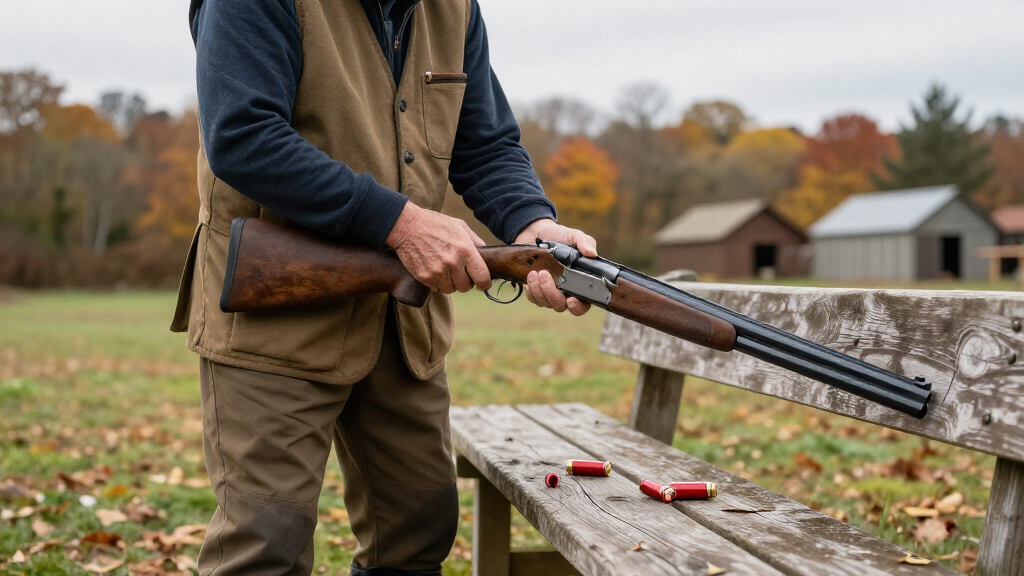
Online interest has surged in Winchester’s roughly century-long effort to develop autoloading (semi-automatic) shotguns, a story that spans the long-established Winchester 1911, Model 50, Model 59, and SX3 lines. The trigger for the current spike is unconfirmed; the underlying engineering history is well documented.
Search interest in Winchester’s century-long pursuit of the autoloading shotgun has spiked in recent coverage tracked via news feeds, drawing renewed attention to one of American firearms manufacturing’s longest-running engineering stories. No new Winchester product launch, anniversary event, or company statement has been confirmed as the trigger for the current attention. What is well established is the history itself: Winchester began work on self-loading shotguns in the early twentieth century and iterated on the concept across multiple model lines for roughly a hundred years.
Winchester Repeating Arms, the New Haven, Connecticut-based manufacturer whose lever-action rifles defined the American West, turned to autoloading shotgun design in the 1910s. Its earliest self-loading shotgun effort — the Winchester Model 1911, a long-recoil, hammerless 12-gauge — was the company’s answer to John Browning’s Auto-5, which Winchester rival FN produced. The 1911 was mechanically ambitious for its era but gained a mixed reputation among collectors and shooters, and it established a pattern that would define the company’s shotgun program for decades: promising engineering paired with real-world compromises.
Later milestones in the lineage are long-documented fact. The Model 50 (introduced in 1954) and the Model 59 (introduced in 1959) used a short-recoil system designed by Winchester engineer Marshall Williams, with the Model 59 notable for its lightweight barrel construction. The Super X-1, introduced in 1974, applied gas operation and was regarded as a premium target and field gun before its discontinuation. The Super X2 and SX3, produced from the early 2000s through FN-owned production in Belgium and later in Portugal and Japan depending on era, carried the gas-operated design forward under the Winchester brand, which has been licensed by Olin Corporation and manufactured through FN Herstal affiliates since the closure of the New Haven plant in 2006.
The current spike in interest appears in search queries and syndicated articles framed as historical retrospectives, categorized under survival and outdoor content feeds. These pieces recount the engineering evolution described above. It bears repeating: the reason this topic is circulating now, at this volume, is not confirmed. No manufacturer announcement, anniversary campaign, or new model introduction tied to the surge has been verified by this outlet.
Why the Autoloading Pursuit Still Draws Attention
Winchester’s autoloading shotgun history matters to shooters, collectors, and outdoor gear readers because it tracks the central engineering problem of the category: making a gas- or recoil-operated shotgun that cycles reliably across light target loads and heavy hunting shells without excessive weight, recoil, or maintenance. Every model in the lineage — from the 1911’s long recoil to the SX3’s gas system — represents a different bet on how to solve that problem, and the trade-offs are still debated among hunters and competitive shooters today.
The story also matters commercially. Winchester remains one of the most recognized ammunition and firearms brands in the United States, and the modern Super X3 and its successors sit in a market segment where reliability claims directly influence purchasing decisions for waterfowl, turkey, and sport shooting use. Renewed public interest in the lineage can reflect collector activity, hunting-season timing, or viral historical content — all plausible, none confirmed.
From the Model 1911 to the Super X Series
The relevant background is the engineering chronology itself. Winchester entered self-loading shotgun production around 1911, competing against Browning’s Auto-5 design. Its mid-century recoil-operated models, the 50 and 59, were succeeded by the gas-operated Super X-1 in 1974, which established the template for the later Super X2 and SX3 gas guns of the 2000s. The brand’s manufacturing history shifted substantially in 2006, when the historic New Haven plant closed and Winchester-branded firearms production continued under arrangements involving Olin Corporation licensing and FN Herstal-affiliated manufacturing. That corporate history is documented fact; how current audiences are rediscovering it — through retrospectives, forums, or social media — is the unconfirmed element.
What’s Driving the Spike Now
The specific trigger for the current wave of interest is unconfirmed. The source material consists of a trending topic label and category metadata (‘survival,’ via RSS) with no underlying article text, press release, or named event. Plausible explanations include a new retrospective article gaining traction, hunting-season search behavior, collector-market discussion, or social media circulation of historical content. None of these has been verified. It is also unclear whether Winchester or its licensing partners have any active promotional campaign connected to the topic, and no new product tied to the autoloading lineage has been announced as of this writing.
Watch for Official Word from Winchester
Readers tracking this topic should watch for an official statement or product announcement from Winchester Repeating Arms or Olin Corporation, which would convert the current speculation into concrete news. Otherwise, the likely next developments are continued retrospective coverage in outdoor and firearms media and sustained search volume if the trend has organic momentum. If no announcement materializes within a typical news cycle, the spike is best read as episodic historical interest rather than a signal of an upcoming launch.
Key Questions
Did Winchester announce a new autoloading shotgun?
No. No new product announcement has been confirmed. The current attention appears to be historical or retrospective coverage; the trigger for the spike is unknown.
What was Winchester’s first autoloading shotgun?
The Winchester Model 1911, a long-recoil 12-gauge introduced in the early 1910s, was the company’s first self-loading shotgun, developed in response to Browning’s Auto-5.
Are Winchester shotguns still made in the United States?
The historic New Haven, Connecticut plant closed in 2006. Winchester-branded firearms have since been produced under licensing arrangements involving FN Herstal-affiliated manufacturing overseas, while Winchester ammunition is a separate Olin Corporation business.
Is the Super X-3 part of this lineage?
Yes. The SX3, a gas-operated autoloader of the 2000s, descends from the Super X-1 (1974) and Super X-2 designs and represents the most recent widely recognized chapter of Winchester’s autoloading shotgun development.
Why is this topic trending right now?
That is unclear. Search and feed interest has risen, but no announcement, anniversary event, or company statement has been identified as the cause.
Source: rss
Fall Picks
fall essentials
As an affiliate, we earn on qualifying purchases.