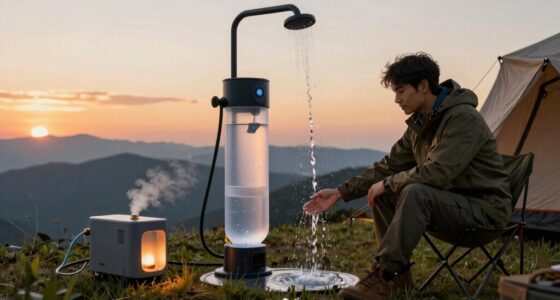
To build a more functional camp wash station, start by choosing a reliable water source and use a portable filter to guarantee water safety. Designate separate zones for washing, rinsing, and drying, keeping supplies nearby. Use collapsible basins and store wastewater in a designated container, disposing of it responsibly downhill from sleeping areas. Keep everything disinfected and promote hygiene through proper handwashing practices. Incorporating eco-friendly practices and good ventilation also helps protect the environment. For details on optimizing your setup, keep exploring.
Key Takeaways
- Design separate zones for washing, rinsing, and drying to improve workflow and hygiene.
- Use portable basins and collapsible containers to contain wastewater and facilitate easy disposal.
- Position the wash station downhill from sleeping areas to prevent runoff contamination.
- Keep soap, sanitizer, and towels nearby for quick access and efficient cleaning routines.
- Incorporate proper ventilation and eco-friendly practices to minimize environmental impact and odors.
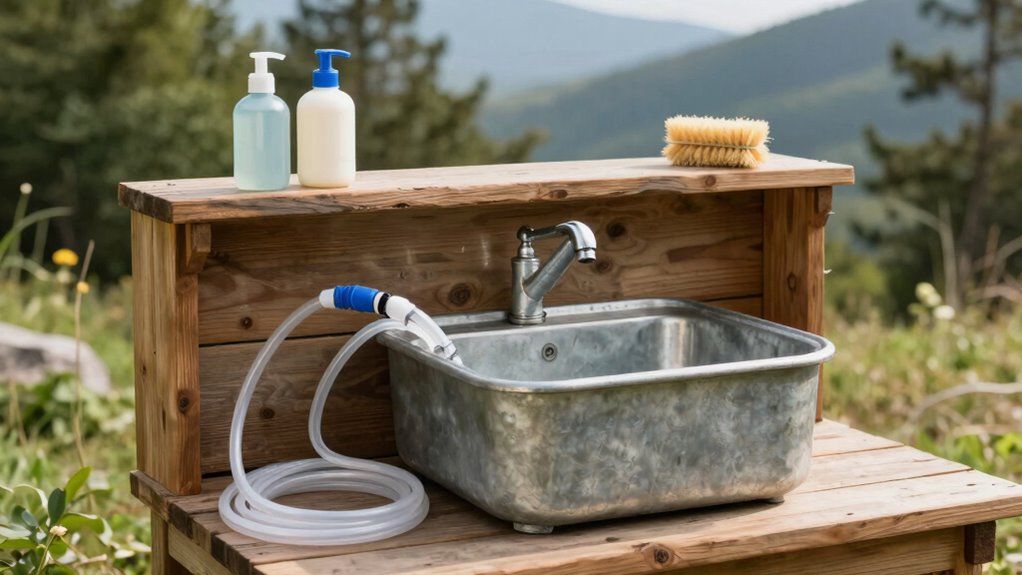
Setting up a camp wash station is essential for maintaining hygiene and preventing the spread of germs during your outdoor adventures. A well-designed wash station keeps everyone healthy and makes cleanup more efficient. To make it more functional, focus on incorporating water filtration systems and sanitation tips that guarantee clean water and proper hygiene. The first step is choosing a reliable water source. If you’re relying on natural water, like a stream or lake, water filtration becomes critical. Use a portable water filter or purifier to remove bacteria, protozoa, and other contaminants. This assures the water you use for washing and rinsing is safe and doesn’t cause illness.
Next, plan the layout of your wash station to maximize efficiency. Set up a dedicated area for washing, rinsing, and drying. Keep soap, hand sanitizer, and clean towels close to this zone. This encourages proper hygiene habits and prevents cross-contamination. Using a collapsible or portable basin can help contain wastewater, making disposal easier and more environmentally friendly. When you’re finished, make sure to collect wastewater in a designated container, and remember to dispose of it responsibly, following Leave No Trace principles. Incorporating biodiversity-conscious practices, such as avoiding the use of harmful chemicals, further protects local ecosystems. Additionally, ensuring proper ventilation around your setup can help reduce odors and keep the area more comfortable.
Arrange your wash station for efficiency with dedicated zones and eco-friendly wastewater disposal.
Incorporate sanitation tips that keep your setup hygienic. Regularly disinfect your wash basin, utensils, and any reusable items. Use biodegradable soap that’s safe for the environment to wash your hands and dishes. To prevent the spread of germs, wash your hands thoroughly with soap and water or sanitizer before and after handling food, after using the restroom, or after touching shared surfaces. Remember to keep your wash station elevated or off the ground to avoid contamination from dirt and insects.
Another key aspect is assuring proper drainage and water disposal. Position your wash station downhill from your sleeping area to prevent water runoff from contaminating your campsite. Use a drain bag or a designated disposal area to contain wastewater, and ensure it’s emptied regularly. This helps maintain sanitation and keeps your campsite clean. By integrating water filtration and following sanitation tips, your camp wash station becomes more effective, reducing health risks and making your outdoor experience more enjoyable. Proper setup, thoughtful placement, and diligent hygiene practices are your best tools for a functional, eco-friendly camp wash station.

LifeStraw Personal Water Filter for Hiking, Travel and Emergency, Blue, 1PK
- Bacteria & Parasite Removal: Removes 99.9999% bacteria and parasites
- Microplastics Filtration: Filters microplastics down to 1 micron
- Turbidity Reduction: Reduces turbidity to 0.2 microns
As an affiliate, we earn on qualifying purchases.
As an affiliate, we earn on qualifying purchases.
Frequently Asked Questions
What Are the Best Materials for a Durable Wash Station?
You should choose materials with high durability to guarantee your wash station lasts. Stainless steel is excellent for its corrosion resistance and strength, making it ideal for longevity. Heavy-duty plastics or polyethylene are also good options, as they resist cracking and weathering. Avoid cheap, lightweight materials that wear out quickly. Using durable materials not only boosts wash station longevity but also reduces maintenance, saving you time and money in the long run.
How Do I Prevent Water From Freezing in Winter?
To keep water from freezing, think of winter insulation as your camp’s warm blanket, wrapping your pipes and water sources in cozy layers. You can also install heating solutions like pipe heaters or heat tapes, which act like tiny fires, keeping everything warm. Running a small, continuous flow of water helps prevent freezing, ensuring your wash station stays functional even in the coldest months.
Can I Build It Without Plumbing Expertise?
Yes, you can build a camp wash station without plumbing expertise by opting for a DIY assembly and portable design. Use simple, pre-made parts like water jugs, a wash basin, and a faucet kit designed for easy setup. Follow clear instructions, and focus on secure connections. This approach makes it manageable, affordable, and flexible, so you can enjoy a functional wash station without needing professional plumbing skills.
What Are Eco-Friendly Water Disposal Options?
You can use eco-friendly water disposal options like recycling solutions and gray water systems. Recycling solutions filter and reuse water for tasks like washing dishes and cleaning, reducing waste. Gray water systems safely direct wastewater from sinks and showers to designated areas, preventing contamination. Make sure you follow local regulations and use biodegradable soaps to keep the environment protected. These options help you maintain a sustainable camp wash station while conserving water resources.
How Much Space Do I Need for a Functional Setup?
You need at least 10 by 6 feet for a functional camp wash station, as this provides enough space for essential camping accessories and a practical wash station layout. Investigating the theory that more space improves efficiency confirms that a well-organized setup reduces clutter and makes cleaning easier. Prioritize accessible water sources, storage, and drainage within this area to guarantee your wash station is both effective and comfortable to use.
As an affiliate, we earn on qualifying purchases.
Conclusion
With your new camp wash station standing tall like a trusty lighthouse, you’re now the captain of cleanliness. It’s your anchor amidst the wilderness, guiding you safely through dirt and grime. Every splash and scrub becomes a dance, turning routine chores into an invigorating ritual. As you stand there, confident and prepared, remember that this station isn’t just about hygiene — it’s your personal oasis, turning your campsite into a haven where fresh starts are just a rinse away.
As an affiliate, we earn on qualifying purchases.
camp wastewater disposal container
As an affiliate, we earn on qualifying purchases.
As an affiliate, we earn on qualifying purchases.