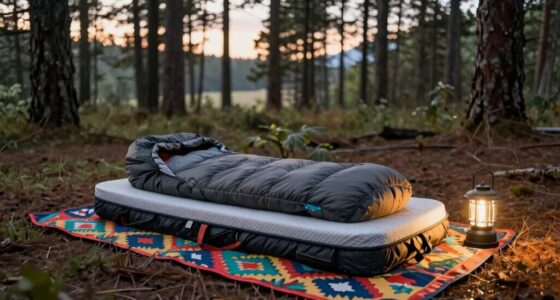
To sleep better outdoors as a light sleeper, choose a quiet spot away from noise sources, using natural terrain features or barriers like trees and bushes. Incorporate earplugs or white noise machines to block out sounds, and set up windbreaks for additional noise reduction. Use blackout shades or sleep masks to combat early sunlight, and guarantee your gear is comfy. Keep exploring for more tech tricks that will transform your camping experience.

Get emergency and outdoor gear delivered free — and shop member deals
- Fast, free delivery on millions of items
- Access to Prime Big Deal Days deals on October 6–7
- Prime Video, Amazon Music and more included
Key Takeaways
- Use blackout sleep masks and dark curtains to block early sunrise and moonlight for consistent darkness.
- Play white noise or nature sounds via portable devices to mask unpredictable outdoor noises.
- Incorporate earplugs (silicone or wax) to effectively reduce ambient sounds and enhance sleep quality.
- Set up natural sound barriers like dense foliage or windbreaks to minimize environmental disturbances.
- Choose a quiet, sheltered campsite away from high-traffic or noisy areas to reduce external sound disruptions.

Sleeping outdoors offers a revitalizing way to improve your rest by reconnecting with nature. However, for light sleepers, the natural sounds and unpredictable environment can make it challenging to get quality sleep. The key lies in creating a sleep environment that minimizes disturbances, especially noise, so you can truly relax and recharge. You don’t need fancy equipment; simple, strategic solutions can considerably enhance your outdoor sleeping experience.
Start by choosing a quiet spot away from busy paths, water sources, or areas with frequent activity. Even a small distance from these noise sources can make a noticeable difference. Once you’ve found a suitable location, focus on noise reduction. Earplugs are a straightforward, effective tool that blocks out most environmental sounds. Silicone or wax earplugs fit comfortably and can drown out rustling leaves, distant voices, or animal noises. If you prefer a more natural approach, consider using a camping pillow with built-in soundproofing or wrapping your sleeping area with heavy blankets or foam mats to absorb noise.
Choose a quiet spot and use earplugs or blankets to block out noise for better outdoor sleep.
An additional trick is to set up a windbreak or natural barrier using trees, bushes, or a tent sidewall. These barriers can help deflect wind and muffling sounds, creating a quieter zone. If you’re camping in an area prone to early morning bird calls or other consistent sounds, consider playing white noise or nature sounds on a portable speaker or sound machine. This might seem counterintuitive, but a steady, calming background noise can mask unpredictable sounds that easily wake you up.
Another useful tip is to utilize natural sound barriers, such as dense foliage or terrain features, which can significantly reduce ambient noise levels. Lighting also plays a role in your sleep environment. Use blackout shades or a sleep mask to block out early sunrise or moonlight, which can wake you prematurely. The right combination of darkness and noise control helps your body relax into the natural rhythms that promote better sleep. Remember, consistency is key, so try to establish a routine that signals to your body that it’s time to rest.
Finally, keep your sleeping gear in top shape. A comfortable sleeping pad and a quality sleeping bag create a physical barrier against the ground and insulate you from temperature fluctuations, making it easier to stay asleep. By paying attention to your sleep environment—reducing noise and controlling light—you give yourself the best chance to enjoy restorative, peaceful sleep outdoors, even if you’re naturally light-sensitive. With these simple tech tricks, you can turn your outdoor adventure into a true sanctuary for rest.
portable white noise machine for camping
As an affiliate, we earn on qualifying purchases.
As an affiliate, we earn on qualifying purchases.
Frequently Asked Questions
What Are the Best Natural Remedies for Sleep Issues Outdoors?
To improve sleep outdoors, you should try herbal teas like chamomile or valerian to relax your mind and body. Aromatherapy diffusers with calming essential oils like lavender can create a soothing environment, helping you drift off easier. Guarantee your camping spot is dark and quiet, and practice deep breathing or meditation to enhance relaxation. These natural remedies work well to ease sleep issues when you’re camping, making your outdoor experience more restful.
How Can I Block Out Unfamiliar Sounds Effectively?
You can block out unfamiliar sounds effectively by using earplugs for camping, which fit comfortably and reduce noise considerably. Additionally, investing in a soundproof tent can create a barrier against external sounds, ensuring a quieter sleep environment. Combining these methods, along with positioning your tent away from noisy areas, helps you enjoy restful sleep outdoors, even when you’re a light sleeper sensitive to unfamiliar sounds.
Are There Specific Sleeping Positions Recommended for Outdoor Camping?
Your best bet is to sleep on your side or in a fetal position, which can reduce discomfort and minimize noise disruption. Studies show that side sleeping can improve sleep quality by 20%. Use a supportive camping pillow choice and make certain your sleeping bag insulation is adequate to stay warm. These positions help keep your spine aligned and create a cozy, insulated barrier against outdoor sounds and temperature drops.
What Should I Do if I Wake up Feeling Cold?
If you wake up feeling cold, first add extra campsite clothing layers like a hat, socks, or an insulated jacket. Check your sleeping bag insulation—consider using a sleeping bag liner or adjusting the zipper for more warmth. You can also shift to a more insulated sleeping position, like curling up, to conserve heat. Keeping these items close helps you stay warm and guarantees a more restful night outdoors.
How Do I Prevent Insects From Disturbing My Sleep?
To prevent insects from disturbing your sleep, you should use insect repellents containing DEET or natural alternatives like citronella. Setting up a mosquito net around your sleeping area creates a physical barrier that keeps bugs out. Make sure the net is properly secured and free of tears. Combining these methods offers effective protection, allowing you to rest peacefully without being bothered by insects during your outdoor sleep.
silicone earplugs for sleeping outdoors
As an affiliate, we earn on qualifying purchases.
As an affiliate, we earn on qualifying purchases.
Conclusion
With these tech tricks, you’ll transform your camping nights into peaceful, restful escapes—so serene, even a sleeping bear would envy your rest. Remember, a good night’s sleep outdoors isn’t just a luxury; it’s the secret to waking up refreshed and ready to conquer the day. Embrace these tips, and you’ll turn your campsite into a haven of tranquility, proving that even in the wild, technology can be your best sleep partner. Sweet dreams await!
As an affiliate, we earn on qualifying purchases.
As an affiliate, we earn on qualifying purchases.
Fall Picks
fall essentials
As an affiliate, we earn on qualifying purchases.