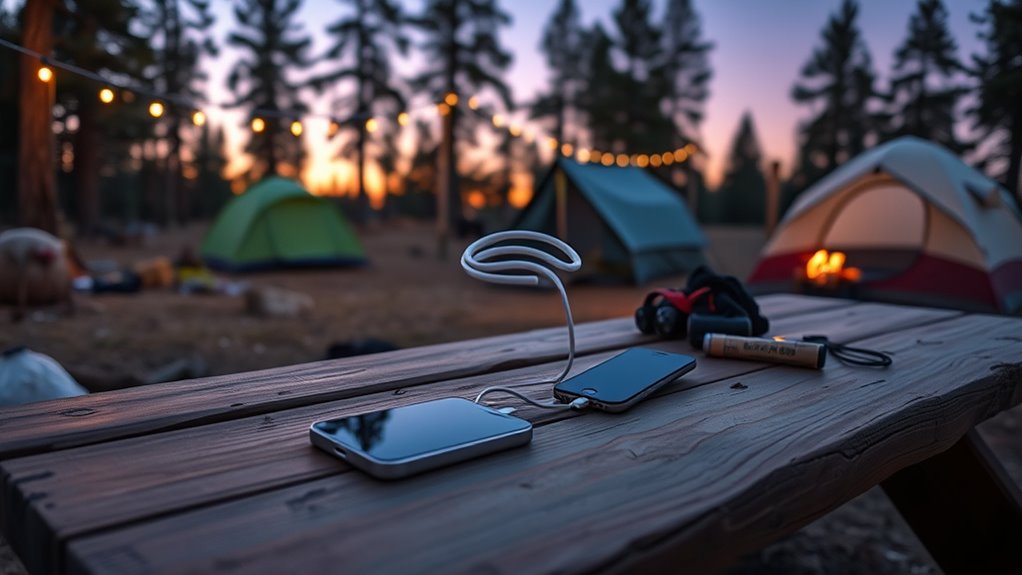

Wireless charging at camp is possible but not entirely cord-free yet. You’ll need portable solar panels, power banks, and compatible devices with wireless charging support. Weather, terrain, and device limits can affect efficiency, so proper setup and energy management are key. While technology is improving, fully ditching cords in outdoor settings still has hurdles. Keep exploring to discover how to maximize wireless power and make your camping experience more convenient.
Key Takeaways
- Wireless charging is possible outdoors using compatible devices, but requires proper setup and environmental conditions.
- Solar-powered wireless charging pads and portable power banks enable cord-free device charging at campsites.
- Signal strength and device compatibility can limit wireless charging effectiveness in remote outdoor settings.
- Positioning solar panels in direct sunlight and ensuring device support are essential for successful outdoor wireless charging.
- Future innovations aim to improve outdoor wireless power range, speed, and reliability, making cord-free camping more feasible.
Understanding Wireless Charging Technology and Its Limitations
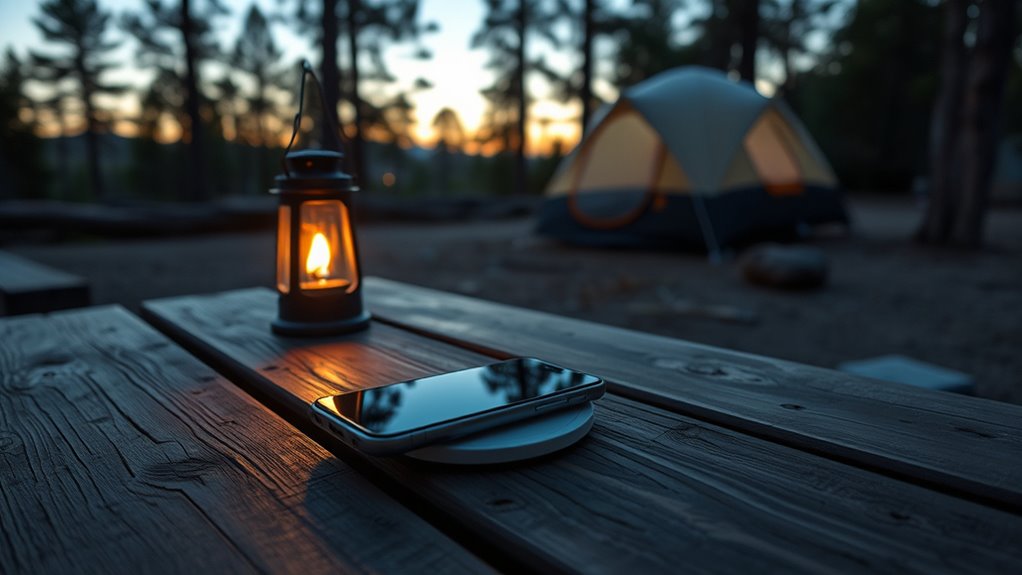
Wireless charging uses electromagnetic fields to transfer energy from a charging pad to a device without the need for cables. This technology is common for indoor charging setups, allowing you to simply place your device on a pad and power up. However, wireless power standards like Qi help guarantee compatibility across different devices and chargers, but they still have limitations. You might find that not all devices support wireless charging, especially in outdoor or rugged environments. Signal strength can weaken with distance, so your device needs to stay close to the charger for effective power transfer. Also, charging speed can vary, and some devices may charge slower wirelessly than wired. Understanding these factors helps you manage expectations when using wireless charging at camp. Additionally, high-quality charging pads can improve efficiency and reduce potential issues with signal strength and charging speed. Furthermore, energy transfer efficiency plays a crucial role in how well wireless charging performs, especially in challenging outdoor settings. To maximize performance in outdoor environments, selecting robust and weather-resistant charging equipment can be beneficial. Proper placement and shielding can also help optimize signal stability, ensuring better charging performance outside. Incorporating smart charging features can further enhance energy management and device safety during outdoor use.
Essential Gear for Wireless Power in the Outdoors
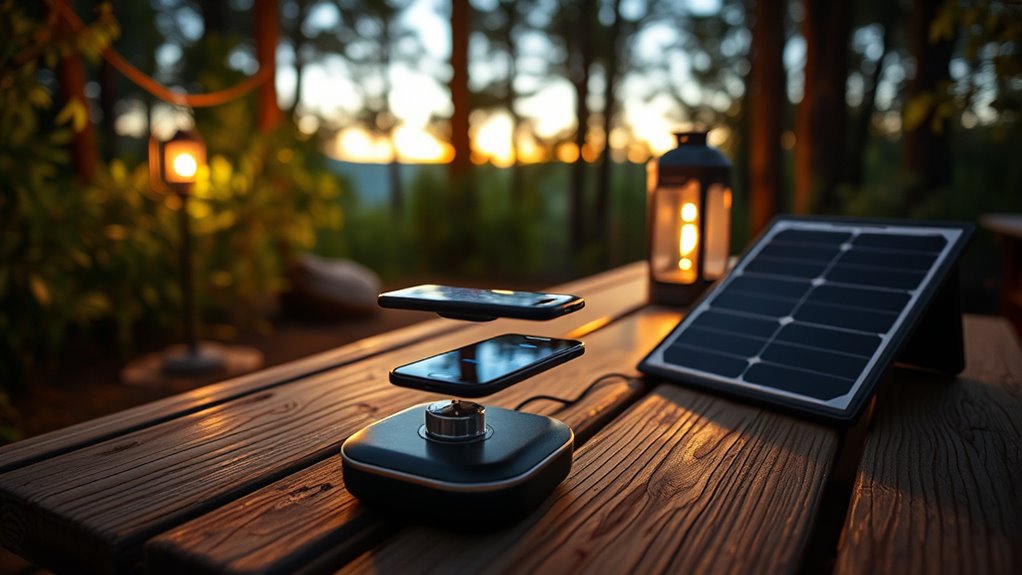
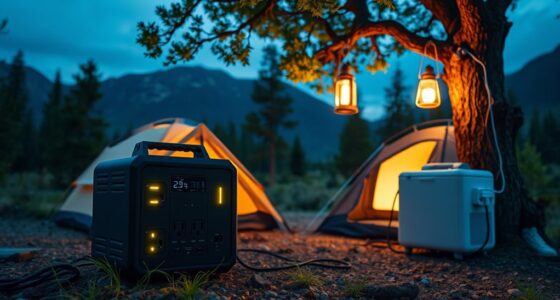
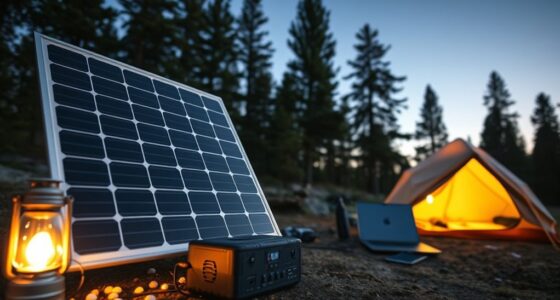
To make the most of wireless charging outdoors, you’ll need gear designed to withstand rugged conditions and guarantee reliable power transfer. Durable solar panels are essential for capturing sunlight and converting it into energy, especially in remote locations. Pair them with high-capacity battery banks to store power for later use, ensuring your devices stay charged even when the sun isn’t shining. Look for waterproof and shockproof options that can handle rough terrain and weather changes. Incorporating smart shopping strategies can help you find the best quality and value for outdoor power gear. These tools help you stay powered up, making cordless charging feasible on your outdoor adventures, especially when selecting reliable energy sources suited for outdoor use and understanding solar panel efficiency to optimize energy collection. Additionally, choosing energy storage solutions with high-capacity batteries ensures extended usage during cloudy days or nighttime. Being aware of solar panel durability can also help you choose equipment that withstands harsh environmental conditions.
Practical Strategies for Camping Without Cords
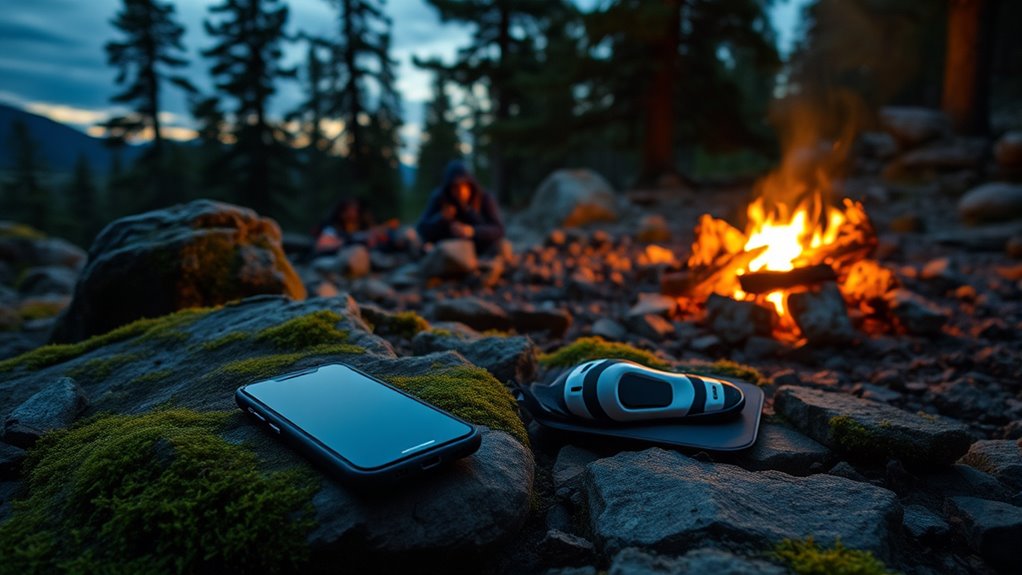
When you’re camping without cords, planning ahead is key to staying powered up. Start by investing in a reliable power bank to keep your devices charged during the trip. Pair it with portable solar panels to recharge your power bank sustainably during the day. Position the solar panels in direct sunlight to maximize efficiency, making sure they’re stable and angled correctly. Keep an eye on your power bank’s capacity, and recharge it whenever possible to avoid running out of juice. Use energy-efficient settings on your devices to conserve power. Consider bringing extra batteries or portable chargers as backups. emerging trends in nanotechnology can also provide innovative charging solutions that are more efficient and compact for outdoor activities. Exploring advanced battery technology can further enhance your portable power options, ensuring you stay connected without the hassle of cords, all while harnessing the sun’s energy. Additionally, understanding wireless charging advancements can help you select compatible devices and accessories for seamless power options during your outdoor adventures.
Challenges and Considerations for Wireless Charging at Campsites
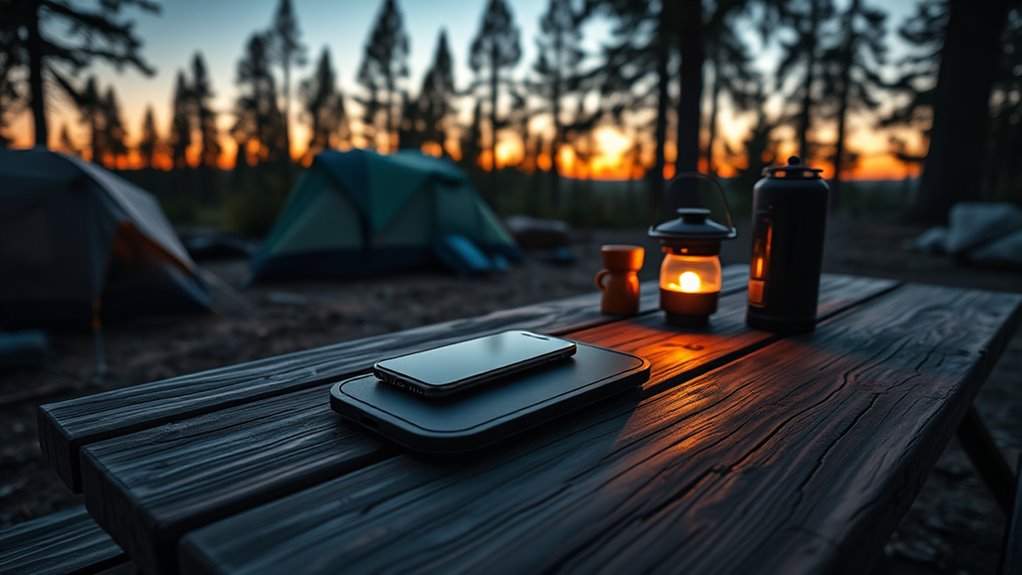
While wireless charging offers convenience at campsites, it comes with specific challenges that you need to contemplate. One major issue is the reliance on power sources like solar panels or power banks, which may not always generate or store enough energy. You’ll also need to consider the compatibility of your devices with wireless charging pads, as not all gadgets support this technology. Additionally, environmental factors such as rain, dirt, or uneven surfaces can interfere with charging efficiency. To make the most of wireless charging, you should:
- Ensure your devices support Qi wireless charging
- Use high-capacity power banks for backup energy
- Position solar panels optimally for maximum sunlight exposure
- Recognize the importance of power management and proper setup to extend your device’s usability in remote settings
- Being aware of environmental conditions helps you adapt your setup for better performance and reliability
- Planning for energy conservation can help maximize your device’s operational time when resources are limited
- Understanding charging limitations in remote environments can help you develop effective strategies for maintaining power.
- Incorporating energy-efficient devices can further improve your ability to sustain power in off-grid locations.
Addressing these considerations helps you stay powered without cords, even in remote camp settings.
Future Trends and Innovations in Outdoor Wireless Power
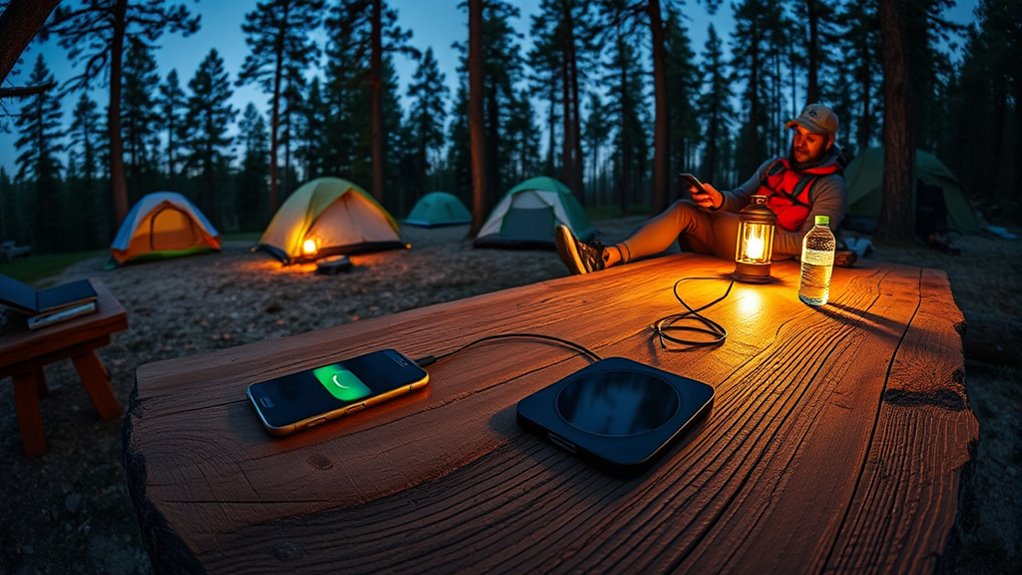
Advancements in outdoor wireless power technology are rapidly transforming how you stay connected in remote settings. Future innovations aim to improve battery safety, reducing risks of overheating or damage during wireless charging. Researchers are developing smarter systems that monitor battery health in real-time, ensuring safer use outdoors. Additionally, new methods are being designed to minimize signal interference from environmental factors like trees or weather, which can disrupt power transfer. Wireless charging solutions are expected to become more efficient, with longer ranges and faster charging times, making camping trips more convenient. These innovations will help you stay powered without cords, even in challenging outdoor environments, while maintaining safety and reliability. As technology evolves, outdoor wireless power will become an integral part of your camping experience.
Frequently Asked Questions
How Weather-Resistant Are Outdoor Wireless Charging Devices?
Outdoor wireless charging devices are quite weather-resistant, thanks to durability testing and weatherproof ratings like IP66 or IP67. These ratings ensure they withstand rain, dust, and even snow. You should check the specific weatherproof rating before buying, as higher ratings offer better protection. Keep in mind that regular maintenance helps prolong their lifespan, so clean and inspect your device periodically to maintain ideal performance in outdoor conditions.
Can Multiple Devices Be Charged Simultaneously Using Wireless Tech?
Yes, you can charge multiple devices simultaneously with wireless tech, turning your camp setup into a powerhouse of multi-device charging. Imagine the convenience of powering your phone, tablet, and camera all at once without tangled cords. Modern wireless chargers support simultaneous power distribution, so you won’t have to wait for one device to finish before starting another. It’s like having an entire charging station in the palm of your hand, ready to go.
What Safety Precautions Should I Take With Outdoor Wireless Chargers?
You should keep outdoor wireless chargers away from water and metal objects to prevent electromagnetic interference. Always use chargers with proper insulation and safety certifications to protect against battery safety risks. Avoid placing devices on uneven surfaces and check for damage before use. Regularly inspect your equipment for wear and tear, and follow manufacturer instructions to ensure safe, reliable charging while camping.
Are There Sustainable or Eco-Friendly Wireless Charging Options for Camping?
Imagine a gentle stream nourishing the earth—sustainable wireless charging options do just that. You can opt for solar-powered chargers that harness sunlight, turning it into clean energy for your devices. Additionally, look for chargers made from biodegradable materials that break down naturally, reducing waste. These eco-friendly choices allow you to stay connected without harming the environment, making your camping experience both modern and mindful of nature’s delicate balance.
How Long Do Portable Wireless Chargers Typically Last on a Single Charge?
A portable wireless charger typically lasts between 10 to 20 hours on a single charge, depending on its battery life and your device’s power consumption. You’ll find that charging speed varies, with some models offering fast wireless charging, which can recharge your device quickly but may drain the battery faster. To maximize usage during camping, choose a charger with a larger battery capacity and efficient charging speed to keep your devices powered longer.
Conclusion
Wireless charging at camp is like planting a seed—it promises convenience but needs careful nurturing. While new tech is making outdoor power more accessible, it’s not quite ready to replace cords entirely. With patience and the right gear, you can enjoy the freedom of unplugged adventures. Embrace these innovations as stepping stones on your journey, and soon, the campsite might just become your wireless oasis—where energy flows as freely as the wilderness around you.