
Choosing between solar panels and solar power banks depends on your needs. If you want steady, long-term energy for your home, solar panels are your best bet—they’re durable, efficient, and environmentally friendly. If you need quick, portable power for outdoor activities, solar power banks are more convenient. To find out which option fits your lifestyle and how each works, explore further for detailed insights.
Key Takeaways
- Solar panels are ideal for long-term, large-scale energy needs, while power banks suit portable, on-the-go device charging.
- Panels offer higher efficiency and durability, making them better for consistent, sustainable power supply.
- Power banks are more affordable upfront and easy to set up, but have shorter lifespan and lower energy output.
- Choose solar panels for permanent installations and higher energy demands; opt for power banks for convenience and mobility.
- Both options support renewable energy but serve different lifestyles; select based on your portability, capacity, and energy needs.
Understanding the Basics of Solar Energy Systems

Solar energy systems capture sunlight and convert it into usable electricity, making them an eco-friendly alternative to traditional power sources. The process begins with solar panel manufacturing, where high-quality materials like silicon are used to produce efficient panels. As sunlight hits these panels, photovoltaic cells generate direct current (DC) electricity. Advances in battery technology have also improved energy storage, allowing you to store excess power for later use. These innovations mean your system can operate more reliably and efficiently. Additionally, European manufacturers are leading the way in developing energy-efficient solutions, integrating sustainable practices into their design and production processes. Moreover, ongoing research in material innovation continues to enhance the performance and durability of solar components. For instance, new perovskite materials are showing promise in increasing efficiency and reducing costs. Furthermore, the development of solar tracking systems helps maximize sunlight exposure throughout the day, boosting overall energy output. Understanding the manufacturing process of solar panels and how modern batteries enhance storage helps you grasp the fundamentals of solar energy systems. This knowledge is essential in choosing the right setup for your energy needs and maximizing the benefits of harnessing sunlight sustainably.
Comparing Efficiency and Power Output

When evaluating solar panels and solar power banks, understanding their efficiency and power output is crucial. An efficiency comparison reveals that solar panels typically convert sunlight into electricity at rates between 15% and 22%, making them highly effective for long-term energy generation. Solar power banks, however, rely on internal solar cells with lower efficiency, often around 10% or less, limiting their ability to produce substantial power. In terms of power output, solar panels can generate several watts to hundreds of watts depending on their size and design, suitable for powering appliances or entire systems. Power banks usually provide a few watts, enough for charging smartphones or small devices. So, if you need consistent, high-output energy, solar panels generally outperform solar power banks. Additionally, the color accuracy of solar panels can impact their overall efficiency since better color fidelity often correlates with more precise and effective light absorption. Moreover, the cost-effectiveness of solar panels over time tends to be higher due to their durability and ability to generate more energy over their lifespan. The adaptability of solar panels allows them to be integrated into various settings, enhancing their practicality for different users. Furthermore, advancements in solar technology continue to improve efficiency rates and reduce costs, making them increasingly accessible to consumers. Understanding the performance differences helps consumers make more informed decisions based on their energy needs and usage scenarios.
Portability and Convenience for On-the-Go Charging
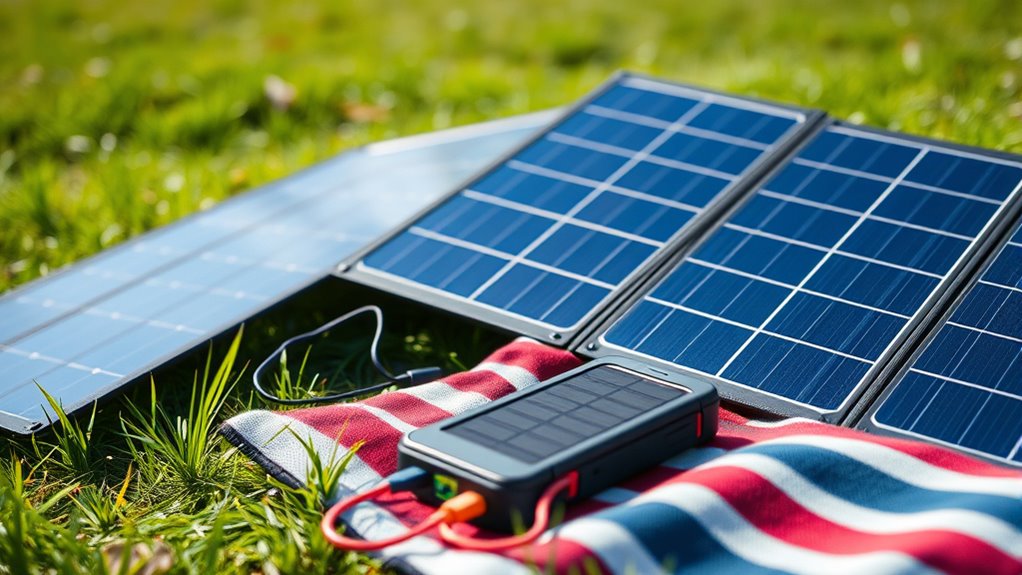
While efficiency and power output are important, portability and convenience often determine how practical solar energy solutions are for everyday use. Solar power banks excel here with their compact, portable design, making them ideal for on-the-go charging. They are lightweight and easy to carry, fitting into bags or pockets without hassle. Solar panels, on the other hand, tend to be bulkier and heavier, requiring more space and effort to set up. The table below compares key features:
| Feature | Solar Panel | Solar Power Bank | Best For |
|---|---|---|---|
| Portable Design | Less portable, bulkier | Compact, pocket-sized | Travelers, commuters |
| Weight Considerations | Heavier | Lightweight | Daily use on the move |
| Ease of Use | Setup needed | Ready to use immediately | Quick, on-the-go charging |
Choosing depends on your need for portability versus setup convenience. For users seeking a reliable energy source, solar power banks offer a practical solution for everyday mobility.
Installation and Setup Requirements
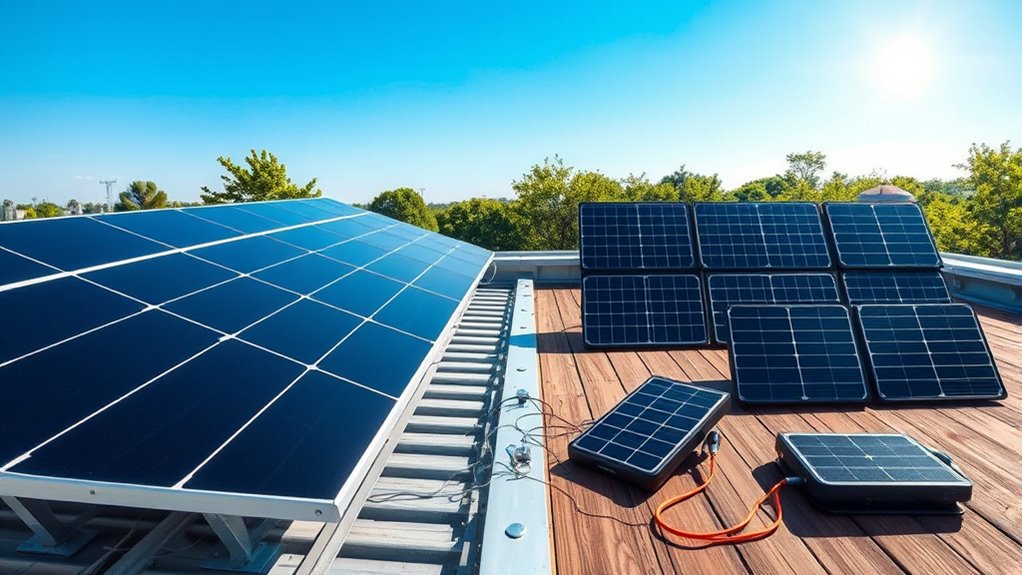
Setting up a solar power system requires different levels of effort depending on the device. For solar panels, you’ll need mounting hardware to secure them to your roof or ground. Proper placement guarantees maximum sunlight exposure and efficiency. The wiring configuration involves connecting panels in series or parallel, depending on your voltage and current needs, and then linking them to an inverter or charge controller. This process can be more involved, requiring careful planning and some technical skills. In contrast, solar power banks are simple to set up; they usually just need to be charged via USB or sunlight. They don’t require mounting hardware or complex wiring, making them ideal for quick, hassle-free use. Overall, panels demand more installation effort than power banks. Additionally, integrating smart home automation can enhance the monitoring and control of your solar energy system. Considering installation complexity can help you decide which system best fits your needs and technical comfort level. Understanding system scalability can also influence your choice, especially if you plan to expand your solar setup in the future. For example, choosing a system with expandability options allows for easier upgrades as your energy needs grow. Moreover, evaluating the cost and maintenance involved can help ensure your solar investment remains sustainable over time.
Cost Considerations and Budgeting

When comparing solar panels and power banks, your initial investment costs can vary greatly. You’ll also want to contemplate the long-term savings from reduced energy bills and the potential expenses for maintenance or replacements over time. Balancing these factors helps you choose a solution that fits your budget and energy needs. Additionally, understanding system sizing and transfer-switch fundamentals can ensure you select the most cost-effective and reliable backup power option. Exploring a free online tool to convert text styles can help you present your research findings more effectively. Considering initial setup costs and ongoing maintenance expenses can further refine your decision-making process. For instance, evaluating all-terrain stroller features can provide insights into durability and long-term use, similar to assessing the lifespan and performance of solar energy systems. A thorough review of component durability can also aid in making a well-informed investment.
Initial Investment Expenses
Investing in solar technology requires careful budget planning, as initial costs can vary considerably between solar panels and solar power banks. Solar panels typically involve higher upfront costs due to installation, equipment, and setup expenses, making your budget planning essential to avoid surprises. In contrast, solar power banks usually have lower upfront costs because they are portable devices that don’t require complex installation. When comparing these options, consider not just the purchase price but also the long-term value your budget allows for. Solar panels may demand a larger initial investment but can pay off over time through energy savings. Solar power banks, while more affordable upfront, serve limited needs. Your choice depends on your immediate budget constraints and long-term energy goals.
Long-term Savings Benefits
Although the initial costs of solar panels are higher, they often lead to greater long-term savings through reduced energy bills and government incentives. Over time, your investment pays off as you generate your own electricity, lowering monthly expenses. Plus, modern solar panels have an impressive battery lifespan, enhancing energy storage efficiency and ensuring consistent power supply. Patchology.ORG offers additional resources on sustainable energy solutions to help you make informed decisions. Here’s a quick comparison:
| Aspect | Solar Panels | Solar Power Banks |
|---|---|---|
| Cost | Higher upfront, but long-term savings | Lower initial cost, limited savings |
| Battery lifespan | Long-lasting, durable energy storage | Shorter lifespan, less reliable |
| Energy storage | Built-in or added batteries for backup | Portable, small capacity |
| Maintenance | Minimal, with occasional checks | Minimal, but limited capacity |
Your choice impacts long-term savings—consider these factors carefully. Additionally, understanding energy management can help optimize your overall solar investment.
A key aspect of solar system efficiency involves proper maintenance and monitoring to maximize energy output over time.
Maintenance and Replacement
Maintenance and replacement costs are essential to contemplate when budgeting for solar energy systems. Regularly evaluating cleaning frequency helps ensure your system performs efficiently; most panels need cleaning every 6 to 12 months, depending on dust and debris. Solar panels generally have long replacement intervals, often lasting 25-30 years, but inverters or batteries might require replacements sooner. Solar power banks typically incur lower maintenance costs and rarely need replacement unless damaged or outdated. However, their lifespan is shorter, usually 2-3 years, which affects long-term budgeting. Planning for these costs helps avoid surprises and keeps your solar investment sustainable. Additionally, considering potential emotional regulation challenges associated with managing long-term maintenance can help set realistic expectations for your solar energy investments. Incorporating these factors into your cost‑of‑ownership analysis ensures a comprehensive understanding of your system’s long-term financial commitment. Being aware of maintenance schedules can also aid in preventing unexpected system failures and costly repairs over time. Regular monitoring of system performance can further prevent costly repairs and optimize your energy output over the lifespan of your setup.
Durability and Weather Resistance

When it comes to durability and weather resistance, solar panels generally outperform solar power banks due to their robust construction and design. Solar panels feature a weatherproof design that withstands rain, snow, and wind, ensuring they keep working in various conditions. Their material durability is high, with tough glass covers and sturdy frames built to endure harsh environments without damage. In contrast, solar power banks are more vulnerable; they often have less durable casings and limited weatherproofing, making them prone to damage from moisture and extreme temperatures. If you need a reliable energy source outdoors, solar panels’ resilience to weather elements makes them the better choice. Their sturdy build ensures longevity, even under challenging weather conditions.
Environmental Impact and Sustainability

When considering environmental impact, you should look at how much each option reduces your carbon footprint and uses resources efficiently. Solar panels typically have a larger upfront environmental cost but offer long-term sustainability, while power banks have a smaller initial footprint but less overall impact. Understanding their lifecycle environmental costs helps you choose the most eco-friendly solution for your needs.
Carbon Footprint Reduction
Solar panels and solar power banks both help reduce your carbon footprint by harnessing renewable energy, but they do so in different ways. Solar panel manufacturing involves energy-intensive processes that produce emissions, but over their lifespan, they generate clean power, offsetting their initial impact. Proper battery recycling is essential for solar power banks to prevent hazardous waste and recover valuable materials, further minimizing environmental harm. By choosing solar panels, you contribute to large-scale renewable energy generation, decreasing reliance on fossil fuels. Solar power banks, while more portable, typically have a smaller environmental impact per unit. Both options promote sustainability, but understanding their manufacturing and disposal processes helps you make an environmentally conscious decision that aligns with reducing your overall carbon footprint.
Resource Consumption Efficiency
While both solar panels and solar power banks harness renewable energy, their resource consumption efficiency varies markedly. Solar panels require significant materials and energy during manufacturing, but they generate clean electricity over decades, making them highly efficient in energy storage and use. They seamlessly integrate with the grid, allowing excess power to be redistributed, reducing waste. Solar power banks, on the other hand, rely on batteries with limited lifespan and higher resource use for production and disposal. Their energy storage capacity is portable but less sustainable long-term. Grid integration favors large-scale solar panels, optimizing resource consumption by balancing supply and demand. Conversely, power banks are ideal for short-term use but less efficient in overall resource consumption when considering their lifecycle and environmental impact.
Lifecycle Environmental Cost
Evaluating the lifecycle environmental costs of solar panels and power banks reveals significant differences in their sustainability. Solar panels typically have a larger manufacturing footprint due to material extraction and processing, but they generate clean energy over decades. Power banks, on the other hand, involve frequent manufacturing and shorter lifespans, increasing their environmental impact. End of life disposal is critical for both; panels require recycling to recover rare materials, while power banks often end up as e-waste, contributing to pollution. Consider this comparison:
| Aspect | Solar Panels | Power Banks |
|---|---|---|
| Manufacturing Footprint | Larger, due to complex materials | Smaller, but frequent replacements |
| End of Life Disposal | Recycling programs essential | Often discarded improperly, harmful waste |
Which Option Suits Different Lifestyle Needs

Choosing between solar panels and solar power banks depends largely on your lifestyle and energy needs. If you enjoy recreational activities like camping or outdoor adventures, a portable solar power bank offers convenience and flexibility, keeping your devices charged on the go. It’s compact, lightweight, and easy to carry, making it ideal for spontaneous trips. On the other hand, if you’re looking to power a home or multiple appliances regularly, solar panels are the better fit, providing a sustainable, long-term energy source. Additionally, solar panels often have a more aesthetic appeal, blending seamlessly into your property without clutter. Your choice ultimately hinges on whether you prioritize portability and quick access or a steady, eco-friendly energy supply tailored to your daily routine.
Frequently Asked Questions
Can Solar Panels and Power Banks Work Together Effectively?
Yes, solar panels and power banks can work together effectively by creating a hybrid system. You can use solar panels to generate clean energy and store excess power in a portable power bank for later use. This setup maximizes energy storage, guarantees you have power on cloudy days or at night, and improves overall efficiency. Combining both allows you to harness sunlight more flexibly and reliably, meeting your energy needs seamlessly.
What Are the Maintenance Requirements for Solar Panels and Power Banks?
To keep your solar panels and power banks working effectively, you should follow simple cleaning routines like wiping panels with a damp cloth to remove dust and debris regularly. Store your power banks in a cool, dry place, adhering to storage guidelines to prevent damage. Check connections and charging ports periodically, and avoid exposing them to extreme weather. Proper maintenance ensures peak performance and longevity for both your solar setup.
How Long Do Solar Panels and Power Banks Typically Last?
Your solar panels generally last 25-30 years, with a durability comparison showing they withstand weather and wear well over time. Power banks, however, typically have a shorter lifespan of 2-5 years, depending on usage and quality. The lifespan estimation indicates that solar panels provide long-term energy, while power banks are more temporary solutions. Proper maintenance can extend your devices’ longevity and maximize their performance.
Are There Any Safety Concerns With Using Solar Energy Devices?
Did you know that improper electrical safety practices cause over 10,000 household fires annually? When using solar energy devices, safety concerns are minimal if you follow proper procedures. Make certain your devices have good device durability and avoid exposure to water or extreme weather, which could compromise safety. Always use certified equipment, inspect connections regularly, and follow manufacturer guidelines to prevent electrical safety hazards and prolong your device’s lifespan.
How Do Weather Conditions Affect Solar Panel and Power Bank Performance?
Weather conditions directly impact your solar devices. Cloud cover reduces sunlight, lowering the efficiency of both solar panels and power banks, so expect slower charging on cloudy days. Temperature effects also matter; high temperatures can decrease solar panel performance, while cooler weather generally boosts efficiency. To get the most out of your solar setup, monitor weather forecasts and optimize placement, ensuring devices get maximum sunlight exposure whenever possible.
Conclusion
Ultimately, choosing between solar panels and power banks depends on your lifestyle—are you seeking endless energy or portable convenience? Think of solar panels as the steady heartbeat of renewable power, while power banks are your quick, on-the-go lifeline. Both harness sunlight, but only one lets you carry the sun in your pocket. So, which will you choose to light up your life? The power to decide is in your hands—shine on!