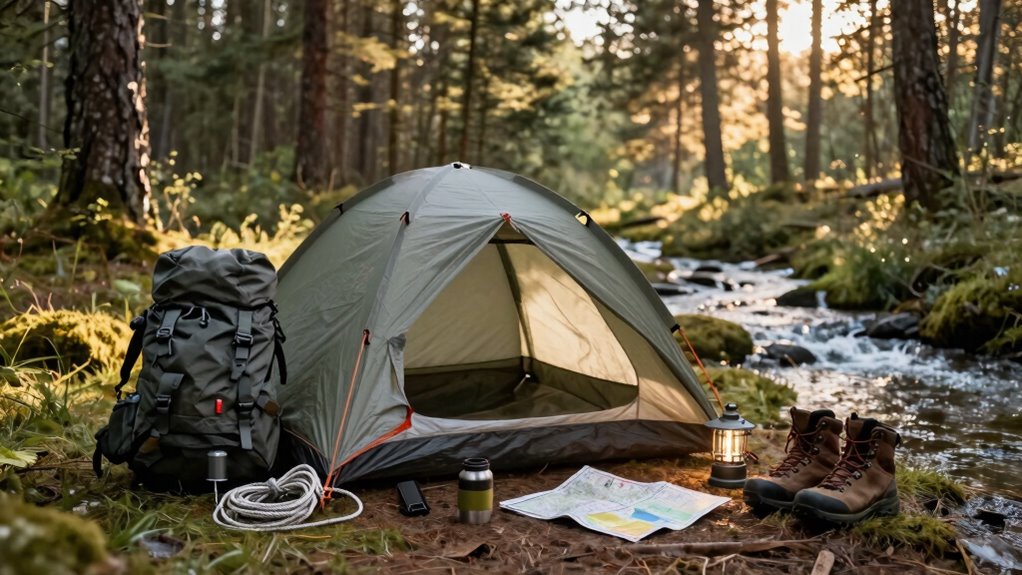

To build a more reliable solo camp routine, establish predictable wake-up times and create a mental checklist for safety and daily tasks. Plan activities early in the day to take advantage of good weather and keep campfire cooking simple and consistent. Store food securely and keep your campsite tidy to prevent wildlife encounters. Always supervise your campfire, fully extinguishing it before sleeping. If you keep practicing these steps, you’ll find your routine becoming second nature—and there’s more to learn to enhance your experience.
Key Takeaways
- Establish consistent wake-up, activity, and bedtime schedules to create predictability.
- Prepare and organize gear and supplies in advance for quick access and reduced stress.
- Incorporate daily safety checks, like fire safety and wildlife precautions, into your routine.
- Plan activities early in the day to maximize daylight and ensure safety.
- Use familiar rituals, such as campfire cooking, to mark the end of each day and signal routine completion.
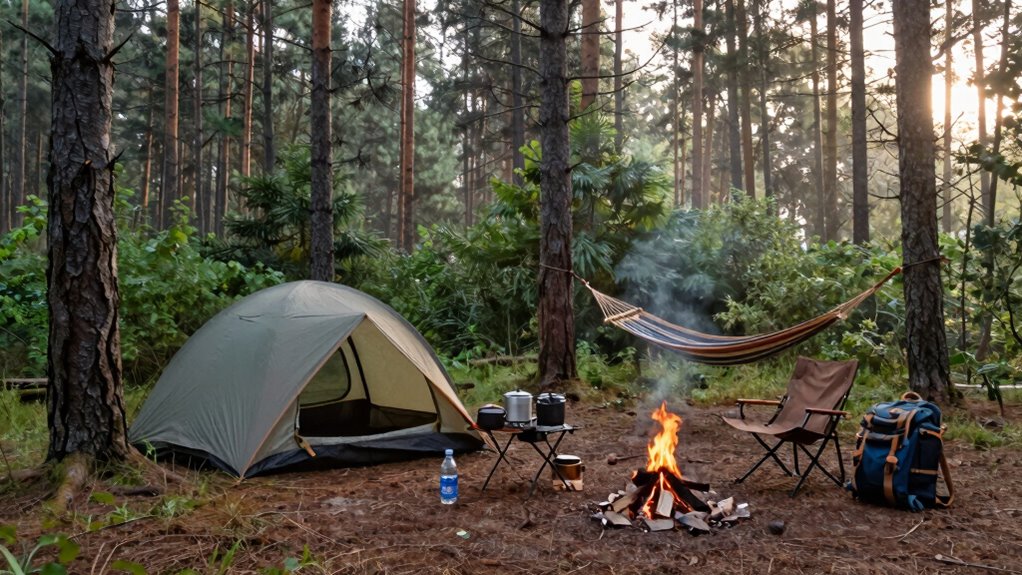
Beginning a solo camping trip can be incredibly rewarding, but establishing a dependable routine is key to ensuring a smooth and enjoyable experience. When you settle into your campsite, creating a predictable sequence of tasks helps you stay organized and relaxed. One essential part of your routine should focus on campfire cooking, which not only warms your meals but also becomes a comforting ritual that signals the end of your day. Always gather your firewood in advance and ensure it’s dry. Build your fire on a prepared fire ring or a cleared, non-flammable surface, and keep a bucket of water or a fire extinguisher nearby. Cooking over a campfire requires patience, so plan simple, nutritious meals that are easy to prepare and clean up. Using a cast-iron skillet or grill grate can make cooking more efficient and enjoyable. Remember, safety is crucial — never leave your fire unattended, and fully extinguish it before sleeping or leaving the site. Incorporating wildlife safety into your routine by storing food securely and keeping your campsite tidy helps protect both you and local animals. Developing a fire safety checklist can help you remember all critical precautions and procedures to prevent accidents. Alongside campfire routines, wildlife safety should be a top priority. To protect both yourself and local animals, store all food and scented items securely, using bear-proof containers if needed, and hang food in a tree away from your tent. Incorporate this into your routine by always putting your food away immediately after eating, rather than leaving it out overnight. This habit prevents attracting wildlife to your campsite, reducing the risk of dangerous encounters. Keep your campsite tidy — clear away trash and food scraps regularly, and avoid leaving crumbs or wrappers lying around. Respect local wildlife by observing from a distance and never attempting to feed or approach animals. Developing a mental checklist for these safety measures ensures you’re always prepared and minimizes surprises. Creating predictable patterns for your daily activities helps you stay grounded and reduces stress. Wake up at a consistent time, check your gear, and plan your day’s hike or exploration early. In addition, understanding firewood types and storage can significantly improve your fire-building success. In the evening, follow your campfire cooking routine, and then double-check that your fire is fully out before bedtime. Incorporate wildlife safety into your evening wrap-up by inspecting your area for food smells or trash. Over time, these habits become second nature, giving you peace of mind and allowing you to focus on enjoying your surroundings. Building a reliable solo camp routine takes effort initially, but once established, it offers structure, safety, and comfort, making your outdoor adventures more rewarding and less stressful.
campfire cooking cast iron skillet
As an affiliate, we earn on qualifying purchases.
As an affiliate, we earn on qualifying purchases.
Frequently Asked Questions
What Safety Gear Should I Always Carry Solo?
You should always carry safety gear like a reliable first aid kit, a multi-tool, and a flashlight. Prioritize campfire safety by bringing matches or a lighter, and always keep water nearby. Remember to follow Leave No Trace principles, packing out all trash and minimizing your impact. Carry a whistle for emergencies, a map or GPS device, and extra batteries. Staying prepared guarantees your solo adventure remains safe and enjoyable.
How Do I Handle Emergencies Alone in the Wilderness?
When handling emergencies alone in the wilderness, stay calm and assess the situation quickly. Use emergency signaling devices like a whistle or mirror to attract help. Keep your first aid essentials handy to treat injuries promptly, and know basic first aid techniques. If possible, move to a safe location before calling for assistance. Remember, staying composed and prepared can make all the difference in surviving and managing solo wilderness emergencies.
What’s the Best Way to Stay Motivated During Solo Trips?
To stay motivated during solo trips, focus on solo mindfulness by being present in your surroundings, which keeps you engaged and grounded. Incorporate wilderness journaling to reflect on your experiences, track progress, and set small goals. These practices help maintain a positive mindset, deepen your connection with nature, and remind you of your purpose, making each moment in the wilderness inspiring and fulfilling.
How Can I Improve My Navigation Skills?
Think of your navigation skills as the compass guiding your journey through an uncharted forest. You improve by practicing map reading, visualizing terrain, and plotting routes. Hone your compass skills by understanding how to orient yourself, taking bearings, and adjusting for declination. Regular practice in different environments sharpens your instincts, making you confident and self-reliant. With time, you’ll navigate like a trailblazer, turning unfamiliar paths into familiar adventures.
What Are Common Mistakes to Avoid When Camping Solo?
When camping solo, avoid common mistakes like neglecting campfire safety, which can lead to wildfires or accidents. Be cautious of wildlife encounters by securing food and keeping a safe distance. Don’t forget to plan ahead, check weather conditions, and inform someone about your whereabouts. Staying alert, respecting nature, and following safety protocols guarantee a safer, more enjoyable experience. These steps help you avoid hazards and make your solo trip memorable.

BearVault BV500 Journey Bear Resistant Food Container – Extra Large
Every ounce matters! The BV500 excels as a high volume, lightweight bear barrel for backpacking. The most spacious…
As an affiliate, we earn on qualifying purchases.
As an affiliate, we earn on qualifying purchases.
Conclusion
By establishing a solid solo camp routine, you’re not just preparing for a trip—you’re forging a bond with nature that’s as steady as the stars above. Your routine becomes the anchor in the wild, guiding you through uncertain moments with confidence and calm. Remember, consistency is your compass, and with each step, you nurture resilience. Embrace this rhythm, and your solo adventures will flourish like a resilient tree rooted deep in the earth’s embrace.
portable campfire extinguisher
As an affiliate, we earn on qualifying purchases.
As an affiliate, we earn on qualifying purchases.
solar-powered campsite lantern
As an affiliate, we earn on qualifying purchases.
As an affiliate, we earn on qualifying purchases.