To boost camp cooking efficiency without adding complexity, focus on simple prep like chopping ingredients at home and organizing your tools for quick access. Use a steady, controlled fire or a portable stove for even heat, and arrange logs to guarantee good airflow. Pre-soak pads and plan meals to minimize cleanup. Staying organized and keeping fuel sources handy can make your cooking smoother, helping you enjoy more time outdoors. Keep exploring to discover even more easy tips.
Key Takeaways
- Prepare and chop ingredients at home to streamline cooking processes at the campsite.
- Use a portable stove with even heat control for quick, reliable cooking without building a fire.
- Organize tools and supplies beforehand for easy access and faster meal prep.
- Build a simple, safe fire with dry wood to ensure consistent heat without added complexity.
- Pre-soak or pre-marinade ingredients to reduce cooking time and improve flavors efficiently.
Cooking efficiently while camping can make your outdoor experience more enjoyable and less stressful. When you’re out in the wild, time and energy are precious, so finding ways to streamline your meal prep makes a big difference. One effective way to do this is by mastering campfire techniques. Instead of haphazardly tossing logs onto the fire, learn how to build a proper fire that provides steady, controllable heat. Use dry, seasoned wood and arrange it to create a good airflow, giving you a reliable base for cooking. Position your cookware carefully over the flames or hot coals, and always have a long stick or poker handy to adjust the fire or shift the logs as needed. This control allows you to cook more evenly and reduces the chances of burned or undercooked food. Additionally, prepping ingredients ahead of time at home—such as chopping vegetables or marinating meats—can save you precious time and effort at the campsite. Proper fire-building techniques help ensure consistent heat and safer cooking conditions. Proper fire-building not only improves safety but also enhances your overall camp cooking experience by providing a reliable heat source.
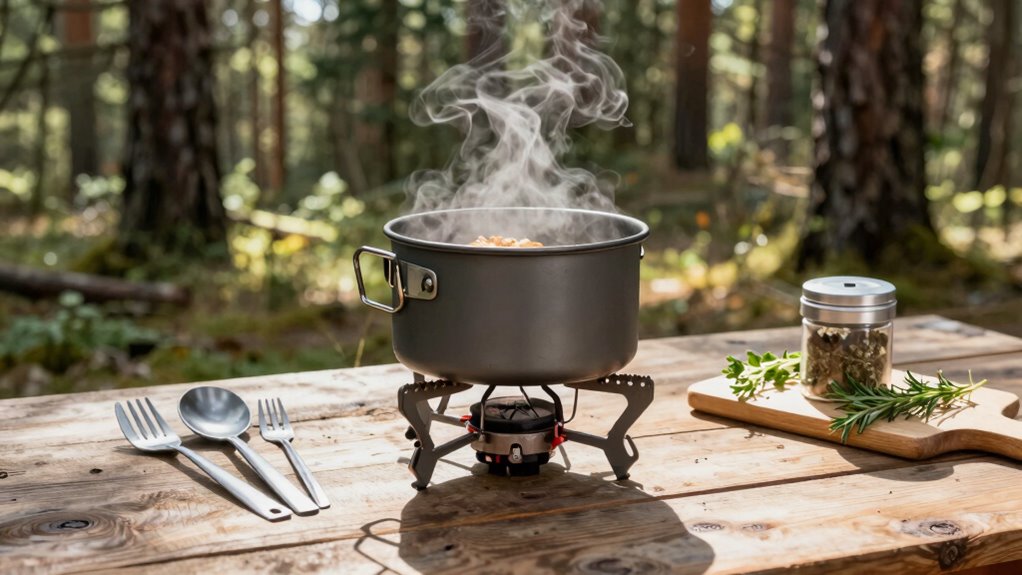
Another way to improve your camp cooking efficiency is by choosing the right portable stove options. Modern portable stoves come in a variety of designs, from compact canister stoves to multi-burner setups, giving you flexibility based on your group size and cooking needs. A simple, lightweight stove can help you boil water or cook meals quickly without the fuss of building a fire, especially in areas where fire bans are in effect. When selecting a portable stove, opt for one that heats evenly and is easy to operate, so you don’t waste fuel or time troubleshooting. Keep fuel canisters or propane tanks organized and ready to go so you can start cooking immediately. Using a stove also allows you to cook with precision, controlling temperature more accurately than over an open flame. This means fewer burnt meals and less cleanup afterward. Incorporating AI-powered data analytics can help you plan your meals more efficiently by tracking your cooking habits and optimizing ingredient use. Being aware of cooking techniques and how to adapt them for outdoor environments can further boost your efficiency and enjoyment. Additionally, practicing pre-soaking pads and adjusting pressure can improve your scrubber’s effectiveness when cleaning up after cooking, ensuring a spotless and hygienic meal area.
To further enhance your cooking efficiency, consider the benefits offered by stingless bees in natural environments, which can contribute to local ecosystems and biodiversity, indirectly supporting the availability of wild herbs and plants used in outdoor cooking.
Combining both these approaches—perfecting campfire techniques and investing in reliable portable stove options—lets you switch seamlessly between open-flame cooking and stove-based meals, depending on your environment and mood. You’ll spend less time fussing over the fire or waiting for water to boil, giving you more time to relax and enjoy your surroundings. Remember, the goal isn’t just about speed; it’s about making your cooking process more efficient without adding unnecessary complexity. With a little prep and the right equipment, you’ll find yourself preparing hearty, satisfying meals with less hassle and more enjoyment, making your camping trip truly memorable.
portable camping stove with even heat control
As an affiliate, we earn on qualifying purchases.
As an affiliate, we earn on qualifying purchases.
Frequently Asked Questions
What Are the Best Portable Cooking Tools for Camping?
The best portable cooking tools for camping include compact camping cookware and versatile portable stoves. Choose lightweight, durable camping cookware with non-stick surfaces for easy cleanup. A reliable portable stove, like a backpacking gas stove, allows quick meal prep without fuss. These tools are easy to pack and set up, helping you cook efficiently in the outdoors. With the right gear, you can enjoy delicious meals without extra complexity or bulk.
How Can I Reduce Meal Prep Time Outdoors?
Did you know that proper meal planning can cut your outdoor prep time by up to 50%? To reduce meal prep time outdoors, focus on pre-measuring ingredients and pre-chopping items at home. Pack everything in organized containers, so you spend less time searching and prepping. Streamlining your ingredient prep and planning meals ahead of time make cooking quicker and more enjoyable, letting you savor your adventure rather than spend hours in the kitchen.
What Safety Tips Should I Follow While Camp Cooking?
When camp cooking, prioritize campfire safety by keeping a water source nearby and never leaving the fire unattended. Store food properly to prevent wildlife encounters, using bear-proof containers or hanging food away from your tent. Always wash your hands and cooking utensils thoroughly to avoid contamination. Follow local fire regulations and extinguish the fire completely when finished. These safety tips keep you safe and preserve the natural environment.
How Do I Conserve Fuel During Campfire Cooking?
You can conserve fuel during campfire cooking by practicing smart fire management and using fuel-saving techniques. Keep your fire small but steady, focusing on efficient heat rather than large flames. Use a lid on pots to retain heat, and cook multiple items together to maximize fuel use. These methods not only save fuel but also reduce smoke and environmental impact, making your cooking more efficient and eco-friendly.
Are There Eco-Friendly Cleaning Methods for Camping Dishes?
You can use eco-friendly cleaning methods by choosing biodegradable soaps that break down naturally and won’t harm the environment. Pair these with reusable scrubbers instead of disposable ones to reduce waste. After cooking, wash your dishes with minimal water, scrubbing gently with reusable tools and biodegradable soap. This approach keeps your campsite clean while protecting nature, making your camping experience more sustainable and eco-conscious.
As an affiliate, we earn on qualifying purchases.
Conclusion
By streamlining your camp cooking process, you can save time and enjoy more of your outdoor adventure. Remember, using pre-prepped ingredients or one-pot meals can cut down on cleanup and cooking time. Did you know that reducing cooking time by just 20% can give you an extra hour of outdoor fun? So, keep it simple, plan ahead, and make every minute count—your next great outdoor meal is just a few smart steps away.
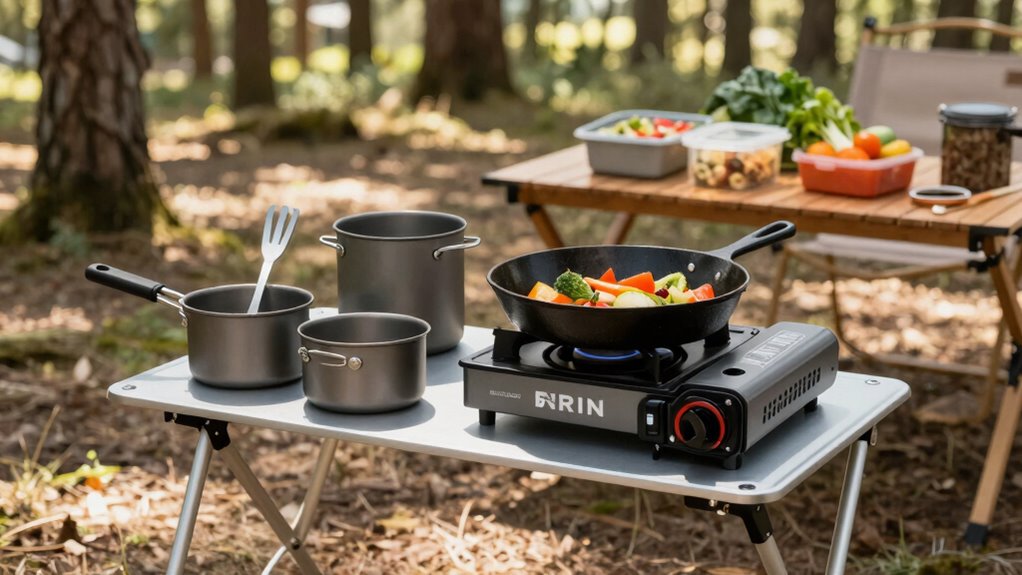
camping food prep and storage containers
As an affiliate, we earn on qualifying purchases.
As an affiliate, we earn on qualifying purchases.
As an affiliate, we earn on qualifying purchases.