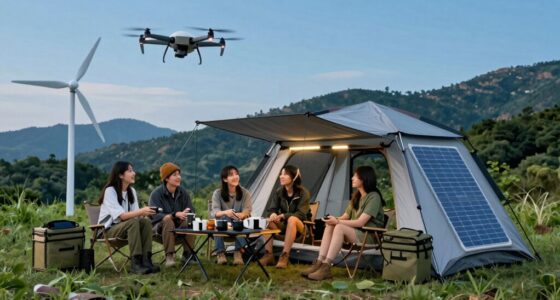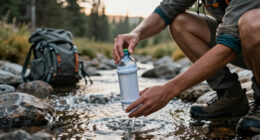
Space tech developments for Mars, like durable materials and advanced filtration systems, directly inspire Earth’s outdoor survival gear. You’ll find lightweight, radiation-resistant fabrics, portable oxygen generators, and smarter insulation in your gear, thanks to extraterrestrial innovations. These advancements make outdoor adventures safer, more efficient, and more durable. If you stay curious, you’ll discover how these space-inspired innovations can transform your experience in extreme conditions.

Get emergency and outdoor gear delivered free with Prime
- Fast, free delivery on millions of items
- Prime Video, Amazon Music and more included
- Member-only deals all year
Key Takeaways
- Space tech develops durable, lightweight materials like radiation-resistant fabrics for outdoor gear.
- Mars-inspired oxygen generators and filtration systems enhance terrestrial survival equipment.
- Extraterrestrial agriculture methods, such as hydroponics, improve Earth’s sustainable farming practices.
- Innovations in insulation, water purification, and power solutions support long-term outdoor survival.
- Space-driven advancements make camping gear more resilient, efficient, and adaptable to extreme conditions.
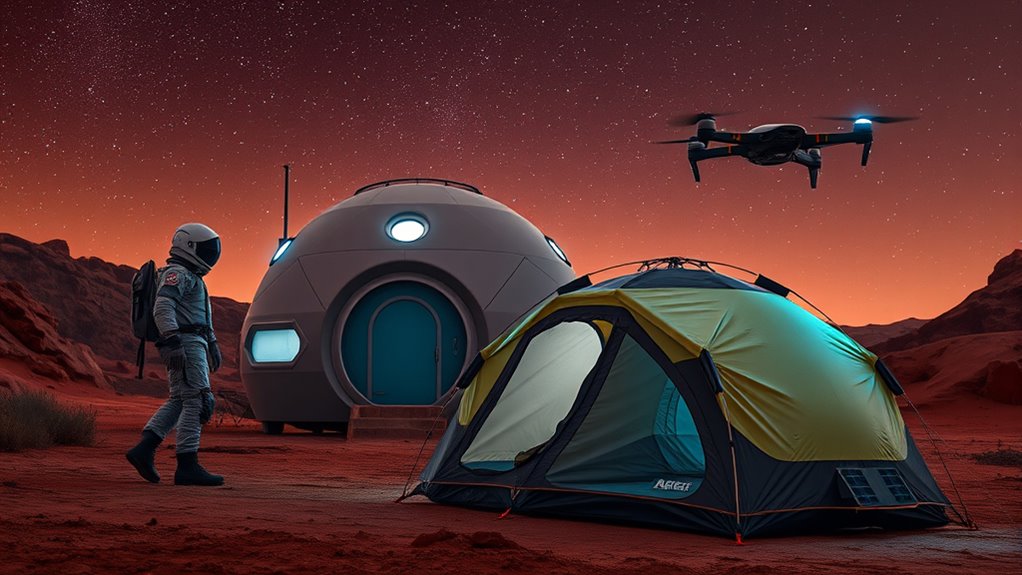
Venturing to Mars for camping may sound like science fiction, but advances in space technology and survival gear are bringing this idea closer to reality. As scientists explore how to make Mars more hospitable, they face significant terraforming challenges—altering the planet’s environment to support human life. These efforts involve developing systems to generate breathable air, manage extreme temperatures, and create water sources. While these are monumental tasks, they also inspire innovations in extraterrestrial agriculture, which could eventually support sustained human presence. You might not be planting a garden on Mars just yet, but the concepts behind extraterrestrial agriculture are influencing Earth-based survival gear in surprising ways.
Terraforming challenges force engineers to rethink how we protect ourselves from harsh environments. For Mars, this means designing gear that can withstand radiation, extreme cold, and low atmospheric pressure. These solutions often translate into advanced materials and compact, multi-functional equipment that you can carry during extreme outdoor adventures. For instance, lightweight, radiation-resistant fabrics and portable oxygen generation devices are derivatives of space tech that enhance outdoor survival gear on Earth. Understanding how to cultivate crops in Martian soil—an endeavor driven by extraterrestrial agriculture—also impacts Earth’s sustainable farming practices. Innovative hydroponic and aeroponic systems, initially designed to grow food on Mars, are now used in remote or disaster-stricken areas worldwide, offering resilient food sources independent of traditional agriculture.
The challenge of creating a livable environment on Mars pushes the boundaries of technology, resulting in gear that’s not only durable but also capable of supporting long-term survival. You benefit from this progress through improved insulation, smarter water purification systems, and portable power solutions. These innovations are often the result of adapting space-grade materials and methods for terrestrial use. When you’re camping in extreme conditions, you rely on gear that’s been tested against the toughest environments—just like the gear designed for Mars missions. Additionally, the development of space-grade materials for extraterrestrial environments is directly contributing to the creation of more robust outdoor gear. The quest to overcome terraform challenges and develop extraterrestrial agriculture fuels a cycle of technological improvements that make Earth’s outdoor adventures safer and more manageable.
In essence, the hurdles faced in transforming Mars into a habitable world are accelerating the development of survival gear that you can use in the most demanding environments. From advanced filtration systems to temperature regulation fabrics, space tech continues to inspire innovations that enhance your outdoor experience. As humanity tackles the complexity of extraterrestrial living, you gain access to gear that’s more efficient, durable, and adaptable—reminding you that even the most distant challenges can lead to breakthroughs that benefit us here on Earth.
lightweight radiation-resistant outdoor fabrics
As an affiliate, we earn on qualifying purchases.
As an affiliate, we earn on qualifying purchases.
Frequently Asked Questions
How Do Space-Rated Materials Perform in Extreme Earth Environments?
Space-rated materials perform excellently in extreme Earth environments by providing superior thermal insulation and radiation shielding. You’ll notice these materials withstand high temperatures, intense radiation, and harsh conditions better than conventional options. Their advanced properties help keep you safe from extreme heat or cold and protect against harmful radiation. When applied to Earthly survival gear, these materials ensure durability, safety, and reliability, making them ideal for extreme weather, high-altitude, or contaminated environments.
Can Space Communication Tech Improve Outdoor Safety?
Yes, space communication tech can improve outdoor safety. With satellite navigation, you get precise location data even in remote areas. Plus, advanced systems help detect and mitigate signal interference, ensuring reliable communication when you need it most. By integrating these innovations, you can navigate unfamiliar terrains confidently, stay connected with rescue services, and respond quickly to emergencies, making your outdoor adventures safer and more secure.
Are There Portable Life Support Systems for Earth Adventurers?
A penny for your thoughts? Yes, there are portable life support systems designed for earth adventurers. These systems often incorporate space tech like portable water purification and lightweight thermal clothing, ensuring you stay safe and comfortable. Just remember, the right gear can make all the difference when venturing into the wild. With these innovations, you’re better equipped to handle the unexpected and explore confidently.
How Is AI Used in Remote Survival Gear?
AI is used in remote survival gear through AI-powered predictive analytics, helping you anticipate dangers and optimize your safety strategies. It also enables immersive virtual training, allowing you to practice survival skills in realistic simulations. These innovations make your gear smarter and more responsive, giving you better chances of survival in extreme environments. With AI, you get proactive support and enhanced preparedness wherever adventure takes you.
What Innovations From Mars Missions Could Benefit Urban Disaster Prep?
You can benefit from innovations like Martian agriculture, which improves food sustainability during urban disasters, ensuring you have access to fresh produce even when supplies run out. Radiation shielding techniques developed for Mars help protect you from harmful radiation in disaster zones. These space-inspired solutions make your urban safety measures more resilient, helping you survive and recover more effectively during emergencies.
portable oxygen generator for camping
As an affiliate, we earn on qualifying purchases.
As an affiliate, we earn on qualifying purchases.
Conclusion
As you explore how space tech shapes earthly survival gear, you realize the innovation fuels progress, the challenges inspire creativity, and the lessons from Mars push boundaries. You see that every invention, every discovery, and every solution connects you closer to mastering survival, both on distant planets and right here on Earth. Embrace the future where space inspires, space empowers, and space transforms your world—making every challenge an opportunity to thrive.
advanced water purification systems for outdoor use
As an affiliate, we earn on qualifying purchases.
As an affiliate, we earn on qualifying purchases.
space-inspired insulation for extreme conditions
As an affiliate, we earn on qualifying purchases.
As an affiliate, we earn on qualifying purchases.
Columbus Day / Indigenous Peoples' Day Picks
long weekend sales
As an affiliate, we earn on qualifying purchases.