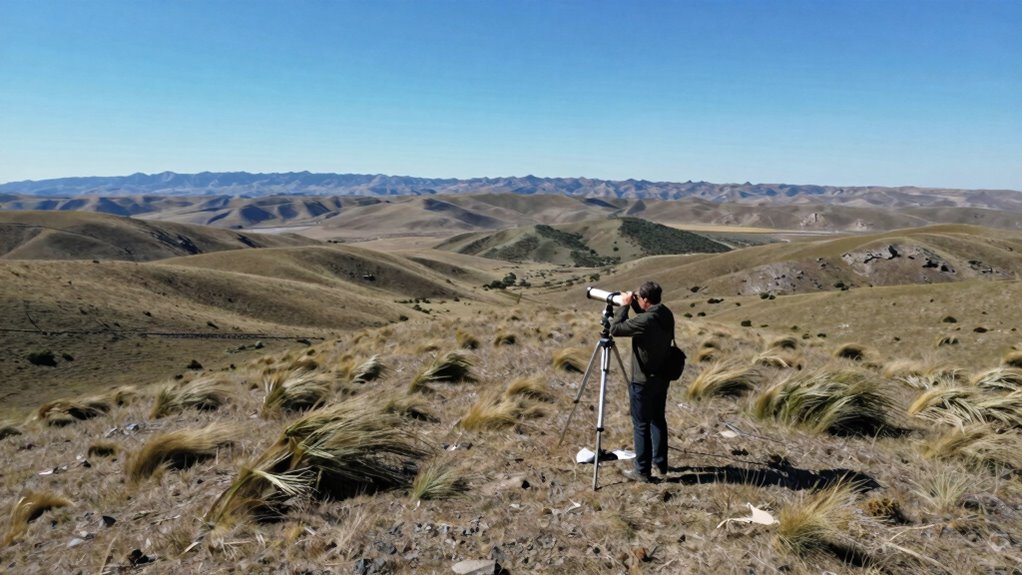

In open terrain and remote camps, you rely heavily on observation tools to stay safe, monitor wildlife, and spot environmental changes. These tools help compensate for limited sensory perception in vast areas, allowing you to detect hazards early and understand your surroundings better. They give you an essential edge in anticipating dangers and making quick decisions. By using reliable observation gear, you can protect yourself, the environment, and guarantee your mission’s success—learn more about how they work.
Key Takeaways
- Open terrain offers limited natural cover, requiring observation tools to detect threats and wildlife effectively.
- Remote camps lack immediate access to external support, making reliable observation crucial for safety and communication.
- Vast, unobstructed environments increase the need for enhanced sensory perception through specialized tools.
- Early detection of hazards, weather changes, or animals depends on effective observation in open areas.
- Accurate environmental monitoring supports sustainable operations and reduces risks in remote, open settings.
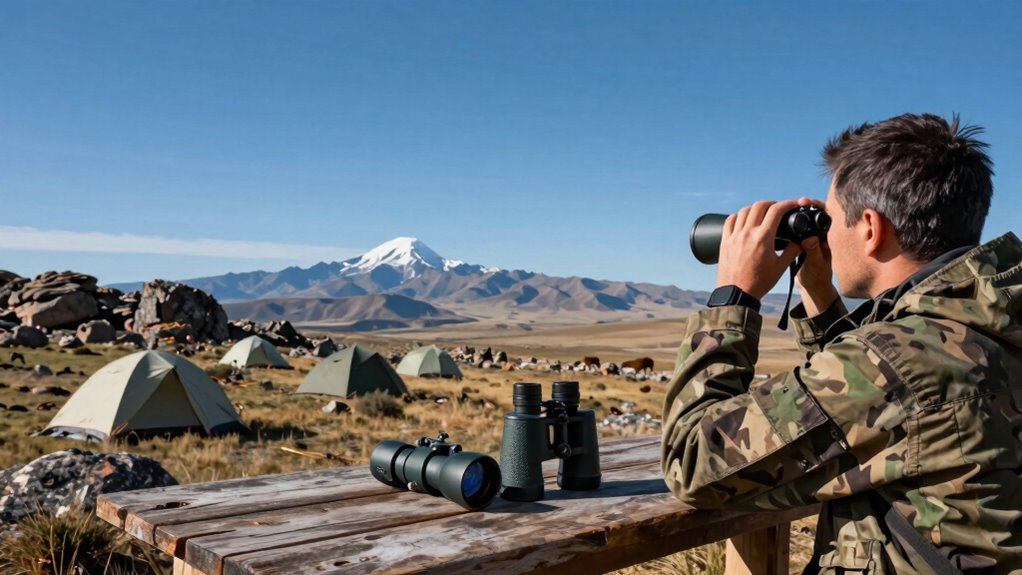
In open terrain and remote camps, effective observation tools are essential for maintaining safety, monitoring environmental changes, and ensuring operational success. When you’re miles away from urban centers, relying solely on your senses isn’t enough. You need tools that help you pick up subtle signs of wildlife movement or detect signals that might indicate approaching hazards or other human activity. These tools become your eyes and ears, providing critical information that can prevent accidents, protect wildlife, and keep your mission on track. Utilizing observation tools enhances your situational awareness and allows for more precise decision-making in challenging environments.
Wildlife tracking is a key aspect of observation in such environments. By using binoculars, trail cameras, and other tracking devices, you can observe animal behaviors and movements without disturbing the ecosystem. This not only helps in studying local wildlife but also serves as an early warning system—if you notice increased animal activity or unusual patterns, it might signal changes in weather or the presence of predators. Tracking wildlife also informs safety protocols; for example, spotting large animals nearby can help you decide whether to proceed or find a safer location. Additionally, understanding animal behavior can contribute to more sustainable and ethical interactions with the environment. Incorporating environmental cues into your observation routine further enhances your ability to interpret subtle changes in your surroundings, especially when combined with knowledge of local ecology.
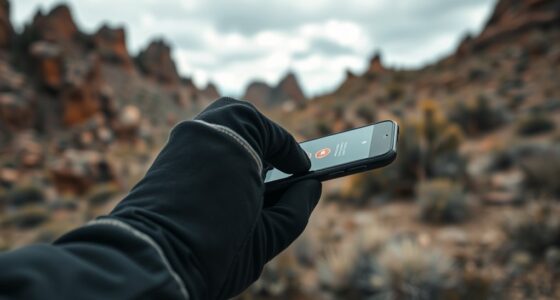
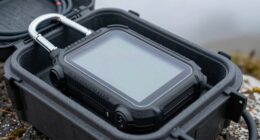
Signal detection becomes equally important when you’re in remote areas. Radios, satellite phones, and other communication devices allow you to identify and interpret signals that could indicate incoming weather fronts, equipment malfunctions, or even human presence. These tools help you stay connected with your team or base camp, especially when other communication methods fail. Recognizing signals early means you can respond quickly—whether that’s securing your camp before a storm or avoiding an area where unauthorized personnel might be nearby.
The combination of wildlife tracking and signal detection tools ensures you’re never in the dark about what’s happening around you. In open terrain, where visual obstructions are limited, these tools amplify your observational capabilities, giving you a strategic advantage. They help you anticipate dangers, adapt your plans, and make informed decisions in real-time. Furthermore, they foster a deeper understanding of the environment, which is essential for sustainable operations and conservation efforts.
Ultimately, investing in reliable observation tools isn’t just about safety; it’s about empowering you to operate effectively in the challenging conditions of open terrain and remote camps. When you can detect signals early and track wildlife accurately, you’re better equipped to protect yourself, your team, and the environment—all while maintaining the success of your mission.

Bushnell PowerView 2 20×50 Binoculars – High-Definition with Multi-Coated Lenses, Durable Aluminum Alloy Chassis, Wide Field of View, Ideal for Wildlife Observation, Hiking and Sporting Events
- Trusted Brand: Bushnell PowerView 2 Binoculars
- Durable Construction: Aluminum alloy chassis for longevity
- High-Quality Optics: Multi-coated lenses for bright images
As an affiliate, we earn on qualifying purchases.
As an affiliate, we earn on qualifying purchases.
Frequently Asked Questions
How Do Weather Conditions Affect Observation Tools’ Effectiveness?
Weather conditions greatly impact your observation tools’ effectiveness, especially in open terrain and remote camps. Weather variability, like fog, rain, or snow, can obscure your view and reduce accuracy. Seasonal impacts, such as winter storms or summer heat, also affect performance, causing equipment to malfunction or become less reliable. To stay effective, you must adapt to changing weather, maintaining your tools and adjusting your observation strategies accordingly.
What Training Is Needed to Maximize Observation Tool Usage?
To maximize observation tool usage, you need targeted training protocols that focus on skill enhancement. You should learn how to operate different tools effectively, interpret data accurately, and adapt to changing conditions. Practice regularly in various environments to build confidence and precision. Stay updated on new techniques and technology. Continuous training guarantees you remain sharp, improves your observation accuracy, and helps you respond swiftly in open terrain and remote camps.
How Do Observation Tools Aid in Emergency Response?
Have you ever wondered how quick responses save lives? Observation tools enhance emergency response by providing crucial surveillance techniques, helping you detect threats early. Proper tool maintenance guarantees these devices work reliably when needed most. By sharpening your observation skills and maintaining your equipment, you can identify dangers faster, coordinate effective actions, and ultimately protect yourself and others in remote or open terrain situations. Isn’t safety worth it?
What Are the Cost Considerations for Deploying Advanced Tools?
When deploying advanced observation tools, you need to take into account the cost analysis and budget planning carefully. These tools often require significant upfront investments, maintenance, and training expenses. You must appraise their long-term benefits against costs to guarantee value for money. By thoroughly examining these factors, you can make informed decisions that balance operational needs with financial constraints, ensuring effective surveillance without overspending in remote or open terrains.
How Do Observation Tools Integrate With Communication Systems?
You realize that integrating observation tools with communication systems can be tricky, especially in remote areas. The challenge lies in overcoming integration issues and ensuring signal reliability, which is essential for real-time updates. When these systems work seamlessly, you gain a powerful advantage: instant, accurate information flow that keeps your team safe and informed. Without reliable signals, however, the entire operation risks falling into chaos, making integration a critical priority.
trail camera for wildlife monitoring
As an affiliate, we earn on qualifying purchases.
As an affiliate, we earn on qualifying purchases.
Conclusion
So, next time you’re wandering through open terrain or setting up a remote camp, remember—your observation tools are your lifelines, not just fancy gadgets. Without them, you’re basically a blindfolded explorer in a world that won’t wait for you to catch up. Sure, you could rely on intuition, but let’s be honest—your gut’s not as reliable as a well-placed binocular or a good ol’ compass. Stay sharp, stay prepared, or enjoy the surprise party nature throws you.

GARMIN IN-REACH MINI 2 OPERATOR HANDBOOK: Configure, Troubleshoot, and Master Satellite Communication for Outdoor Adventures
As an affiliate, we earn on qualifying purchases.
As an affiliate, we earn on qualifying purchases.
weather alert radio for outdoor safety
As an affiliate, we earn on qualifying purchases.
As an affiliate, we earn on qualifying purchases.