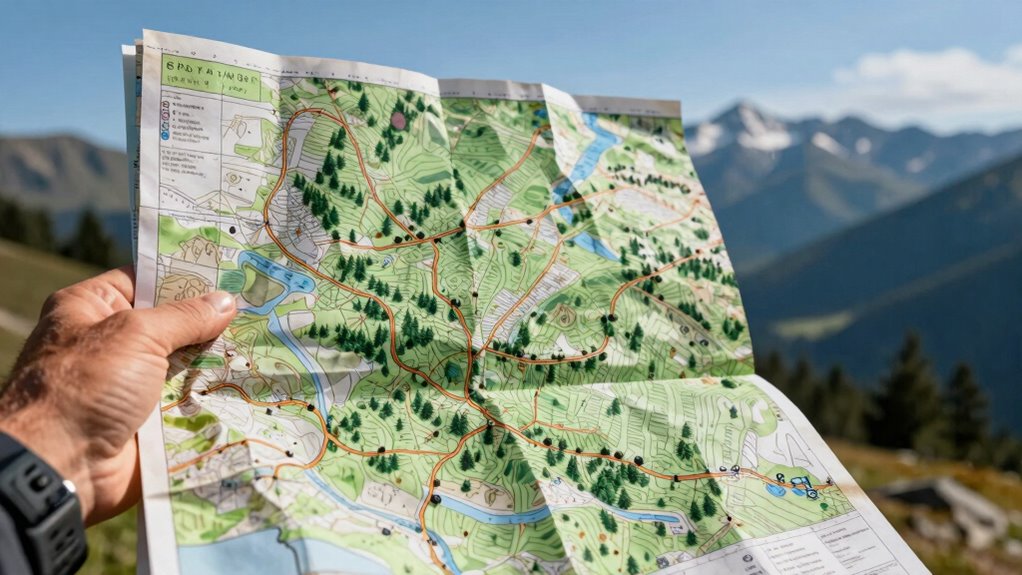

Even with digital maps at your fingertips, strong mapping skills are essential. They help you interpret and assess map accuracy, recognize distortions, and understand the history and culture behind different routes. These skills boost your spatial awareness and confidence, especially if technology fails or becomes unreliable. By developing your navigation abilities, you become more resourceful and safer outdoors. Keep exploring, and you’ll see how understanding map principles can greatly enhance your navigation confidence and independence.

Get emergency and outdoor gear delivered free — and shop member deals
- Fast, free delivery on millions of items
- Access to Prime Big Deal Days deals on October 6–7
- Prime Video, Amazon Music and more included
Key Takeaways
- Developing mapping skills fosters critical thinking and reduces overreliance on digital tools, ensuring better navigation in tech failures.
- Traditional map understanding enhances spatial awareness and environmental recognition beyond digital representations.
- Cognitive navigation skills enable effective orientation using landmarks and terrain, independent of electronic devices.
- Knowledge of map construction and history provides context to identify inaccuracies and biases in digital maps.
- Combining map skills with technology promotes adaptable, resourceful navigation in diverse environments.
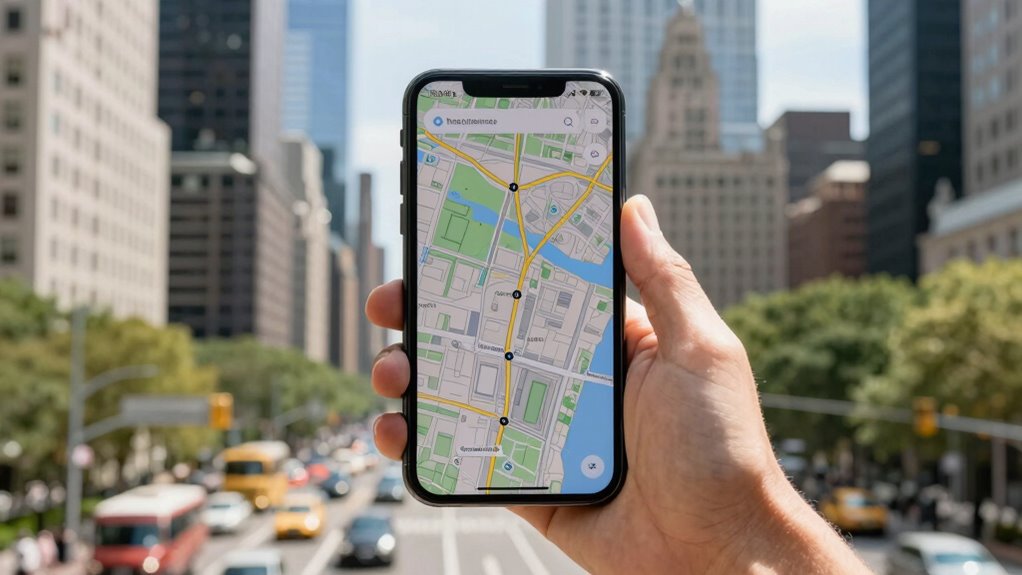
In today’s digital world, mapping skills are more essential than ever, especially as apps make geographic information instantly accessible. While you might rely on your smartphone to find your way, understanding the roots of mapping through historical cartography can deepen your appreciation for how maps have evolved. These early maps weren’t just tools for navigation; they reflected cultural beliefs, trade routes, and territorial claims. Recognizing this history helps you see maps as more than just digital screens—they’re records of human knowledge and exploration.
Even with the convenience of apps, cognitive navigation remains a vital skill. Cognitive navigation is your ability to mentally visualize and understand spatial relationships without external aids. It involves creating mental maps of your surroundings, which can be especially useful if your devices fail or if you’re in unfamiliar terrain. Developing this skill means you’re less dependent on technology and more confident in your innate sense of direction. It allows you to navigate complex environments using landmarks, terrain features, and spatial memory, rather than solely relying on GPS instructions.
Cognitive navigation boosts confidence by using mental maps, landmarks, and spatial memory over relying solely on technology.
Mapping skills also help you interpret the information presented by digital tools more critically. Apps might tell you the fastest route, but understanding how maps are constructed—rooted in principles from historical cartography—enables you to assess their accuracy. You learn to recognize distortions, scale issues, and biases that can influence digital maps. This critical perspective can save you from getting lost or relying blindly on technology that might not always be perfect.
Furthermore, grasping the basics of cartography fosters a deeper sense of spatial awareness. When you understand how maps are created, you become more aware of your environment, noticing details that might otherwise go unnoticed. This heightened awareness can improve your ability to anticipate obstacles or find shortcuts, even without digital assistance. It also encourages a proactive approach to navigation, where you combine technological tools with your own spatial reasoning and memory.
In the end, mapping skills connect the past to the present. They remind you that navigation isn’t just about following arrows on a screen but involves understanding geography, history, and your environment. By honing these skills, you’re better equipped to navigate confidently in any situation—whether you’re relying on a map app, recalling a mental image of your surroundings, or understanding the historical significance behind the places you visit. These skills ensure you remain adaptable, resourceful, and grounded in the rich tradition of cartography, even in an age dominated by digital technology. Recognizing the importance of historical cartography can deepen your appreciation for how maps serve as more than just navigation tools—they’re cultural artifacts that reflect human exploration and understanding.
As an affiliate, we earn on qualifying purchases.
Frequently Asked Questions
How Do Traditional Mapping Skills Enhance Digital Map Usage?
Traditional mapping skills, like understanding cartography fundamentals and spatial awareness, enhance your digital map usage by giving you a solid foundation. When you grasp how maps are designed and how spatial relationships work, you can interpret and navigate digital maps more effectively. This knowledge helps you recognize errors, customize routes, and make smarter decisions, ensuring you’re not solely reliant on apps but also equipped with essential geographic insights.
Can Mapping Skills Improve Navigation in Emergency Situations?
Mapping skills can considerably improve your navigation during emergencies by boosting your spatial awareness and emergency preparedness. When you understand how to read maps, you can quickly identify safe routes, locate exits, or find nearby help even if digital tools fail. These skills help you stay calm, make informed decisions, and adapt to unpredictable situations, ensuring you’re better equipped to respond effectively during emergencies.
What Are the Limitations of Relying Solely on Apps for Mapping?
Relying solely on apps can be risky because user interface issues and data inaccuracies can mislead you. Apps might be difficult to navigate during emergencies or lose signal, leaving you stranded. Mapping skills help you interpret physical landmarks and terrain, overcoming digital limitations. They guarantee you stay oriented, even when data accuracy is compromised or the user interface fails, making you more self-reliant in critical situations.
How Do Mapping Skills Benefit Outdoor Enthusiasts and Explorers?
As an outdoor enthusiast, your mapping skills help you with trail marking and terrain assessment, ensuring safe navigation. You can identify landmarks, plan routes, and adapt to changing conditions even when apps fail or lose signal. This independence boosts your confidence, minimizes risks, and enhances your exploration experience. Mastering these skills allows you to connect more deeply with nature, making your adventures safer, more enjoyable, and truly rewarding.
Are Mapping Skills Relevant for Careers Outside Geography and Travel?
You might think mapping skills are only useful in geography or travel, but they’re truly the jack of all trades. These skills boost your career versatility and lend themselves to cross-disciplinary applications—from urban planning and engineering to data analysis and even marketing. Mastering map reading and creation sharpens your spatial thinking, problem-solving, and data visualization—abilities that are valuable in many fields, proving that mapping skills are a versatile asset in today’s job market.
As an affiliate, we earn on qualifying purchases.
Conclusion
Think of mapping skills as your compass in a vast, ever-changing forest. While apps are like trusty lanterns lighting your path, they can’t replace your sense of direction or understanding of the terrain. By honing your skills, you’re not just following a trail—you’re steering with confidence, reading the landscape, and forging your own course. In this wilderness of technology, your skills are the steady star guiding you safely home.
As an affiliate, we earn on qualifying purchases.
As an affiliate, we earn on qualifying purchases.
Fall Picks
fall essentials
As an affiliate, we earn on qualifying purchases.