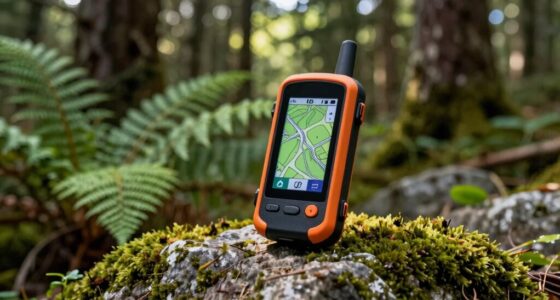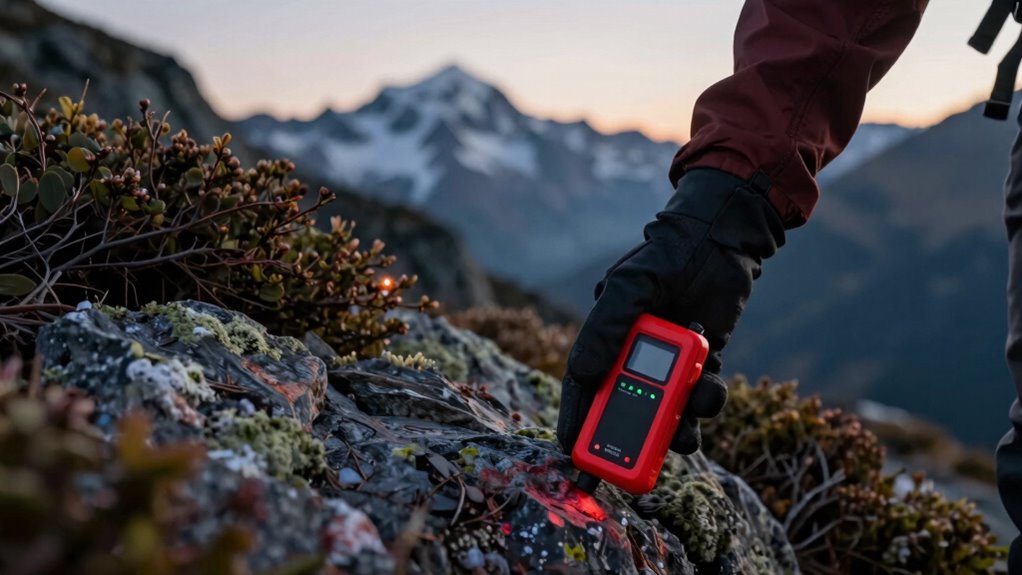

In an emergency, your Personal Locator Beacon (PLB) immediately transmits a distress signal via satellite, connecting you to rescue teams no matter where you are. It operates independently of your vessel or surroundings, activating automatically or manually if needed. The GPS function sends precise location data, helping rescuers find you quickly in remote or challenging terrain. Want to discover how these devices can truly keep you safe? Keep exploring to learn more.

Get emergency and outdoor gear delivered free with Prime
- Fast, free delivery on millions of items
- Prime Video, Amazon Music and more included
- Member-only deals all year
Key Takeaways
- Activate automatically or manually to send distress signals during emergencies like capsizing or falling overboard.
- Transmit GPS-embedded distress signals via satellite for precise location tracking.
- Ensure communication even in remote areas or when vessel systems fail.
- Connect rescue teams globally, regardless of environmental obstructions.
- Increase rescue speed and safety by providing accurate location data and reliable emergency communication.
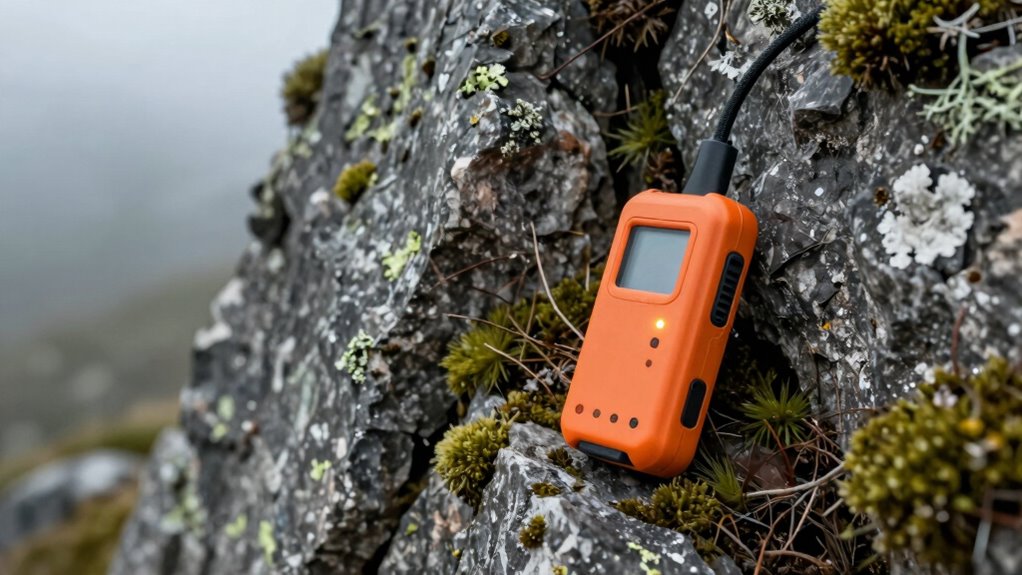
When you find yourself in an emergency situation, every second counts, and having a Personal Locator Beacon (PLB) can be a lifesaver. These compact devices are designed to send distress signals quickly and reliably, making them essential tools for anyone venturing into remote areas, especially on the water. If you’re involved in marine navigation, a PLB becomes even more critical because it helps bridge the gap between you and rescue teams through satellite communication, regardless of your location. When trouble strikes—like a capsized boat or a fall overboard—the PLB activates, transmitting an emergency signal that is received by satellites orbiting the Earth.
Once activated, the PLB immediately sends a distress signal embedded with your GPS coordinates. This information is relayed via satellite communication to rescue authorities, pinpointing your exact location with remarkable accuracy. The satellite link ensures that even if you’re in a remote or hard-to-reach area, your message gets through without delay. Unlike traditional distress signals, which depend on radio signals that can be obstructed or lost, satellite communication provides a global, reliable channel for emergency alerts. This means rescue teams can locate you faster, reducing your wait time and increasing your chances of survival.
Once activated, a PLB transmits GPS-enabled distress signals via satellite, ensuring rapid, accurate rescue even in remote areas.
A key part of what makes a PLB effective is its integration with marine navigation. If you’re navigating through unfamiliar waters or in poor weather conditions, your device can be a critical backup. It works independently of your vessel’s systems, so even if your boat’s communication equipment fails, your personal beacon remains operational. When you’re out on the water, knowing that your PLB can connect to satellites and transmit your location ensures you’re never entirely out of reach. This peace of mind allows you to focus more on your journey and less on what might happen if an emergency occurs.
In essence, a Personal Locator Beacon acts as your lifeline, leveraging satellite communication technology to bridge the gap between danger and rescue. It’s simple to operate—just activate it in an emergency—and it takes care of the rest by transmitting your distress signal. By integrating GPS data, the beacon guarantees that rescue teams aren’t just alerted to an emergency but can also locate you precisely, even in the most remote areas. Whether you’re sailing the open seas or exploring rugged terrains, a PLB ensures that help can find you swiftly, turning a potentially life-threatening situation into a manageable one. Additionally, understanding the horsepower of electric dirt bikes can be helpful if you’re considering alternative transportation options for rugged terrains or remote areas where rescue might be needed.
Personal Locator Beacon with GPS
As an affiliate, we earn on qualifying purchases.
As an affiliate, we earn on qualifying purchases.
Frequently Asked Questions
How Long Does a PLB Battery Last Before Needing Replacement?
A Personal Locator Beacon’s battery lifespan typically lasts around 24 to 48 hours once activated, depending on the model and usage. You should plan for a replacement timeline of about 5 to 10 years for the battery, even if unused, as batteries can degrade over time. Regularly check your PLB’s battery status and follow the manufacturer’s guidelines to guarantee reliable performance when needed.
Can a PLB Be Used Underwater or in Extreme Weather?
A PLB isn’t designed for underwater use, like trying to speak underwater with a snorkel—it’s not effective. It can’t be used for underwater communication or in extreme weather conditions. Although highly resilient to harsh weather, it’s mainly built for land and air emergencies. You should rely on specialized equipment for underwater or extreme weather situations, as PLBs excel in alerting rescue services from land or open water, but not submerged or intensely stormy environments.
What Are the Costs Associated With Activating a PLB?
When you activate a PLB, the primary cost consideration is any activation fee charged by rescue services, which can vary depending on the provider and the region. Some services might include activation fees in their overall rescue costs, while others charge separately. Be aware that activating a PLB typically doesn’t incur a fee, but the rescue operation itself could be costly, especially if it’s an extensive or unnecessary response.
Are PLBS Effective in Remote Areas With No Satellite Coverage?
Personal Locator Beacons rely on satellite coverage for emergency communication, so they’re generally effective even in remote areas without cell service. When you activate a PLB, it sends a distress signal via satellites, ensuring rescue teams can locate you. However, if there’s no satellite coverage in that specific location, the PLB won’t work until you’re within coverage range. Always check satellite coverage maps before venturing into remote regions.
How Quickly Can Rescue Teams Locate a Person Using a PLB?
In an emergency, rescue teams can locate you within minutes when you activate your Personal Locator Beacon. This rapid response is crucial for your personal safety and underscores the importance of emergency preparedness. While remote areas pose challenges, PLBs transmit signals via satellites, enabling swift detection. Your quick activation can mean the difference between rescue and peril, making PLBs an essential tool for outdoor adventurers prioritizing safety.
marine emergency satellite distress beacon
As an affiliate, we earn on qualifying purchases.
As an affiliate, we earn on qualifying purchases.
Conclusion
Just like a lighthouse guiding a ship through stormy seas, a personal locator beacon (PLB) leads rescuers right to you in your darkest hour. When every second counts, it’s your beacon of hope, signaling your location across vast, unforgiving waters or rugged mountains. With a simple press, you ignite a rescue beacon that turns chaos into clarity, helping you find your way back to safety—your own shining light in the storm.
personal GPS satellite messenger
As an affiliate, we earn on qualifying purchases.
As an affiliate, we earn on qualifying purchases.
As an affiliate, we earn on qualifying purchases.
Fall Picks
fall essentials
As an affiliate, we earn on qualifying purchases.