
To build a better outdoor family communication routine, start by establishing clear expectations and creating device-free moments to promote genuine interactions. Use signals or cues to remind everyone to stay present, and incorporate reflective activities like sharing highlights or listening actively. Focus on being attentive, respectful, and creating a safe space for everyone to express themselves. Consistency is key; small steps over time will strengthen your bond. Keep exploring more ideas to deepen your family connection.

Get emergency and outdoor gear delivered free with Prime
- Fast, free delivery on millions of items
- Prime Video, Amazon Music and more included
- Member-only deals all year
Key Takeaways
- Establish clear expectations for device-free time to promote attentive and meaningful family interactions outdoors.
- Incorporate regular reflection moments to encourage sharing and deepen family bonds.
- Use natural surroundings and calming sounds to create a relaxed environment for open communication.
- Practice active listening and respectful responses to foster trust and genuine conversations.
- Develop simple signals or cues to help family members stay present and engaged during outdoor activities.
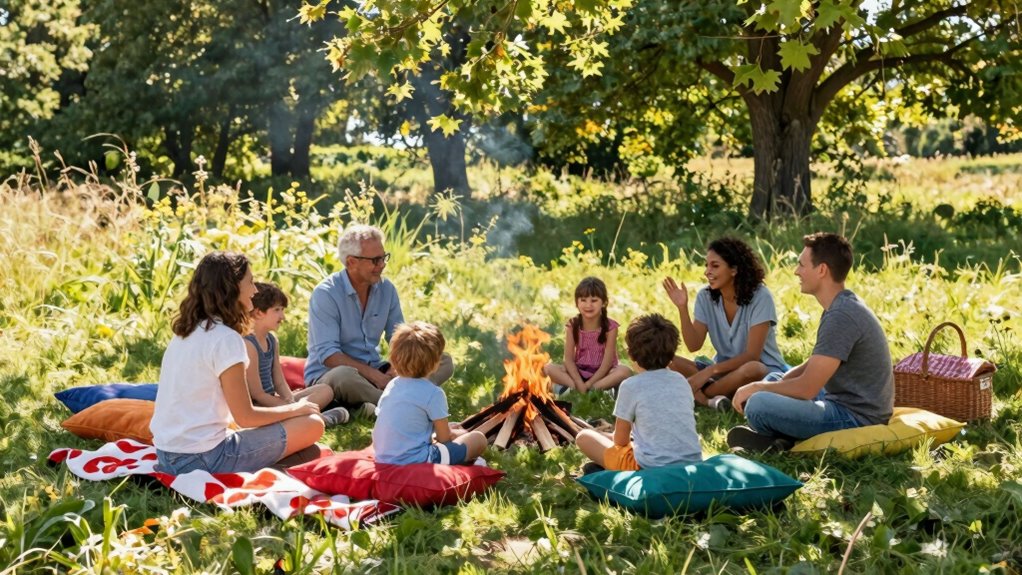
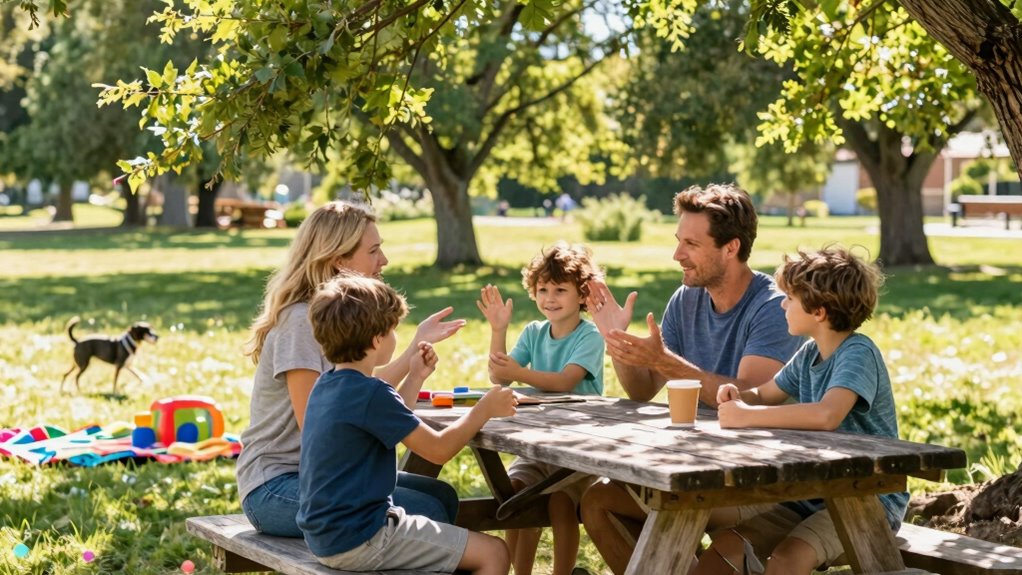
Creating a strong communication routine is essential when families spend time outdoors, as it helps everyone stay connected and safe. When you’re surrounded by nature’s beauty, it’s easy to get distracted by screens and miss out on meaningful interactions. A deliberate approach to communication guarantees you’re present with each other, fostering stronger bonds and better safety habits. One effective way to do this is by encouraging a digital detox during your outdoor activities. Put away phones, tablets, and other devices so everyone can focus on the moment. This reduces distractions and creates space for genuine conversations. When you’re less glued to screens, you naturally become more attentive and engaged, improving your ability to listen actively. Active listening means truly hearing what others say, without planning your response or interrupting. It shows respect and helps you understand each family member’s thoughts and feelings, making your interactions more meaningful. To build this into your routine, start by establishing clear expectations before heading outdoors. For example, agree that devices stay off during hikes or picnics, and that everyone will take turns sharing thoughts or feelings about the experience. You can also set aside specific times for conversations, like during breaks or while relaxing in a scenic spot, to encourage active listening. When someone is speaking, give them your full attention—make eye contact, nod, and respond thoughtfully. This not only boosts understanding but also models respectful communication for children. As you practice active listening, you’ll notice that conversations become more genuine, and everyone feels heard. It’s also helpful to create simple signals or cues to remind each other to stay focused and attentive, especially for kids. Incorporating moments for reflection after activities can reinforce your routine. Ask questions like, “What was your favorite part today?” or “Did anything surprise you?” These prompts encourage everyone to share their feelings and listen to each other’s perspectives. Developing a routine that incorporates digital boundaries can further enhance your family’s outdoor experiences. Additionally, understanding the importance of clear and consistent communication can significantly improve interactions, similar to how contrast ratio influences the clarity and depth of images in projectors. Research from sound healing science suggests that incorporating calming sounds or music during reflective moments can help deepen your family’s connection. A natural environment can also serve as a calming backdrop that enhances the effectiveness of your communication exercises. Over time, your family will develop a habit of open, honest communication that extends beyond outdoor outings. Remember, consistency is key. Small, intentional steps—like regular device-free times and active listening exercises—can greatly improve how you connect and communicate. Building these routines isn’t about perfection but about creating a space where everyone feels valued and safe to express themselves. When your family makes a conscious effort to communicate well outdoors, you’ll find that your shared experiences become richer, and your bonds grow stronger.
family outdoor communication games
As an affiliate, we earn on qualifying purchases.
As an affiliate, we earn on qualifying purchases.
Frequently Asked Questions
How Can I Encourage Shy Family Members to Speak up Outdoors?
You can encourage shy family members to speak up outdoors by creating a supportive environment that fosters encouraging participation. Gently invite them into conversations, and avoid pressuring them. Use activities that build confidence, like sharing stories or playing collaborative games. Recognize their efforts to boost their comfort levels. Over time, these approaches help shy members feel more at ease, encouraging ongoing participation and strengthening family communication outdoors.
What Are Effective Non-Verbal Communication Strategies for Noisy Outdoor Settings?
Don’t let the noise drown you out—think of it as finding your voice in a sea of chatter. Use visual signals and gesture techniques like thumbs up or wave to communicate effectively. Maintain eye contact and clear body language, so your family knows you’re engaged. These non-verbal cues cut through the din, helping everyone stay connected and ensuring your message gets across without raising your voice.
How Do I Handle Disagreements During Family Outdoor Activities?
When disagreements happen during outdoor activities, you should stay calm and practice conflict resolution by listening actively and acknowledging everyone’s feelings. Encourage emotional expression by giving each person space to share their perspective. Use clear, respectful language and suggest solutions rather than blame. This approach helps diffuse tension, fosters understanding, and keeps the focus on enjoying the outdoor experience together. Remember, patience and empathy are key to resolving conflicts effectively.
What Tools or Apps Can Enhance Outdoor Family Communication?
Ever wonder how to stay connected during outdoor adventures? Using apps like Zello or Walkie-Talkie keeps your family in sync, especially when exploring or playing outdoor game ideas. These tools support family communication tips by enabling instant, clear conversations without shouting. They’re simple, effective, and make coordinating activities easier. With these tools, you’ll foster better communication, enhance fun, and guarantee everyone stays safe and engaged during your outdoor family time.
How Can I Balance Listening and Sharing During Outdoor Family Time?
To balance listening and sharing during outdoor family time, focus on active listening by giving your full attention and asking open-ended questions. Use sharing techniques like taking turns to speak and expressing your thoughts honestly yet respectfully. Encourage everyone to listen without interrupting, creating a safe space for open dialogue. This approach nurtures understanding, strengthens bonds, and guarantees each family member feels heard and valued during your outdoor adventures.
As an affiliate, we earn on qualifying purchases.
Conclusion
By establishing clear and consistent communication routines outdoors, you create a stronger bond with your family and foster an environment of trust. Remember, open dialogue is the backbone of any successful relationship—don’t let it fall by the wayside. With a little effort and patience, you’ll find that your family can navigate challenges together more smoothly. Keep the lines open, and you’ll find that everything else falls into place—like pieces of a well-laid puzzle.
outdoor reflection activity cards
As an affiliate, we earn on qualifying purchases.
As an affiliate, we earn on qualifying purchases.
active listening training for families
As an affiliate, we earn on qualifying purchases.
As an affiliate, we earn on qualifying purchases.
Halloween Picks
halloween
As an affiliate, we earn on qualifying purchases.