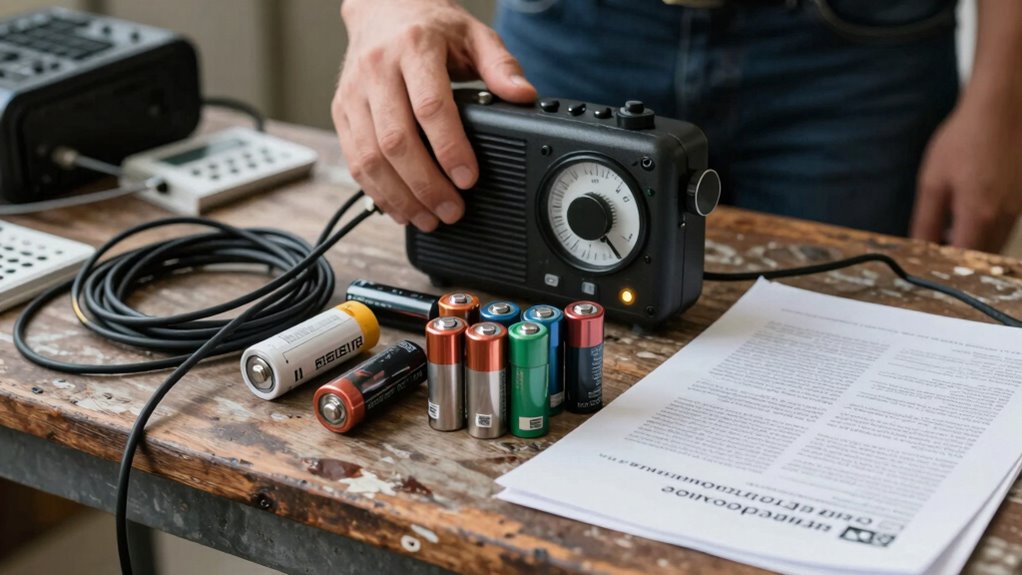
One common mistake is neglecting regular maintenance, like testing and replacing batteries, which can leave your radio dead when you need it most. People also forget to keep the antenna in good condition or fail to adjust settings for clarity. Blocking signals with obstacles or storing batteries improperly can hinder performance. If you overlook these basics, your radio might fail in emergencies. Keep these points in mind, and you’ll discover more ways to stay prepared and reliable.

Get emergency and outdoor gear delivered free — and shop member deals
- Fast, free delivery on millions of items
- Access to Prime Big Deal Days deals on October 6–7
- Prime Video, Amazon Music and more included
Key Takeaways
- Failing to regularly test and replace batteries, leading to device failure during emergencies.
- Not fully extending or maintaining the antenna, which weakens signal reception.
- Ignoring environmental factors and obstacles that hinder radio performance and clarity.
- Overlooking proper device settings, such as channel selection and display adjustments.
- Neglecting manual instructions and routine maintenance, reducing device lifespan and reliability.
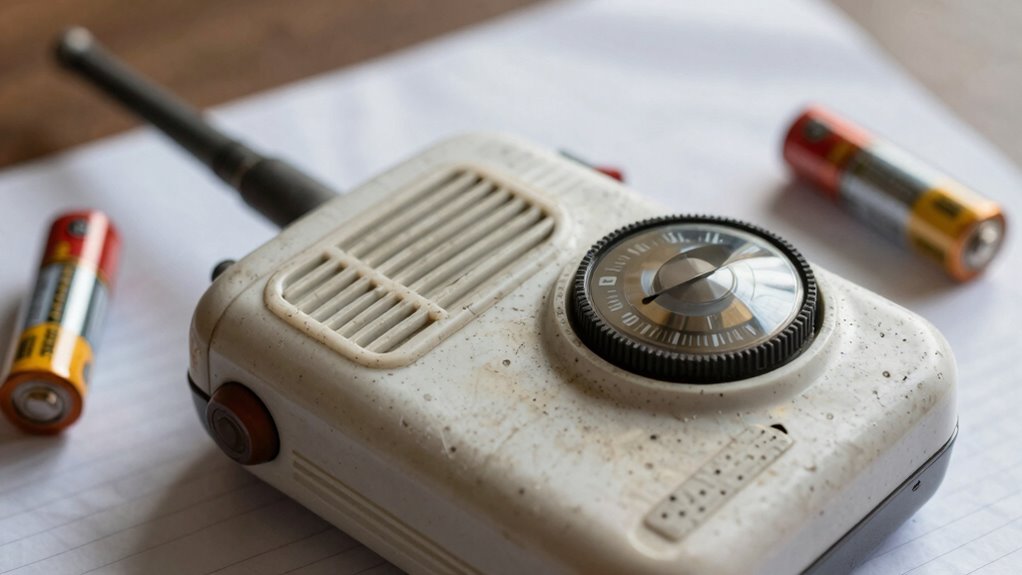
Emergency radios are essential tools for staying informed during crises, but many people make simple mistakes that can compromise their effectiveness. One of the most common errors involves neglecting proper battery maintenance. You might assume that because your radio has been stored away for a while, it’s still ready to go when needed. However, batteries can lose their charge over time, especially if they aren’t removed or checked periodically. To avoid this, you should regularly test your radio’s batteries and replace them as necessary, even if you haven’t used the device. Using fresh batteries ensures your radio will function reliably when it matters most. Additionally, consider keeping spare batteries on hand, stored in a cool, dry place, so you’re prepared for any emergency.
Another frequent mistake is overlooking signal troubleshooting. Many users assume that if their radio isn’t picking up signals immediately, it’s broken. In reality, signal issues often stem from simple problems that can be fixed with some quick troubleshooting. You should familiarize yourself with the radio’s antenna and ensure it’s fully extended and in good condition, as a damaged or collapsed antenna can severely reduce reception. Also, pay attention to your location when trying to receive broadcasts. Obstacles like buildings, trees, or hills can block signals, so moving to a higher or more open spot can improve reception. If you’re having trouble tuning in, double-check that your radio is set to the correct frequency or channel. Many radios have multiple options, and selecting the wrong one can make it seem like the device isn’t working. Taking the time to troubleshoot these simple issues can save you from unnecessary panic during an emergency. Moreover, understanding the importance of signal strength in your radio’s display can help you better interpret signals and optimize reception under different conditions. Proper maintenance of the antenna can also significantly enhance your device’s ability to pick up faint signals, especially in challenging environments.
Furthermore, understanding the importance of contrast ratio in your radio’s display can help you better interpret signals and information under various lighting conditions. People also tend to forget that batteries should be removed during long storage periods, especially if the device will sit unused for months. Corrosion from old batteries can damage the radio’s internal components, leading to failure when you need it most. Regularly inspecting your device, cleaning contacts, and replacing batteries ensures your radio remains functional. It’s also helpful to read your radio’s manual, so you fully understand how to perform basic signal troubleshooting and maintenance. A little preparation goes a long way in making sure your emergency radio is reliable when disaster strikes. By paying attention to battery health and troubleshooting signals properly, you’re considerably increasing your chances of staying connected and informed during critical moments.
emergency radio batteries replacement
As an affiliate, we earn on qualifying purchases.
As an affiliate, we earn on qualifying purchases.
Frequently Asked Questions
How Long Does Emergency Radio Battery Life Typically Last?
Emergency radio battery life typically lasts between 8 to 48 hours, depending on battery longevity and usage. To maximize power management, you should turn off your radio when not in use and avoid unnecessary features that drain the battery. Keep spare batteries handy, and consider rechargeable options. Properly maintaining your device makes sure it’s ready when you need it most, extending the overall battery life during emergencies.
Are Emergency Radios Waterproof or Water-Resistant?
Think of an emergency radio as a reliable ship sailing through stormy waters. Some models are waterproof, but not all. You should check waterproof testing and durability standards to guarantee it can handle rain, splashes, or immersion. Look for radios with an IPX rating, which indicates water resistance. Remember, a truly waterproof device withstands submersion, giving you peace of mind during unpredictable weather situations.
Can Emergency Radios Be Used Worldwide Without Additional Accessories?
Emergency radios can often be used worldwide, but it depends on their global compatibility. You don’t usually need additional accessories for basic international use, but some models might require specific antennas or power adapters for certain regions. Always check the radio’s specifications to confirm it covers the frequencies and voltages of your destination. This way, you avoid surprises and make sure your emergency radio works seamlessly wherever you go.
What Is the Recommended Maintenance for Emergency Radios?
You should treat your emergency radio like a treasured relic—regularly calibrate the battery to guarantee it’s always ready and perform antenna maintenance to keep signals crystal clear. Check and replace batteries periodically, and clean the antenna to prevent corrosion. By doing this, you guarantee your radio will function flawlessly when it’s needed most. Proper maintenance isn’t just recommended; it’s the key to your safety in critical moments.
Do Emergency Radios Require Regular Updates or Software?
Yes, emergency radios do require regular firmware updates to guarantee peak performance and security. You should check for firmware updates from the manufacturer periodically, as they often improve software compatibility and fix bugs. Updating your radio’s firmware helps maintain reliable communication during emergencies. To do this, follow the manufacturer’s instructions carefully, and keep your device’s software current to stay prepared for any situation.
portable emergency radio with antenna
As an affiliate, we earn on qualifying purchases.
As an affiliate, we earn on qualifying purchases.
Conclusion
To avoid common pitfalls, remember that emergency radios are your lifeline in crises—think of them as your flashlight in a dark room. Whether it’s forgetting to check the batteries, not familiarizing yourself with the device, or ignoring maintenance, these mistakes can leave you unprepared when it matters most. Stay proactive, keep your radio in good shape, and practice using it regularly. Like a trusted compass, a well-maintained emergency radio can guide you safely through any storm.
As an affiliate, we earn on qualifying purchases.
As an affiliate, we earn on qualifying purchases.
Fall Picks
fall essentials
As an affiliate, we earn on qualifying purchases.