A CB radio is an essential tool for overlanders, offering reliable, straightforward communication when cell service fails in remote areas. Proper antenna placement on rooftops or metal surfaces boosts range and clarity, while secure connections and good power options make certain of consistent performance. Choosing durable antennas and reliable power sources makes your adventures safer and more coordinated. Want to discover how to set up your CB radio for maximum effectiveness? Keep exploring for expert tips.
Key Takeaways
- CB radios provide reliable, straightforward communication for overlanders in remote areas without cell service.
- Proper antenna placement, such as on roof racks, maximizes signal range and clarity during rugged adventures.
- Connecting the CB to the vehicle’s electrical system ensures consistent power and reduces communication disruptions.
- Durable whip or mag-mount antennas are ideal for tough terrains and keep communication equipment protected.
- Maintaining proper installation and secure connections enhances reliability, safety, and coordination on off-the-grid journeys.
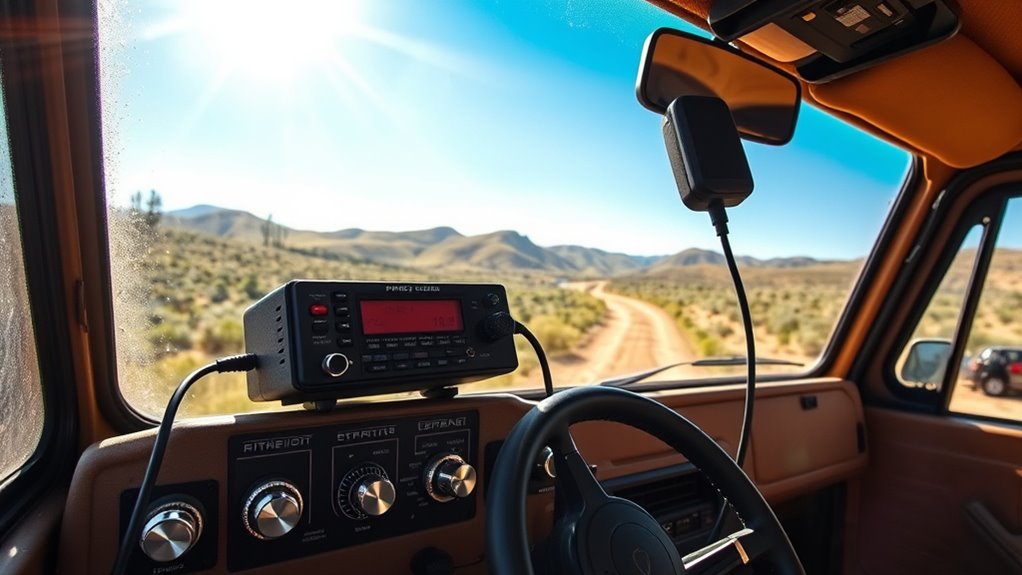
When you’re exploring remote trails and off-the-beaten-path destinations, having reliable communication is vital, and CB radios provide a straightforward solution. They’re a dependable way to stay connected with your fellow overlanders, especially when cell service isn’t an option. Setting up your CB radio properly starts with antenna installation. A good antenna is essential because it determines how well your radio transmits and receives signals. You’ll want to choose an antenna that’s durable and suited for off-road conditions, like a whip or a mag-mount antenna. Installing it at a height that’s unobstructed enhances your range, so mount it on the roof rack or a sturdy metal surface on your vehicle. Secure the antenna firmly to withstand bouncing over rough terrain, and make sure the cable connection is tight and weatherproofed to prevent corrosion or signal loss.
Choosing the right power source options is just as vital as the antenna setup. Your CB radio needs a reliable power supply to operate smoothly during your trip. Most overlanders opt to connect their radios directly to their vehicle’s electrical system because it’s convenient and consistent. This usually involves tapping into the 12-volt accessory or fuse box, ensuring you have a fuse inline for safety. If you prefer a more portable setup, a deep-cycle or AGM battery dedicated to your radio can give you extra power and independence. Some overlanders also use portable power banks or 12-volt plug adapters, which are handy for quick setup or temporary use. Whichever option you choose, verify that it supplies enough current to keep your radio functioning without interruption. Additionally, understanding the importance of antenna placement can significantly influence your communication range and clarity.
Proper antenna installation and reliable power options combine to give you a robust communication system that can handle the demands of off-road adventures. A well-mounted antenna ensures your signals reach farther and clearer, especially in rugged environments where obstructions can block radio waves. Meanwhile, having multiple power source options provides flexibility and peace of mind, so you’re never caught without a way to communicate. Remember, securing your antenna properly and choosing a dependable power setup not only improves performance but also prolongs your equipment’s lifespan. When you’re out in the wilderness, these details make all the difference in maintaining contact, coordinating with your team, or calling for help if needed. Staying connected through your CB radio keeps your adventure safer and more enjoyable, no matter how remote your journey gets.
Frequently Asked Questions
Can CB Radios Operate in Remote Wilderness Areas Without Cell Service?
Yes, CB radios can operate in remote wilderness areas without cell service. Unlike mobile phones, which rely on cell towers, CB radios use short-range radio waves to communicate directly with other radios within range. While they don’t offer satellite communication, they’re dependable for local coordination in areas with no mobile phone coverage. Just remember, their range is limited, so having multiple units helps guarantee you stay connected.
What Is the Typical Range of a CB Radio in Off-Road Conditions?
You can expect a typical CB radio range of about 1 to 15 miles off-road, depending on antenna height and terrain influence. Taller antennas generally increase your signal, while rugged terrain like hills or dense forests can markedly reduce your range. To maximize communication, lift your antenna higher and choose open, unobstructed areas. Keep in mind, actual range varies based on environmental conditions and your radio’s power output.
Are CB Radios Legal to Use Without a License in All Countries?
You can generally use CB radios without a license in many countries, but legal restrictions and licensing requirements vary widely. In the US, no license is needed, but in other nations, licensing might be mandatory. Always check local regulations before using a CB radio abroad. Ignoring licensing requirements can lead to fines or equipment confiscation. Stay informed about the legal restrictions in each country to guarantee legal and safe communication during your adventures.
How Do I Choose the Best Antenna for Overlanding Adventures?
You want an antenna that transforms your overlanding adventures into epic journeys with unbeatable signal range. Choose from antenna types like whip, gain, or magnetic mount, each designed to maximize your communication power. The best antenna boosts signal range exponentially, making it feel like you’re talking across continents. Consider your vehicle’s size, terrain, and communication needs. A high-quality antenna guarantees you’re always connected, no matter how remote your adventure gets.
Can CB Radios Connect to Emergency Services or Other Communication Devices?
CB radios typically don’t connect directly to emergency services or other communication devices. However, they are essential for emergency protocols among overlanders and can enhance communication interoperability within your group. You should keep a dedicated emergency communication plan, using CB radios alongside satellite phones or other devices, to guarantee you stay connected in remote areas. Always verify local regulations and consider adding an emergency channel for quick access during crises.
Conclusion
In a world obsessed with instant messaging and satellite tech, CB radios still prove their worth on rugged trails. They’re your reliable, old-school link to fellow overlanders, ensuring you stay connected even when the latest gadgets fail. Think of it as your trusty radio telegram, bridging generations of adventurers. So, don’t ditch the classics—embrace the nostalgia and keep your communication game strong in the wild, just like the pioneers of yesteryear.