Before depending on GPS in the wilderness, you should master basic navigation skills like map reading and compass use. This helps you interpret terrain features, recognize landmarks, and determine your position without electronics. Understanding how to take bearings and match features with a map guarantees you stay oriented, even if your tech fails or signals drop. By practicing these skills, you’ll boost your confidence and stay safer—if you keep exploring, you’ll discover even more essential skills to rely on.

Get emergency and outdoor gear delivered free with Prime
- Fast, free delivery on millions of items
- Prime Video, Amazon Music and more included
- Member-only deals all year
Key Takeaways
- Master traditional navigation skills like map reading and compass use to ensure safety without electronic devices.
- Understand terrain features and landmarks to interpret maps accurately and relate them to surroundings.
- Practice navigation techniques regularly in various environments to build confidence and proficiency.
- Learn how to orient maps and take precise bearings to maintain accurate routes.
- Recognize the limitations of GPS technology and develop backup strategies for emergencies.

Relying solely on GPS devices in the wilderness can be risky if you haven’t learned essential navigation skills. Technology can fail or run out of batteries, leaving you stranded without a way to find your way. That’s why understanding fundamental navigation techniques like map reading and compass navigation is crucial before depending on GPS.
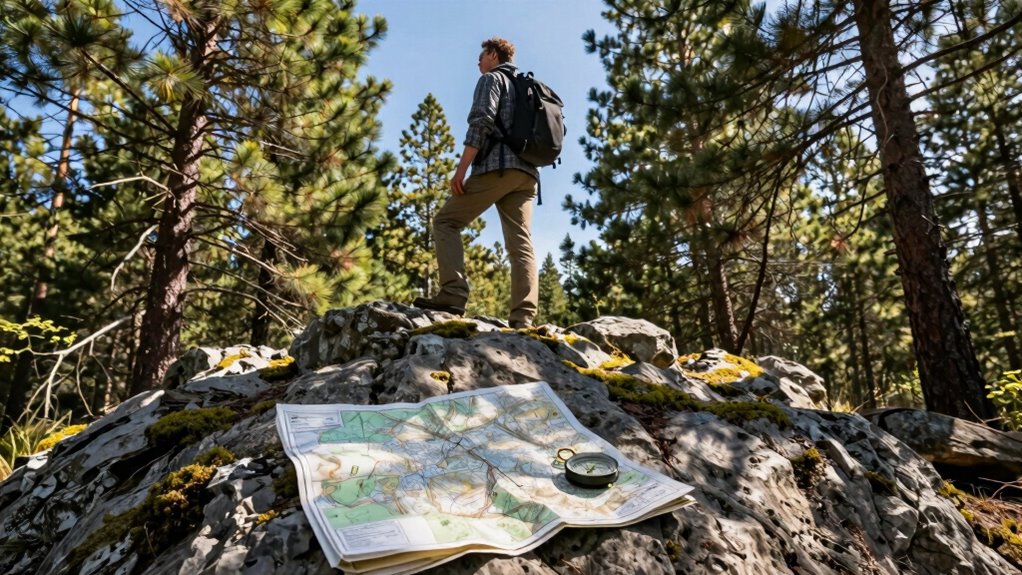
Map reading is more than just looking at a paper map; it’s about interpreting terrain, recognizing landmarks, and understanding scale and orientation. When you learn to read a map correctly, you can determine your position even without electronic devices. Practice matching features on the map with what you see around you—such as rivers, ridges, and trails—to build your spatial awareness. Knowing how to identify your location on a map allows you to plan your route and adjust as needed, especially if the trail is blocked or unclear.
Complementing map reading, compass navigation provides a reliable way to determine direction in the wilderness. Learning to use a compass involves understanding how to take a bearing, orient your map, and follow a specific azimuth to reach your destination. Unlike GPS, a compass doesn’t rely on batteries or signals; it works anywhere. You should practice holding the compass flat, aligning the magnetic needle with the orienting arrow, and adjusting the map to match your bearing. This skill helps you stay on course, especially in dense forests or mountainous terrain where landmarks might be obscured or difficult to identify.
Mastering these skills involves regular practice, ideally in various outdoor settings. Start by navigating simple routes with a map and compass, then gradually move to more complex scenarios. The more familiar you become with these techniques, the less you’ll depend on electronic devices. Remember, understanding your environment through map reading and compass navigation gives you confidence and independence. It also acts as a safety net if your GPS fails, ensuring you can still find your way back.
Popular right now

Shark HydroVac Reveal Cordless Wet-Dry Vacuum and Mop, Lilac, WD321

Breville Barista Express Espresso Machine with Built-In Grinder, Black Truffle

Ninja Luxe Café Mini Espresso and Drip Coffee Machine, ES301
As an affiliate, we earn on qualifying purchases.
Frequently Asked Questions
How Accurate Are GPS Devices in Remote Areas?
GPS devices in remote areas are generally accurate within a few meters, but their reliability can vary due to factors like terrain and satellite availability. You should always know map reading and compass navigation skills as backups. Relying solely on GPS can be risky if signals are lost or devices fail. Combining GPS with traditional navigation guarantees you stay oriented and safe, no matter the wilderness challenges.
What Are Common GPS Device Failures in the Wilderness?
GPS devices can fail due to battery loss, signal interference, or hardware issues. When this happens, depend on your map reading and compass navigation skills to find your way. Always carry a physical map and compass as backup, and practice using them regularly. Knowing how to read a map and orient yourself with a compass ensures you stay on course even if your GPS fails unexpectedly.
Can GPS Be Used Effectively Without Cellular Service?
Yes, you can use GPS effectively without cellular service by relying on offline maps stored on your device. Make sure to download these maps beforehand. Additionally, manage your battery wisely by turning off unnecessary features and carrying extra power sources. This way, your GPS remains functional even when you’re out of network coverage, ensuring you stay on course and avoid getting lost in wilderness areas.
How Do Weather Conditions Affect GPS Signal Strength?
Weather conditions can greatly influence your GPS signal strength. Heavy rain, snow, or thick cloud cover create weather interference that disrupts the satellite signal your device relies on. When these conditions occur, your GPS may lose accuracy or temporarily stop working. To guarantee reliable navigation, it’s crucial to be aware of these weather impacts and have backup navigation methods in case the satellite signal weakens during adverse weather.
What Backup Navigation Skills Should I Learn Besides GPS?
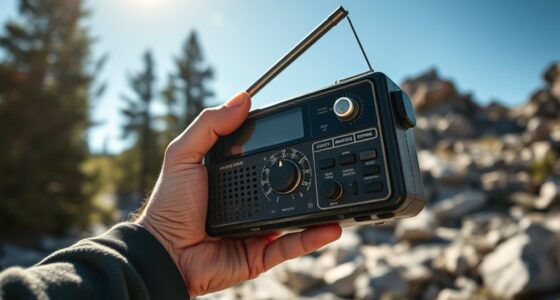
Think of your navigation skills as a vintage radio—reliable when you know how to tune in. Besides GPS, you should learn map reading and compass skills to stay oriented. Practice reading topographic maps, understanding terrain features, and taking bearings with a compass. These skills let you navigate confidently without electronic devices, ensuring you’re prepared for unexpected failures or weather issues that might block your GPS signal.
Conclusion
Before relying solely on GPS, remember that even the best tools can fail. Think of it like a sailor trusting their compass during a storm—without knowing how to read the stars and the waves, you’re lost. A GPS is a helpful guide, but your skills and knowledge are the true anchors in the wilderness. Master navigation basics now, so you won’t be adrift when technology lets you down.