To build a better water storage routine for your basecamp, develop a consistent system for collecting, inspecting, and cleaning your tanks regularly. Track your water usage to determine when to refill, and diversify your sources like rainwater, wells, or streams. Always keep storage containers sealed and resistant to UV rays. Regular maintenance and safety checks keep water safe and reliable. Keep your routine proactive—if you stick with these tips, you’ll guarantee a steady, clean water supply.

Get emergency and outdoor gear delivered free with Prime
- Fast, free delivery on millions of items
- Prime Video, Amazon Music and more included
- Member-only deals all year
Key Takeaways
- Establish a consistent schedule for inspecting, cleaning, and maintaining storage containers to prevent contamination and leaks.
- Use durable, UV-resistant containers that are easy to clean and seal tightly to ensure water safety.
- Diversify water sources, including rainwater harvesting, wells, and streams, to ensure a reliable supply.
- Regularly test stored water quality and employ purification methods like boiling or filters before use.
- Keep spare purification supplies accessible and adapt routines based on weather patterns and water availability.
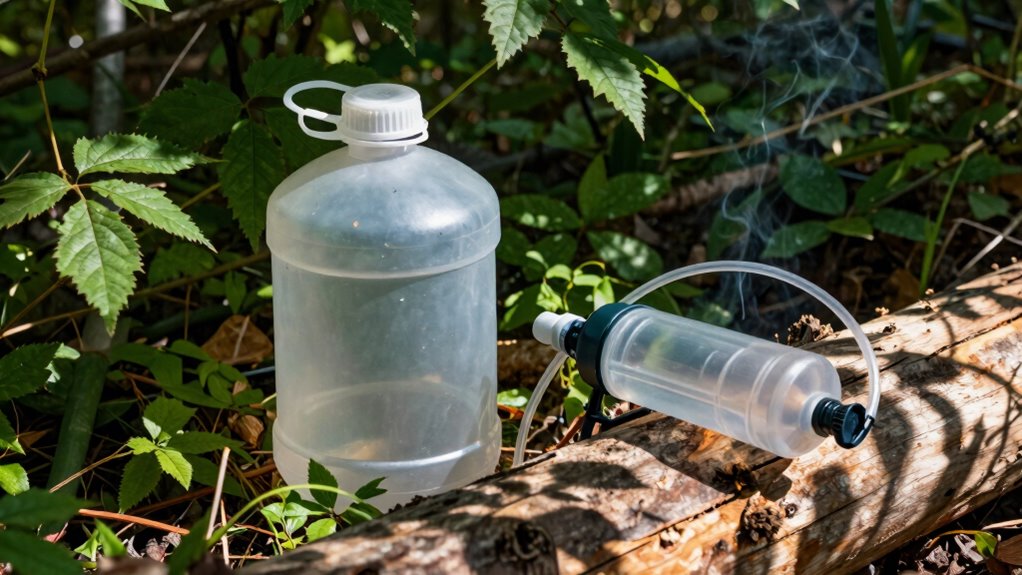
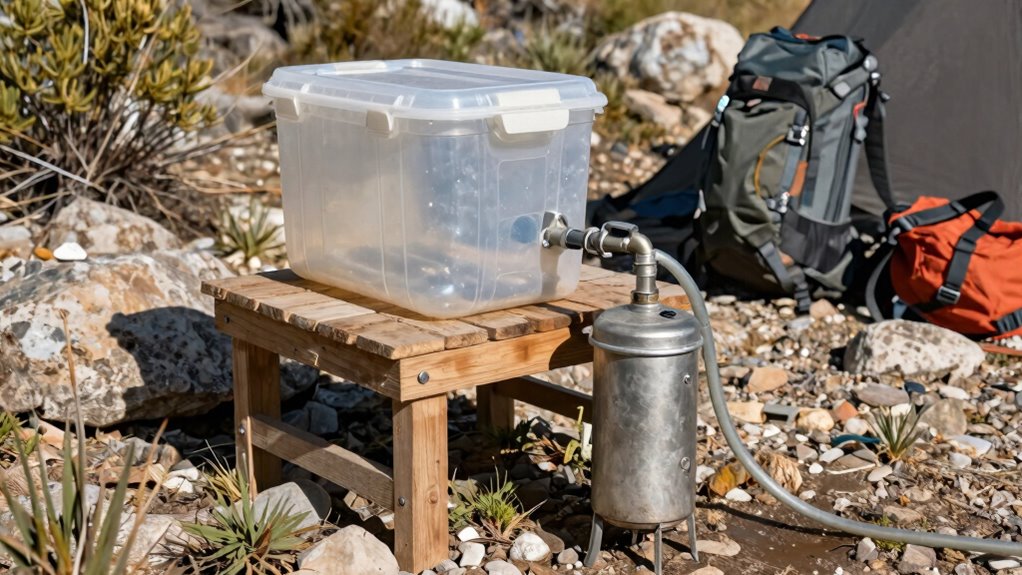
Having a reliable water storage routine is essential for keeping your basecamp well-supplied and prepared for any situation. When you develop a solid system, you guarantee a steady supply of clean water, even during dry spells or emergencies. One effective way to supplement your water reserves is through rainwater harvesting. Setting up simple collection systems, like gutters and storage barrels, allows you to capture rainwater directly from your shelter or nearby structures. This method is cost-effective and sustainable, especially if you regularly monitor the local weather patterns to maximize collection. Remember, though, that rainwater isn’t immediately safe to drink. You’ll need to implement water purification methods to make it potable. Boiling is the simplest and most reliable, killing bacteria and parasites, but it requires a steady heat source. Filtration systems, such as portable water filters or purification tablets, are convenient alternatives that make water safe quickly, especially when boiling isn’t feasible. Combining rainwater harvesting with proper purification methods ensures you always have access to safe drinking water, reducing reliance on stored supplies alone. Moreover, understanding the water purification techniques available helps you choose the most effective method for your situation.
When building your routine, consider how often you collect and replenish your water reserves. Regularly inspect your collection setup for leaks or debris, and clean storage containers to prevent contamination. Keep track of your water usage, so you know when to harvest or refill your tanks. If your basecamp is in an area with unpredictable weather, diversify your sources, mixing rainwater harvesting with other methods like digging wells or sourcing from natural streams, always applying water purification techniques before use. To streamline your routine, designate specific times for checking and maintaining your water systems, and keep spare purification supplies handy. This proactive approach minimizes downtime and ensures your water supply remains consistent. Additionally, understanding water safety practices enhances your ability to prevent waterborne illnesses and maintain a healthy environment at your basecamp. Implementing water testing methods can further help you verify water quality and ensure safety.
Also, make sure your storage containers are suitable for long-term use, resistant to UV rays, and easy to clean. Proper sealing prevents contamination from insects, dirt, or animals. When your water storage routine is well-established, you’ll find it easier to manage your water needs efficiently. This not only saves time and effort but also enhances your safety and comfort at the basecamp. Remember, a good water routine isn’t static; regularly review and adjust your methods based on changing conditions or new technology. Staying vigilant with rainwater harvesting and water purification methods keeps your water supply reliable, safe, and ready whenever you need it.
UV resistant water storage containers
As an affiliate, we earn on qualifying purchases.
As an affiliate, we earn on qualifying purchases.
Frequently Asked Questions
What Are the Best Materials for Water Storage Containers?
You should choose water storage containers made from durable, safe materials like food-grade plastic or stainless steel. These materials guarantee container durability and prevent leaks or cracks over time. Food-grade plastics are lightweight and resistant to corrosion, while stainless steel offers excellent material safety and longevity. Avoid containers with BPA or harmful chemicals, as they can contaminate your water. Prioritize durability and safety for reliable, clean water storage.
How Often Should I Sanitize My Water Storage Units?
You should sanitize your water storage units at least once every three to six months for essential container maintenance. Regular sanitization helps prevent bacteria buildup and guarantees safe water for drinking. Use water purification solutions like bleach or commercial sanitizers, following proper dilution instructions. This routine keeps your containers clean, safe, and ready for use, especially in a basecamp setting where maintaining water quality is vital for health and safety.
What’s the Optimal Water Intake per Person at Basecamp?
You should aim for about a gallon of water per person daily at basecamp. This includes drinking, cooking, and minimal cleaning. To guarantee safety, incorporate water filtration methods when sourcing water from natural supplies, and always keep emergency supplies stocked with extra water. Regularly check and sanitize your storage units to prevent contamination, and rotate your supplies to maintain freshness for when you need them most.
How Can I Prevent Water Contamination During Storage?
Did you know that contaminated water causes over 3 million deaths annually? To prevent water contamination during storage, prioritize water purification by regularly treating your water and using reliable purification methods like boiling or filters. Additionally, maintain your containers by cleaning them thoroughly and sealing them tightly to prevent bacteria and debris from entering. Proper container maintenance and water purification are essential to keep your stored water safe at basecamp.
What Backup Water Sources Should I Consider?
You should consider backup sources like rainwater harvesting and stored bottled water. Rainwater harvesting provides a sustainable supply, but make sure you use water purification tablets to treat it before storage. Additionally, keep a supply of bottled water as a reliable backup. Regularly test and purify all backup sources to prevent contamination, and rotate supplies to maintain freshness and safety for your basecamp needs.
portable water filtration system
As an affiliate, we earn on qualifying purchases.
As an affiliate, we earn on qualifying purchases.
Conclusion
By implementing these simple steps, you’ll find your water storage routine becomes more reliable and efficient. It’s funny how a small tweak—like labeling containers or scheduling regular checks—can make a big difference in your daily basecamp life. Sometimes, it’s those little habits that unexpectedly save you time and stress, proving that a well-organized water system isn’t just practical but essential. Stick with your routine, and you’ll always be ready when water’s most needed.
As an affiliate, we earn on qualifying purchases.
camping water purification tablets
As an affiliate, we earn on qualifying purchases.
As an affiliate, we earn on qualifying purchases.
Halloween Picks
halloween
As an affiliate, we earn on qualifying purchases.