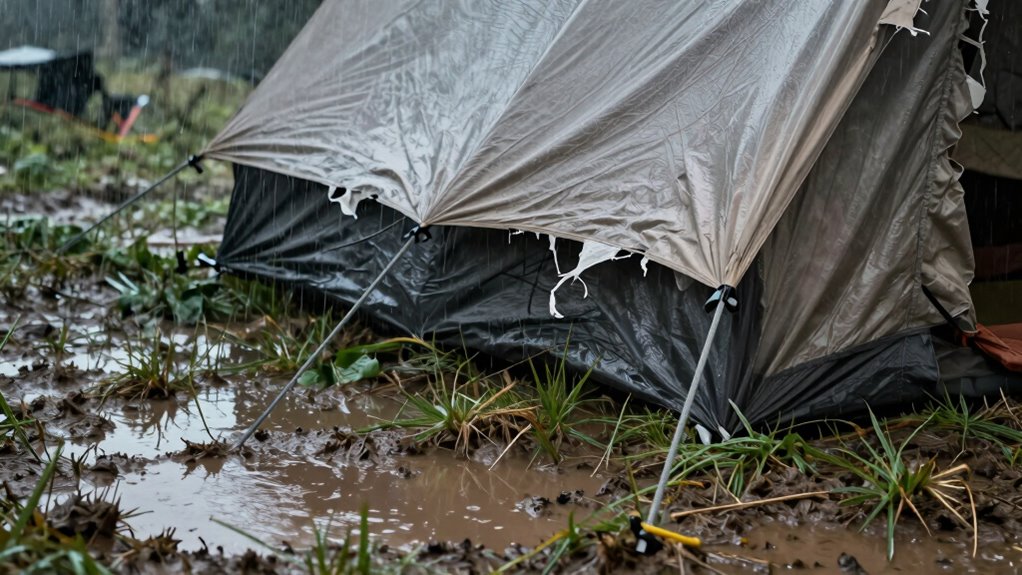

Wet ground and rain quickly expose weaknesses in your campsite’s design and planning. Soggy, unstable soil makes tents shift or sink, while poor drainage causes water to pool around fire pits and sleeping areas, increasing safety risks. Wet conditions also attract wildlife and insects, complicating food storage and health. Weak fire setups and insecure tents become hazards when moisture is involved. If you keep exploring, you’ll discover ways to reinforce your campsite for rainy conditions.

Get emergency and outdoor gear delivered free with Prime
- Fast, free delivery on millions of items
- Prime Video, Amazon Music and more included
- Member-only deals all year
Key Takeaways
- Wet ground reduces campsite stability, causing tents to sink, shift, or collapse due to poor anchoring on saturated soil.
- Rain and water runoff create pooling around tents and firepits, increasing safety hazards and complicating fire safety measures.
- Moist conditions attract wildlife and insects, raising risks of animal encounters and health issues like mosquito-borne diseases.
- Poor drainage and site selection lead to soggy sleeping areas, compromising comfort and increasing the likelihood of ground shifting.
- Unstable fire setups and damp materials hinder safe fire management, elevating the risk of flare-ups and wildfires.

Have you ever set up camp only to have the ground turn soggy and unstable after a sudden rainstorm? It’s a frustrating experience that quickly reveals the vulnerabilities in your campsite setup. When the ground becomes saturated, your carefully chosen spot can turn into a muddy mess, making it difficult to walk or sit comfortably. This sogginess also exposes susceptibilities in your campsite systems, especially if you didn’t take steps to prepare for rain. Poor drainage and inadequate ground protection can cause tents to shift, make your fire pit unsafe, and even increase the chances of unintentional wildlife encounters. Wet ground conditions often lead to unsafe campfire safety practices, as sparks or embers can smolder longer in damp wood or ash, increasing the risk of wildfires. You might find yourself struggling to keep your fire contained or to extinguish it completely, which is dangerous both for your safety and the environment. Understanding ground stability and how moisture affects it can help prevent accidents and injuries.
Rain and wet ground also bring wildlife encounters into sharper focus. Animals tend to be more active when the environment changes, and wet conditions can drive them closer to your campsite in search of food or shelter. If your setup isn’t secure, you could inadvertently attract curious or hungry wildlife, which increases the risk of conflicts or bites. Inadequate waste management or food storage becomes even more problematic, as animals will be more likely to investigate if they smell leftovers or scented items. Wet ground can also cause your campsite to become a magnet for insects like mosquitoes, further complicating your outdoor experience and posing health risks. Additionally, ground composition plays a crucial role in maintaining a safe and secure campsite, especially in wet conditions. Properly assessing water runoff patterns during setup can also significantly improve drainage and prevent pooling around your tent or firepit.
Understanding proper site selection can help mitigate many of these risks and ensure your campsite remains safe and comfortable despite the weather. Your campsite’s foundation becomes particularly vulnerable under these conditions. Tents that aren’t on well-drained ground or that lack proper staking can sink or shift, compromising your shelter’s stability. Without a reliable system to manage water runoff, rainwater can pool around your site, leading to soggy sleeping arrangements and increased discomfort. This, in turn, affects your overall safety, especially if you’re trying to maintain campfire safety; a wet fire can smolder or flare unexpectedly, and the damp environment increases the chance of accidental wildfires. To avoid these issues, it’s essential to choose high, well-drained areas, reinforce your fire setup with proper materials, and always be mindful of wildlife encounters. When your campsite isn’t prepared for rain, it exposes weaknesses that can turn a pleasant outdoor adventure into a stressful, unsafe ordeal.
Popular right now

Bose QuietComfort True Wireless Earbuds with Active Noise Cancellation, Black

KitchenAid Artisan 5-Qt Tilt-Head Stand Mixer – Dried Rose (KSM150PS)

Apple AirPods Max 2 Wireless Over-Ear Headphones – Midnight
As an affiliate, we earn on qualifying purchases.
Frequently Asked Questions
How Can I Prevent Campsite Systems From Weakening During Heavy Rain?
To prevent campsite systems from weakening during heavy rain, focus on improving ground drainage by choosing a high, level spot and clearing debris. Use tent materials designed for waterproofing, like ripstop nylon or polyester with sealed seams, to keep water out. Set up your tent on a tarp or groundsheet for extra protection, and make certain proper stakes and guylines are secured. These steps help maintain your campsite’s stability and dryness during storms.
What Are the Early Signs of a Failing Campsite Setup?
You notice soil erosion around your tent and instability in its stakes, like the ground suddenly giving way—these are early signs your campsite setup is weakening. When rain hits, weak soil can’t hold stakes securely, causing tent shifts. If you see pooling water or mud near your tent, it indicates poor drainage. These signs point to compromised stability, and ignoring them risks further damage or collapse during heavy rain.
Which Materials Are Most Resistant to Water Damage in Camping Gear?
You should prioritize gear made from waterproof fabrics like nylon or polyester, which repel water effectively. Additionally, look for camping equipment with rust-resistant metals, such as aluminum or stainless steel, to prevent corrosion during wet conditions. These materials help keep your gear dry and functional, even in heavy rain or on wet ground. Choosing durable, water-resistant materials guarantees your campsite setup remains reliable and safe, no matter how rainy it gets.
How Often Should Campsite Systems Be Inspected for Vulnerabilities?
You should inspect your campsite systems regularly, especially after heavy rain or wet conditions. Focus on ground stability and drainage solutions, checking for pooling water or erosion that could weaken your setup. Conduct these inspections at least once a month and after storms, ensuring that your tent stakes hold firm and drainage channels remain clear. Proactive checks help prevent vulnerabilities, keeping your campsite safe and dry during wet weather.
Are There Specific Rain Patterns That Are More Damaging to Campsites?
Did you know that heavy rainfalls over 2 inches per hour can cause significant damage to campsites? Intense rain exacerbates drainage issues, making weak systems more vulnerable. Sudden, short bursts of high-intensity rain can flood tents and pathways, while prolonged drizzle may erode soil stability. To protect your campsite, monitor rain patterns and guarantee proper drainage, especially during unpredictable storms, to prevent long-term damage and maintain safety.
Conclusion
When rain pours and ground turns soggy, even the strongest campsite systems crumble like a house of cards in a hurricane. You quickly realize that without proper drainage, sturdy tents, and reliable setups, your entire outdoor experience can unravel in an instant. Wet ground exposes every weakness, turning your adventure into a soggy nightmare. To survive this deluge, reinforce your campsite before the rain hits—because a resilient setup is your best defense against nature’s relentless assault.