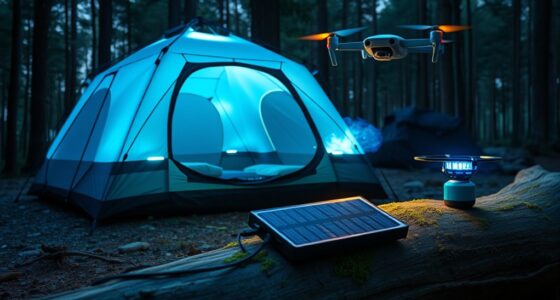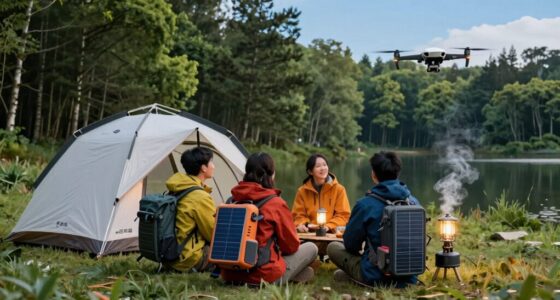
Virtual camping in the outdoor metaverse offers immersive experiences that can rival real outdoor adventures in many ways. Through augmented reality, you can explore digital wilderness, enjoy wildlife sounds, and experience scenic environments from the comfort of home. While it may not fully replicate tactile sensations, it provides a safe, accessible, and customizable alternative, especially for those who can’t physically venture outdoors. To discover how technology is shaping the future of outdoor exploration, continue exploring this exciting frontier.
Listen free for 30 days with Audible
Thousands of audiobooks and originals — cancel anytime.
As an affiliate, we earn on qualifying purchases.
Key Takeaways
- AR enhances virtual camping with immersive visuals and sounds, increasing realism but lacks tactile sensory feedback.
- Virtual environments offer accessibility and customization, appealing to those unable to experience real outdoor camping.
- While AR can simulate many aspects of nature, it cannot fully replicate physical sensations like touch and temperature.
- Advances in technology will progressively improve realism, potentially narrowing the experiential gap between virtual and real camping.
- Virtual camping provides a safe, sustainable, and inclusive alternative, complementing rather than fully replacing real outdoor adventures.
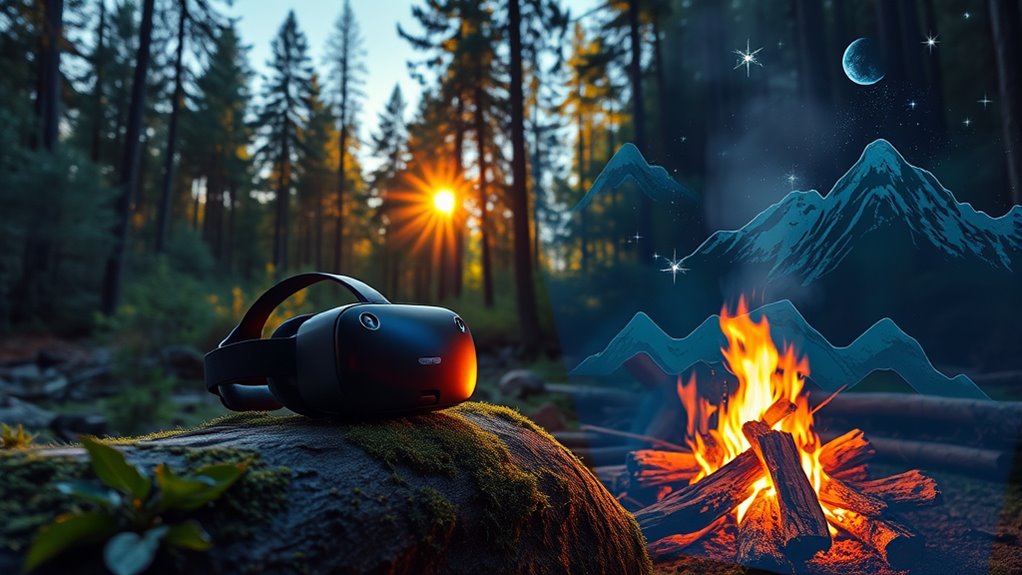
Have you ever wondered if you can experience the great outdoors without leaving your home? With advancements in augmented reality and the rise of the digital wilderness, the answer might surprise you. The outdoor metaverse is transforming how people connect with nature, offering immersive virtual camping experiences that could rival, or even complement, real-world adventures. Instead of packing gear and planning trips, you can now step into a digital wilderness from your living room, thanks to augmented reality technologies that overlay realistic images and sounds onto your environment. This blend of the physical and digital worlds creates a compelling simulation of outdoor life, making it possible to explore forests, mountains, and lakes without ever setting foot outside.
Experience the outdoors from home with immersive AR camping in the digital wilderness.
In this virtual domain, augmented reality plays a vital role. It enhances your surroundings by adding layers of digital information, creating a sense of presence in a sprawling, detailed landscape. You can hike virtual trails, set up camp under simulated starry skies, or listen to the sounds of wildlife—all from your device. The digital wilderness becomes accessible to anyone with a smartphone or AR headset, breaking down geographic and physical barriers. This kind of experience isn’t just about visual immersion; it taps into all your senses, making the virtual environment feel surprisingly real. As a result, you can enjoy the calming effects of nature, learn about different ecosystems, or even share adventures with friends, all within a fully interactive digital space. Moreover, advancements in nanotechnology are poised to enhance the realism and sensory feedback of these virtual environments, making virtual outdoor experiences even more convincing.
While some might argue that virtual camping can’t replace the tactile experience of real camping—like feeling the rough bark of a tree or the chill of nighttime air—many find that the outdoor metaverse offers a compelling alternative. It’s especially appealing for those with physical limitations or busy schedules who still crave connection with nature. Plus, the digital wilderness can be customized, allowing you to explore environments that might be inaccessible in real life, such as remote rainforests or icy tundras. It also offers educational opportunities, letting you learn about flora and fauna through interactive overlays, deepening your understanding of the natural world.
Ultimately, virtual camping in the outdoor metaverse isn’t about replacing real adventures but expanding how we experience nature. It provides a safe, accessible, and often more sustainable way to connect with the outdoors. As technology continues to evolve, these experiences will only become more realistic and engaging, blurring the line between the physical and digital wilderness. Whether you’re seeking relaxation, education, or adventure, the outdoor metaverse is poised to open new frontiers in how we explore and appreciate the great outdoors, all from the comfort of home.
augmented reality outdoor headset
As an affiliate, we earn on qualifying purchases.
As an affiliate, we earn on qualifying purchases.
Frequently Asked Questions
Can Virtual Camping Fully Replicate Sensory Experiences Like Smell and Touch?
Virtual camping can’t fully replicate sensory experiences like smell and touch because current technology struggles with sensory fidelity and tactile simulation. While you can see and hear the environment, the nuances of real smells and tactile feedback remain elusive. Advances are improving these areas, but they still fall short of genuine sensory immersion. For now, virtual camping offers a glimpse but doesn’t completely match the richness of real outdoor adventures.
What Are the Environmental Impacts of Virtual Versus Real Camping?
While virtual camping gently minimizes environmental strain, it’s not a perfect substitute for sustainable tourism. By avoiding travel and resource use, it considerably reduces your carbon footprint compared to real camping, which can sometimes impact local ecosystems and produce waste. However, virtual experiences lack the direct connection to nature’s delicate balance. Ultimately, both options have roles, but considering their environmental impacts helps you make mindful choices.
How Accessible Is Virtual Camping for People With Disabilities?
Virtual camping is becoming more accessible for people with disabilities thanks to assistive technology. Developers are actively working to remove accessibility barriers by incorporating features like voice commands, customizable interfaces, and haptic feedback. These innovations allow you to experience the outdoors virtually, ensuring you can participate regardless of physical limitations. While challenges remain, the ongoing improvements aim to make virtual camping a more inclusive and enjoyable experience for everyone.
Will Virtual Camping Replace Traditional Outdoor Tourism Industries?
Sure, virtual camping might seem poised to replace traditional tourism, but don’t buy the hype. You’ll find yourself craving a digital escape over fresh air and starry nights. Immersive technology can simulate nature, but it can’t replicate the smell of pine or the sound of crackling fire. While virtual camping offers convenience, it’s unlikely to fully substitute the authentic experience that keeps outdoor tourism thriving.
Are There Health Risks Associated With Prolonged Virtual Reality Use Outdoors?
Prolonged virtual reality use outdoors can pose health risks like eye strain and disrupt your digital detox efforts. Spending too much time immersed in virtual environments strains your eyes, leading to discomfort and fatigue. Additionally, it hampers your ability to disconnect and enjoy real-world experiences. To stay healthy, limit VR sessions, take regular breaks, and prioritize outdoor activities that promote genuine connection with nature and your surroundings.
virtual camping experience device
As an affiliate, we earn on qualifying purchases.
As an affiliate, we earn on qualifying purchases.
Conclusion
While some might say virtual camping can’t match the real outdoors, it offers a surprisingly immersive experience you can enjoy anytime, anywhere. Don’t let concerns about authenticity hold you back—technology keeps improving, making virtual adventures more realistic and engaging. Embrace the outdoor metaverse as a way to explore nature’s beauty, even when you can’t be outside. With an open mind, you’ll find virtual camping a fun, accessible way to connect with the outdoors whenever you want.
AR wilderness simulation goggles
As an affiliate, we earn on qualifying purchases.
As an affiliate, we earn on qualifying purchases.
As an affiliate, we earn on qualifying purchases.
NFL season / tailgating Picks
team gear
As an affiliate, we earn on qualifying purchases.